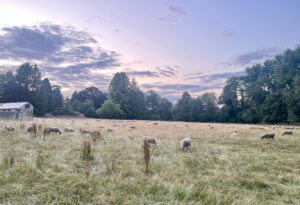
The gardens at the Albuquerque Foundation, Lisbon, October 2025.
Dear Clients and Friends,
I hope that you had a fruitful and successful Autumn season.
During this period I visited Fenton House with a view to hold a future handling session. It was my first visit to the house which is located just of the Hampstead high street.
In October, I attended the Connections conference which was held at the Albuquerque Foundation in Lisbon. On arriving, I was struck by how a summer house had been converted into a state of the art museum and conference centre. Lectures were given by top academics and we were also given a tour of the stores.
Earlier that month, I gave a tour of the Percival David Collection at the British Museum and to the home of a London collector. On the 31 October I gave the 45th Sir Alan Barlow lecture at the Ashmolean Museum entitled The Collector and the Expert, which was based on the paper that Sir Alan gave to the OCS in April 1937.
Asian Art in London had a real buzz about it this year with all the auction houses holding sales for the first time in five years. Long may it continue.
I wish you all the best for the festive season and a prosperous 2026.
Best wishes,
Robert Bradlow, December 2025

26 September – Fenton House, Hampstead
This was my first visit to Fenton House, which had been the home of Lady Katharine Millicent Binning (nee Salting), who was the nice of the collector George Salting. She had inherited a number of Kangxi blue and white pieces from him, which were exhibited in the Blue Porcelain Room on the first floor.


This room contains a number of unusual Kangxi period pieces, the first of which, located on the mantle piece is the two handled vase depicting a court scene. The shape with the long cylindrical neck and attached animal handles is rare and was most likely experimental, as the handles would have been somewhat prone to breaking.
Another pieces is the landscape vase that is located above the glazed cabinets on the far right. Its shape again is uncommon and it is again an experimental early Kangxi form, that one does not see in wares after 1700.


The main part of the porcelain collection was located in two cabinets in the dining room on the ground floor. There were a number of imperial Ming and Qing pieces and I will go into more detail on these when we hold a handling session in the future.


4 October – Visit to the British Museum and a London Collector
On 4 October I gave a tour of the Percival David Collection at the British Museum to a young group of Chinese collectors. I have given this tour previously, but I never get tired of taking groups to what I believe is one of (if not the) best collection of Chinese ceramics outside of China.

I always start the tour behind the long cabinet of Song wares, as it holds some of the finest pieces of early wares in the collection. Particular favourites are the Yaozhou circular carved ‘peony’ box and cover and the black ding bowl, which always catches the eye with its jewel like sparkles.


On a larger scale, the Yuan dynasty Longquan celadon floral vases always captures the imagination as to how such a large pieces is so successfully made. The piece would have been formed in three pieces, the neck and the two horizontal halves of the body. The glaze is a particularly bright green and successfully shows off the relief decoration to the body and neck.


The Percival David Collection is one of the few collections in the world that has eight pieces of Ru ware, two of which are particularly rare – the rounded bottle vase and the cup stand.
Another area of strength in the collection is the Yuan and early Ming dynasty blue and white porcelain. The ‘David’ vases are the earliest dated examples of blue and white and each has a long inscription and a date of 1351. Examples like this are particularly important as they help to date other pieces of similar design.

One of my favourite examples in the collection is the pair of blue and white ‘dragon’ moon flasks. The shape is derived from earlier Middle Eastern metal work, but the decoration is distinctly Chinese. These two examples below differ in that the dragon on the one on the right has been incised onto the body and its outline delineated by the wave ground. The dragon in the example on the left is more commonly painted on a ground of Indian lotus.


After lunch at the Museum we met in north London to view a private collection. A subterranean space had been built consisting of a number of galleries.

We were given a tour of the collection and an interesting introduction to the background of the collector and his role in the Chinese art world. This was really well received by the group, who had not had the opportunity to visit a private collection like this previously.


20-21 October – Lisbon Conference at the Albuquerque Foundation on ‘Connections’
On 20 October I travelled to Lisbon to attend the Connections conference organised by Becky MacGuire and the Albuquerque Foundation.
I arrived in the evening for drinks and a dinner, which was a really good way to meet some fellow attendees before the day of the conference.

The following morning began with lectures by Ricarda Brosch and Christiaan Jörg, who spoke on motifs across the different media in imperial wares and the private trade in Asian porcelain respectively. After a short coffee break, Willemijn van Noord spoke on Chinese perspectives on the art of copying.


Prior to the lunch break, Becky MacGuire gave us a tour of the Museum stores and was to open drawers and bring down pieces off the shelves that caught our eye.


There was a surprising array of pieces from the Ming to the Qing dynasty and it was unusual to see six large Kangxi period blue and white ‘Soldier’ vases lined up in a row.

Three further lectures followed the lunch break and I particularly enjoyed the one given by William R Sargent on Chinese pagodas, which illustrated a number of Chinese examples, as well as later European ones.


Once the lectures were completed, we were free to view the exhibition and the grounds. Walking around the building, I was particularly struck by how well the subterranean galleries were designed and worked with the more traditional architecture of the original house.
The spiral staircase was quite dramatic in the way it enters the downstairs space and one gets glimpses of the cabinets as one travels down it.


The exhibition included some fine examples of Ming imperial pieces, such as the large Jiajing ‘dragon’ fish bowl and the Wanli mark and period ‘100 boys’ box and cover, the latter of which was of a particularly strong blue colour.


I thought that the exhibition successfully portrayed the connections between East and West and was illustrated quite well in the image below with a gilt-bronze mounted blue and white Jiajing mark and period ewer and the juxtaposition of two Kangxi period export bowls and covers and the Wanli mark and period ‘100 boys’ box and cover.


The use of Western shapes such as the tureen and cover and the ewer and basin in the images above and below are also another interesting touch point between East and West and the Chinese would have initially have been completely unfamiliar with such shapes, as they had traditionally served no purpose in China.


The conference ended with a musical recital and a final farewell drinks. Every aspect of the conference was really well organised and it is clear that a lot of thought had gone into it.


Prior to leaving the Foundation, I spent some time in the gardens, which were beautifully landscaped with ponds, trees and floral borders which acted as a peaceful setting to sit and enjoy the passing of time.


31 October – 45th Sir Alan Barlow Lecture at the Ashmolean ‘The Collector and the Expert’

It was an honour to give the 45th annual Sir Alan Barlow lecture at the Ashmolean Museum on 31 October. I enjoyed researching it, as I did not know much about Sir Alan prior to this.
I had valued the collection with colleagues whilst it was situated at the university of Sussex, prior to its move to the Ashmolean in 2011.
The complete slides of the lecture can be located on the website under LATEST NEWS/LECTURES.


Asian Art in London – Around the galleries

This year’s Asian Art in London featured a number of gallery exhibitions, including Marchant’s centenary exhibition and Jorge Welsh’s lacquer exhibition.
All the auction houses held sales, which was a first for five years and included pieces from the collections of the Palmer family, Sam and Marian Marsh, Mary and Peter White and the stock of Priestley and Ferraro.

Jorge Welsh – Asian Lacquer, a Lasting Story of Fascination and Inspiration

The first exhibition I attended was that of Jorge Welsh and there were a number of unusual offerings of lacquer on porcelain. These are quite rare in the history of Chinese and Japanese art and combine the two disciplines of porcelain production and lacquer making.
One particularly striking piece was the large Meiji period Arita dish painted in underglaze blue with a harbour scene. The gold mountains and buildings were painted in underglaze blue and the water and clouds in gold and black lacquer.


One of the most unusual pieces I saw that week was a Chinese export 18th century painted enamel and gold, red and black lacquer bureau on stand. The fall, front drawer, sides and top were painted in bright enamels with fruit and flowers and the interior combined gold lacquer for the interior fall and painted enamel for the drawers. This piece could well be unique and most likely a one off private commission.


Marchant – The Centenary Exhibition
I then attended the centenary exhibition of Marchant, which was one of the real highlights of the week in terms of imperial Qing porcelain. Marchant had produced a three volume hard bound series of books commemorating their hundred years of trading.


The combination of a yellow enamel ground with underglaze blue has been a tradition in imperial wares since the Ming dynasty. The two Qianlong examples in the exhibition continue this tradition, but the lemon yellow is so much brighter and dominant than in the earlier Ming examples.
The nine peach dish is painted with branches of the fruit in the central field. The exterior of the stembowl is divided into vertical panels depicting fruiting branches of peach, pomegranate and finger citron.


My particular favourites of the exhibition were the Kangxi period ‘dragon’ bowls and dish. The underglaze blue example was very finely painted with the dragon’s raised in the air. This contrasted with the iron-red example where his head is lowered almost defensively.
The underglaze blue and green enamel dish was the most striking as the translucent green enamel works so well in combination with the underglaze blue. The dragon takes up a large part of the central field as it tries to catch the pearl with its outstretched arm.


Eskenazi – Chinese Ceramics, Metalwork and Lacquer from the 12th to 14th century, Trees and Mountains on Gold and Silver by Li Huayi


During Asian Art in London I visited Eskenazi gallery to view their two exhibitions, which included some fine examples of Song ceramics, metalwork and lacquer.

I personally remember the purple-splashed Jun dish, as I had discovered it in Stockholm in early 2012 and sold it as the auctioneer at Sotheby’s in May that year. The purple splashes act as an effective and colourful contrast to the pale blue ground.


Another favourite in the exhibition was the Southern Song dynasty Jian ware ‘hares fur’ teabowl. This example is finely potted with a very even arrangement of brown streaks to the interior and exterior of the vessel. The piece was accompanied with a Japanese lacquer cup stand.


The second exhibition running at the same time, was a group of paintings by the ink artist Li Huayi. This is the first time that I have seen works of his on gold and silver grounds, which is an interesting departure for the artist. These coloured grounds give a more dramatic dimension to the work, with various organic forms emerging from it.


Exhibitions at Sotheby’s Colonnade and St George Street Galleries
For the second year in a row, a group of dealers have exhibited at the Colonnade and St George Street Galleries at Sotheby’s in New Bond Street. The venue seems to work well for them, as previously each gallery would have had to hire a space in central London.
This would have made it a somewhat expensive affair and in doing this, the combined force of these dealers becomes a sort of mini fair, comprising dealers of textiles, ceramics, works of art, prints and paintings.

Jacqueline Simcox had a varied display of colourful robes and textile panels. Of particular note was a Yongzheng period plum coloured silk satin dragon robe for the Imperial Court opera. It was woven with 9 dragons, the front depicts a frontal facing dragon above two others and breaking waves and mountain peaks.


The stand of Mark Slaats had an interesting array of lacquer wares, ceramics, plaque a jour and other works of art.


I particularly liked the plaque a jour pieces, which were made by the Chinese artist Yinglong Li (1988-). Each piece is constructed from a silver body with openings that are then filled in with coloured enamels. When lit from behind (as in these examples), the effect is very colourful.


This was the first time that I had encountered the contemporary Japanese woodblock prints from the Hanga Ten Gallery. I found many of the works particularly striking, especially those of Ray Morimura and Clifton Harhu, as illustrated below.


Highlights of the London Auction Viewings and Lectures
Bonhams
With the lead up to the auctions, the various rooms held a number of lectures related to their sales. Edward Luper gave an insightful talk: Creatures, People and Symbols: Themes in the Whites and Marsh Collections.
One of the slides in the lecture (below) reminded me of a visit to Peter and Mary White’s collection some years earlier when I was with Sotheby’s. They were quite close to where I used to live in Reigate and I was somewhat dumfounded when they showed me around the collection, by the breadth and depth of it. Rooms had been divided with purpose build shelving units to accommodate the vast number of pieces.


The Marsh Collection – Art for the Literati (Part IV)
The real highlight for me of the Marsh sale was lot 8 the rare figure of Zhongli Quan or Tan Qiao. The figure was exquisitely modelled asleep on his arms against a rock. The modelling of the robes and the peaceful facial expression is of really fine quality. The figure bears two impressed seal marks to its back of He Chaozong and Qian li mian tan. It is not surprising that it sold well over its £80,000-120,000 estimate at £190,900.

Lot 8. A very rare Dehua reclining figure of Zhongli Quan or Tan Qiao, He Chaozong and Qian li mian tan seal marks, Late Ming dynasty, 15cm long, sold for £190,900 (Estimate £80,000-120,000).


A really great piece to handle in this sale was lot 5 the Chongzheng period fine blue and white ‘riding the elephant’ brushpot. One side is painted with a boy lying on the top of an elephant that was unusually painted with blue and white circular stripes. As Edward Luper pointed out in his lecture, the depiction of a child riding an elephant is quite a common motif in Chinese art and is auspicious omen that good fortune is arriving. Good fortune was certainly reflected in its sale price, which was £95,650 (Estimate £40,000-60,000).


Lot 14, the larger blue and white brushpot, this time of the Kangxi period, was painted with a figure standing on top of an elephant with a broom washing the animal. The term ‘washing the elephant’ (sao xiang 掃象) is a Buddhist allegory for purifying the mind and sweeping away worldly illusions. The Chinese word for elephant (xiàng 象) is a homophone for the word meaning form, image, or illusion (xiāng 相). This piece also sold well above its £30,000-40,000 estimate at £57,550.


The sale realised £1.14 million against a low estimate of £795,000 with a sell through rate of 65% by lot.

Priestley and Ferraro – Three Decades in Chinese Art (1994-2025)
On 4 November Dominica Jellinek gave a talk – Marking 30 Years of Priestley & Ferraro Chinese Art. In it, he looked at a number of the highlight lacquer pieces and plotted their ownership back through a number of well known English collectors.


The most significant piece of lacquer in the sale was lot 130, the exceptionally rare Yongle mark and period carved cinnabar lacquer ‘dragon’ bowl stand. It was finely carved with a pair of five-clawed dragons amongst a dense design of lotus. The mark was carved to the inside of the foot.
It sold for £889,400, well beyond its £350,000-500,000 estimate. It was rumoured that the buyer had a similar example carved with phoenix and wanted to have an example of each.


Of the ceramics, my favourite piece of the sale and the week was lot 132, a small and very rare Tang dynasty sancai-glazed eagle headed pottery ewer. I had spotted it in the catalogue and was expecting it to be a large (roughly 30cm high) example. I was thus somewhat surprised when seeing it and struck how finely it was modelled and how well the glaze worked on the form.
I thought that it might sell for more than it did at £23,040 (Estimate £15,000-20,000), but it had suffered some damage to the neck, which explained the more muted result.


Of the Song ceramics my particular favourite was lot 146, the large Northern Celadon Yaozhou celadon-glazed carved ‘peonies’ bowl. It combines its large size, with really fine carving and a consistent celadon glaze. It sold for £152,800 against its £40,000-60,000 estimate.


My favourite lacquer piece in the sale was lot 108, the extremely rare 13th/14th century cinnabar lacquer ‘chilong’ box and cover. The design to the upper surface of the cover is carved with an unusual design of a chilong holding a lingzhi in its mouth, amongst cloud scrolls.
The body of the animal follows the curve of the circular box and the red relief areas contrasts with the large areas of yellow ground. It sold for £165,000 (Estimate £80,000-120,000).


The sale realised £3.5 million against its low estimate of £1.83 million, with a sell through rate of 92% by lot.


A Life in Ceramics – The Peter and Mary White Collection of Chinese Art
The Peter and Mary White sale marked their first auction of the collection, which was held online and closed on 10 November.
My personal picks of the sale was firstly lot 582, the Kangxi period blue and white ‘eighteen scholars’ brushpot. The pot was deftly painted in strong blue tones with a continuous scene of scholars in an interior conversing, playing weiqi and examining scrolls. It sold for £30,720.


One of my favourite types of dragon dishes, is the green enamelled underglaze blue type of the Kangxi period. Lot 576, was a good example of this and the five-claw dragon was well painted to the centre amongst flame and cloud scrolls. It was originally purchased from Robert McPherson and had unfortunately suffered a rim repair, which accounted for it selling for £12,800. In good condition, it may have made a high five figure sum.


One piece of Ming blue and white I particularly liked was lot 520, the blue and white ‘scholars’ deep bowl. It was painted with four scenes of scholars in gardens and interiors in varied bright tones of blue. It sold for £8,960.
In total, the auction made over £600,000, over double its £287,700.00 low estimate and was a white glove sale with every lot sold.


Fine Chinese Art
The outstanding ceramic lot in the Fine Chinese Art sale was lot 339, the very rare blue and white and iron-red moonflask. It has originally belonged to a German doctor of law and entrepreneur Ferdinand Freiherr Dr von Soiron (1909-1994), who lived in Cologne.
The painting of the iron-red confronting phoenix reminds me of a small underglaze blue and enamelled hu-shaped vase that I had sold in 2013 (illustrated bottom right). Each side was painted with similar confronting phoenix, on a scrolling peony ground. Here the central peony is replaced by a pearl.
Despite the rim having suffered damage and replaced with a gilt-bronze one, it still sold for a very strong price of £279,800 (Estimate £30,000-50,000).


The second highest lot of the sale was lot 335, the very rare imperial yellow-ground ‘dragon’ robe, jifu, early 19th century. It had belonged to a Scottish naval officer – Admiral John McClure (1837-1920). After beginning his career in the British merchant navy, McLure entered Chinese service during the Qing Court’s programme of military modernisation and became one of the highest-ranking foreign officers in the Empire. It sold for £121,050 (£60,000-80,000).
The sale realised nearly £2.2 million, with nearly 80% sold by lot. The week of 8 sales achieving a total of over £9.5 million.


Sotheby’s – Chinese Art
Sotheby’s held its live sale on Wednesday 5 November. The most significant pieces of the sale were laid out in the main saleroom with central tables, which allowed larger groups to view some of the top pieces in the sale.

The auction opened with a group of archaic jades and Song ceramics from the collection of Robin Renton and were easily recognised by their bright electric pink fitted boxes.
My favourite piece of the Song ceramics was the miniature Jun tripod censer, which was really nicely potted and had a bright and even pale blue glaze. It was a really nice piece to hold in the hand. It sold for £76,200 against an estimate of £10,000-20,000.

Another fine small Jun piece that caught my eye was lot 16, the circular dish, which had originally been owned by ET Chow. The deep blue glaze thinned to a mushroom colour towards the rim and was again something special to hold in the hand. It sold for £20,000 (Estimate £10,000-20,000).


Of the early Ming blue and white examples, my pick was lot 67, the blue and white floral dish. It was really well painted with a central meandering floral scroll, below bands of floral scroll and breaking waves. The design, especially of the central roundel was a perfect balance of negative and positive spacing and an effective contrast between a deep blue glaze and a white ground. It sold for well over its £100,000-200,000 estimate for £304,800.


Another piece that I enjoyed viewing was lot 74 the Yongzheng period blue and white fruit vase. This vase caused quite a bit of discussion during the viewing as some believed it to be early Ming, rather than a Qing copy. It had been exhibited in 1952 at the Los Angeles County Museum exhibition – From the Prehistoric Period through Chi’en Lung and from my understanding, it had been dated as early Ming at this exhibition. Anyway, there certainly was a great degree of interest in the piece at the sale and it sold for £622,300 (Estimate £60,000-80,000).


One of the finest kesi panels to come to market was lot 200, that of the Bodhisattva Puxian riding a chariot being pulled by an elephant. Puxian, the Chinese name for Samantabhadra, the Bodhisattva of Universal Virtue and Benevolence, is often seen depicted with an elephant.
At first glance the work looks as though it is painted as the workmanship is so fine. It was acquired by the Scottish collector Edith Stewart Lockhart (1870-1950) and was being sold to benefit George Watson’s College in Edinburgh. It sold for £355,600 (£150,000-250,000).


One of the rarest and most unusual lots of the early ceramics was lot 70 the rare Northern Song dynasty Ding figure of a sleeping boy. The figure was crouched resting his head on his arms on a drum. One rarely ever sees figures in Ding ware, so it was not surprising that it sold for £139,700 (Estimate £20,000-30,000).


Two pairs of vases that I enjoyed handling was firstly lot 21 the pair of rare Yongzheng/Qianlong copper-red and underglaze blue examples. Both vases were painted with deer beneath pine trees, with inscriptions and Taocheng Tang seal marks denoting The Hall of Accomplished Porcelain. This seal is closely associated with Tang Ying (1682-1756) the superintendent of the Jingdezhen kilns during the Yongzheng and Qianlong reigns. The pair sold for £355,600 (Estimate £300,000-600,000).
The second pair was lot 29, the famille verte rouleau examples. Each were painted with immortals in landscapes with garden rocks and pine trees. Considering that one vase was restored, they still sold reasonably well at £63,000 (Estimate £50,000-100,000).
The live and online sales totalled £7.97 million against a low estimate of £7.28 million with a sale through rate of 75%.


Christie’s – Art of Asia Including the Palmer Family Collection
Christie’s London held its first sale in five years, which on this occasion was held online. This may herald further sales in the future after the EU tightened their regulations with regard to pieces arriving from outside the union. London has been the centre of the Chinese art market in Europe since the 1960s, so it is good to see that this will continue into the future.


The sale featured a number of painted enamels and export ceramics from the R H R Palmer Collection and my two personal picks were the two Kangxi period blue and white ink boxes and covers. The first was lot 41, a blue and white Ming style example, painted with Buddhist lions and peony to the cover. The interior surfaces were unusual in that both were painted with detailed scenes of figures in gardens. It sold for over three times the upper estimate at £27,940 (£6,000-8,000).

The second example was lot 44, which was painted to the cover with two figures in sampans on a river. The interior was quite simply painted with a figure and a plant. It sold for £6,096 (£4,000-6,000).


The most significant lot from the various owner section of the sale was lot 114, the rare Yongle mark and period gilt-bronze figure of Shakyamuni Buddha. The figure was really finely cast and seated in dhyanasana, with its right hand in the earth touching bhumisparsa mudra. The figure sold for £482,600 (Estimate £250,000-350,0000).
The 143 lot sale realised £1.92 million with a sale through rate of 90% by lot.

Lecture and Book Signing of ‘The Significance of Jade’ and Exhibition of the Highlights of the Woolf Jade Collection
On 2 November Christie’s held a lecture and book signing of The Significance of Jade, the latest book published on the Woolf Collection. A number of renowned scholars contributed chapters, including, Rose Kerr, Rosemary Scott, James Lin, Ming Wilson and Malcolm McNeil. Christie’s also exhibited a number of highlight pieces from the collection.
The evening was introduced by Kate Hunt and Jonathan Woolf spoke on his father as a collector and Malcolm McNeil spoke on Religion, Belief and Morality in the Woolf Collection of Chinese Jades.


OCS Lecture at Christie’s
Findings and Research in the Jingdezhen Luomaqiao Kiln Site – Blue and White Porcelain Production over 700 Years by Wen Yanjun
The last lecture of the week was given by Wen Yanjun, the director of the Jingdezhen Imperial Kiln Museum and Institute. Dr. Weng headed the significant excavation projects at the Luomaqiao kiln site in Jingdezhen from late 2012 to 2015 and we were fortunate to hear about some of his findings and to see some of the excavated examples.


Dr Weng is leading the project to create a digital archive or ‘gene bank’ for ceramics that have been excavated. This project uses AI and statistical data analysis to scan and catalogue hundreds of millions of porcelain shards, which, will hopefully aid in the future authentication and research of Chinese ceramics. It will be really interesting to see how this project develops.


Some Regional Results
Woolley and Wallis
On 11 November Woolley and Wallis had a successful day of Chinese sales, which kicked off with the Ian Finer collection of bronzes and hand warmers. The hundred lots realised £213,630 against a low estimate of £136,650 with 97% selling by lot.


Of the pieces that I handled from the Fine Asian Art sale when viewing the sale the week earlier, I really liked the Kangxi mark and period green-glazed anhua ‘dragon’ bowls. Both were from a South African private collection and one was quite damaged, whereas lot 215 just had a chip out of the rim. It still went on to sell for £28,500 against a £4,000-6,000 estimate.


Another damaged imperial piece was lot 209, the Qianlong seal mark and period flambé-glazed bottle vase. It had a really successful lilac and purple glaze, that I was not surprised that it sold for £13,970 (Estimate £1,500-2,500).
The sale realised £878,290 hammer against a low estimate of £488,800 and the week of sales totalled £1.33 million hammer.


Dreweatts
On 12 November, Dreweatts sold a very rare and large Ming dynasty standing figure of Guanyin. It had suffered damage to the neck, hands and back and had some firing cracks throughout the body and the glaze to the back of the cowl was significantly crazed. Despite this, the piece sold for 30 times its high estimate at £233,300 (Estimate £6,000-8,000).
Dreweatts two sales realised £1.5 million.


Roseberys
The top selling lot at the 04 November Rosebery’s sale was a pair of 18th century huanghuali continuous yoke back armchairs, nanguan mao yi. They had come from a US naturalised treasury expert – Solomon Adler a who was assigned to China in 1941. The chairs were gifted to his brother, the father of the present owner, who would no doubt have been rather surprised to see them sell for £774,240, nearly twenty times the upper estimate (Estimate £20,000-40,000).
Rosebery’s held three sales including the 1000 Years of 100 Boys, the Feng-Chun Ma sale, which in total realised £1.76 million.

14 November – OCS Handling Session at the British Museum

1935 Revisited: Handling Objects from the International Exhibition of Chinese Art
On 14 November the OCS held a handling session at the Percival David Library at the British Museum to look at pieces that had been exhibited at the International Exhibition of Chinese Art that was held at the Royal Academy in 1935-1936. This session was chaired by Xin Wenyuan, curator for Later China at the Museum.
The majority of the pieces that we looked at were bequeathed to the Museum by the collector – Henry J Oppenheim in 1947.


The first piece that I handled was a small blue and white Yuan dynasty stemcup. It was unusual in that it had a figure painted to the interior. Another usual piece was the Yuan dynasty copper-red splashed peach form wine cup. The interior was randomly splashed with copper-red.


The blue and white Xuande mark and period dish was particularly well painted to the interior with two phoenix ‘flying’ amongst lotus in the central roundel, with two further phoenix painted to the exterior.


Another two unusual pieces were the Fahua bottle vase and the Zhengde mark and period yellow and blue enamelled tripod censer.
Fahua bottle vases are rare and this example was decorated with branches of prunus to the body. The neck was of bamboo form with alternating turquoise and purple bands. It was purchased from George Eumorfopoulos in 1936.


The yellow and blue enamelled tripod censer is particularly rare and the exterior is incised and painted with stylised yellow lotus on a deep blue ground. The mark is incised into a rectangular plaque just below the rim.