People sitting in Central Park for lunch, with the Plaza Hotel in the background, March 2026.
Dear Clients and Friends,
I hope that you had a fruitful spring season.
During this period I visited the March Asia Week sales in New York again and travelled via Philadelphia to catch up with a couple of clients and to see the museums there, which I will write up in a future newsletter.
I also helped to arrange a handling session at Preston Manor and the Brighton Pavilion in early April and I also cover the May sales in London in this issue.
I wish you all the best for the summer season and look forward to catching up with some of you during this period.
Best wishes,
Robert Bradlow, June 2026
Asia Week Sales in New York


Bonhams New Premises at the Steinway Building on 57th Street
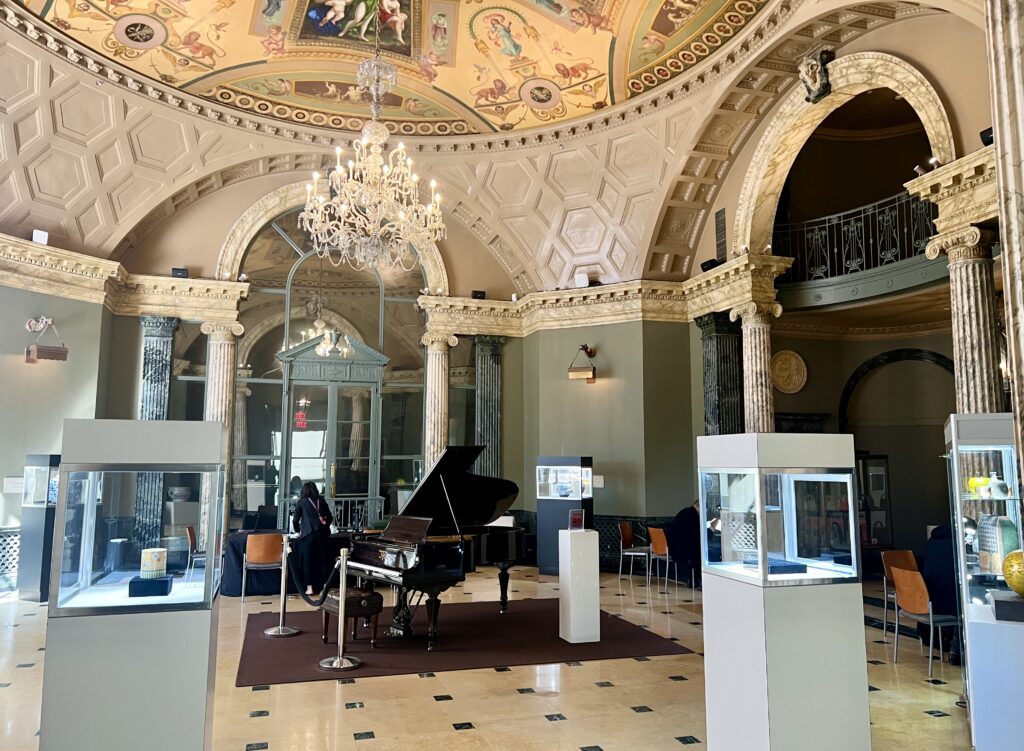
This was the first Asia Week of sales held in the Bonhams new saleroom on 57th street in midtown. It formerly served as the headquarters for piano makers Steinway & Sons and was designed by Warren & Wetmore, the celebrated architects of Grand Central Station. It opened on 27 October 1925. Among the notable performances at the 57th Street building was the 1928 duo piano recital by Vladimir Horowitz and Sergei Rachmaninoff.

The building gives Bonhams 42,000 square feet of viewing, office space and two auction rooms. A grand staircase of 51 steps (I counted them) leads to the expansive, triple-height galleries, which are naturally lit by numerous windows.

The entrance hall to the building is impressive and with its large windows is also bathed in natural light. Adjacent to this is the rotunda from the 1925 part of the building, which is used as viewing space.
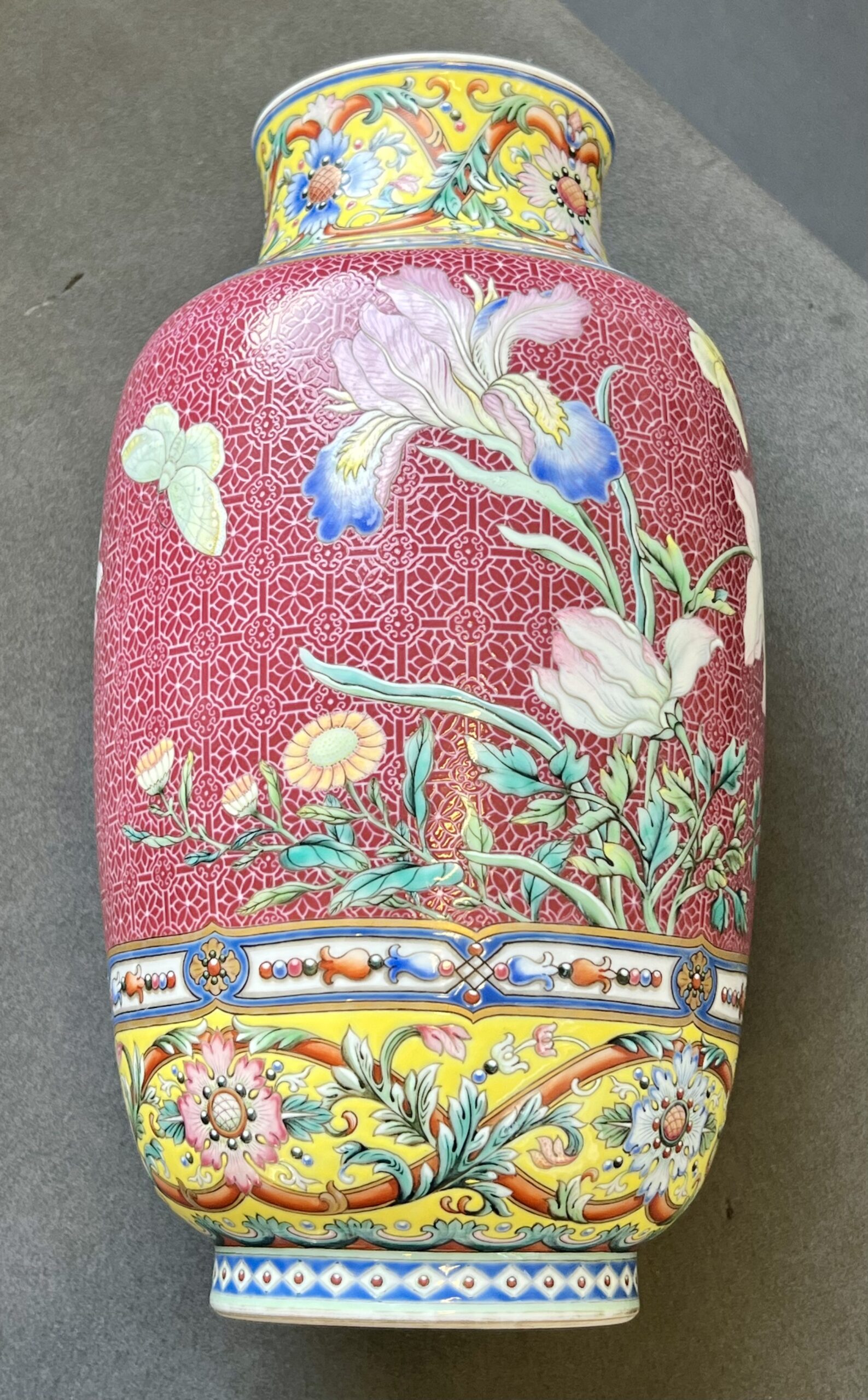
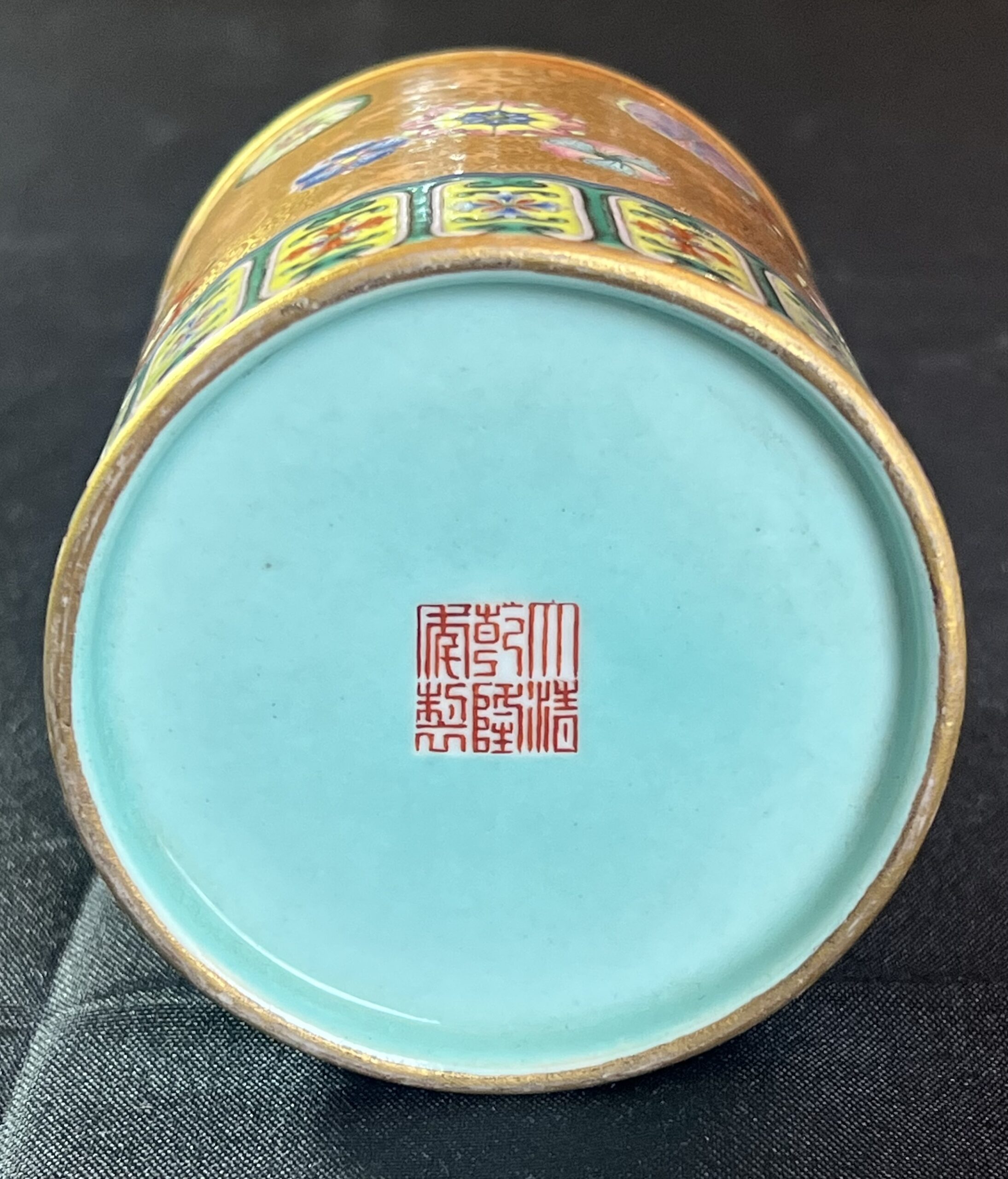
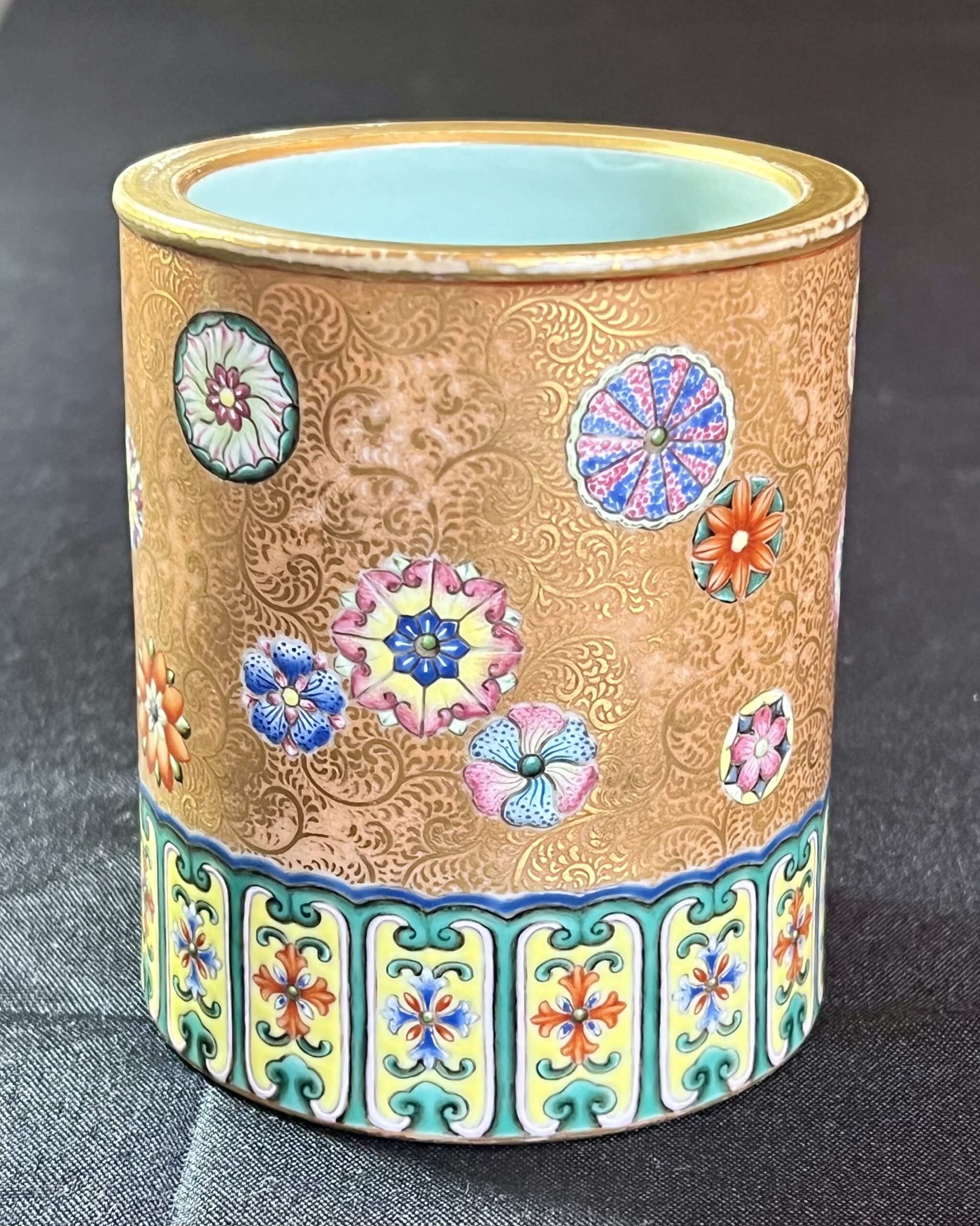
One of the first pieces that I handled was lot 34, the rare Qianlong seal mark and period gilt-decorated Yangcai ‘flower ball’ brushpot. An unusual feature of this brushpot is its gilt floral decoration painted over a salmon pink ground. The yellow ground coloured lappets are quite a contrast to the rest of the piece and are reminiscent of decoration found on a vase in the Victoria and Albert Collection. It sold for $279,900 (Estimate $200,000-300,000).


I was really impressed with the building and Bonhams have successfully combined the old and new elements together really well. I think that it is one of my favourite spaces to view art in New York.

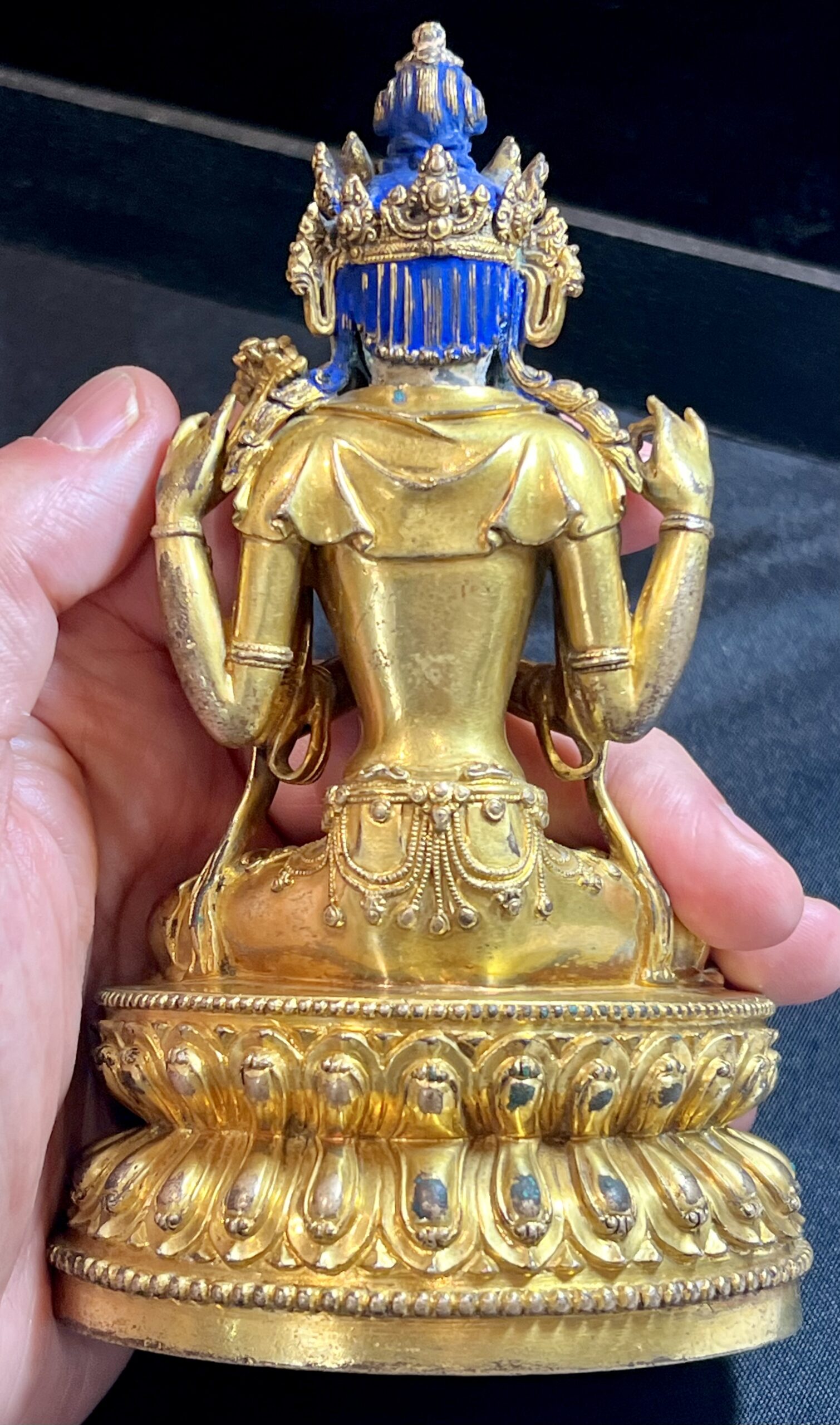
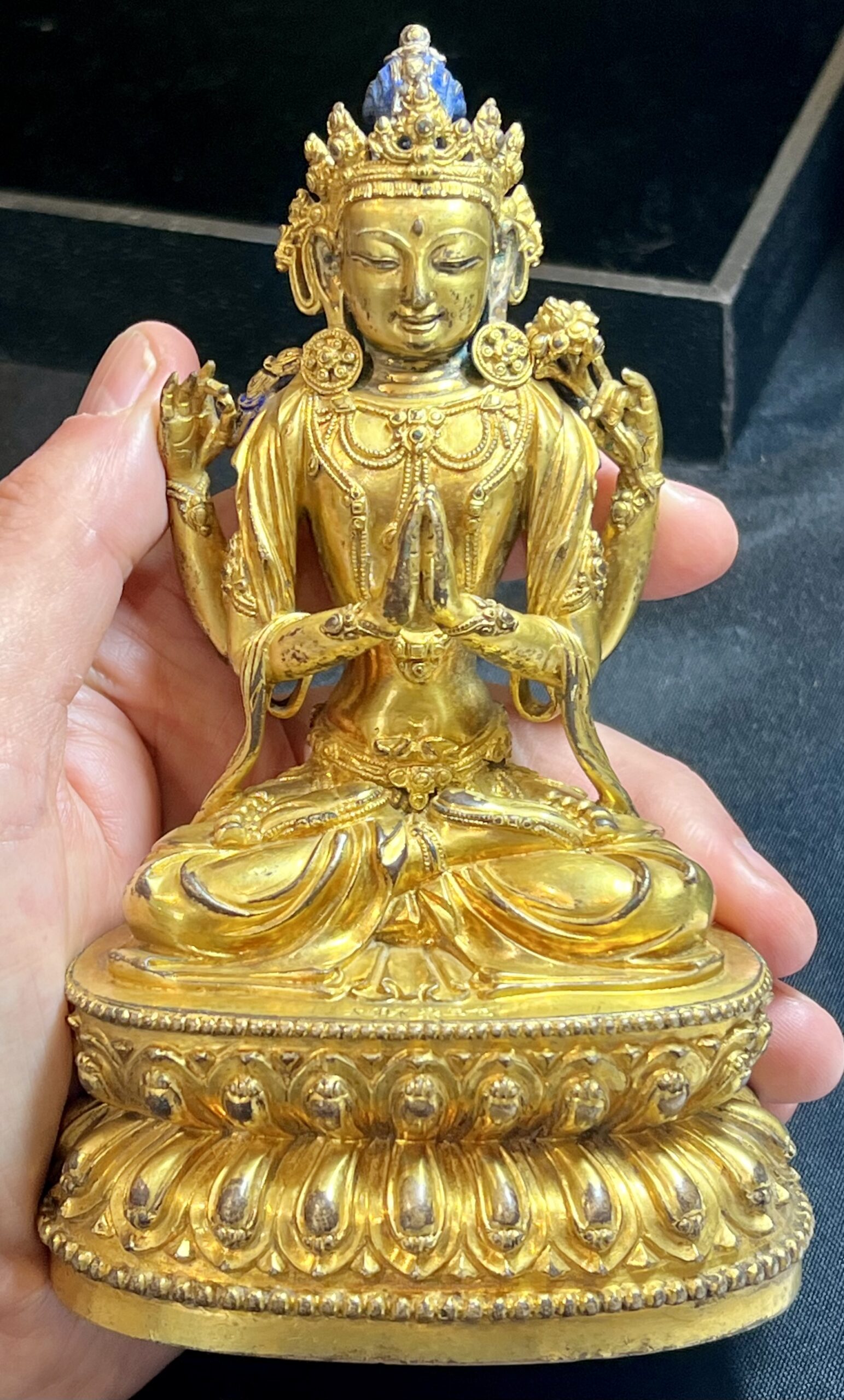
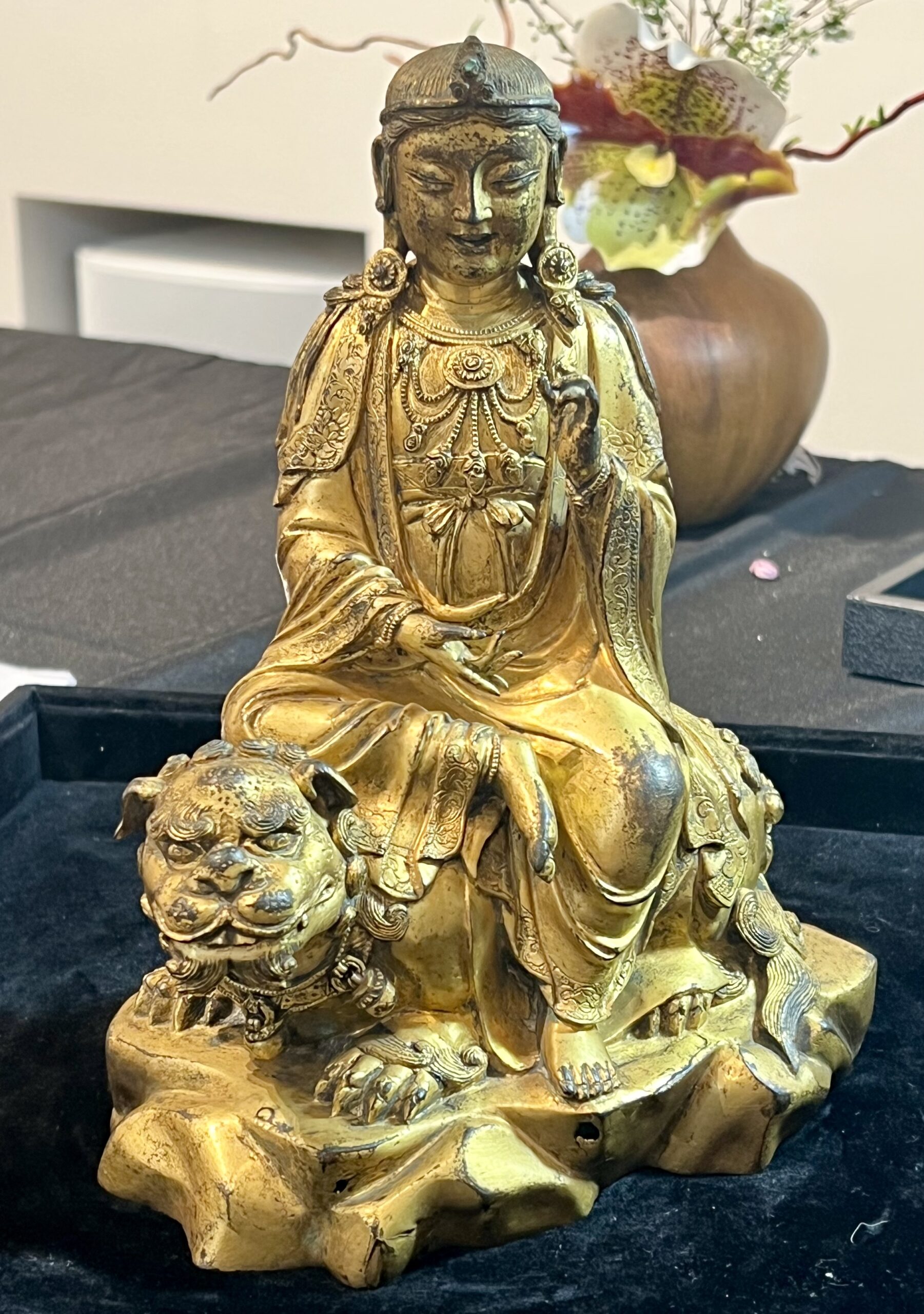
One of the finest pieces that I handled was lot 2, the Yongle mark and period gilt-bronze figure of Avalokitesvara Sadaksari. The quality of the casting was really fine and depicted the figure seated in dhyanasana with its principle hands in anjalimudra. It sold for $279,900 at the upper end of its $200,000-300,000 estimate.
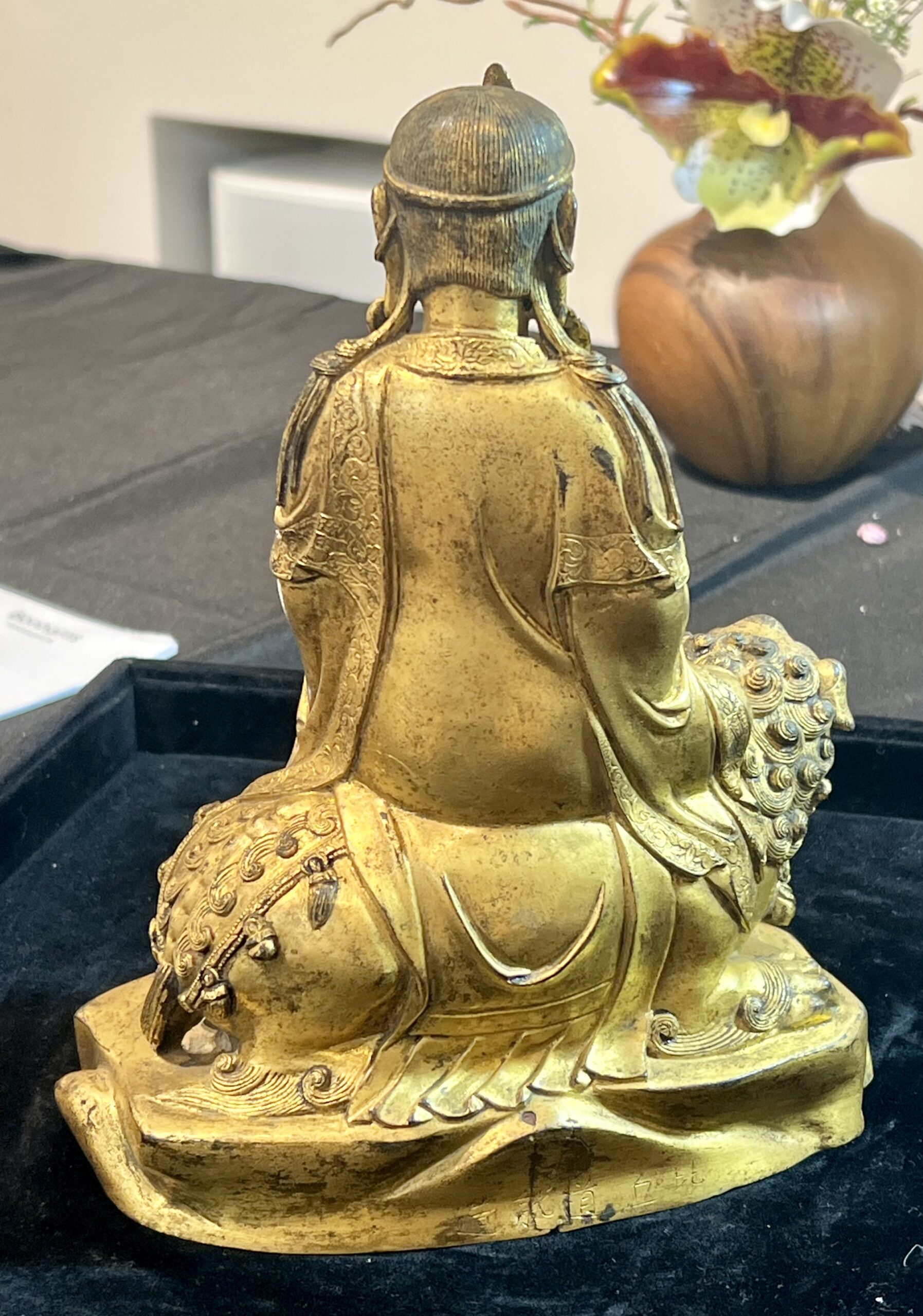
One of the most unusual pieces in the sale was lot 18, the rare Qianlong period glass and enamel-decorated gilt-bronze hat stand. This highly ornate style was fashionable at the Qianlong court and there are strong European influences in the elaborate C-scroll decoration to the centre. One sees similar workmanship in a number of clocks designed for the imperial court. It sold for $117,340 (Estimate $50,000-80,000).



Me


On my way to view other sales in midtown, I enjoyed a walk through Central Park and the sunny weather had brought out people to sit and enjoy their lunch there. It must have been one of the first times of the year.


Viewing Doyles on 87th Street
On this occasion, Doyle had a nice group of Kangxi pieces from the Tina Hills Collection. Argentina Hills was an Italian‑born American media executive and philanthropist who played a significant role in Puerto Rico’s and Miami’s civic and cultural life. In 1960 she married Lee Hills, who was a Pulitzer Prize winning editor of the Miami Herald. He later became chairman/CEO of Knight Ridder newspapers.
The most significant items in the collection was lot 125, the pair of large famille verte rouleau vases. They were really well painted with a continuous scene of the poet and official Pan Yue (or Pan An) riding in a carriage. One vase had restoration to the neck, but they sold for $203,700 against their £30,000-50,000 estimate.

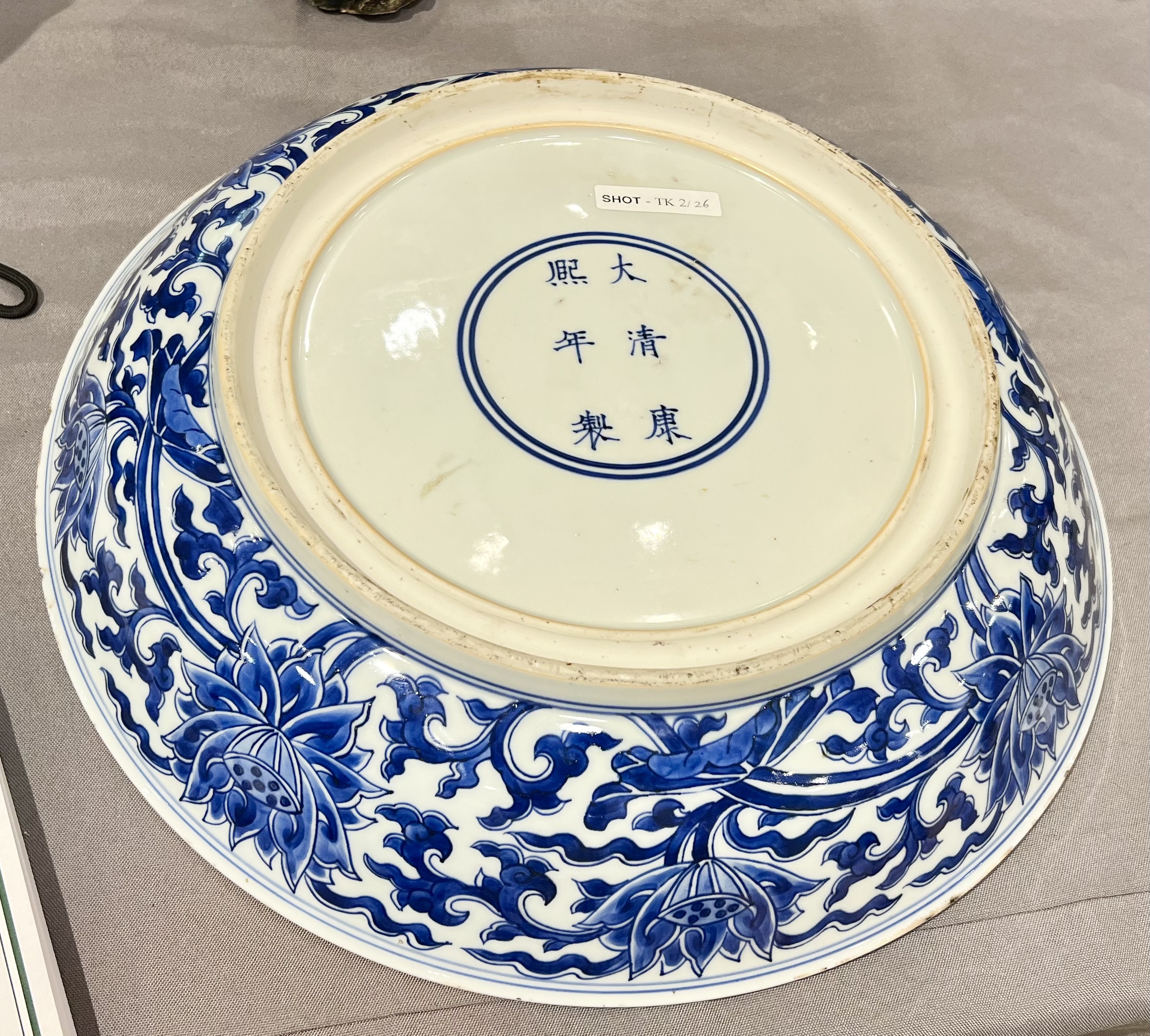
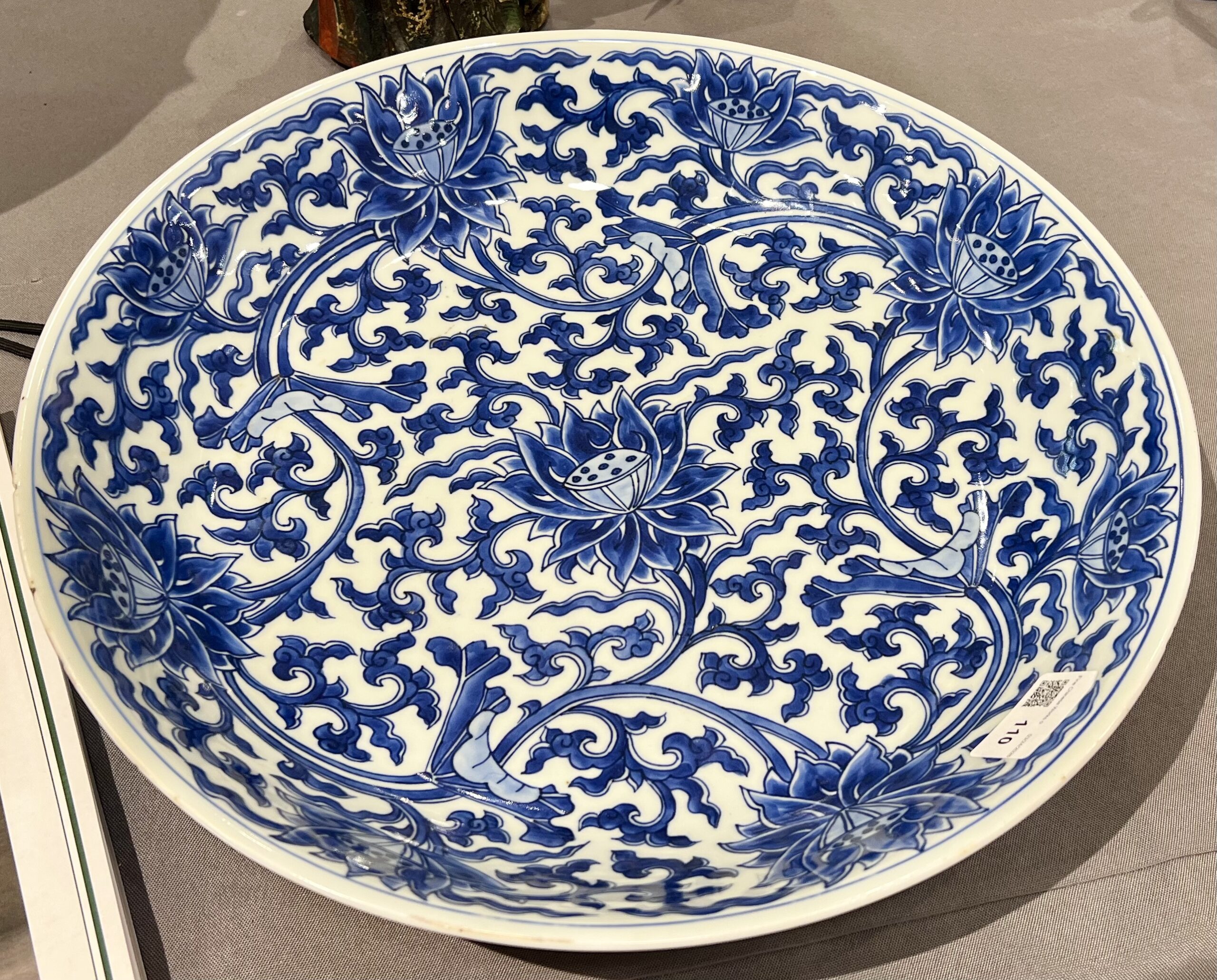
The majority of the Hills collection however was blue and white wares and one of the most striking of these was lot 110, the large Kangxi mark and period blue and white ‘lotus’ dish. The interior and exterior rim was painted with a dense design of lotus in bright blue tones. It sold for $28,800 (Estimate $4,000-6,000).


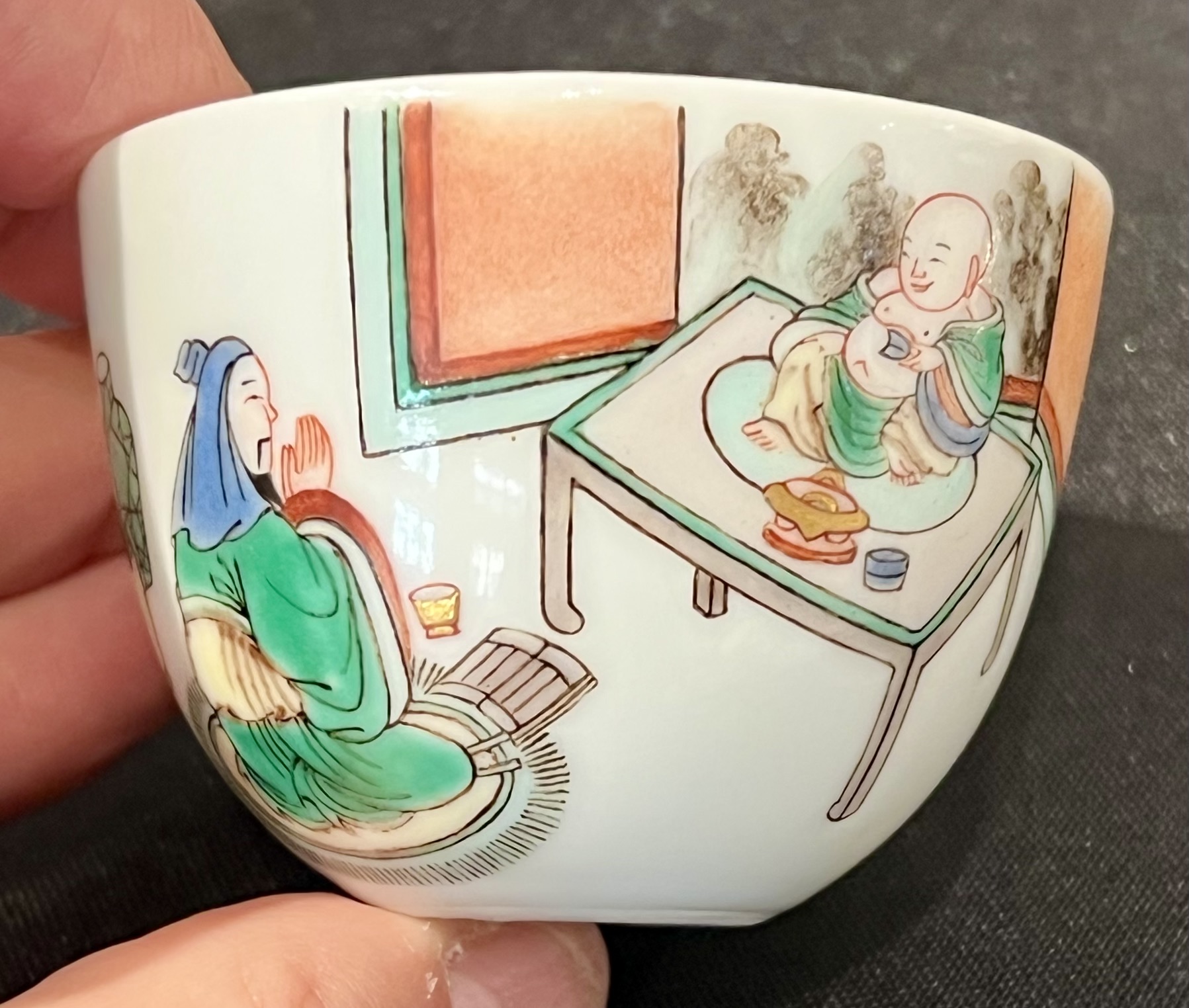
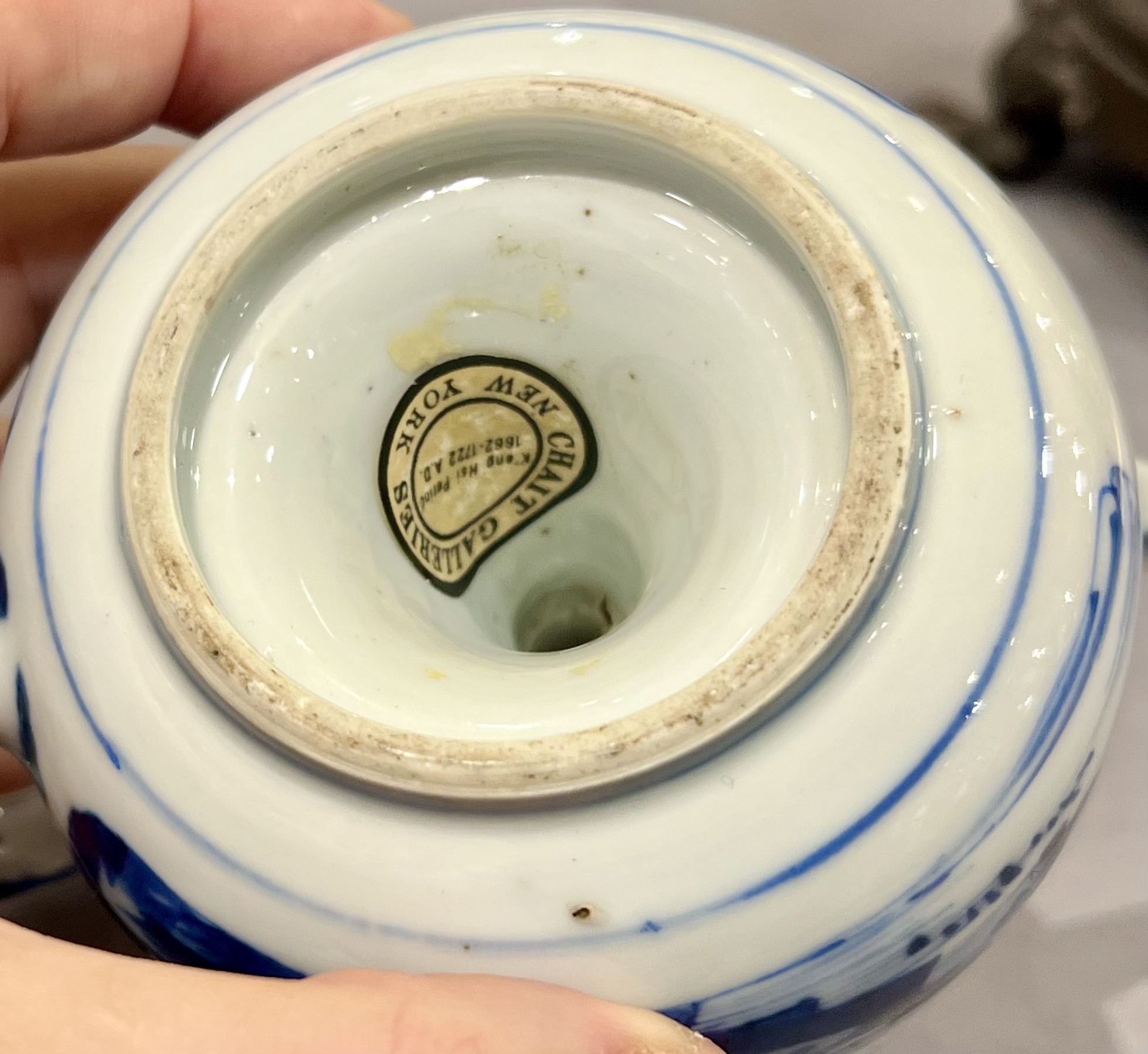
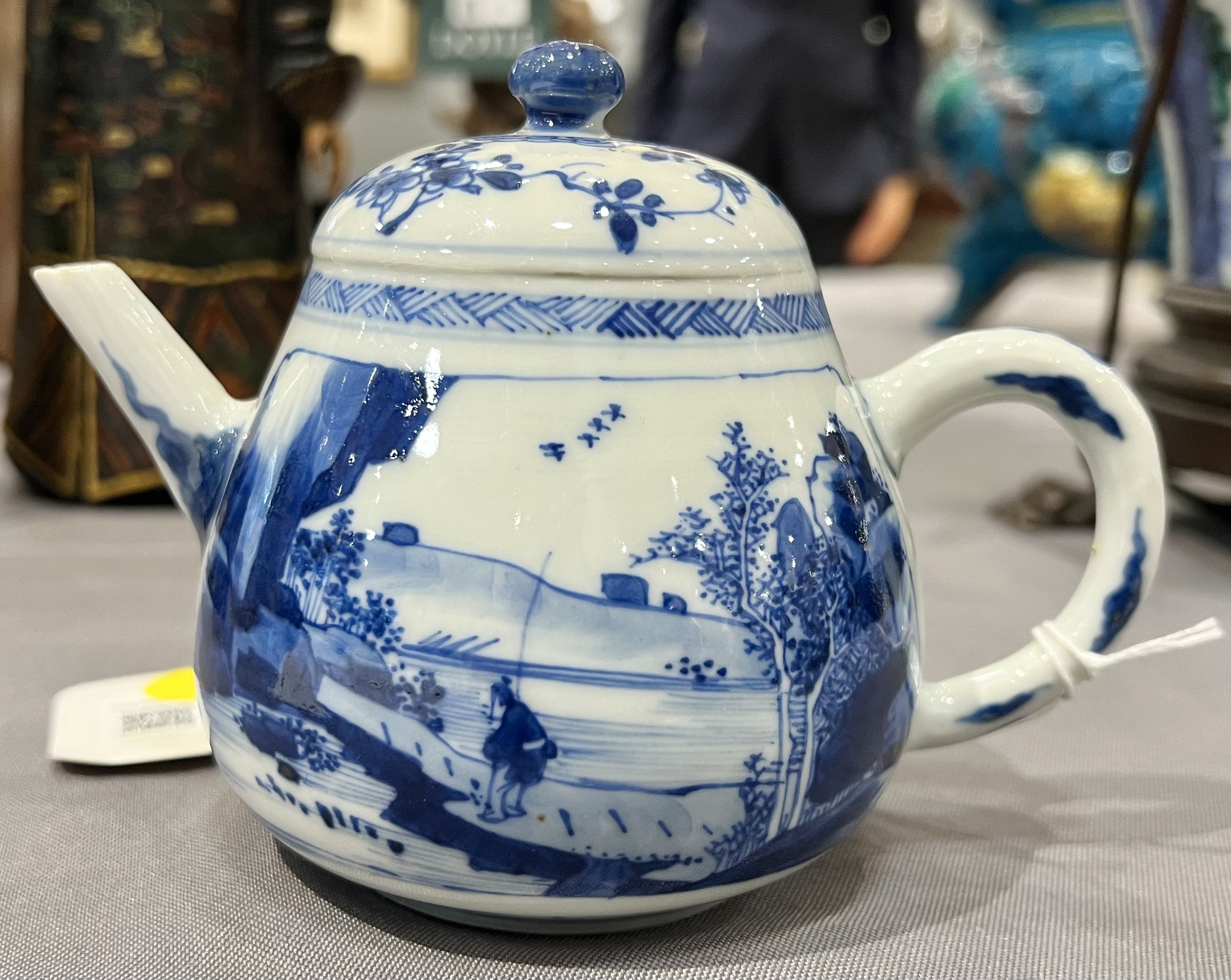
Another personal favourite was lot 143, the blue and white Cadogan teapot, painted with a landscape to each side. Cadogan teapots are usually filled through a hole in the base and the lid is fused to the body. It sold for $8,320 (Estimate £800-1,200).

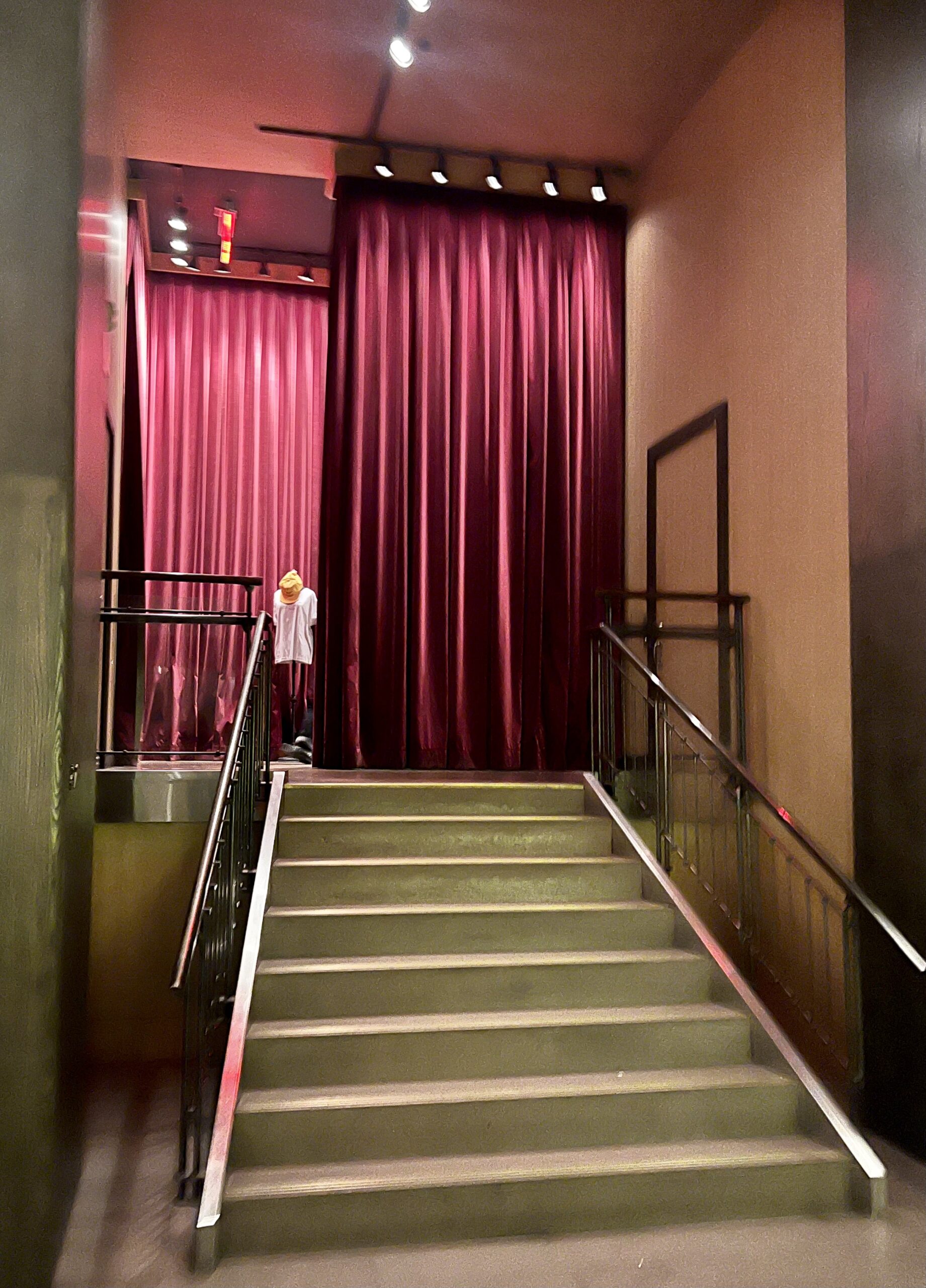
After an evening reception at Bonhams and being in New York, I decided to try the Burger Joint and I was not disappointed. It is located in the Hyatt Thompson Park Hotel on West 56th Street and I had a little trouble finding it initially, as it is hidden behind a red curtain after a short walk through the lobby restaurant.
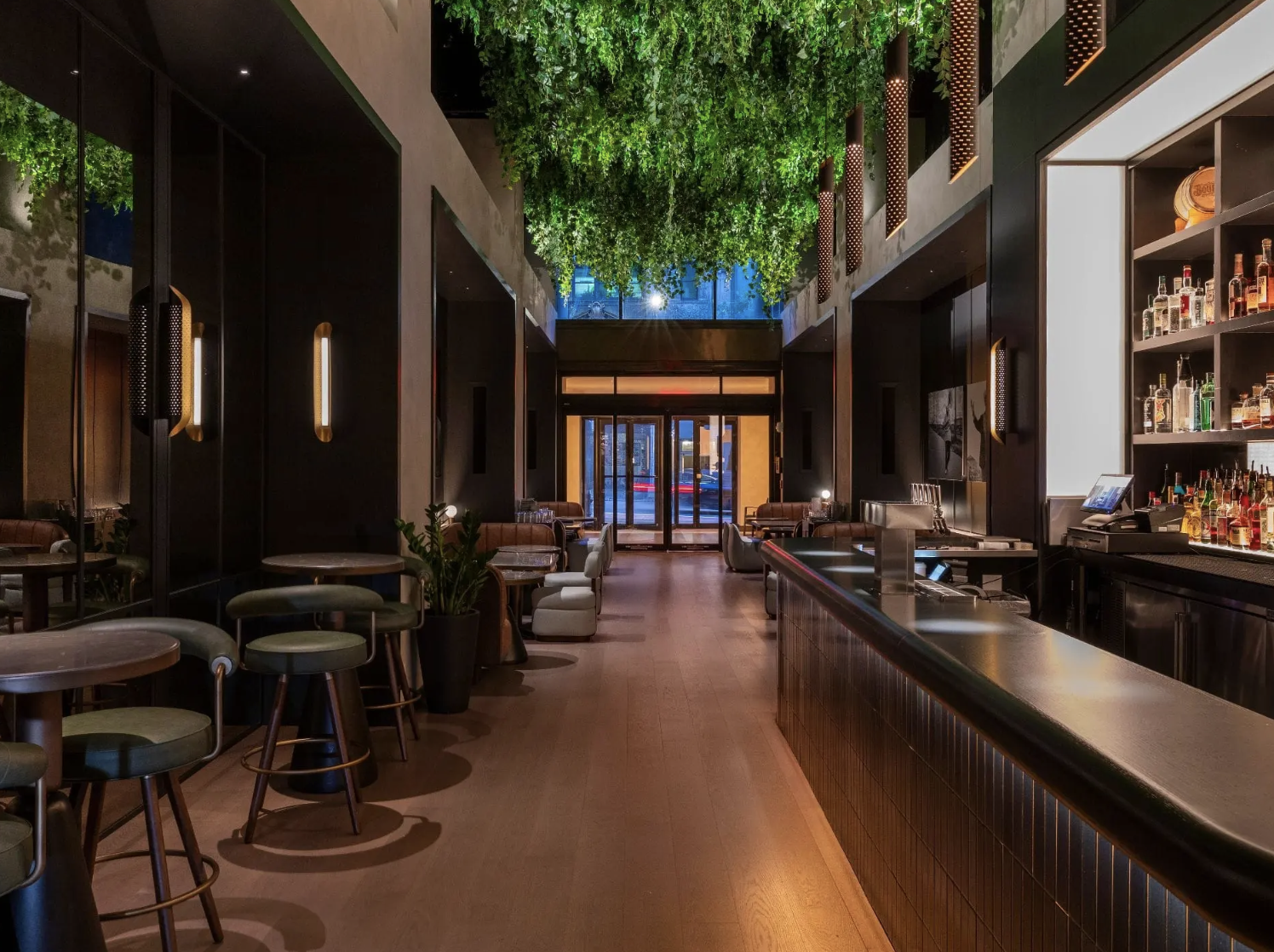
The interior was unexpected with its wall to wall graffiti, a large screen showing sports and informal ordering counter. The food was really good and I enjoyed the bustling atmosphere.


Christie’s Viewing
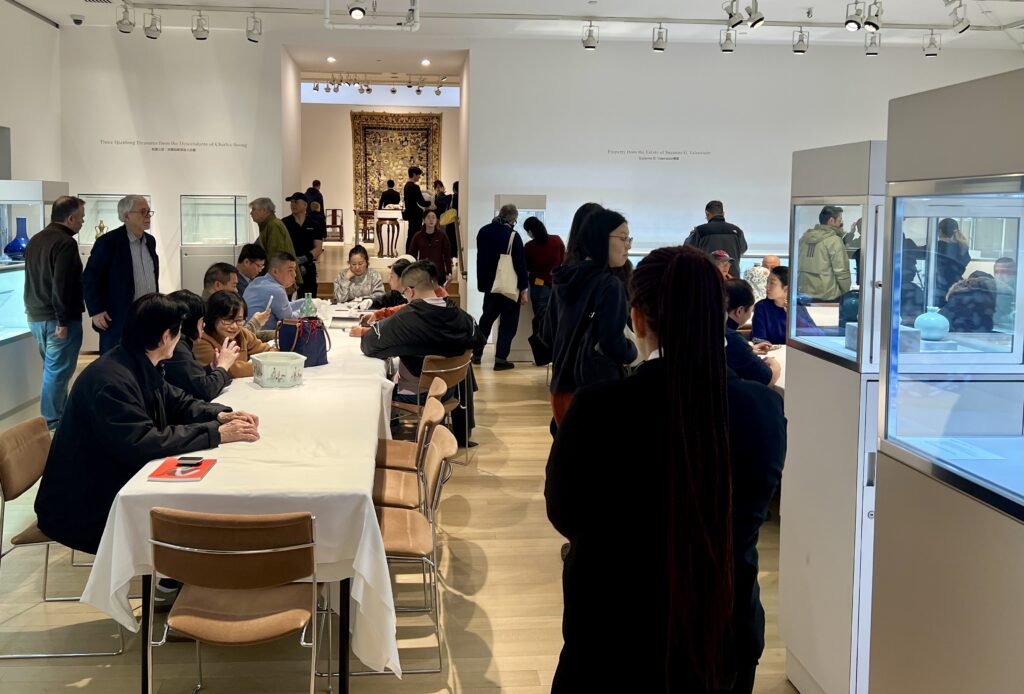
The following morning I headed over to Christie’s to view their sale at Rockefeller Centre. The ceramics viewing room was really busy, but I managed to get a seat and view some of the finest pieces in the sale.

The early part of the sale consisted of 21 lots from the Alan and Jackie Stuart Collection, which covered pieces from the Song to the Qing dynasty. Alan Stuart (1936-2024) was born in Manhattan and completed an art history degree at Brown University, Rhode Island.
Alan was a respected figure in the world of finance and investment, he also served as chairman of the Financial Advisory Board of the Town of Harrison, New York and later, as a member of the Financial Advisory Board of Blue Hill Hospital in Blue Hill, Maine. He had grown up with art and antiques and with his wife Jackie, he went on to buy Chinese art from the leading international auction houses and dealers.


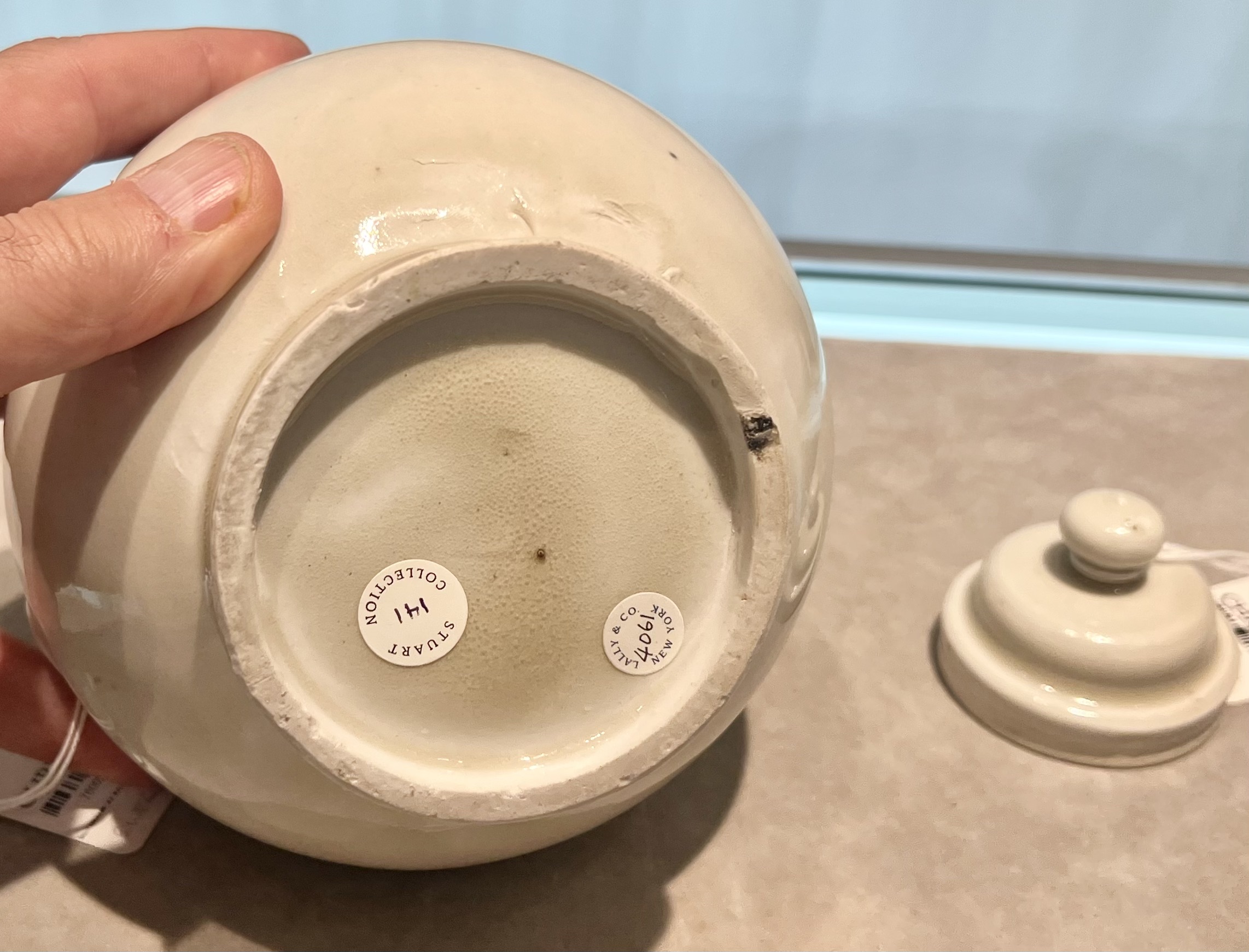
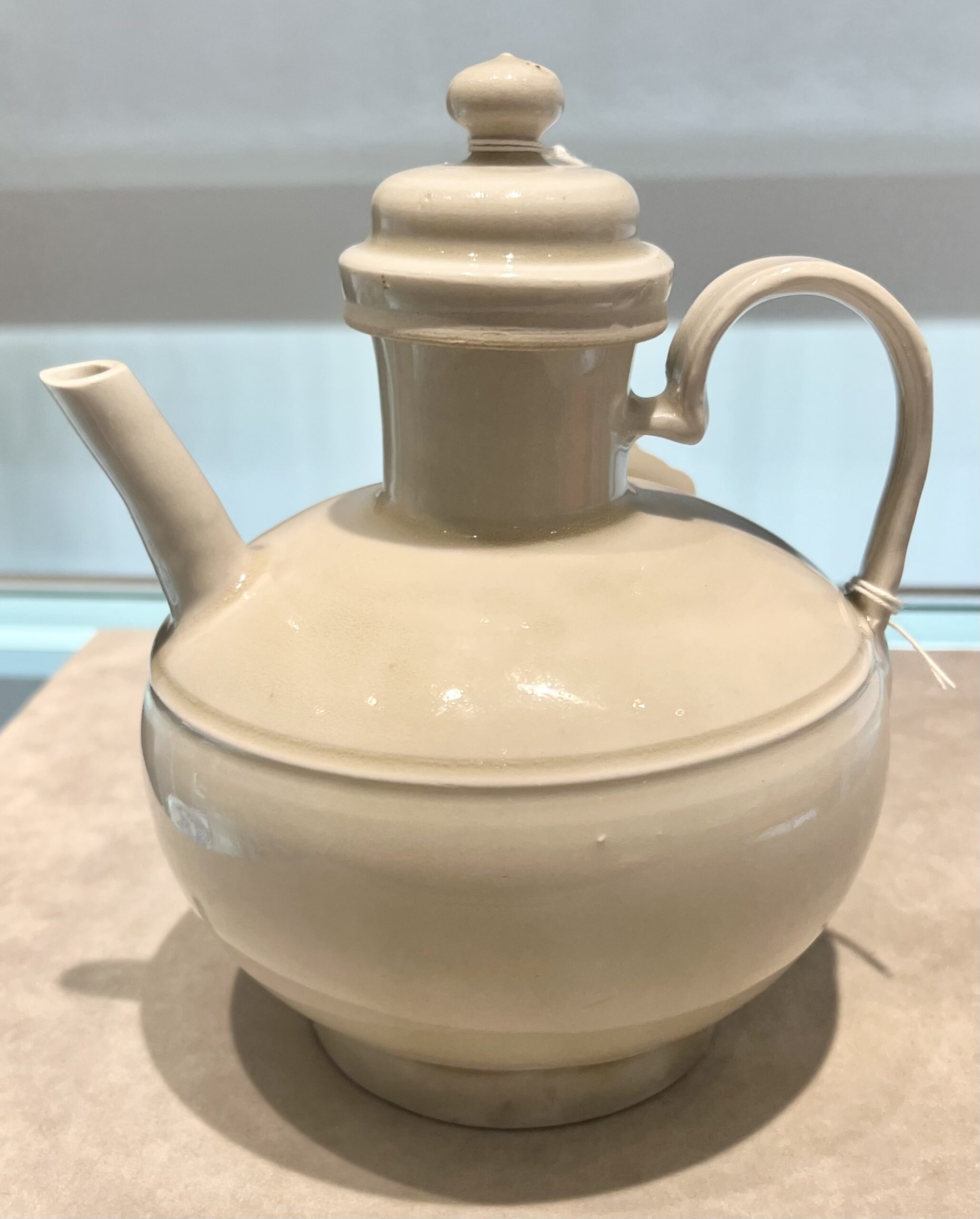
Two notable Song dynasty pieces was lot 613, the large Junyao bowland lot 614, the Ding ewer and cover. The former was very well potted and had a really even and consistent blue glaze to the interior. The Ding ewer was of a really rare form with a beautifully potted compressed rounded body and elegant formed handle. It was purchased from JJ Lally, New York in 2007. It sold for $215,900 (Estimate $60,000-80,000). The Jun bowl had also come from JJ Lally in 2009 and sold for $63,500 (£20,000-30,000).
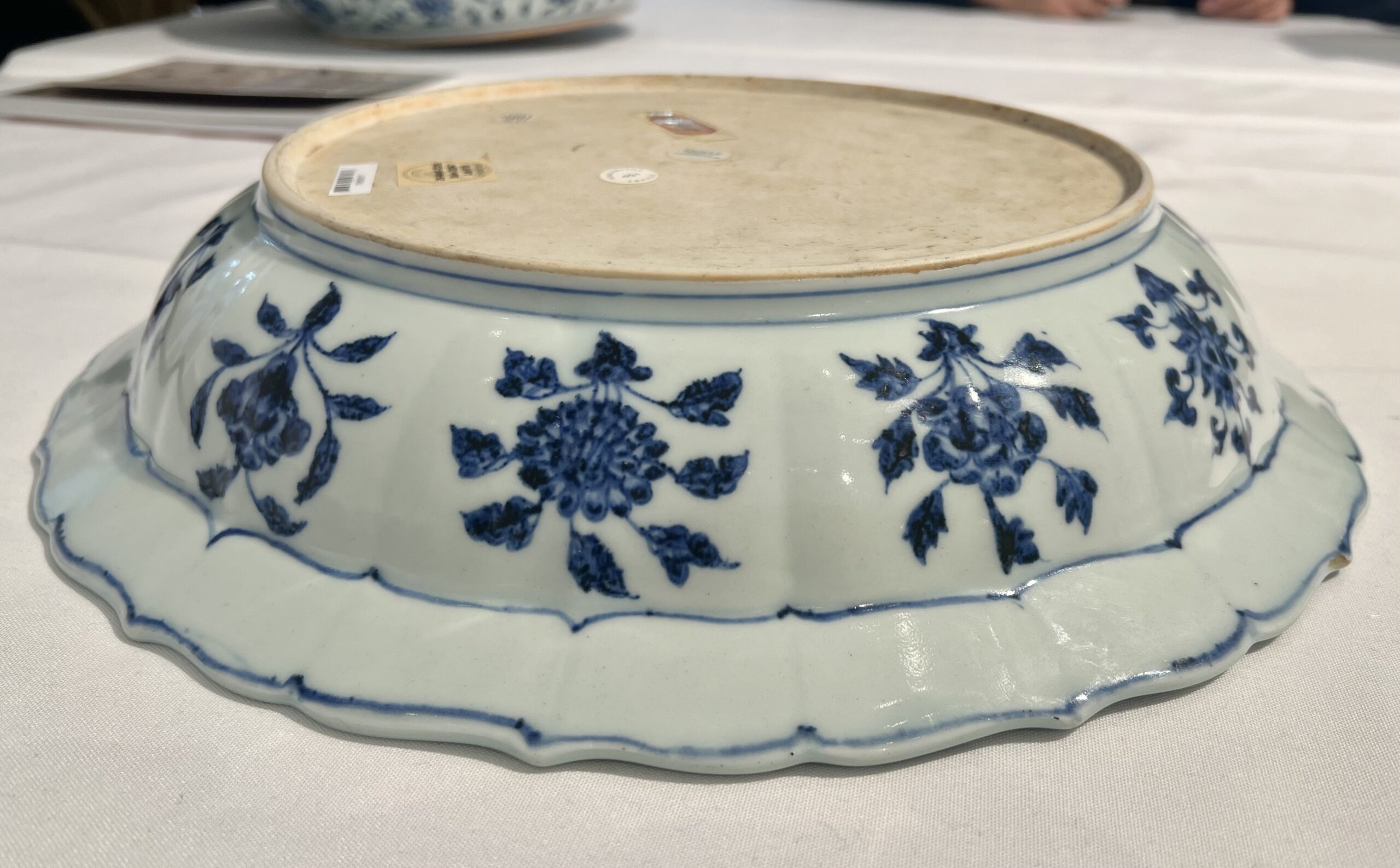
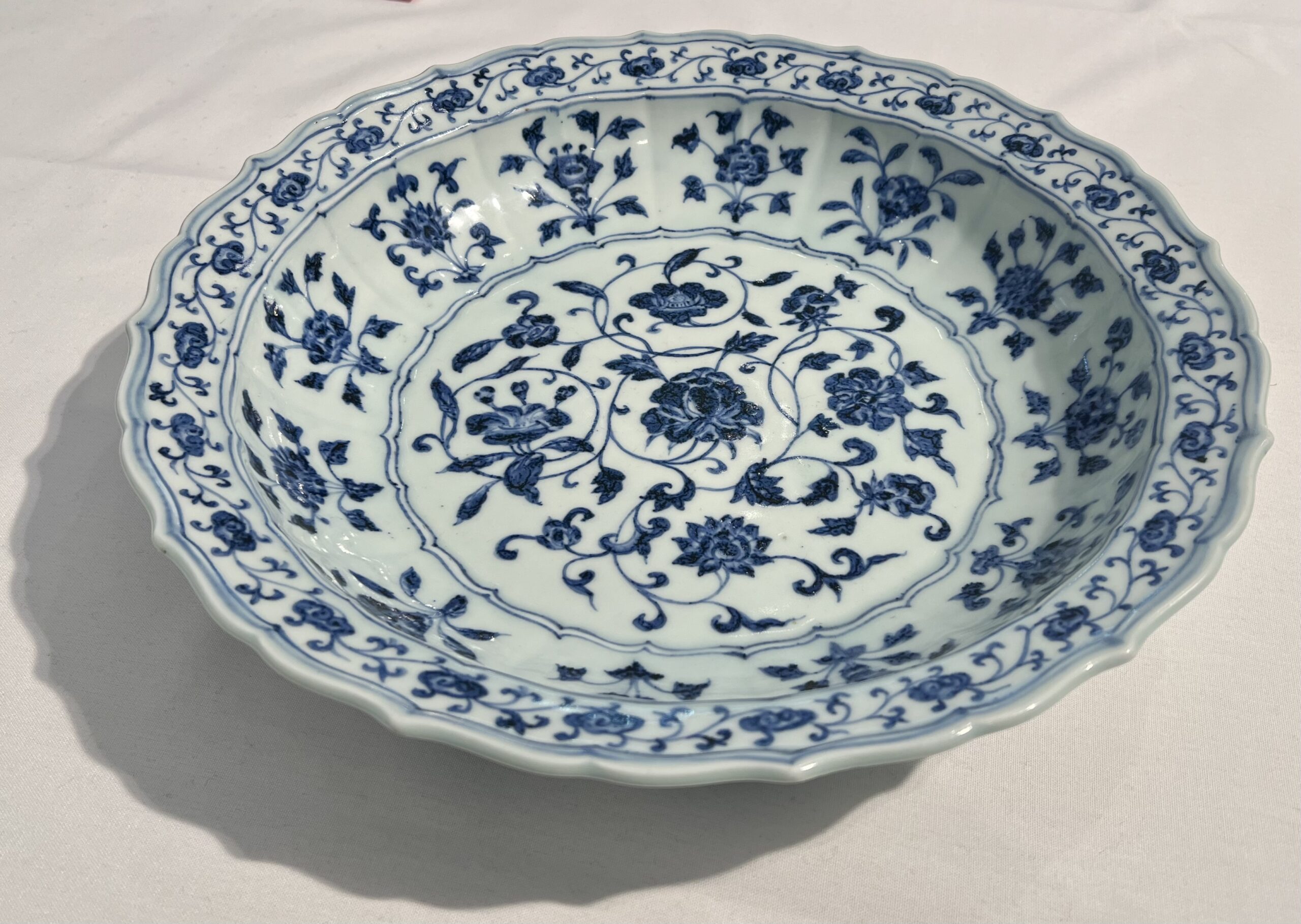
The finest Ming piece in the collection was lot 615, the Yongle period blue and white bracket lobed dish painted with a central panel of lotus, peony and camellia below individual sprays of flowers in the cavetto. The dish had a distinguished provenance and had originally belonged to CT Loo and had passed through a number of hands and was sold at Doyle in September 2003 as part of the collection of F. Gordon Morrill. It sold for $825,500 (Estimate $300,000-500,000).
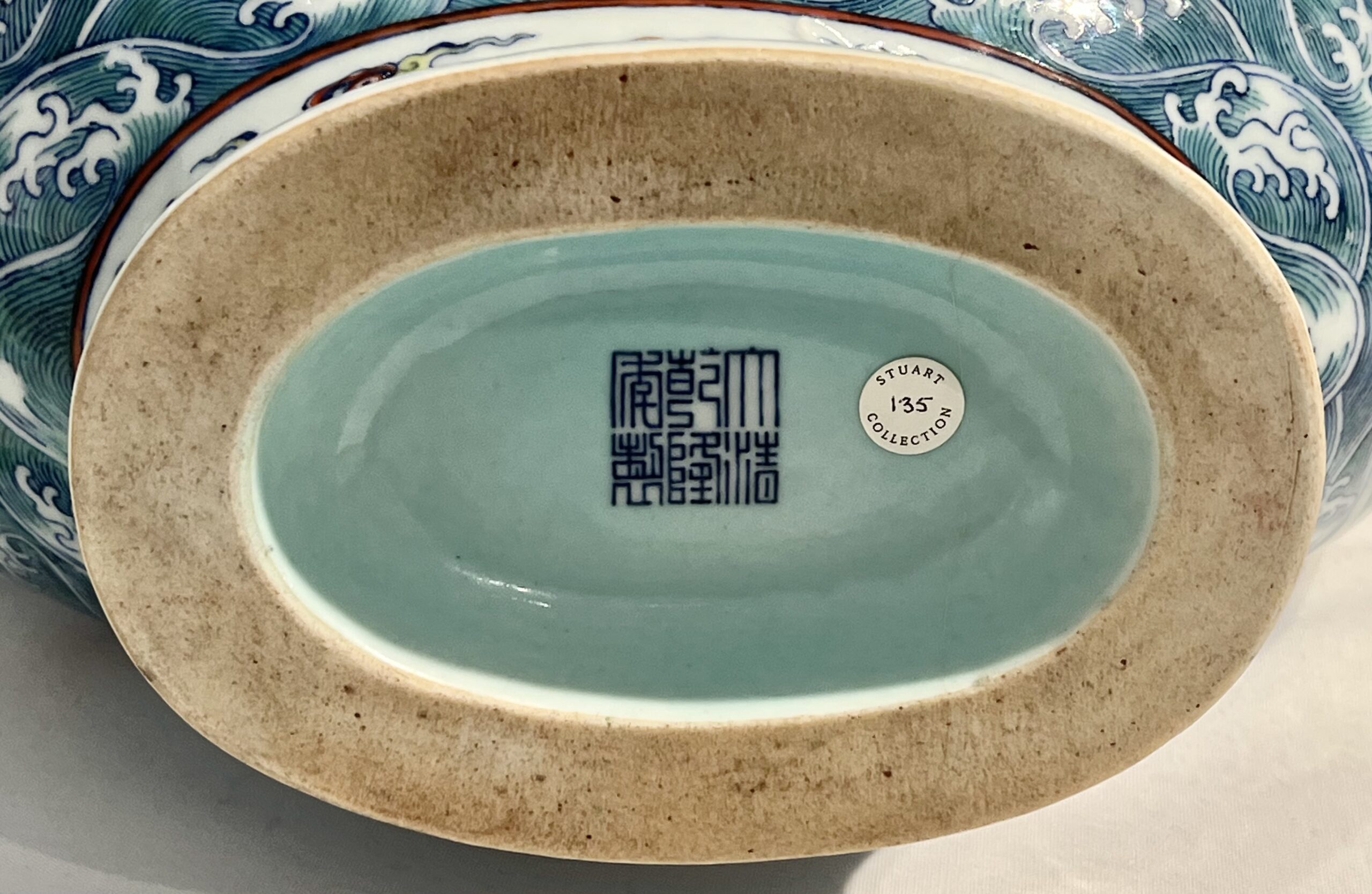
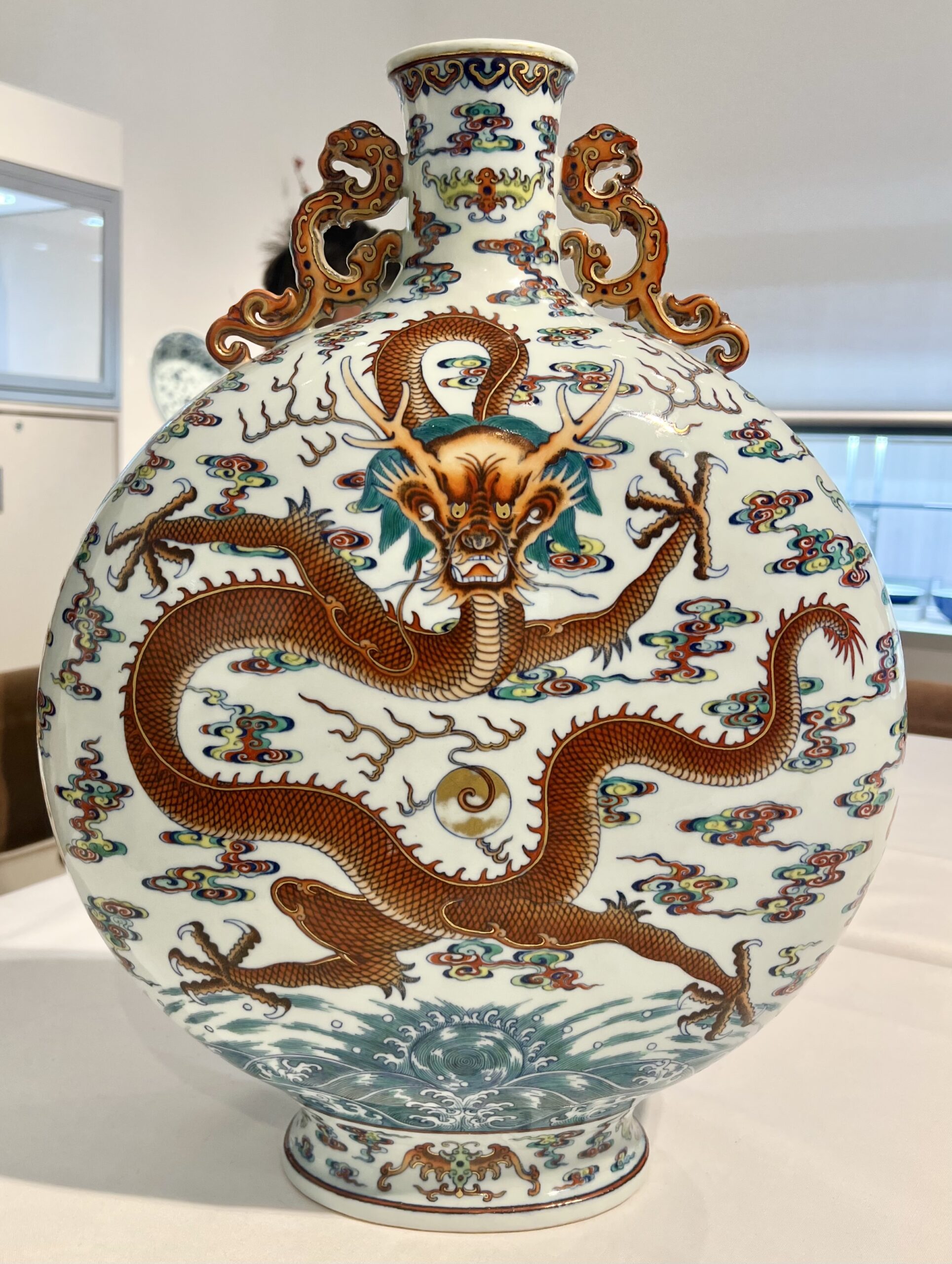
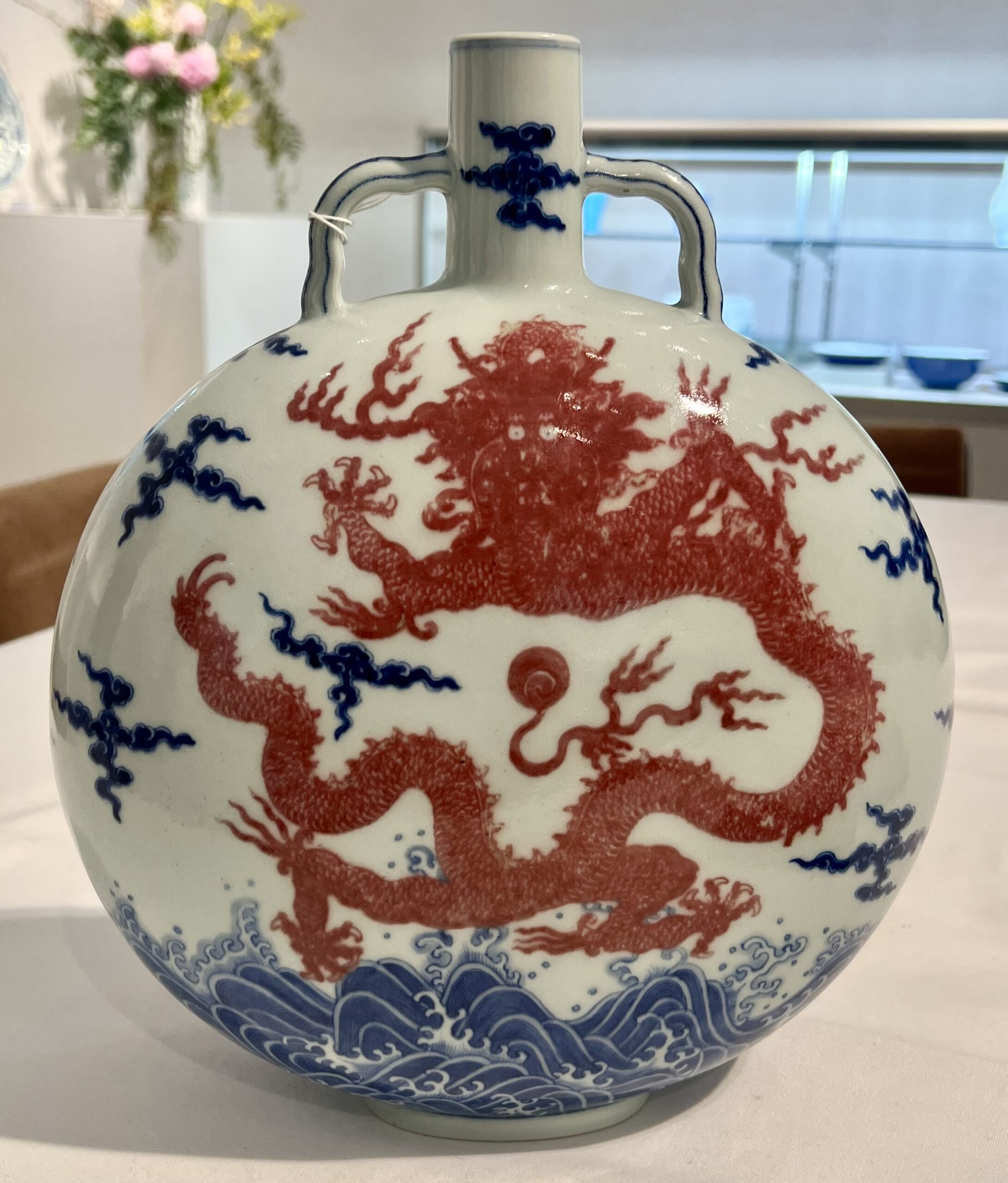
The most notable of the Qing dynasty pieces was lot 624, the large Qianlong seal mark and period dragon doucai moon flask. It was finely painted to each side with a large frontally faced dragon with a pearl above swirling waves. This design is a slightly simplified version of the large flasks which also bear a smaller green dragon emerging from the wives to its right. The piece had restoration to its neck and a crack to its foot and sold for $825,500 (Estimate $800,000-1,200,000).
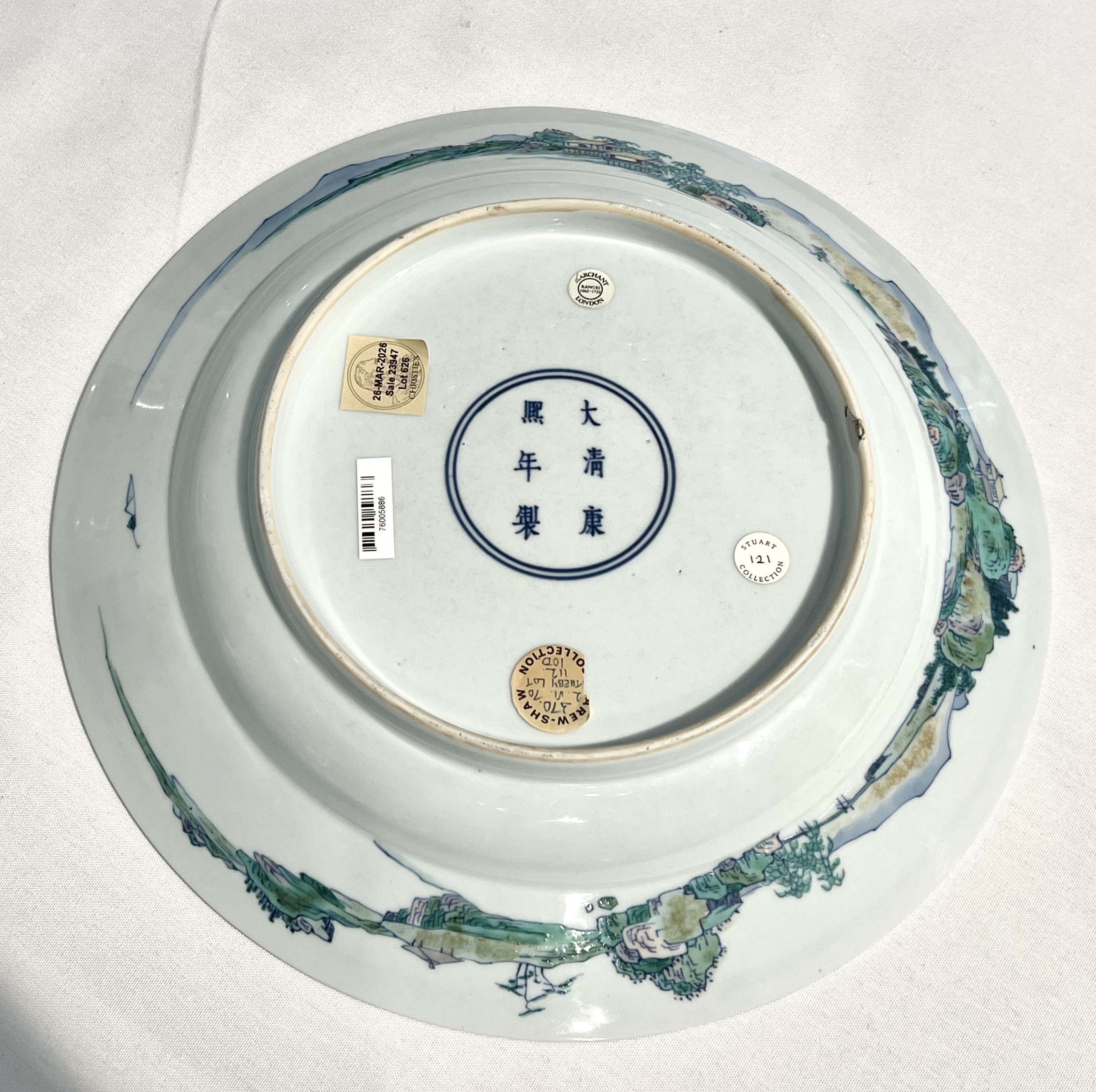
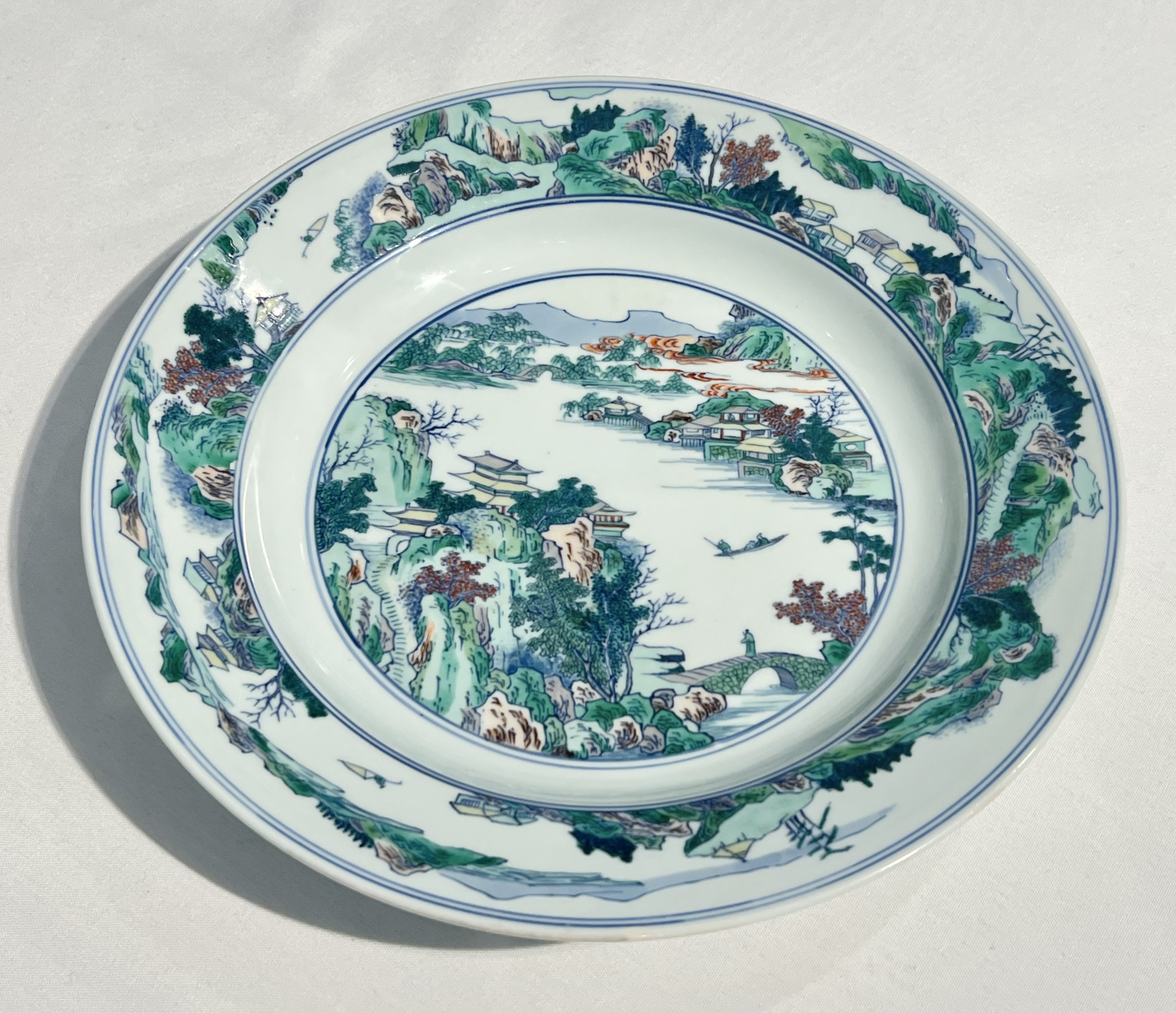
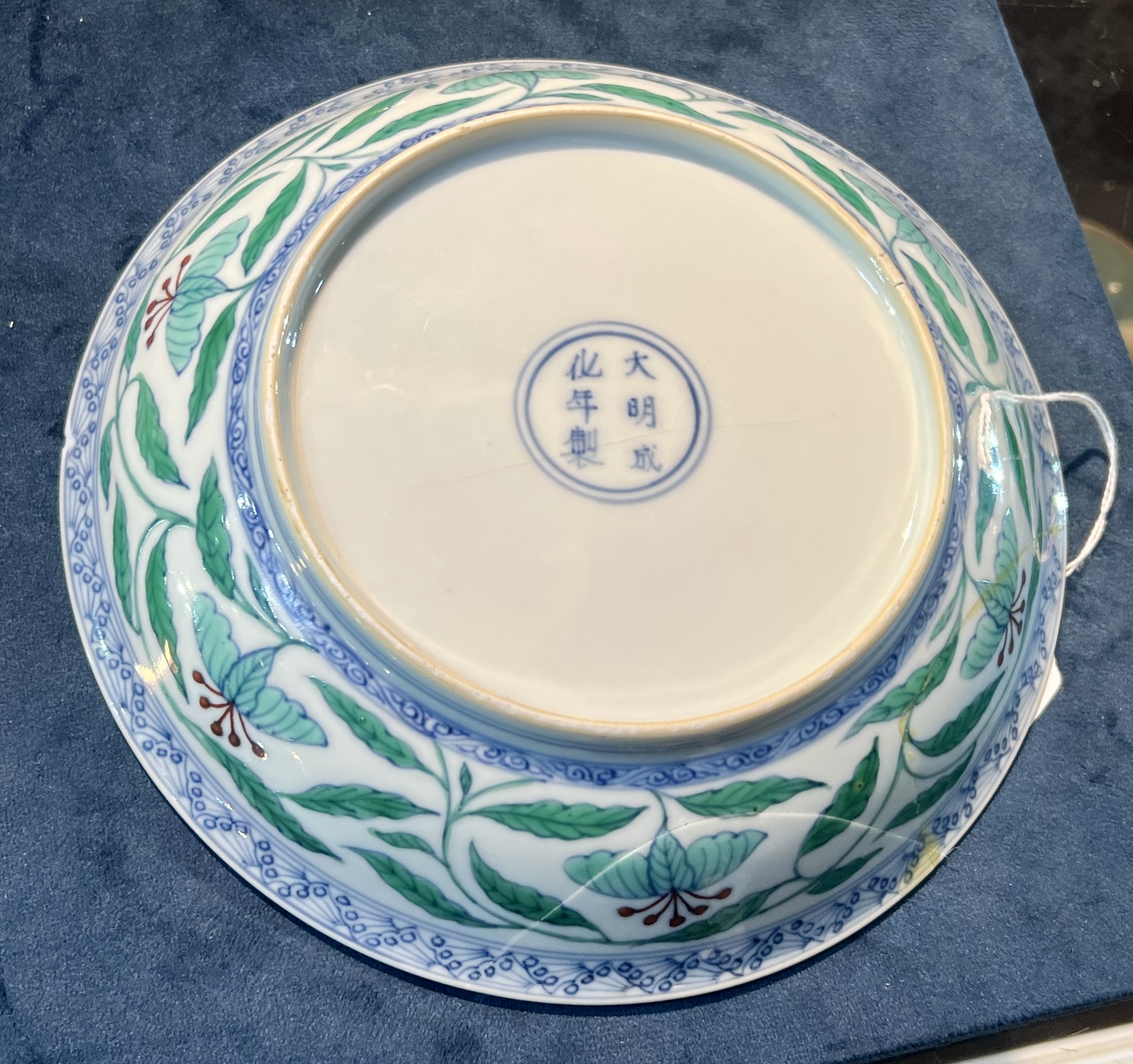
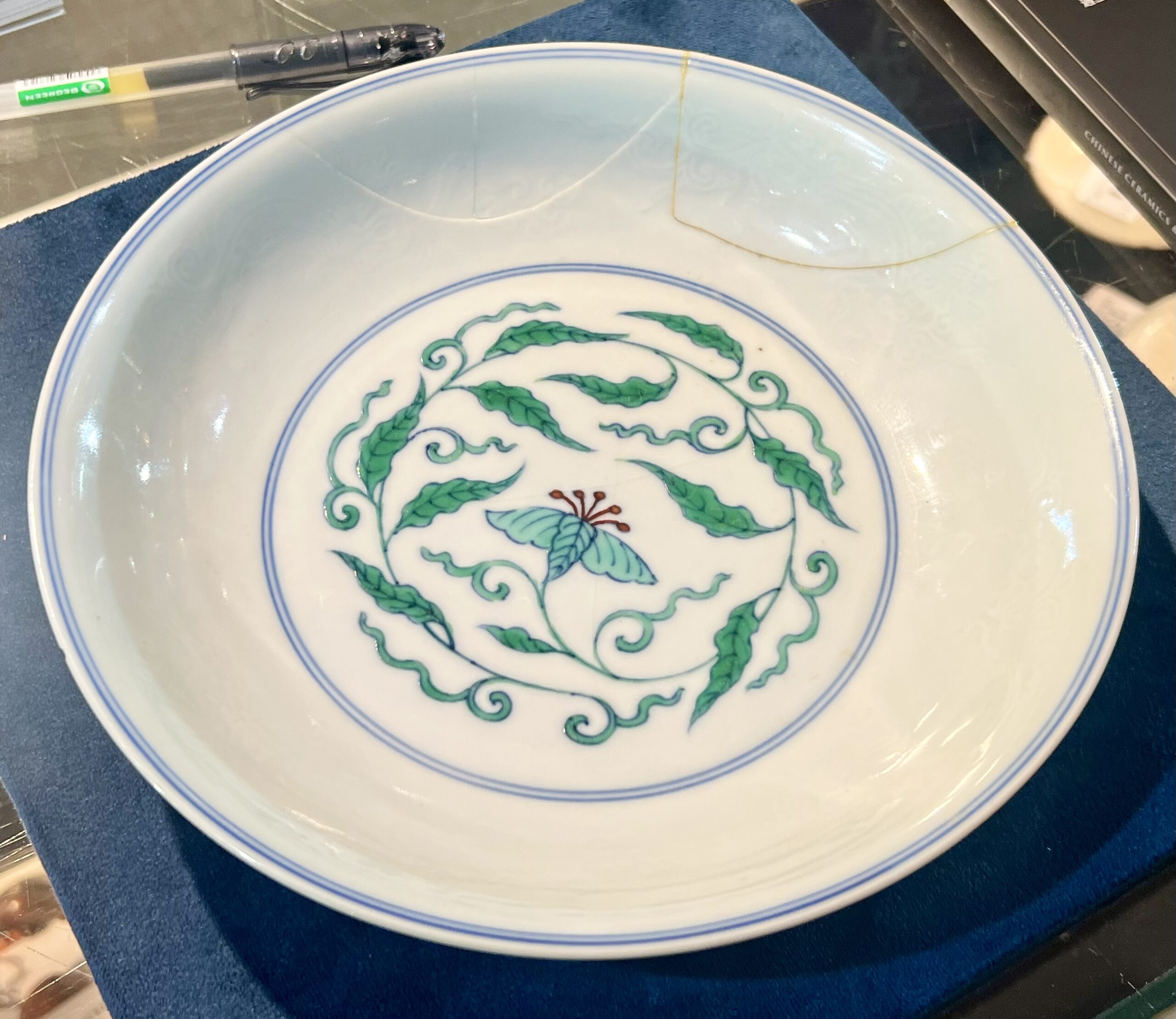
A particular favourite of the collection was lot 626, the rare Kangxi mark and period doucai river landscape dish. The centre of the interior was painted with a sampan crossing a river, with pavilions in a mountainous landscape. The various shades of green, yellow and red enamel harmonised well with the underglaze blue elements of the design, which would have been applied in the first firing. It sold for $114,300 (Estimate $40,000-60,000).
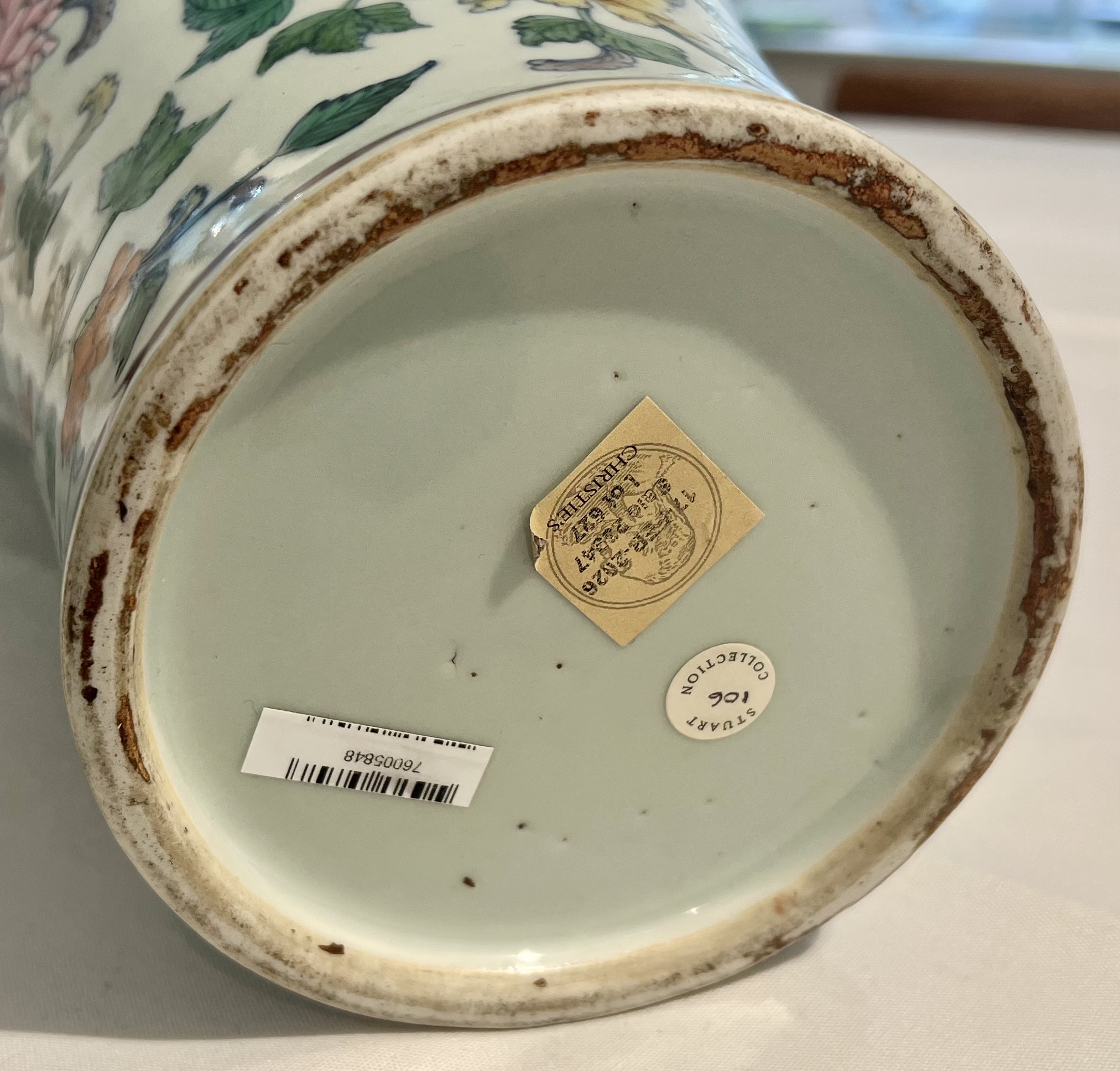

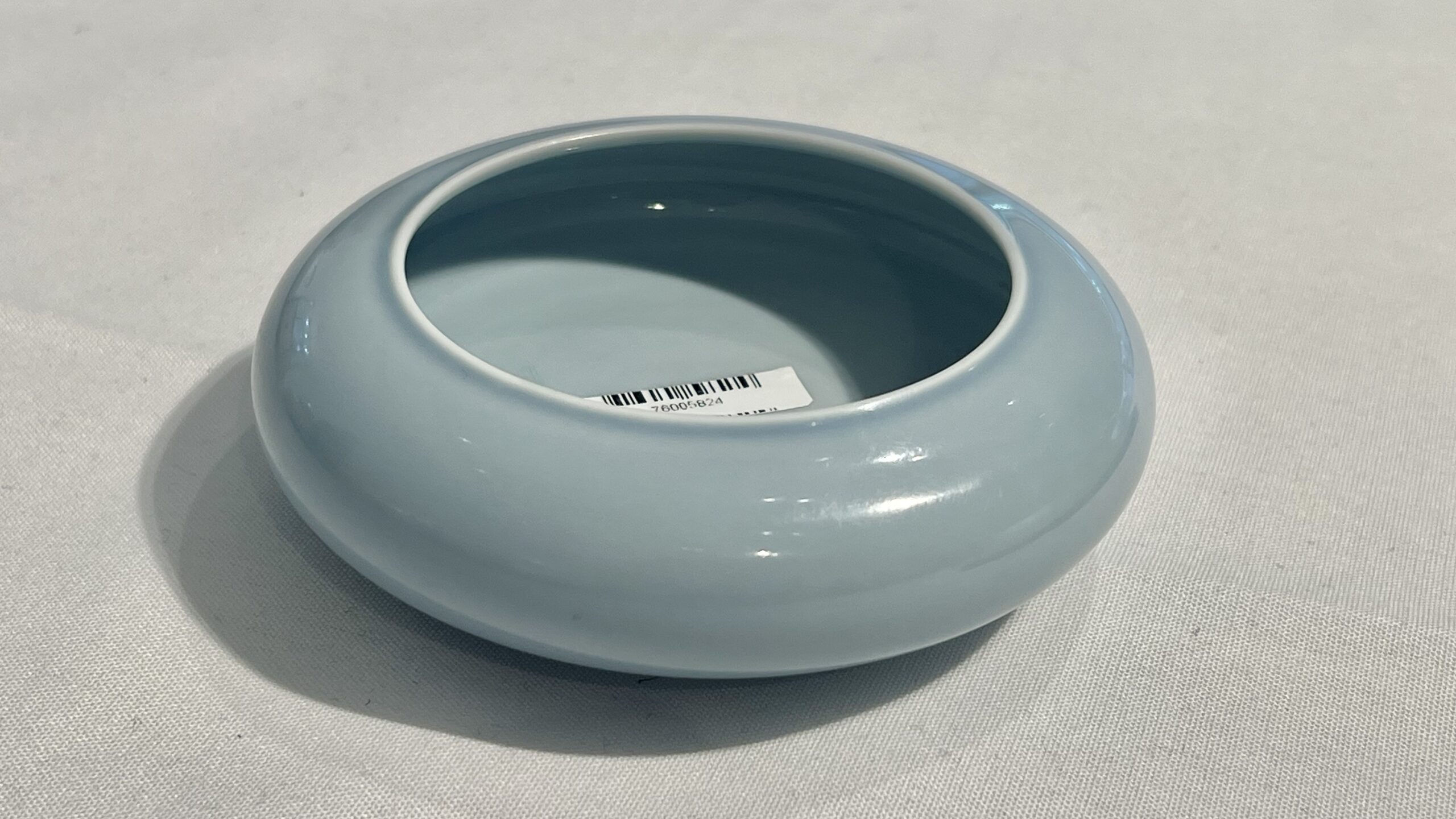
Of the Qing monochromes in the collection, my favourite piece was lot 631, the rare small celadon-glazed pomegranate-form vase. It was beautifully potted with a rounded body, rising to six petalled mouth. It sold for $381,000 against its $120,000-180,000 estimate.
Every lot in the collection sold with a total of $4.89 million against a low estimate of $2.85 million, illustrating the strength in the single owner market.


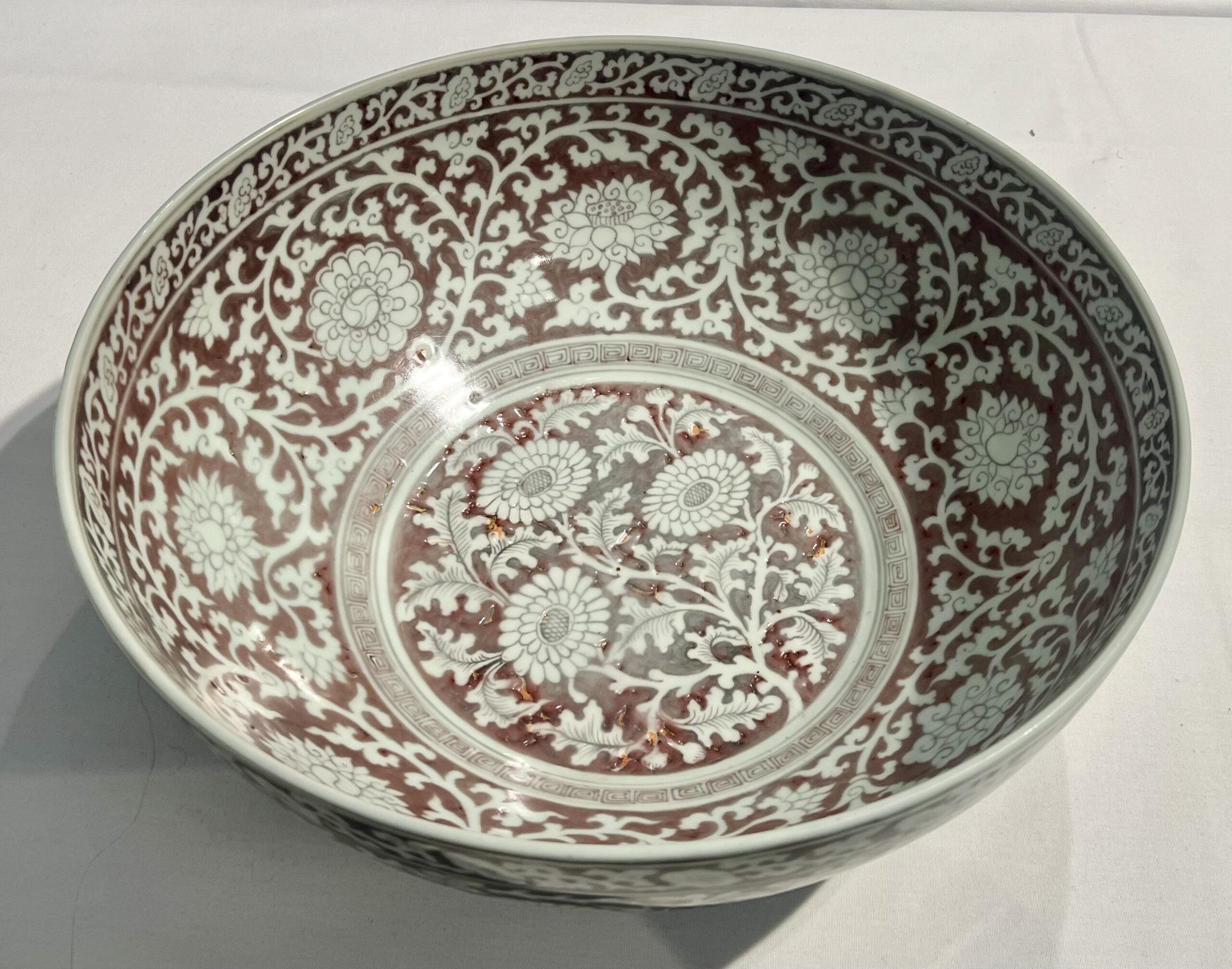
Some other highlights of the sale included lot 647, the large Hongwu period underglaze red bowl. Large early Ming bowls of the latter part of the 14th century are really rare and this example was finely painted with lotus and chrysanthemum in reserve on a red ground. It sold for $2.02 million (Estimate $700,000-1,00,000).

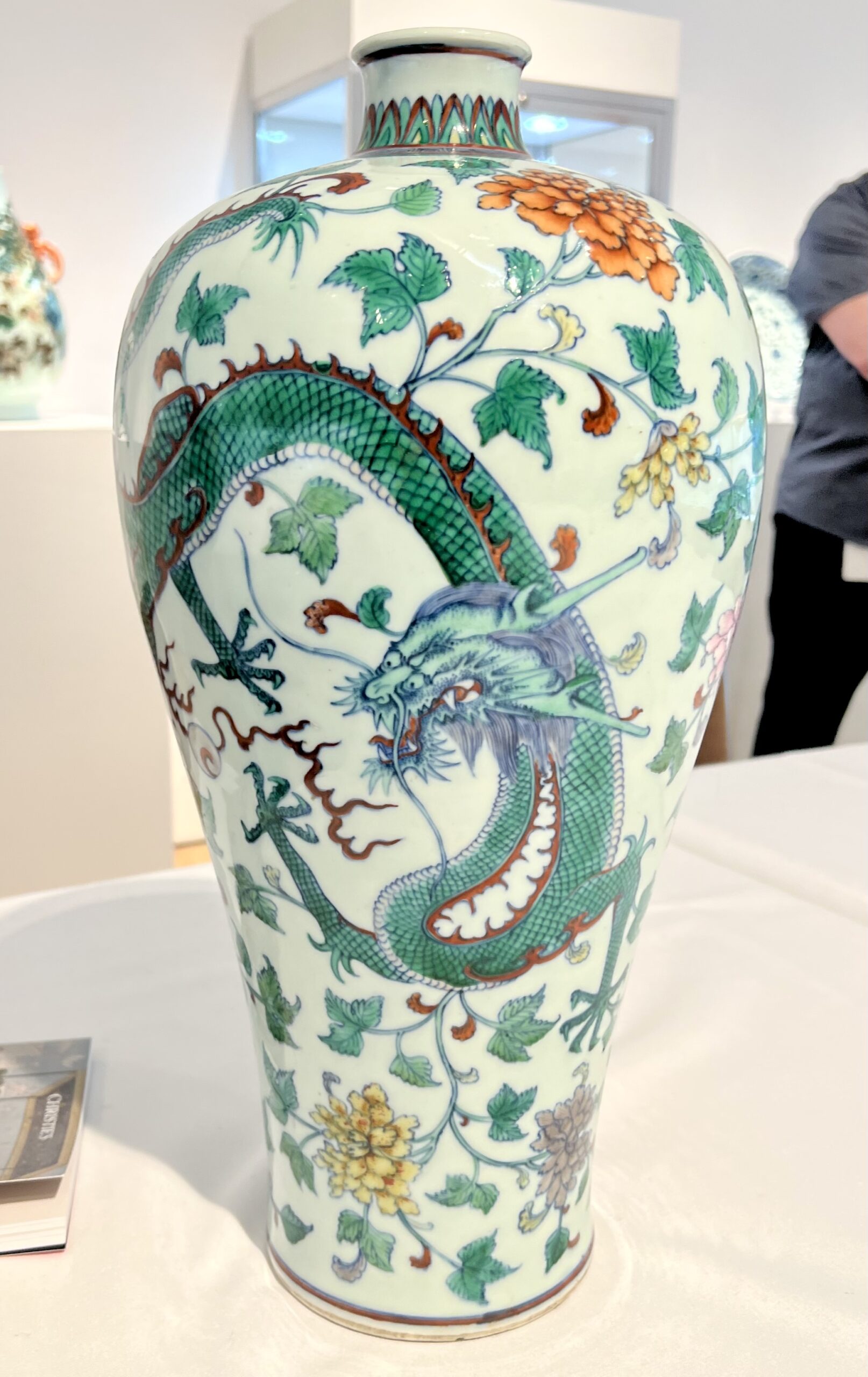
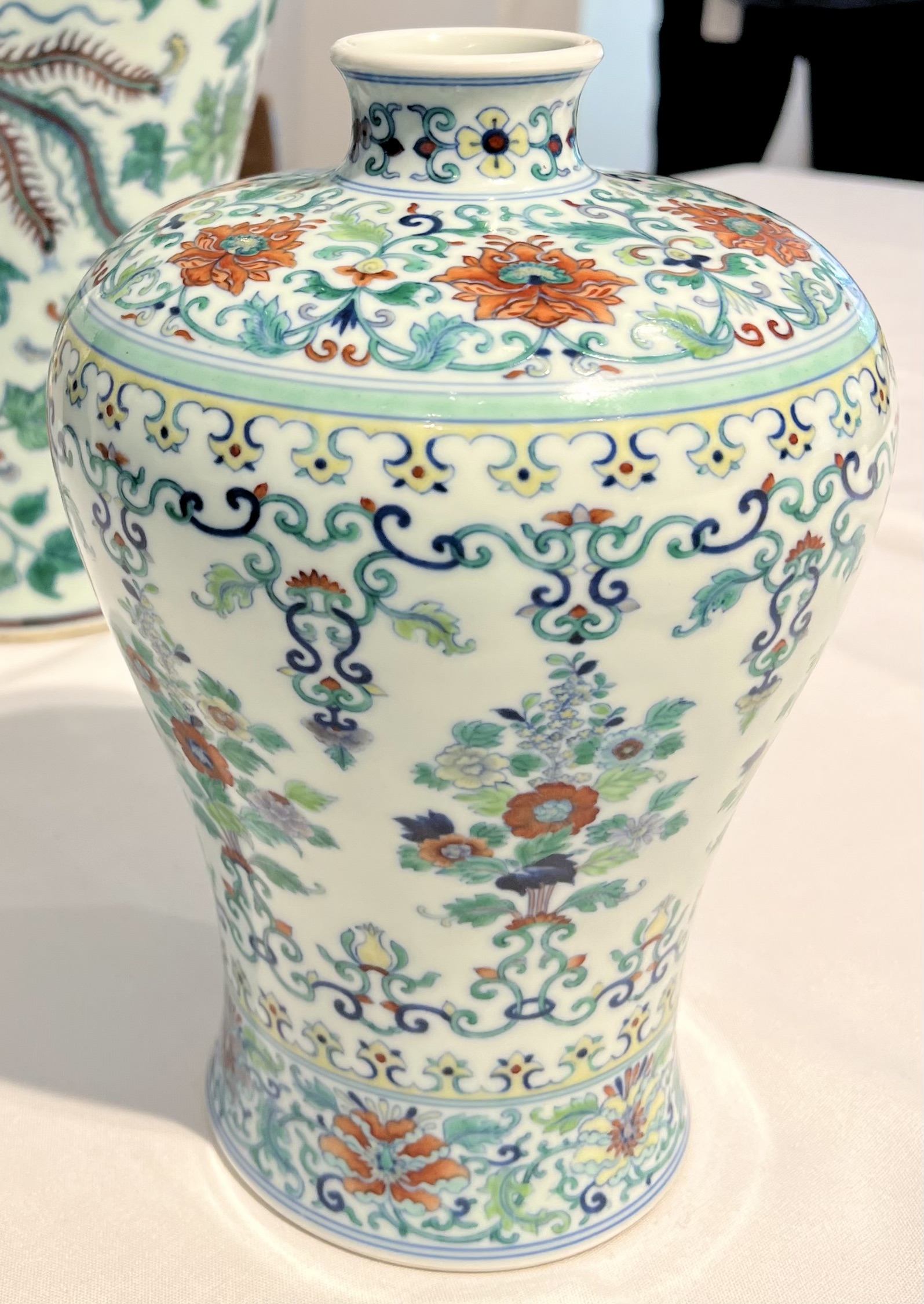
One surprising result of the sale was lot 646, the rare Yonghzeng mark and period doucai floral bouquet’ vase, meiping. It was finely painted with stylised lotus to the shoulder and foot and a central panel of pendant flowers. The quality of the painting and the potting was extremely fine, but to my eye the decoration was somewhat over formalised. However, it was to sell for $3.03 million (Estimate $1-1.5 million) and was the highest selling lot in the sale.
The sale realised $34.21 million, the highest total of the week.





Sotheby’s New Premises at the Breuer Building on Madison Avenue
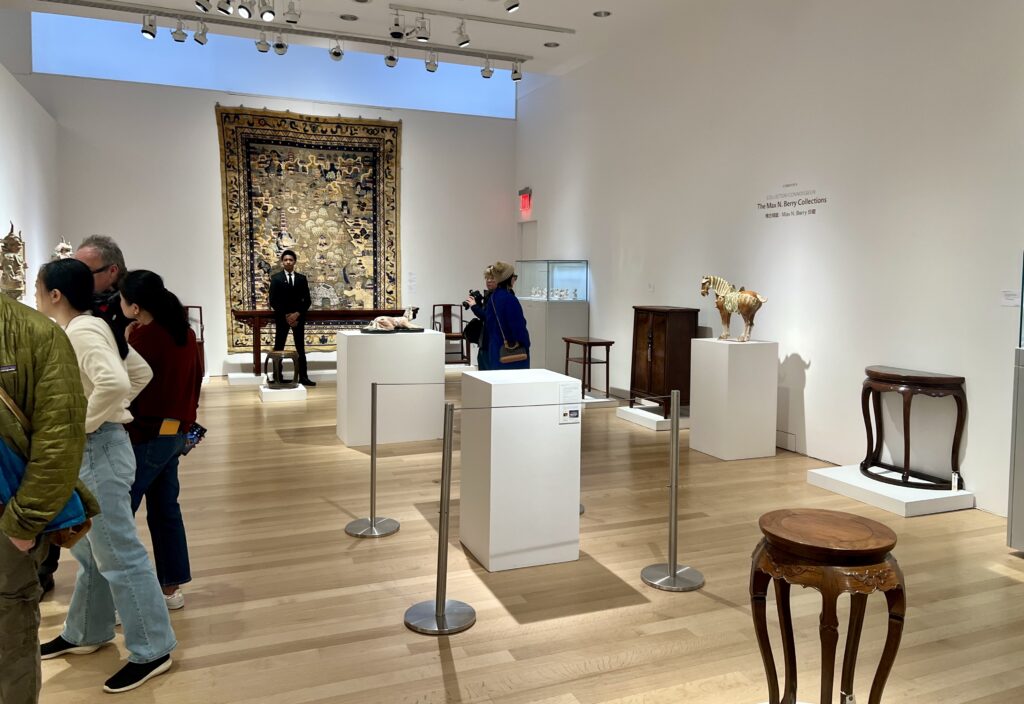
After viewing Christie’s I walked over to Sotheby’s new premises on Madison Avenue. The Breuer building had housed the Whitney Museum and had also been leased by the Metropolitan Museum.
It is a distinctive building built in the Brutalist style, designed by Marcel Breuer and completed in 1966. Prior to moving in, the building underwent a meticulous restoration and as one enters the building, there is a wide reception desk and a ceiling that is filled with lights, with white circular shades.

The building acts as the headquarters for Sotheby’s, but interestingly only houses offices for the department that are currently holding an auction in the building. The remainder of staff still use the building in York avenue which Sotheby’s has continued to lease.

Despite having very few windows in the building, the viewing areas were well lit and worked well for the viewing of objects. The viewing of the Chinese sale was spread out through a number of rooms.

The first that I came to I was to handle a number of Ming and Song dynasty pieces. The first was lot 119, the extremely rare Xuande mark and period blue and white ‘fruit and flower’ jar. Thought to be possibly unique, this jar is painted with joined cloud collar motifs at the shoulder, each housing a single flower, below sprays of other flowers and fruit, including pomegranate and cherry. The six-character mark was painted just below the rim.
There was understandably considerable interest in the piece and it sold for $4.08 million against a presale estimate of $1.5-1.8 million.


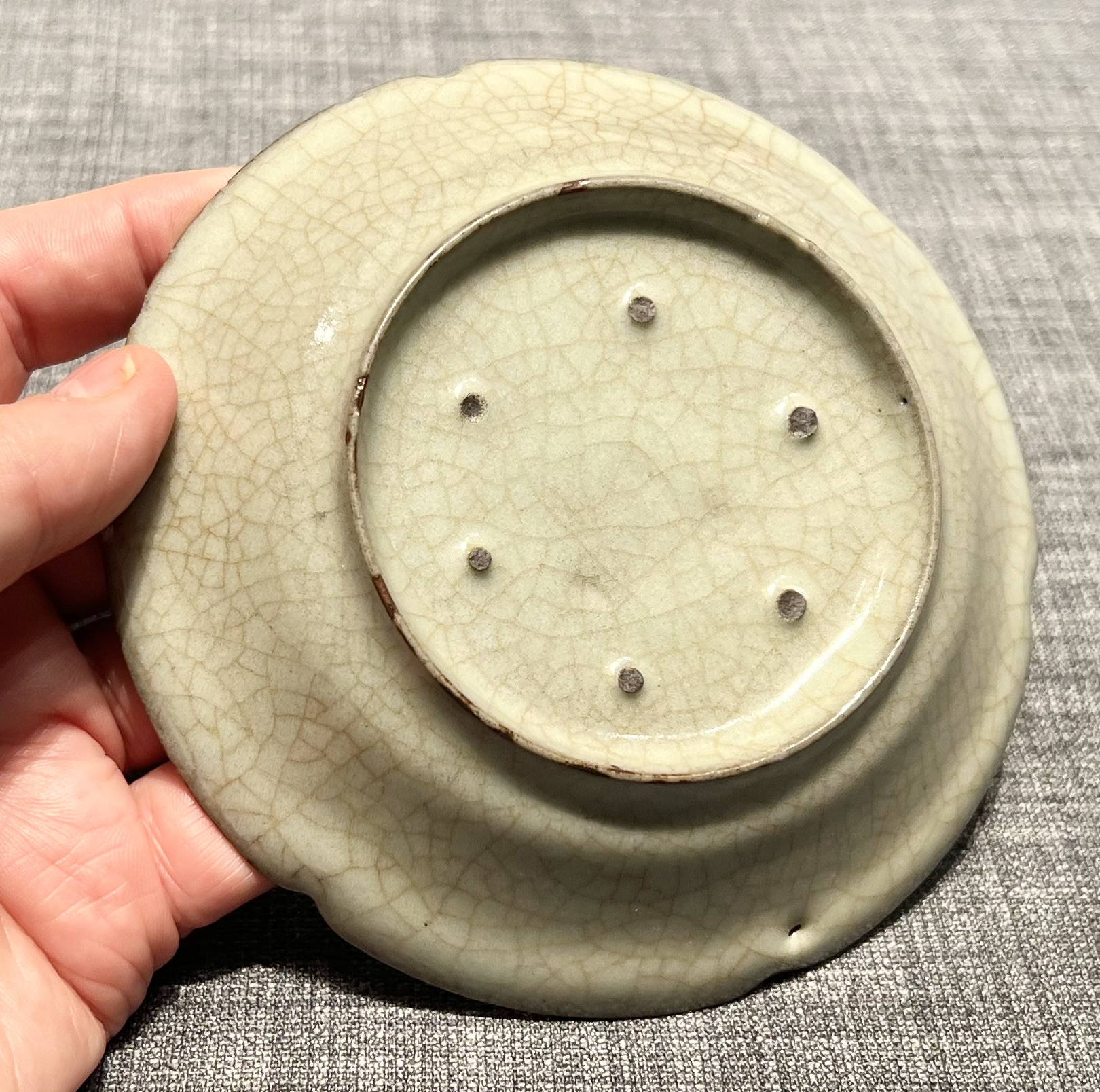
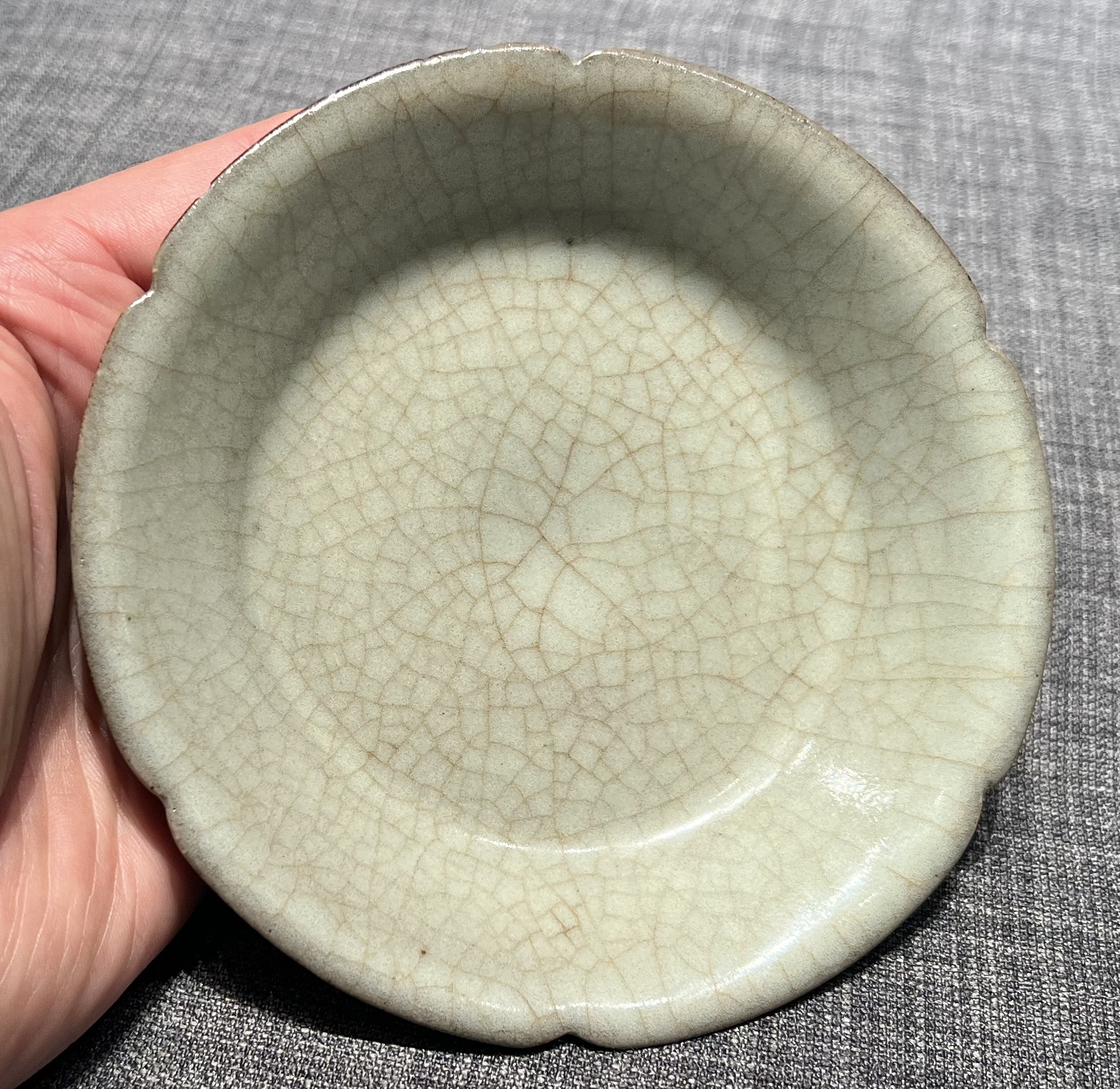
I enjoyed handling two pieces of Qingbai, the first was lot 135, a carved lotus bowl. It was well carved and covered with a really bright and consistent turquoise glaze. One tends to see many Qingbai bowls that are poorly carved and covered with a greyish glaze, so to see such a striking example was a real treat. It sold for $51,200 against a $15,000-25,000 estimate.
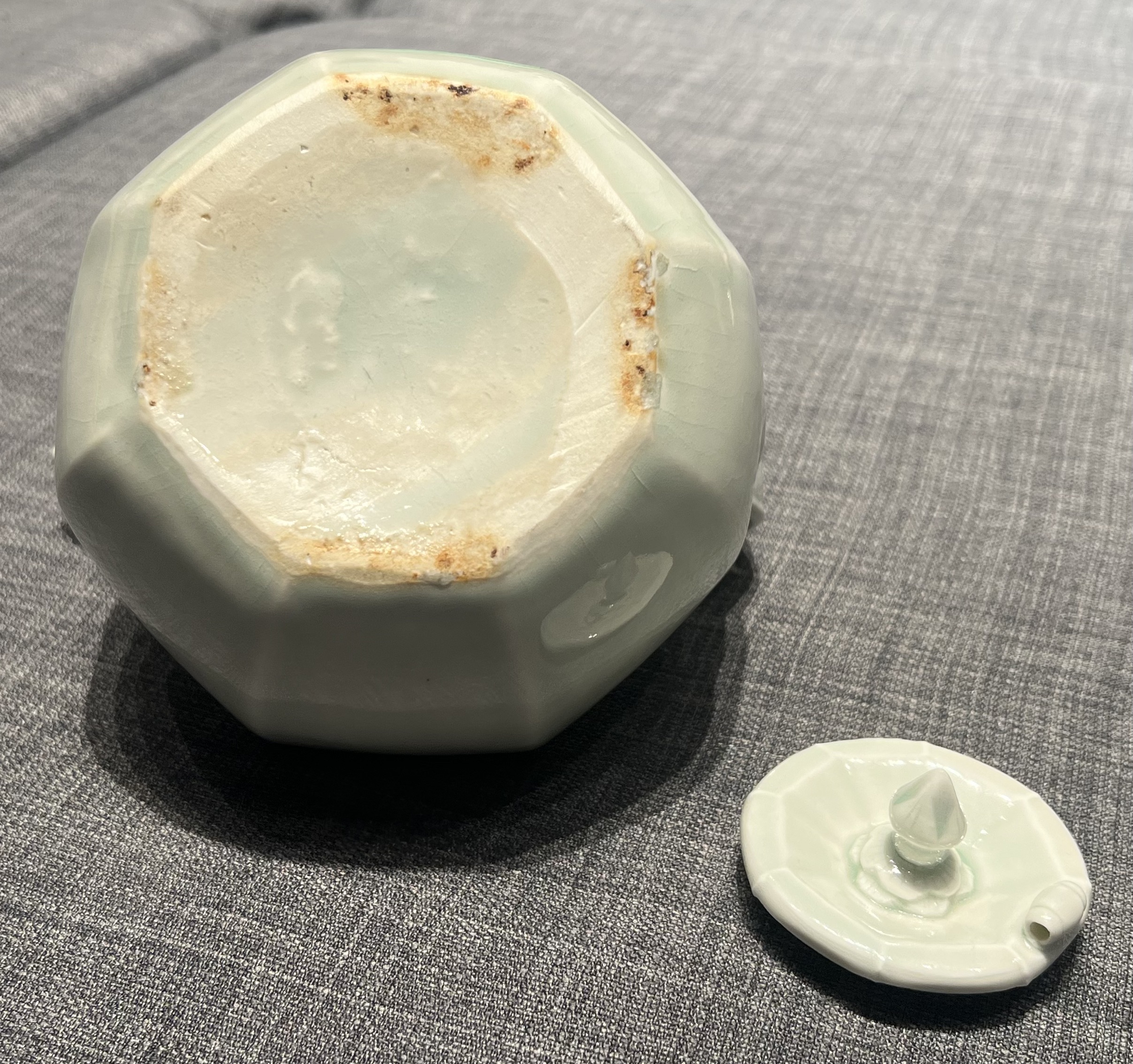
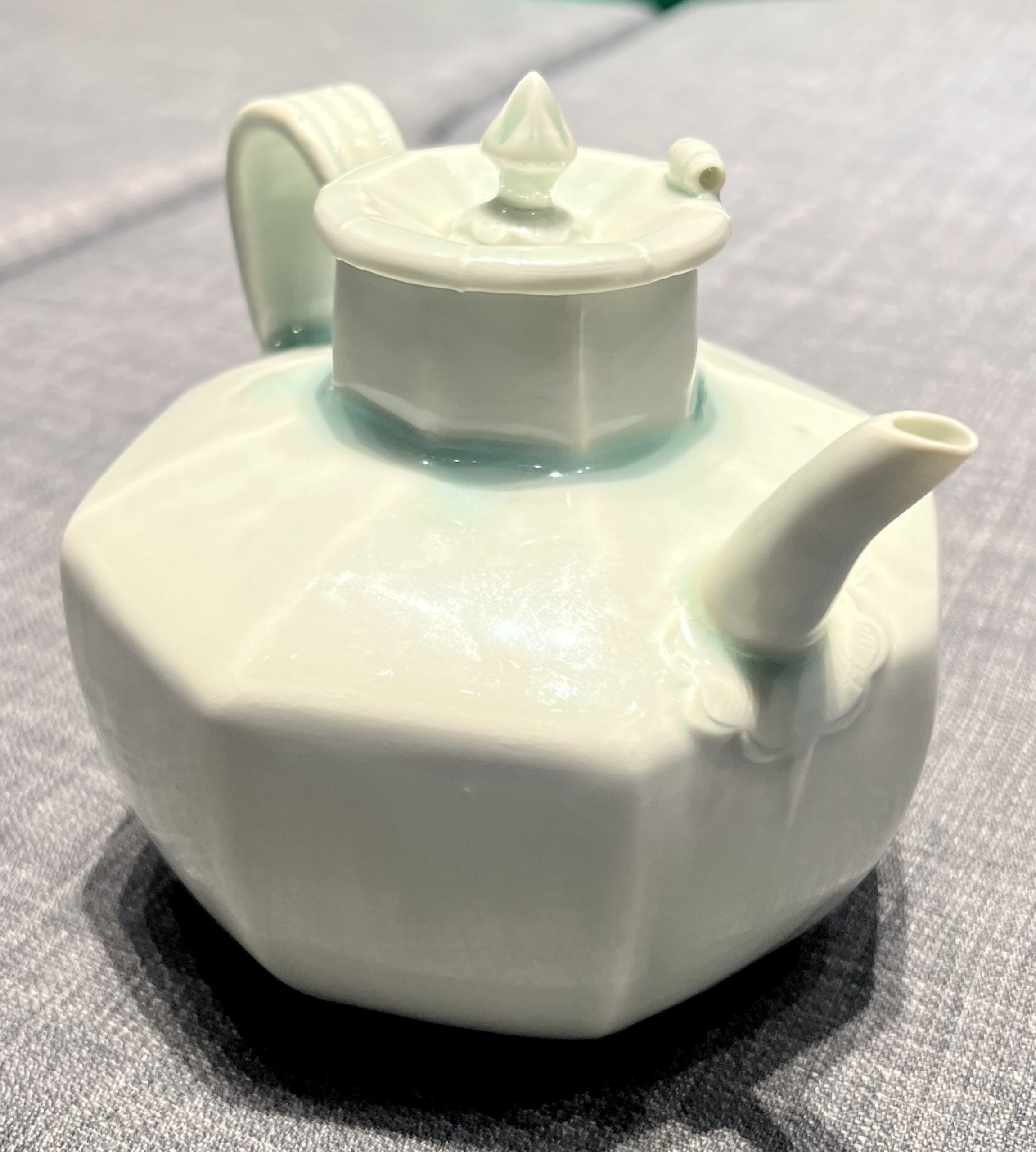
The second example was lot 136, the octagonal faceted ewer and cover. This is a rare form in Qingbai and had retained its cover. It sold for $19,200 (Estimate $15,000-20,000).


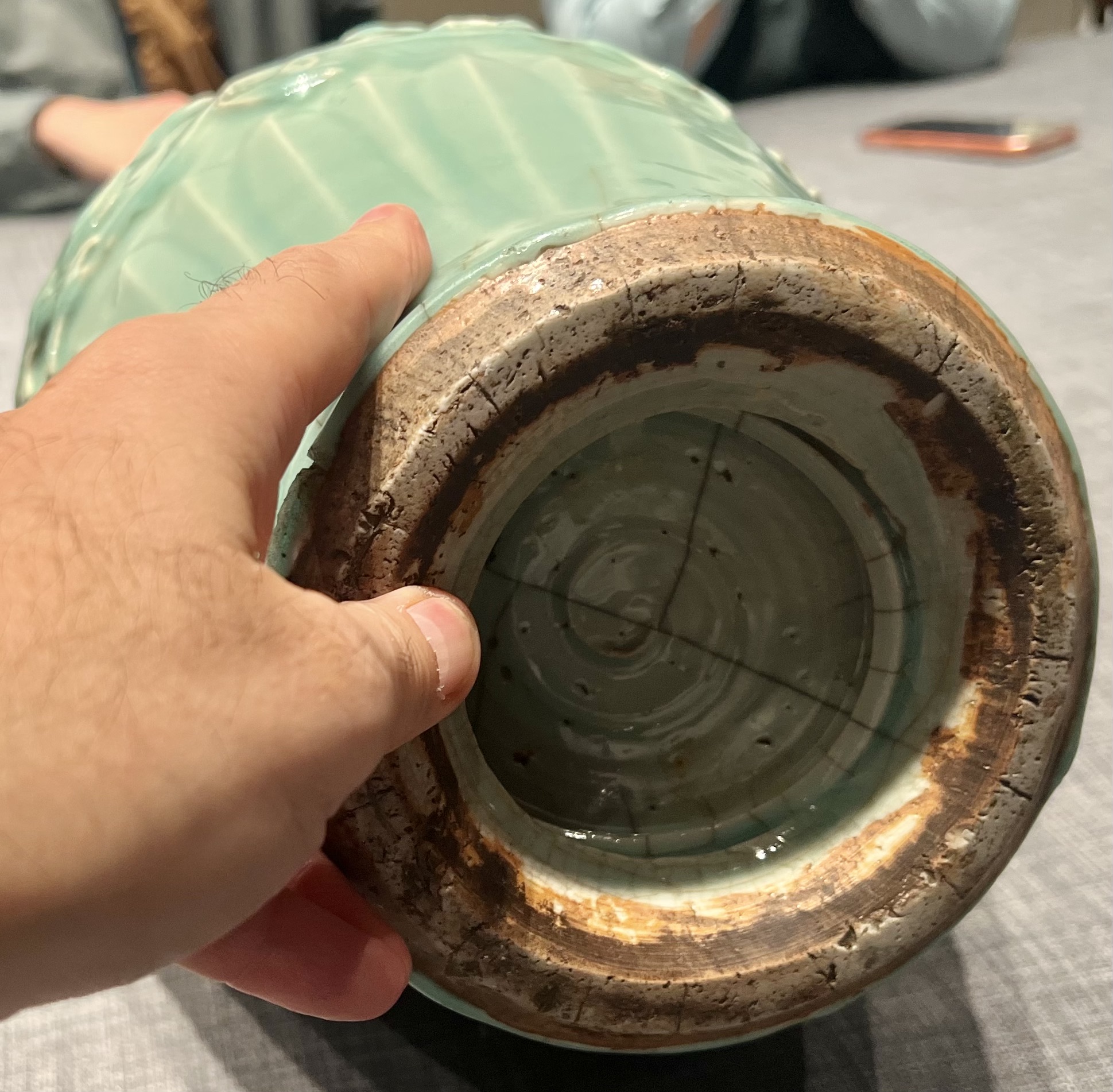
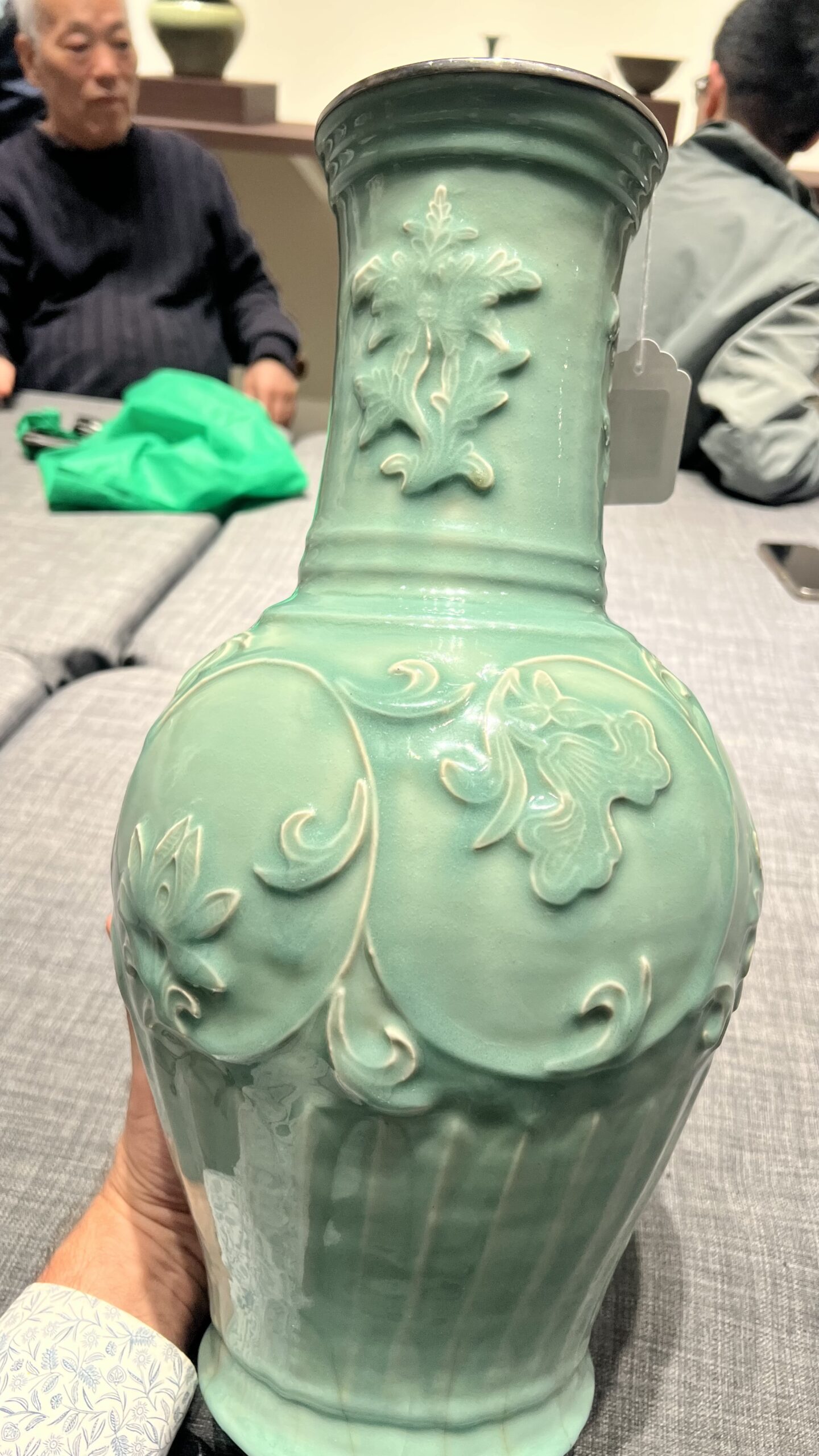
Lot 133, the Yuan dynasty Longquan celadon baluster vase, was great to handle as it had the perfect ‘kinuta’ bright green colour that has always been sought after by collectors. The body and neck was sprig-moulded with lotus flowers and then dipped in the thick glaze. The rim had been slightly cut down as it would have flared more widely. The vase sold for $128,000 (Estimate $100,000-150,000).
Sotheby’s sales totalled $18.1 million.



Sotheby’s Exhibition: Chinese Art in America
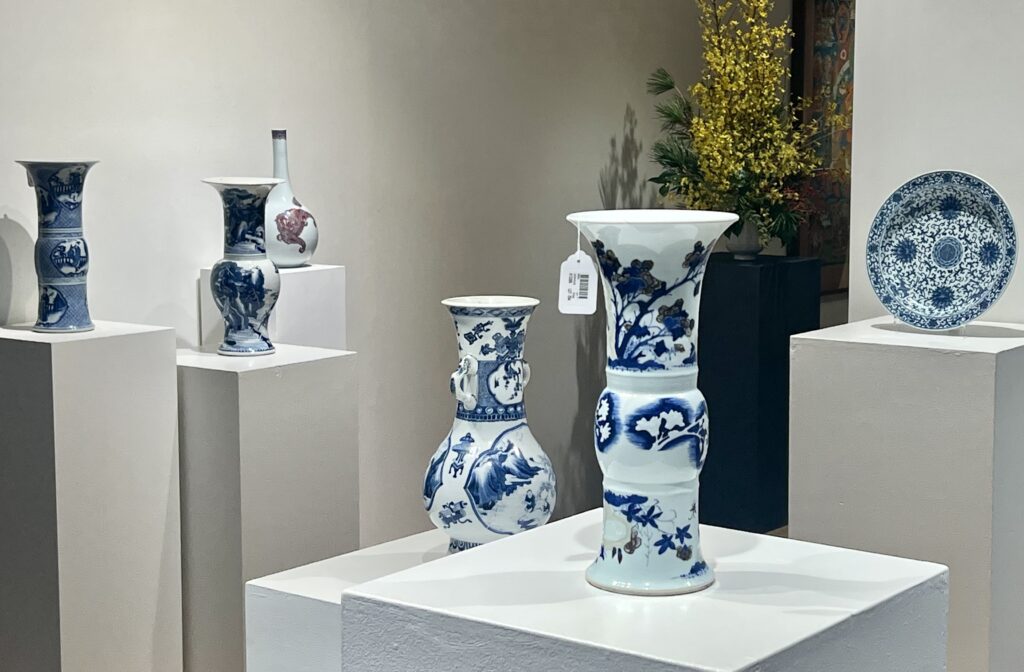
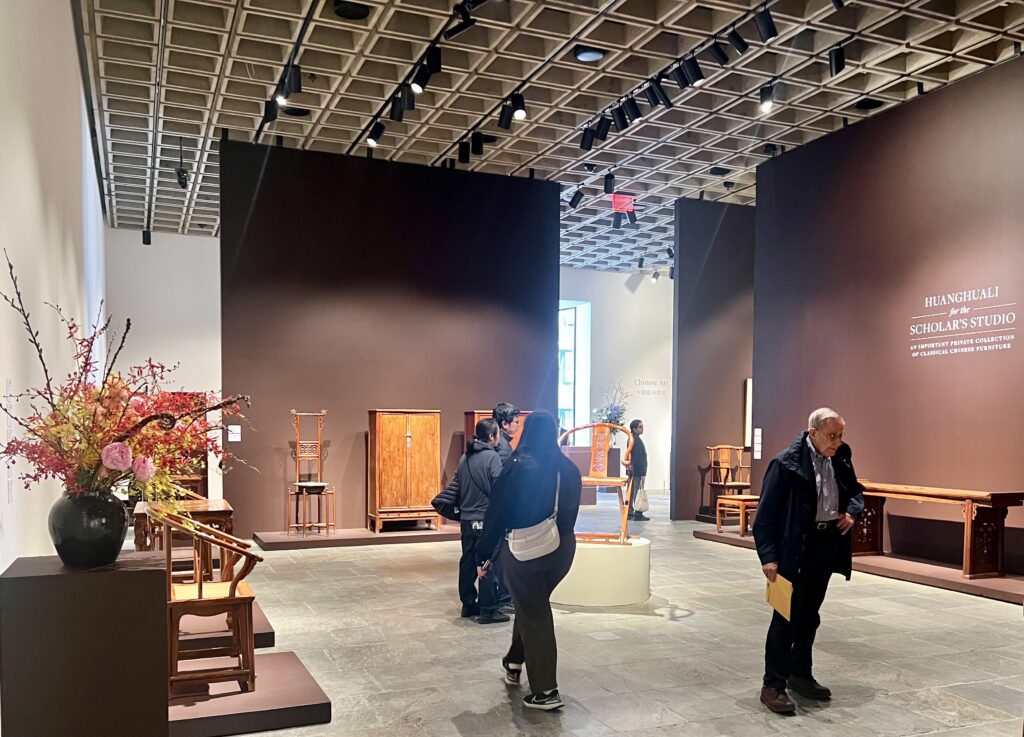
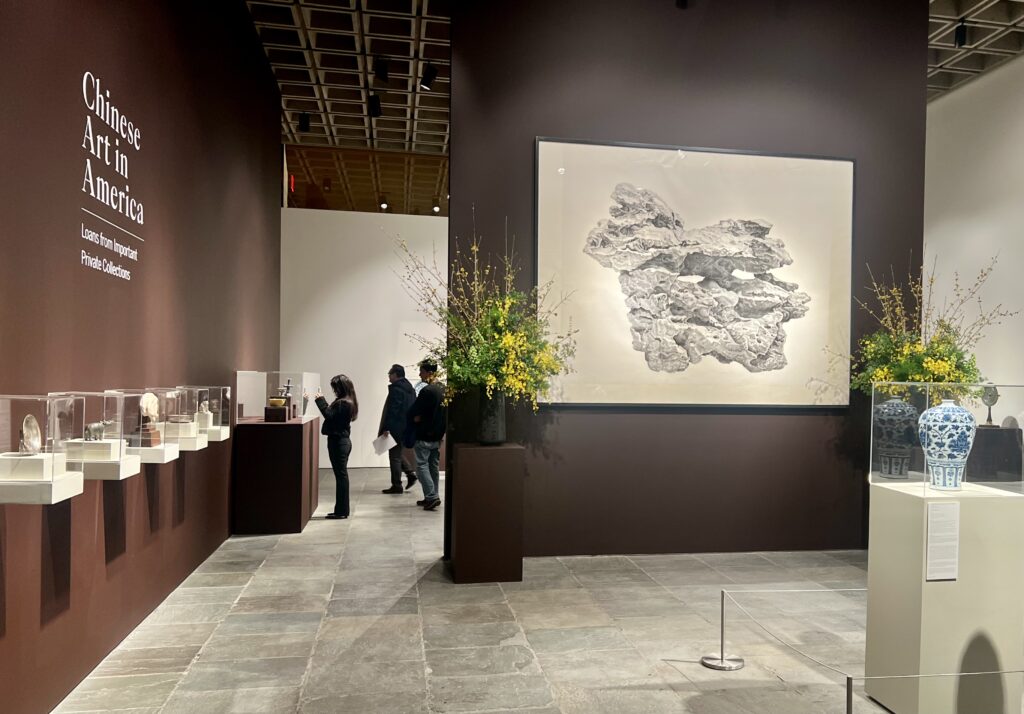
During Asia Week, Sotheby’s held and exhibition of Chinese art in America, where they had gathered a group of objects from collectors across the US from archaic bronzes through to Qing dynasty imperial porcelain.
One of my favourite pieces was the Yuan dynasty blue and white meiping vase painted with lotus scrolls. The quality of the painting and the deep blue colour is about as good as you can get. This style of setting out the design in horizontal bands is very typical of the mid 14th century.
This piece was originally in the collection of Sir Harry Garner (1891-1977) and was sold by Bluett & Sons London in 1972 and later by JJ Lally in New York.

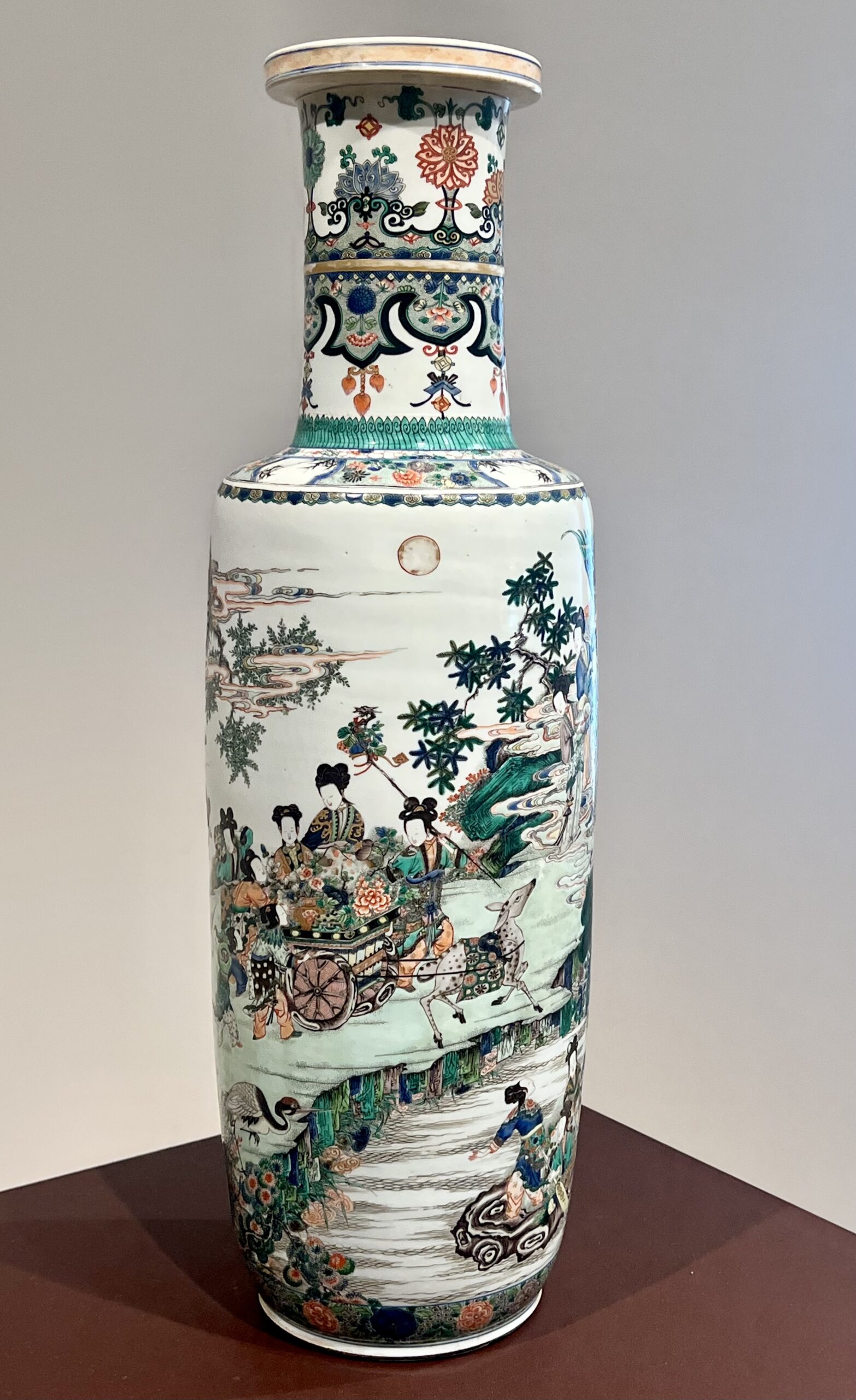
The exhibition also showed two large Kangxi period rouleau vases, one in blue and white and the other in famille verte. The famille verte example is around 75cm high and the painted design is pretty exceptional with a deer pulling a cart of flowers surrounded by ladies beside a river bank. It is in the Jie Rui Tang Collection in Boston.
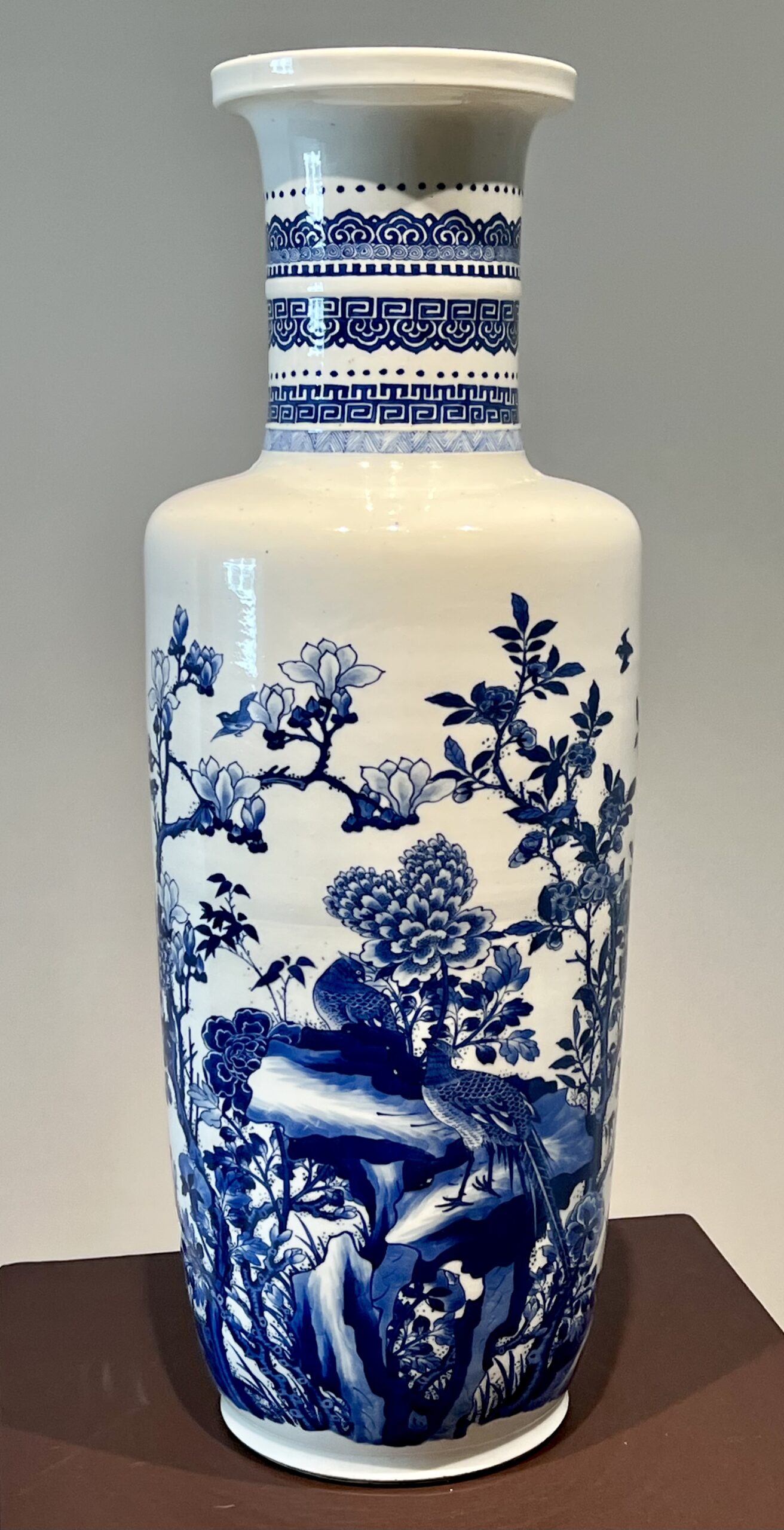
The blue and white vase features two pheasant standing on large garden rocks beneath branches of tree peony and magnolia. The artist successfully uses multiple tones of blue to create depth in this ‘picture’. The vase had originally belong to the Duveen brothers and John Pierpont Morgan (1837-1913),

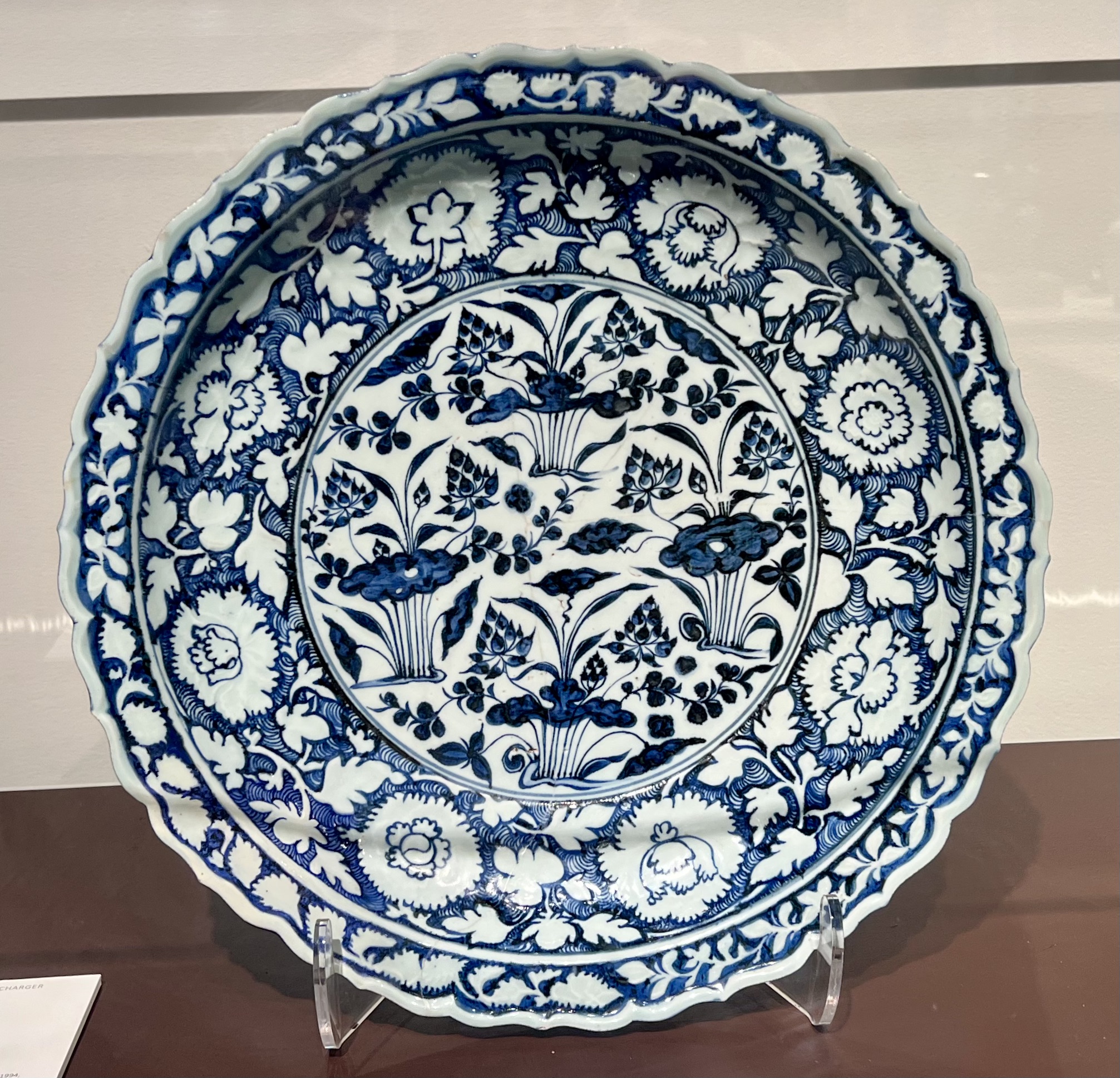
The cabinet of blue and white featured a large Yuan dynasty lotus pond dish and a blue and white bowl that Sotheby’s had sold on 17 March 2021 and had been acquire in a garage sale in Connecticut sometime shortly before this. It is beautifully painted to the interior with flower heads and diaper bands.

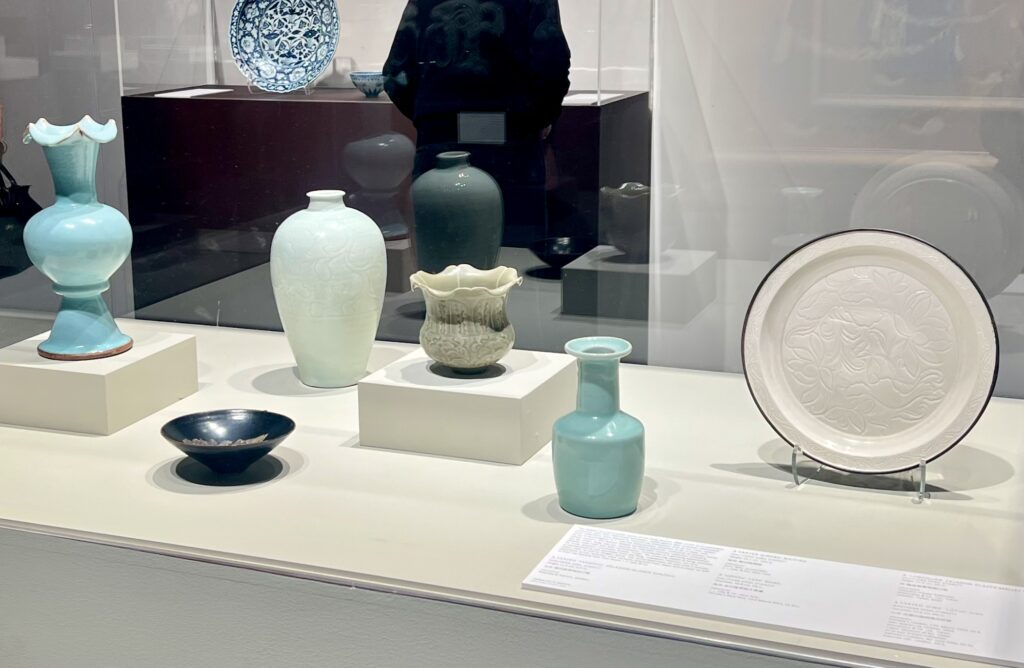
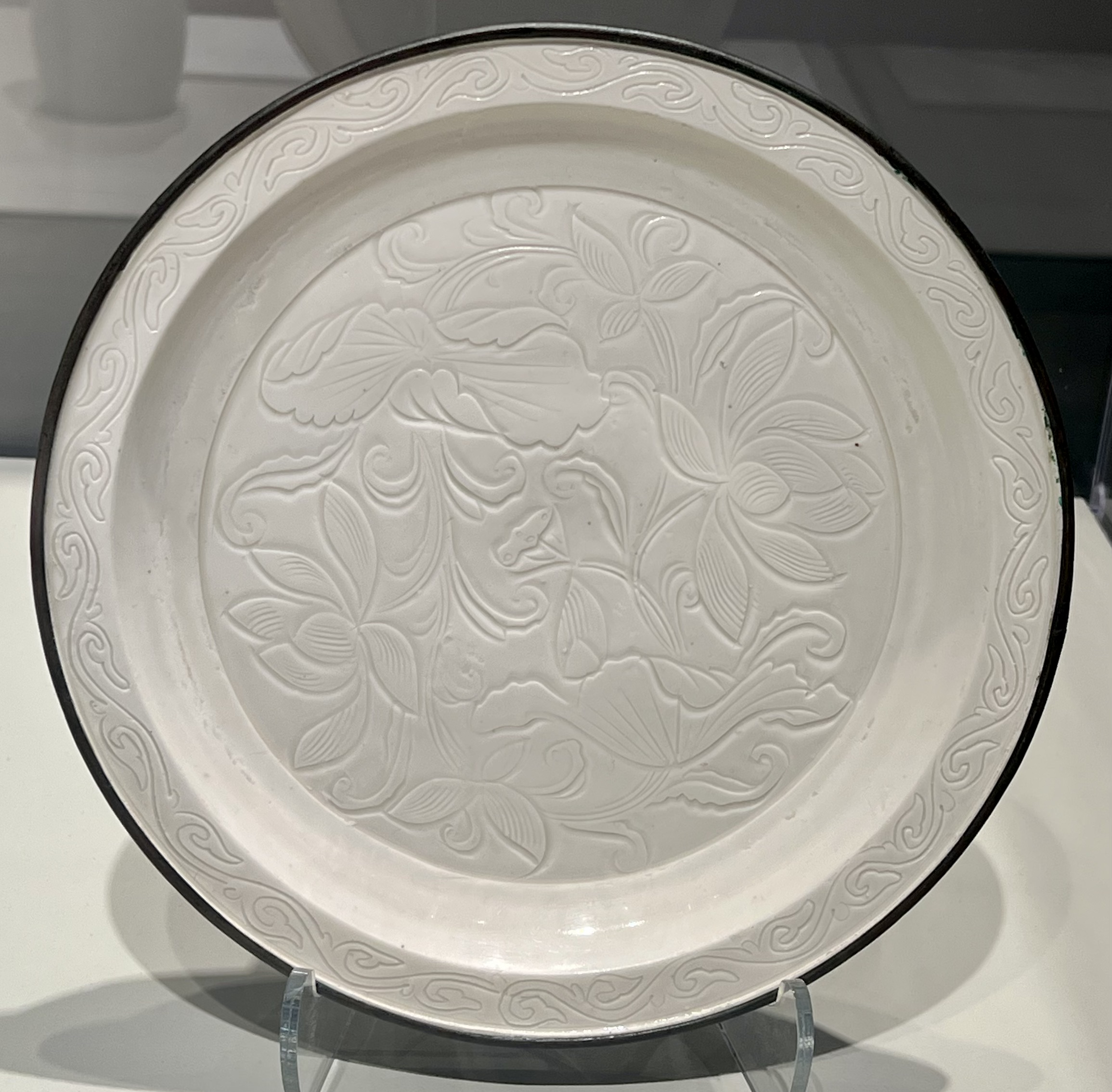
Two Song dynasty pieces that stood out was firstly a rare Yaozhou zhadou, carved with a peony design and secondly a really fine carved Ding lotus dish, which had a provenance back to 1959 with Sotheby’s London and was also in the Toguri Museum of Art, Tokyo.



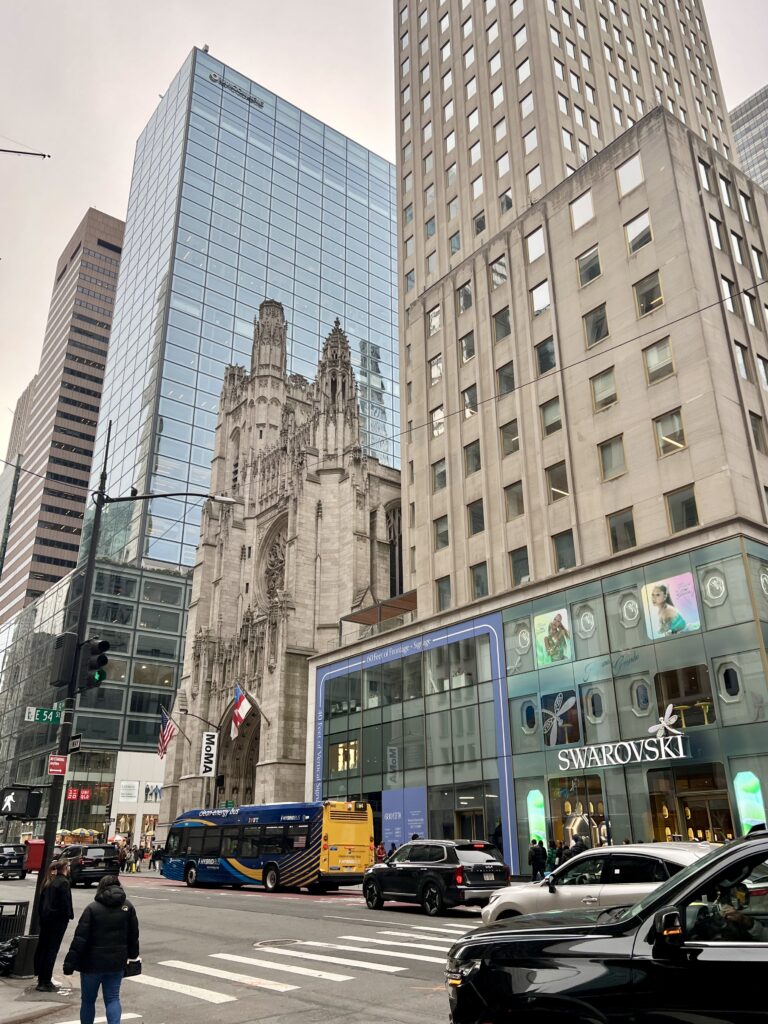
New York City is such a photogenic city architecturally and as usual, I would whip out my phone to take some photographs of these when inspired. I especially like how some of the older buildings, especially churches, are juxtapose to more recent buildings.
I enjoyed the week in New York and took the train back to Philadelphia to catch up with a couple of museums before returning to the UK.


10 April – Handling Session at Preston Manor and Brighton Pavilion
On 10 April, I helped to organise another handling session for young auction house specialists and museum curators. On this occasion it was held at Preston Manor and Brighton Pavilion.
Preston Manor was a former manor house in Preston village, now a part of the wider Brighton and Hove area. The house was privately lived in until 1932 when it was given to the Brighton Corporation by its longest serving family, the Thomas-Stanfords.
The pieces that we were to look at came from the collection of Captain George Francis Warre (1876-1957). He had inherited a number of pieces from his father (Captain Annesley Tyndale Warre) and had, with his wife Norah added to it. Part of his collection was left to Bristol City Art Gallery, the Potteries Museum in Stoke on Trent and Preston Manor.


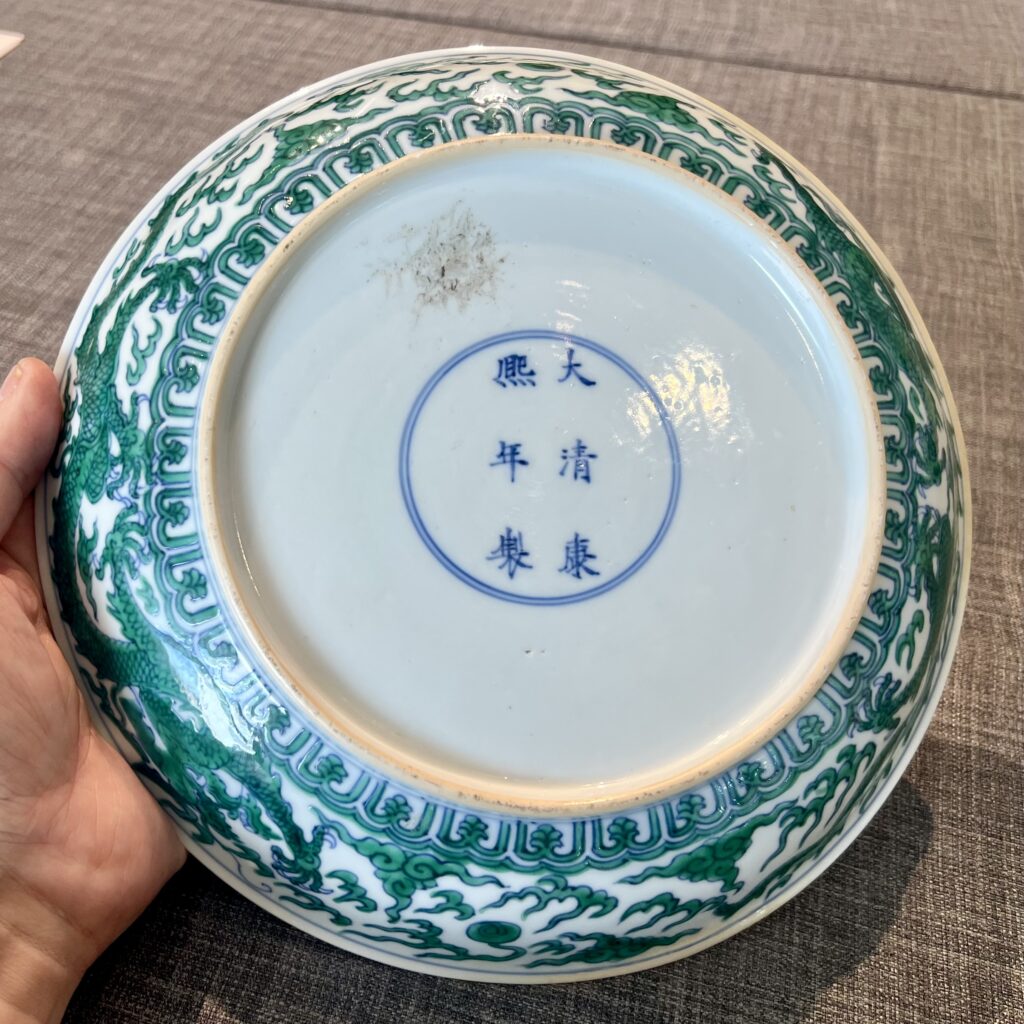
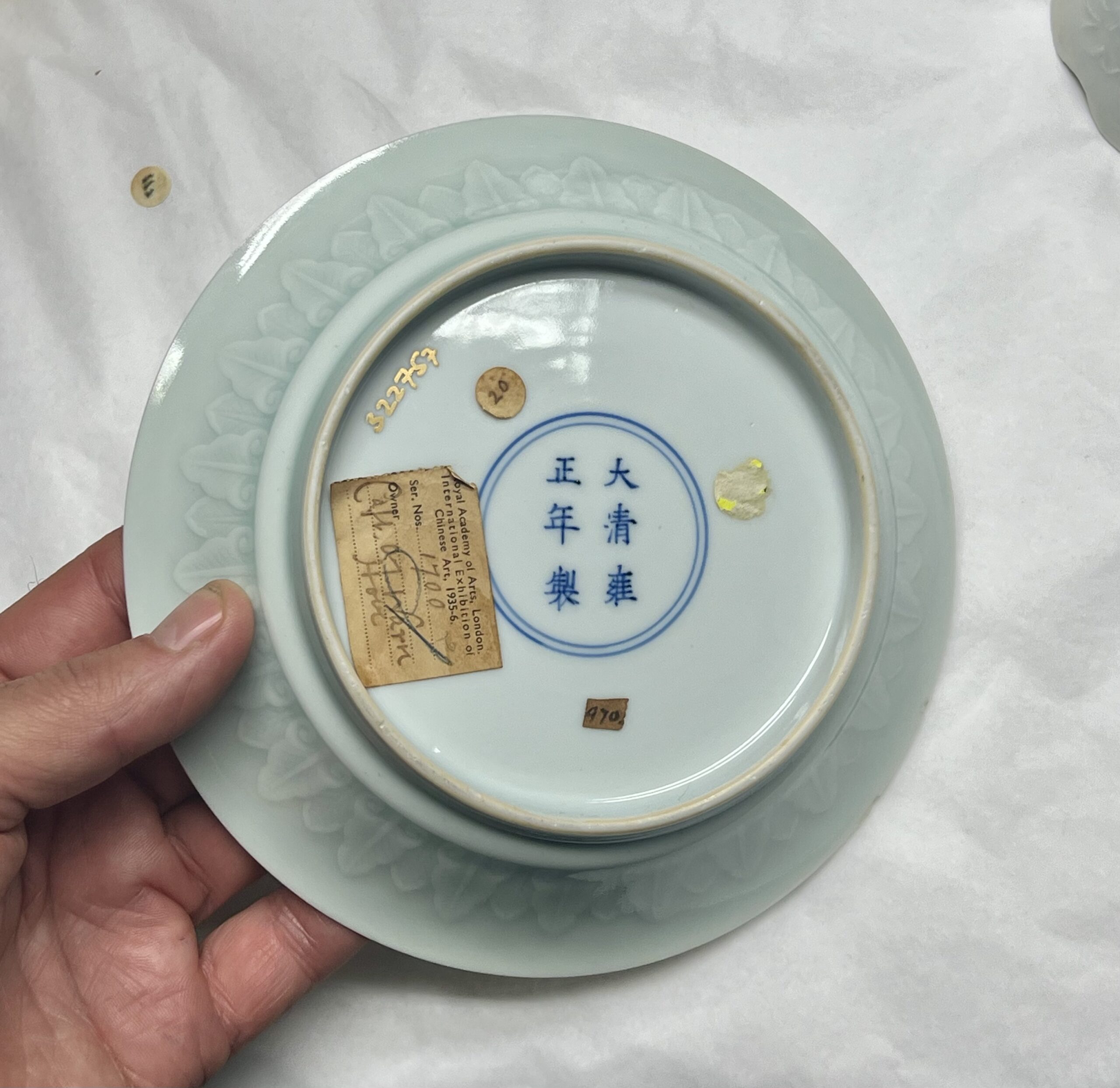
The first piece that we examined was a Kangxi mark and period famille verte ‘Birthday’ plate. It had been exhibited at the 1935-36 Chinese Exhibition at the Royal Academy and was particularly well painted with two ladies, one holding a peach next to a goat pulling a cart of lingzhi fungus.
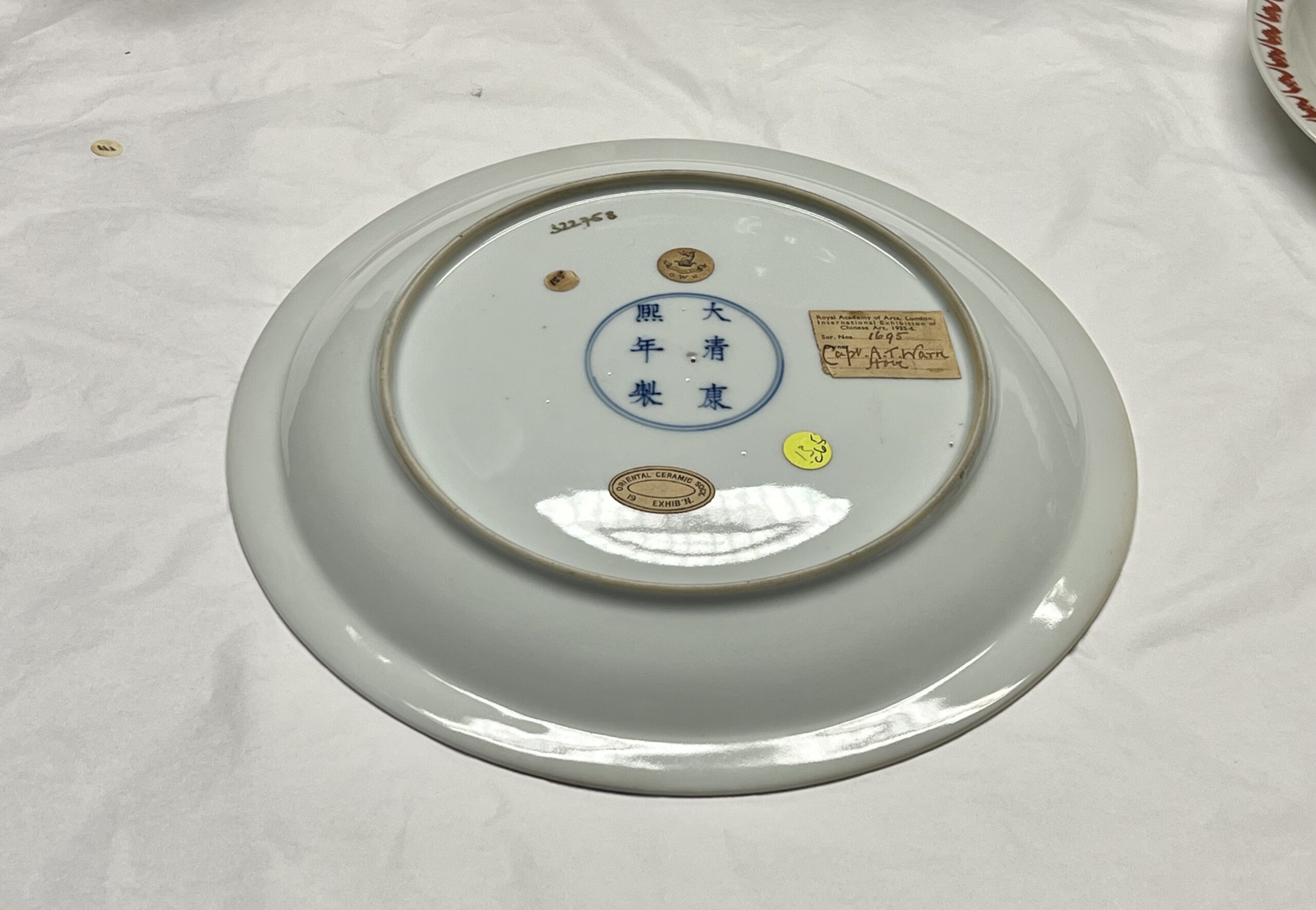

We also handed a smaller Kangxi mark and period famille verte dish painted with Shoulao seated at a rustic table with an attendant and a deer.


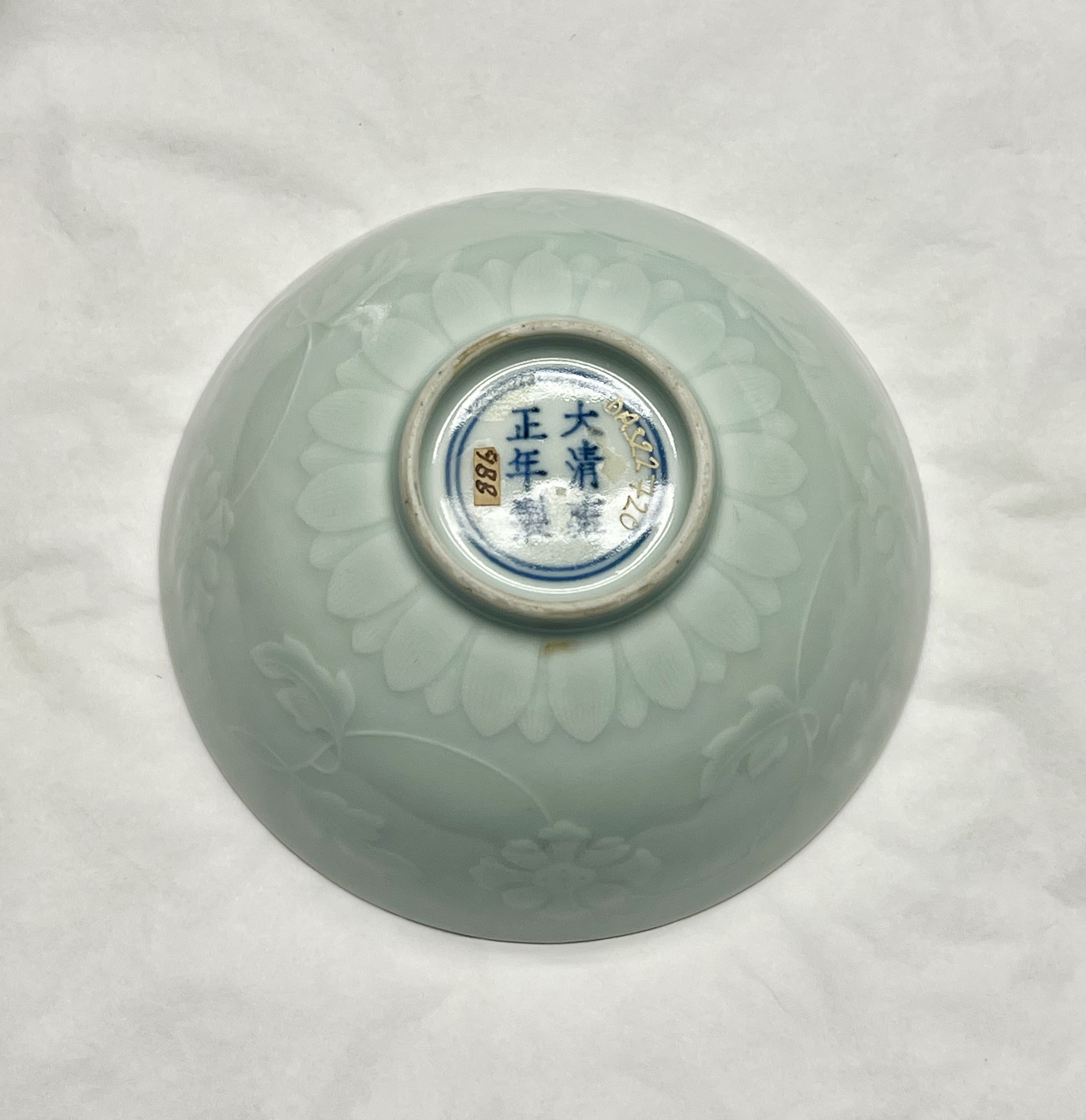
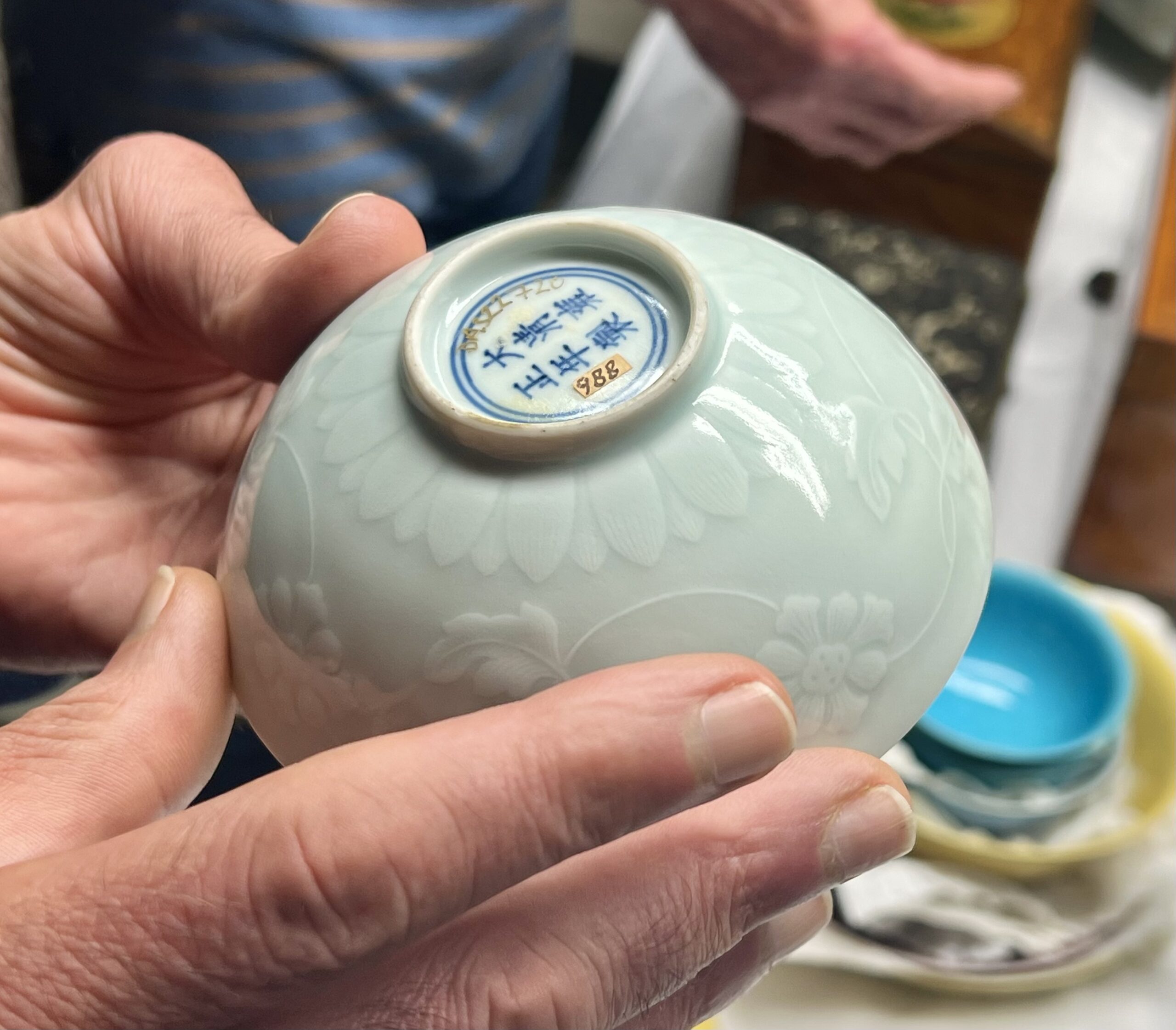
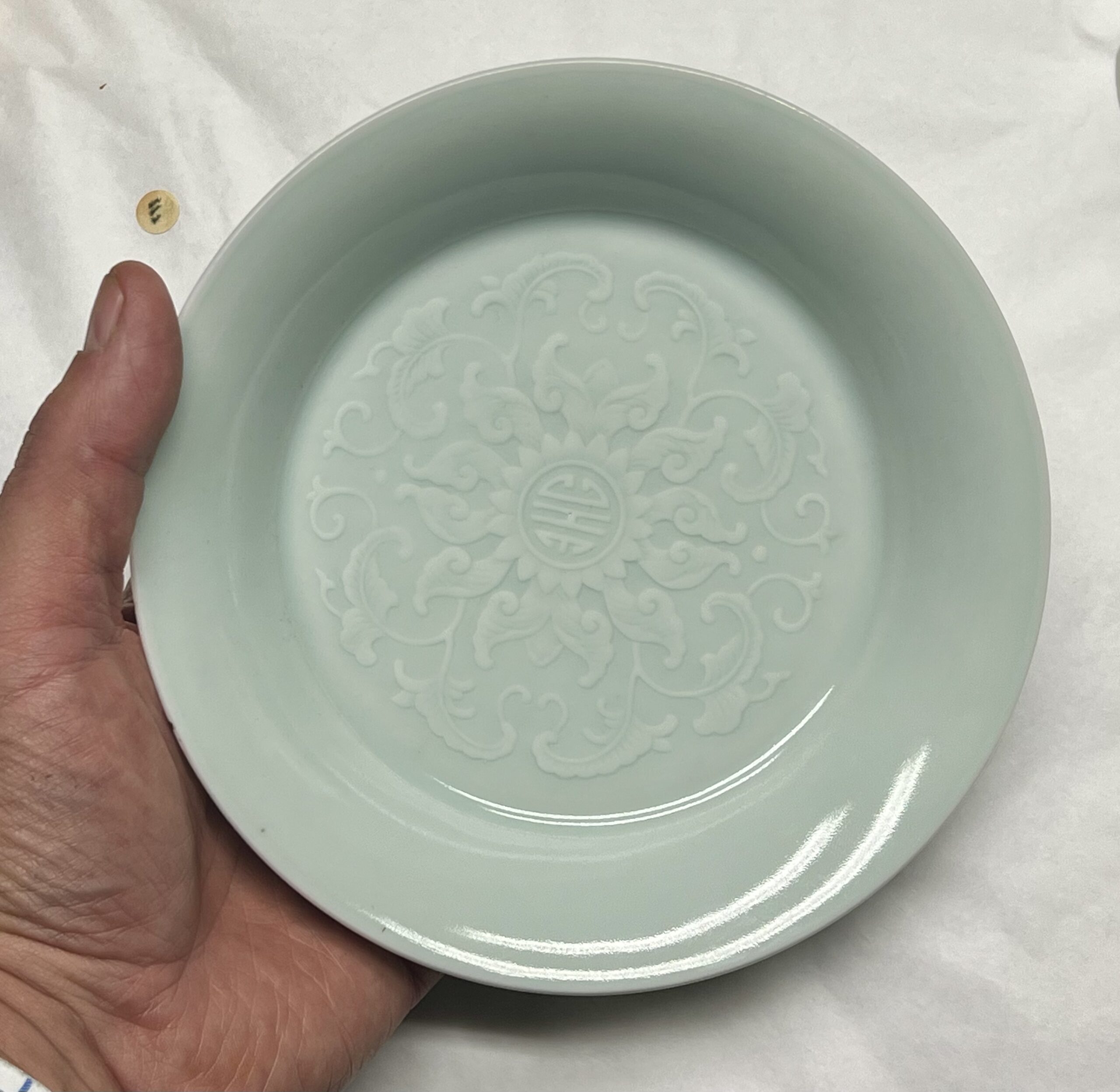
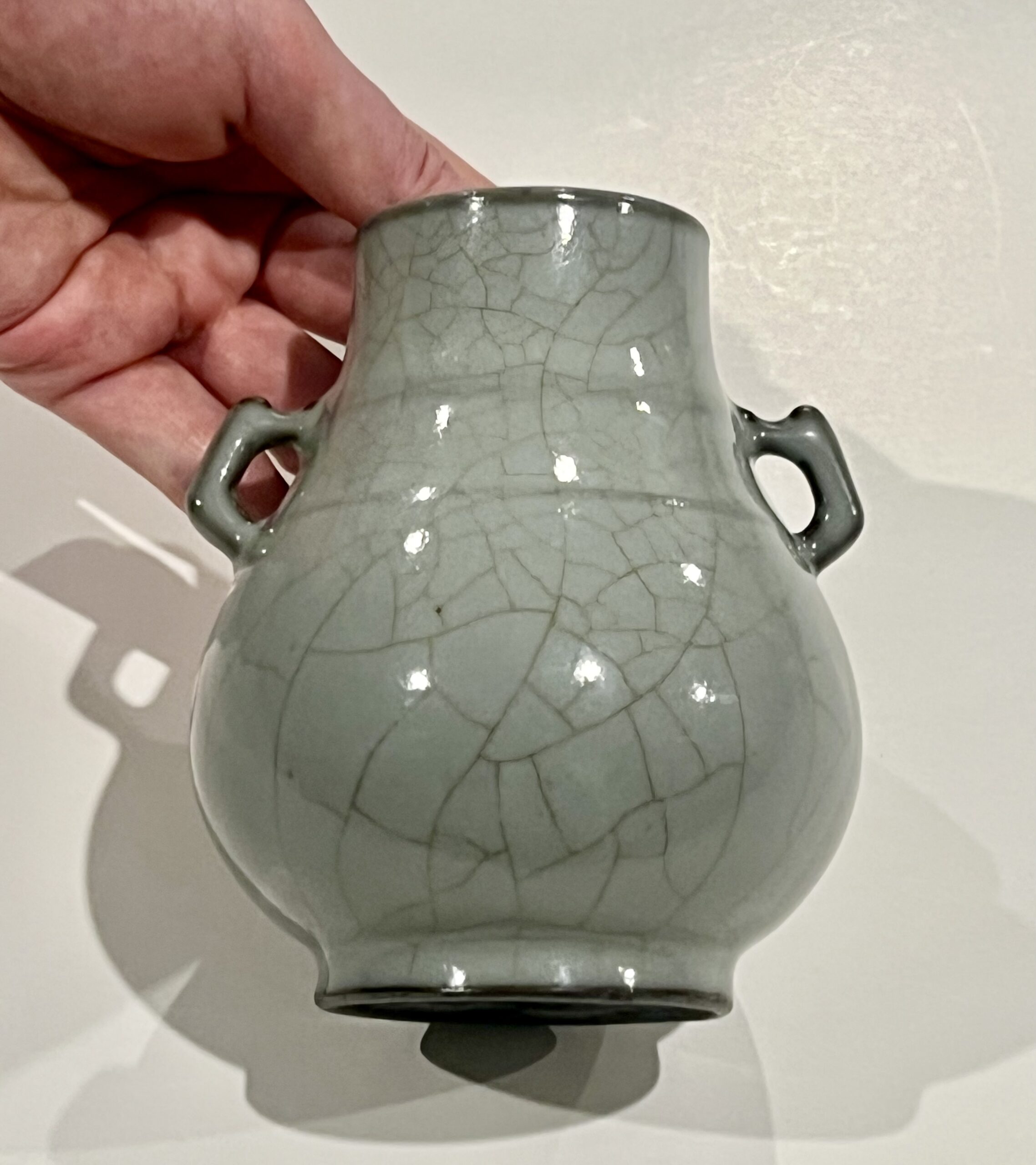
Two of the finest Qing dynasty monochromes in the collection was a Yongzheng mark and period pale celadon bowl carved with a continuous flower scroll and a Yongzheng mark and period pale celadon dish, finely carved with flowers and a central shou character to the interior. Both combined the finest potting, carving and even application of glaze. They were both a delight to handle.


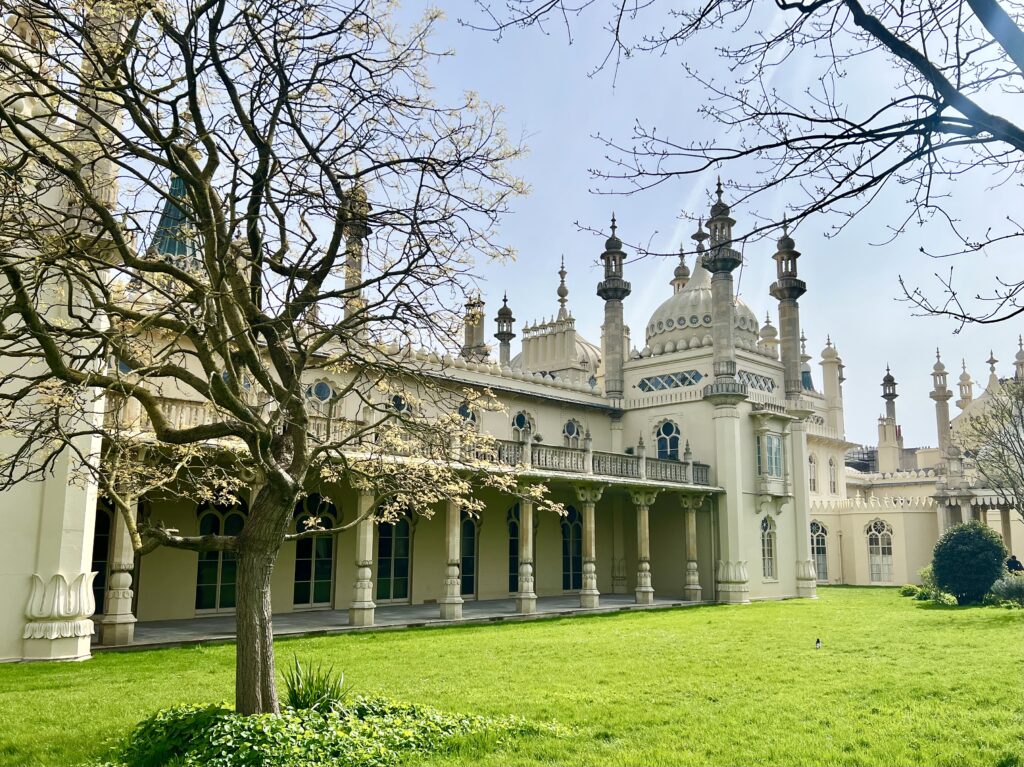
After lunch in the Preston Manor cafe, we headed down to the Brighton Pavilion, where we given a tour by Alexandra Loske, the curator of the Royal Pavilion and Historic Properties at Brighton & Hove Museums.
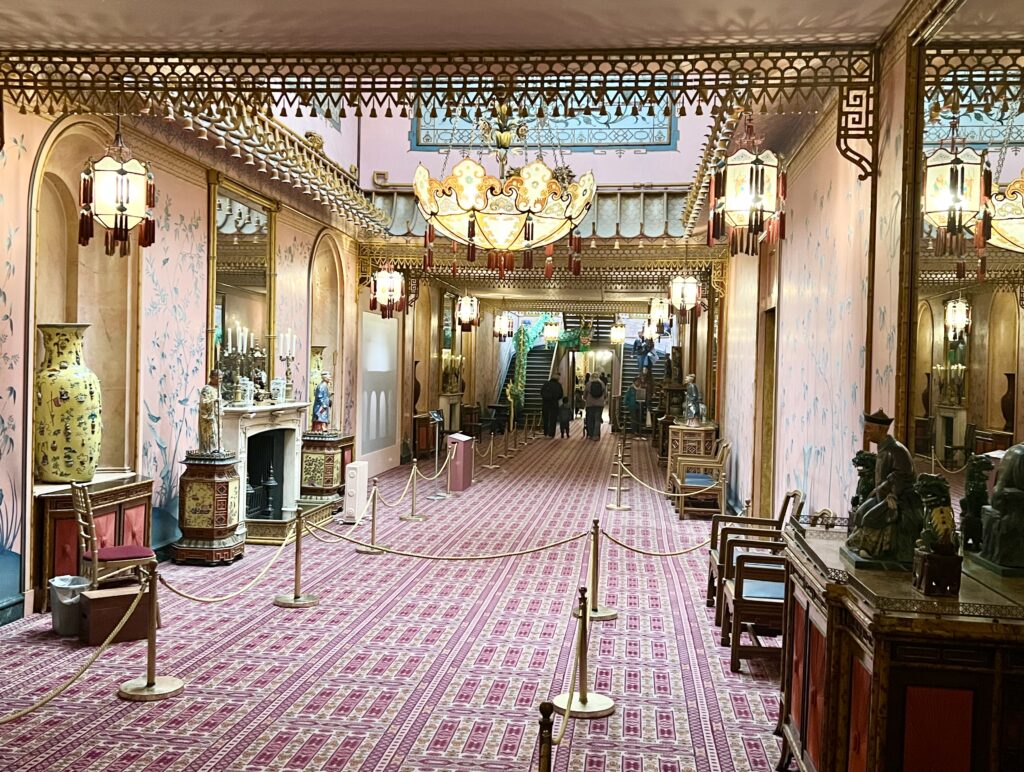
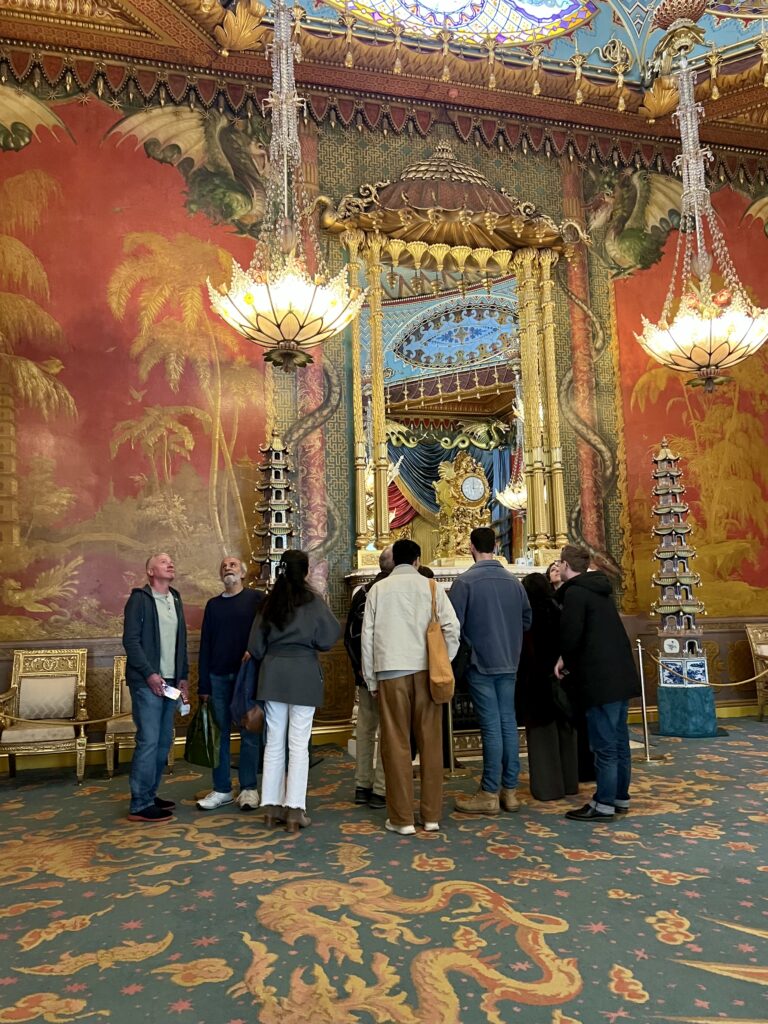
It had been some time since I had seen the Pavilion and we all enjoyed the tour. The music room really stands out from the others with its numerous umbrella like chandeliers and ornately painted ceiling and walls.

The music room also housed two important famille rose pagodas, which were originally commissioned by George IV for this room and were later taken to the Buckingham Palace during Queen’s Victoria reign. Each are composed of nine tiers, plus blue and white bases painted with river landscape scenes.


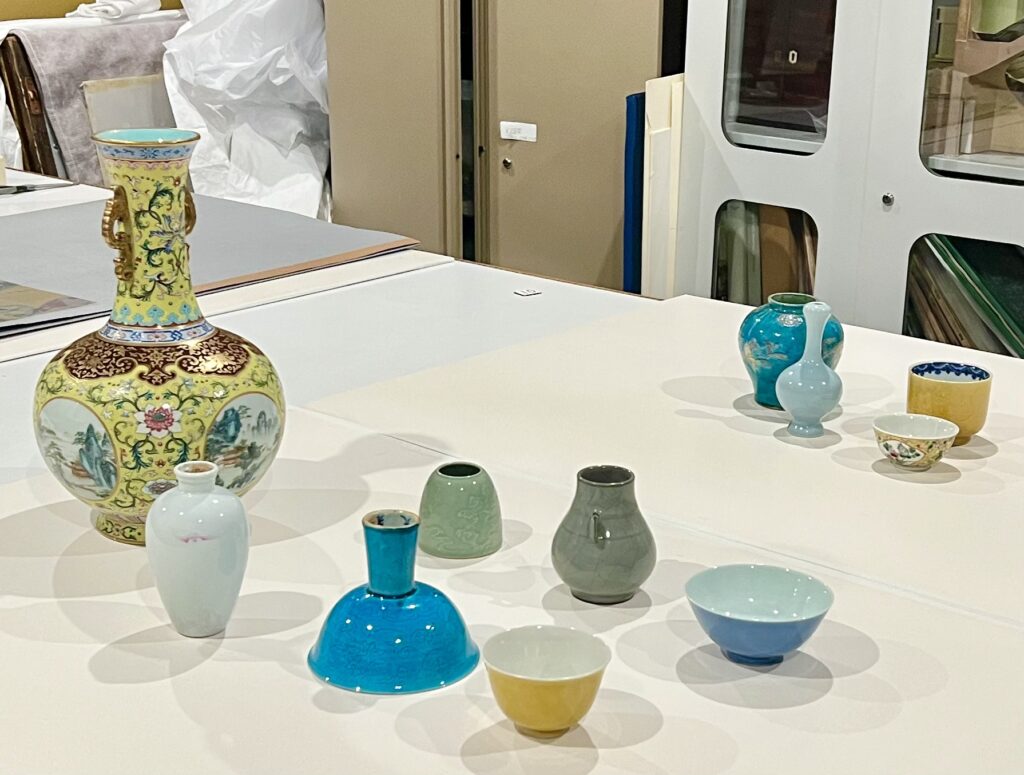
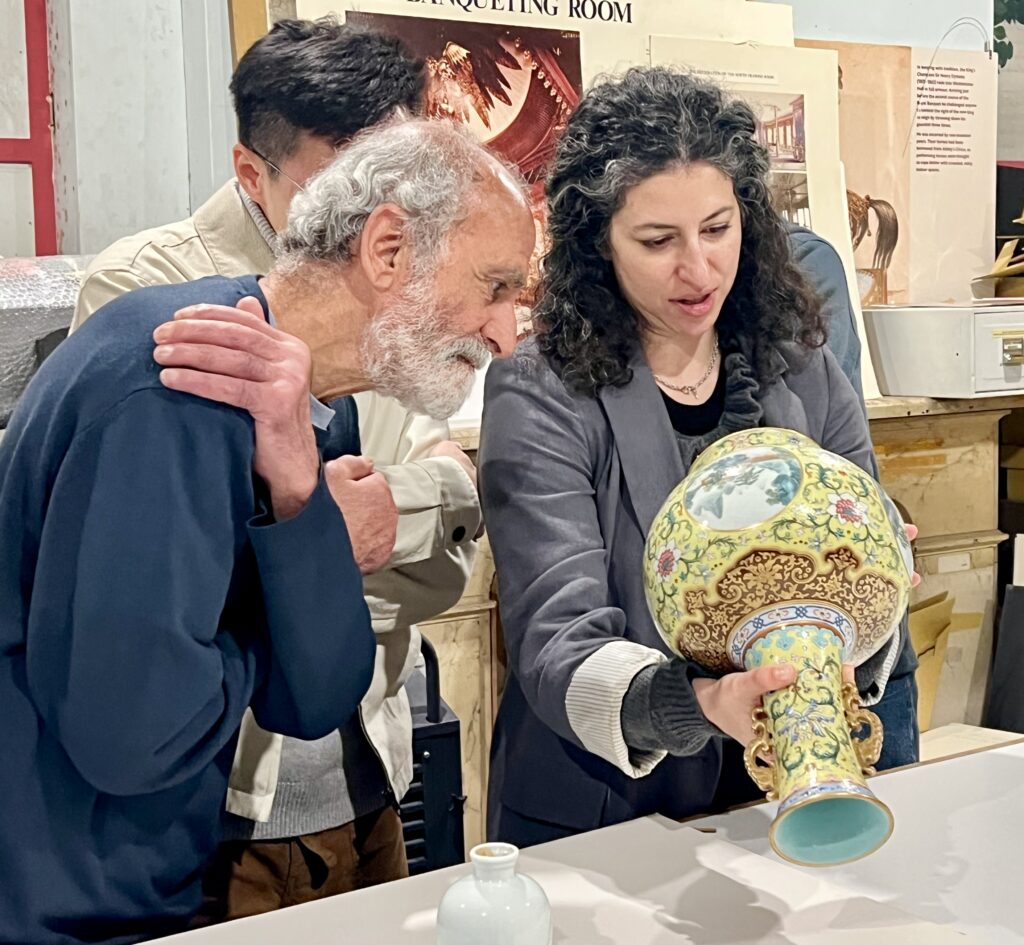
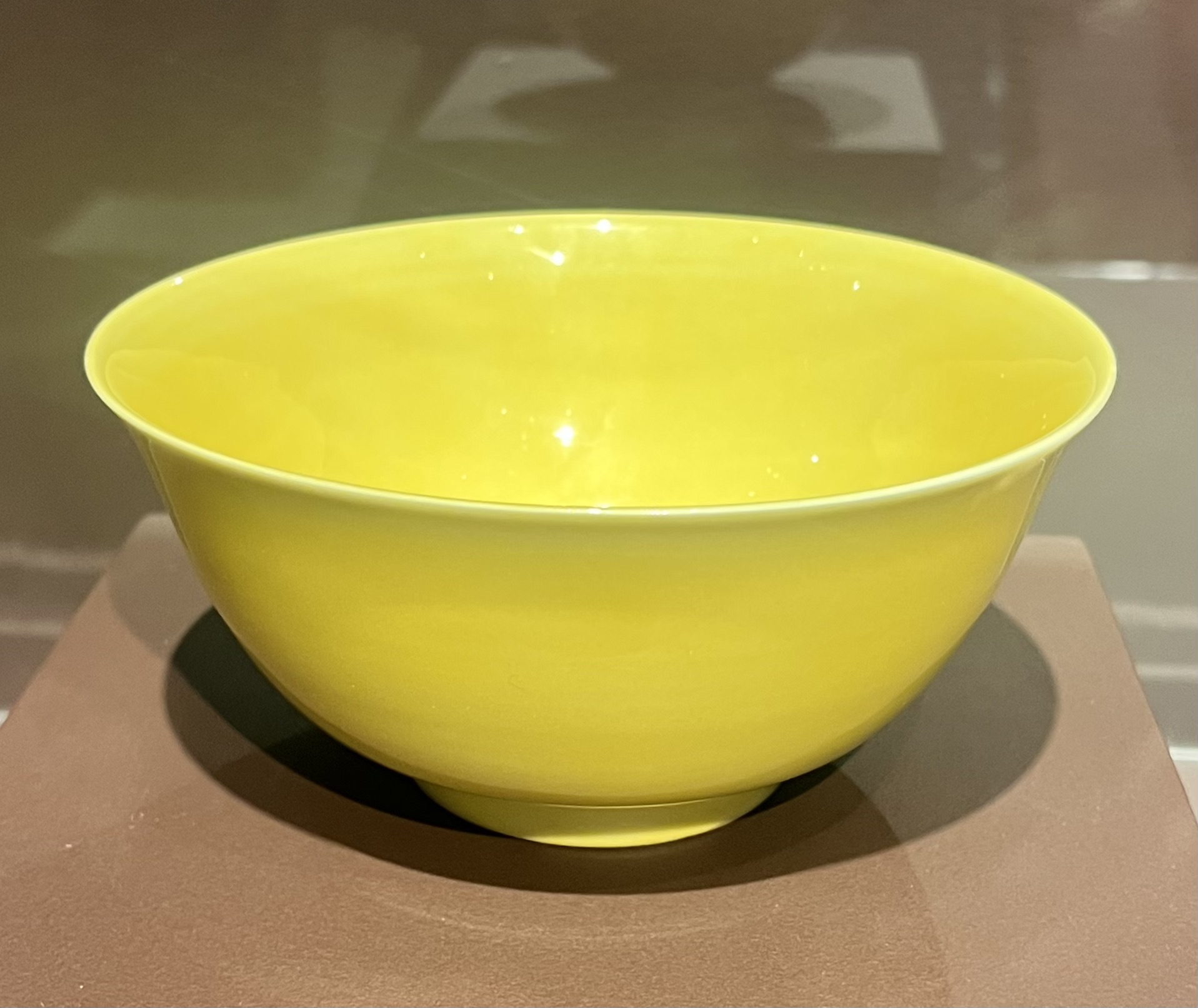
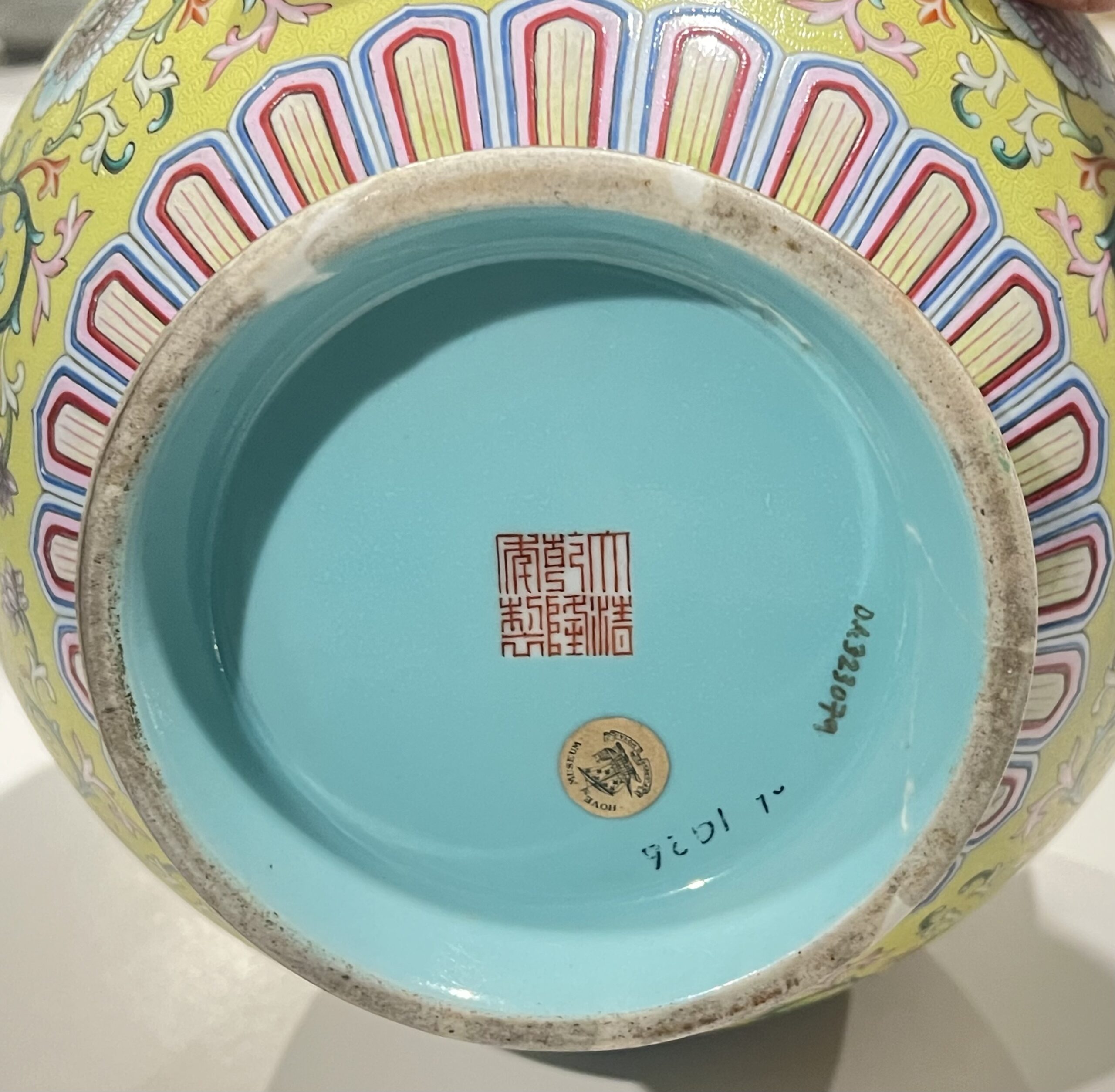
The most significant piece of Qing imperial porcelain that we handled at the Pavilion was the Qianlong seal mark and period yellow sgraffiato ground famille rose vase. The body was painted with four roundels depicting river landscapes. The yellow ground was carved with foliage and then painted with stylised scrolling flowers below a deep rend band of ruyi painted in gilt with flower scrolls. These wares are known as ‘adding flowers to brocade’ (jinshangtianhua) and were manufactured from around 1741.
To the eye of the novice, these can quite rightly be seen as somewhat gaudy and over decorated. However, these pieces have become to be recognised as the high Qianlong style and continuously make records when selling at auction.

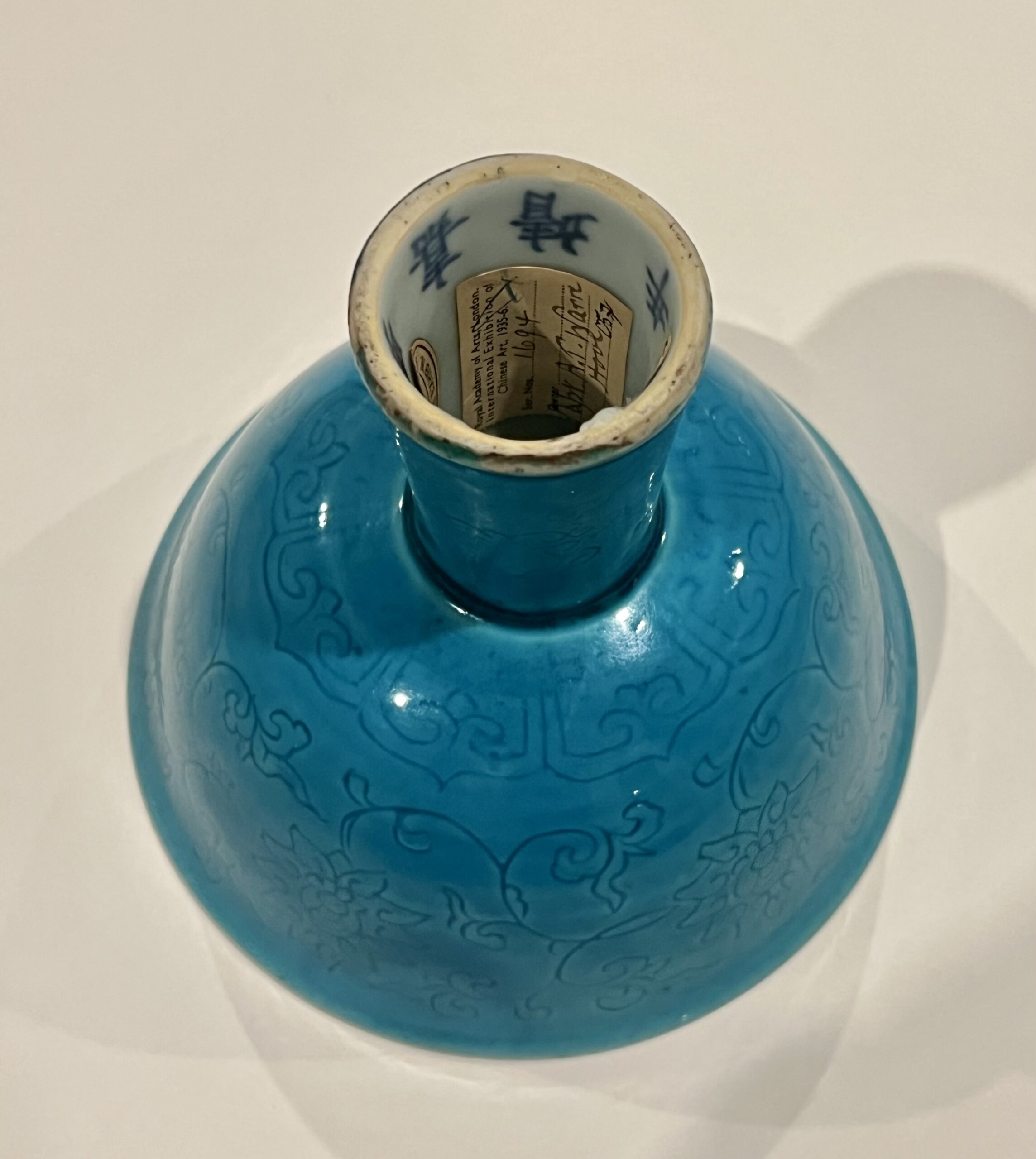
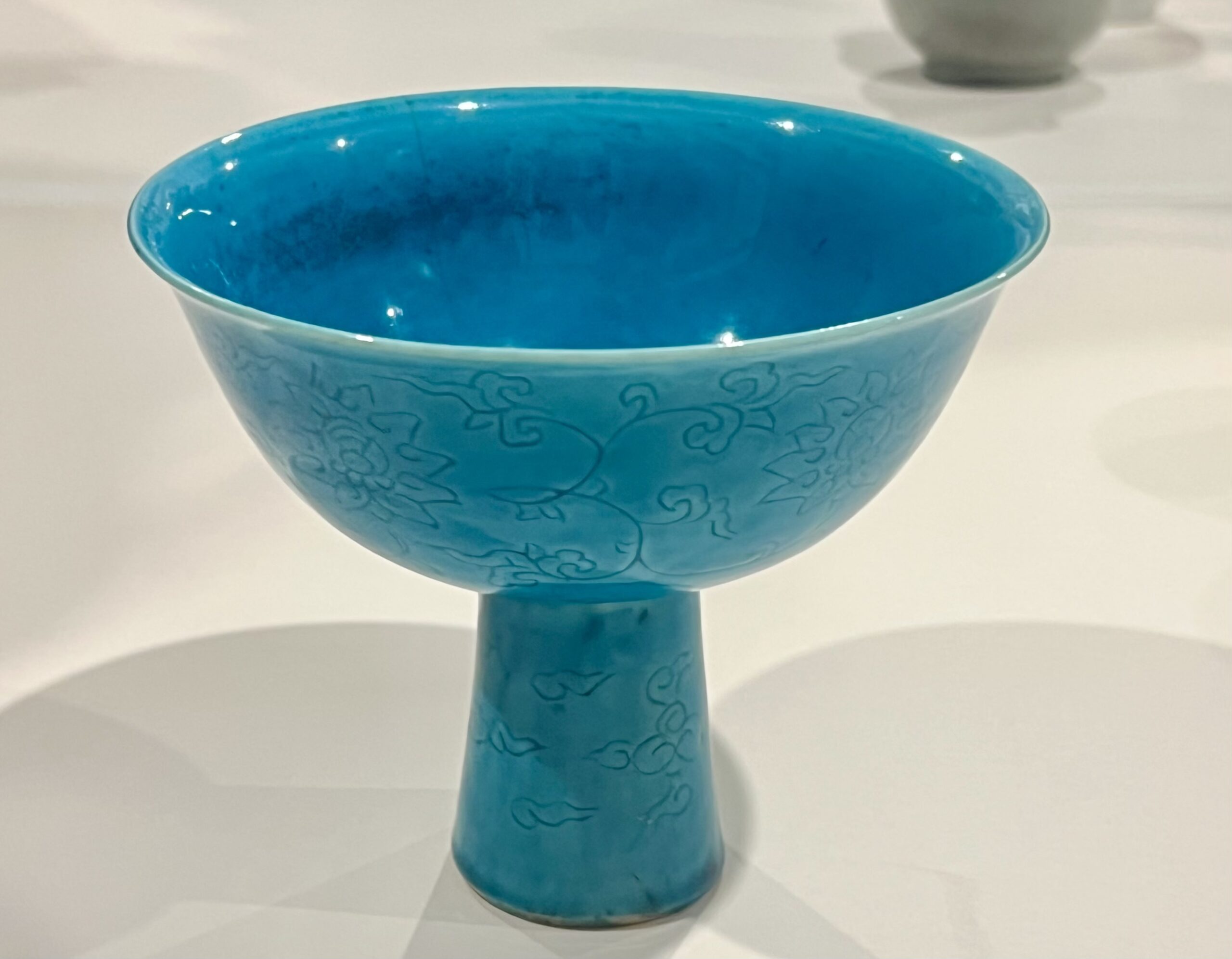
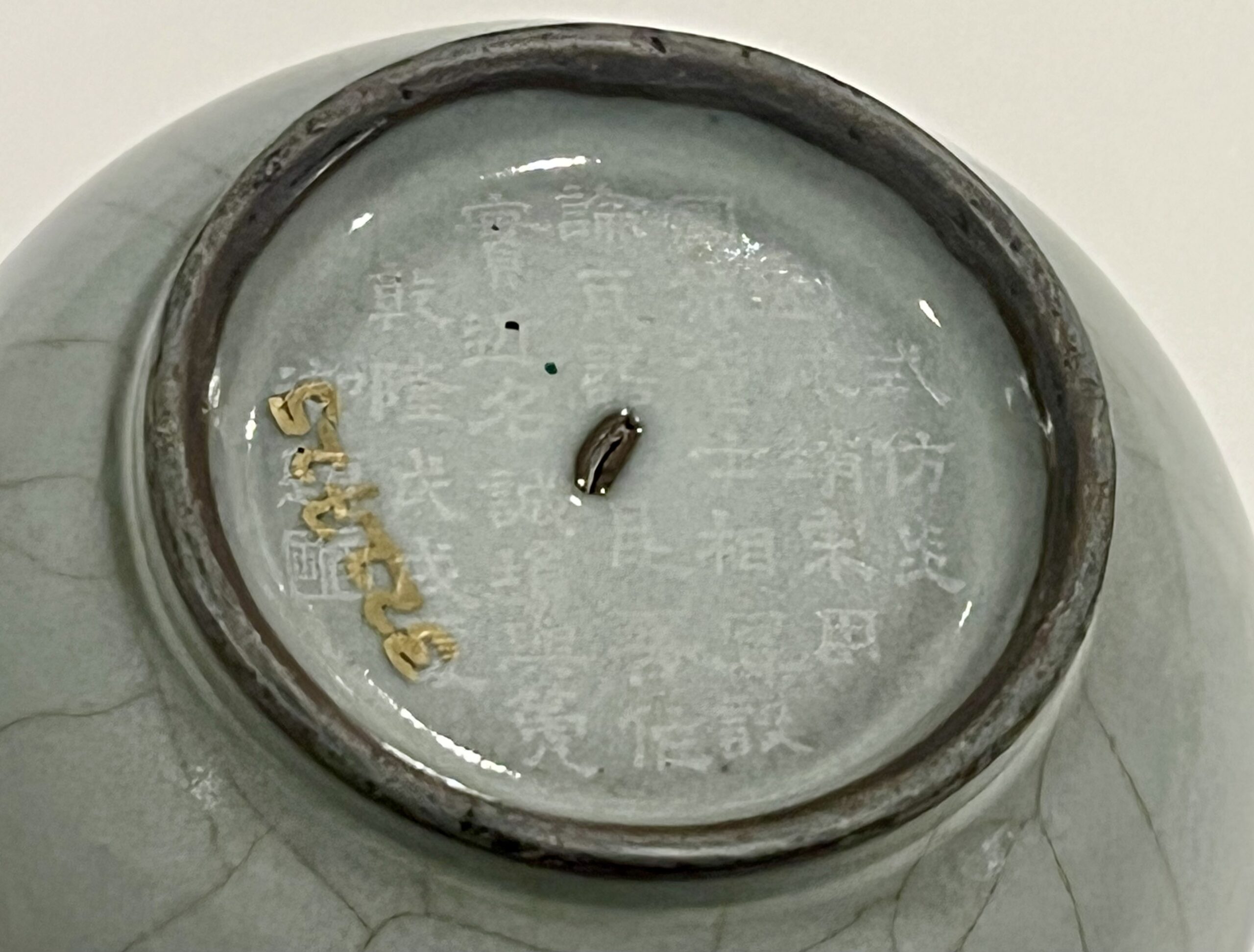
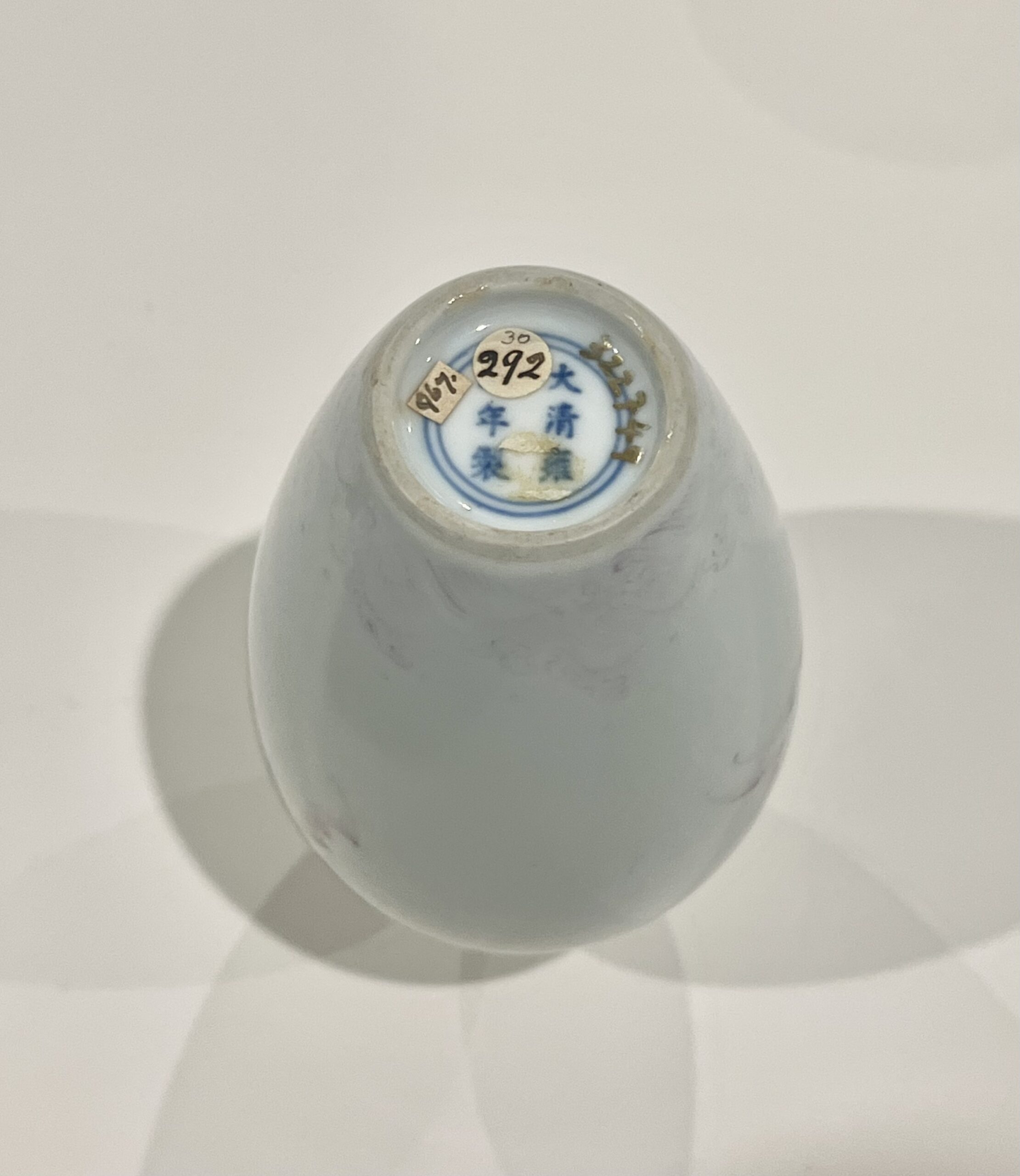
The rarest Ming dynasty monochrome that we were to handle that day was the Jiajing mark and period turquoise stem cup. It was from the Warre Collection and had been lent to the Chinese 1935-1936 Exhibition at the Royal Academy. It is of a very rare type and the exterior is incised with a meandering lotus scroll. The six-character mark is rendered to the interior of the foot in underglaze blue.
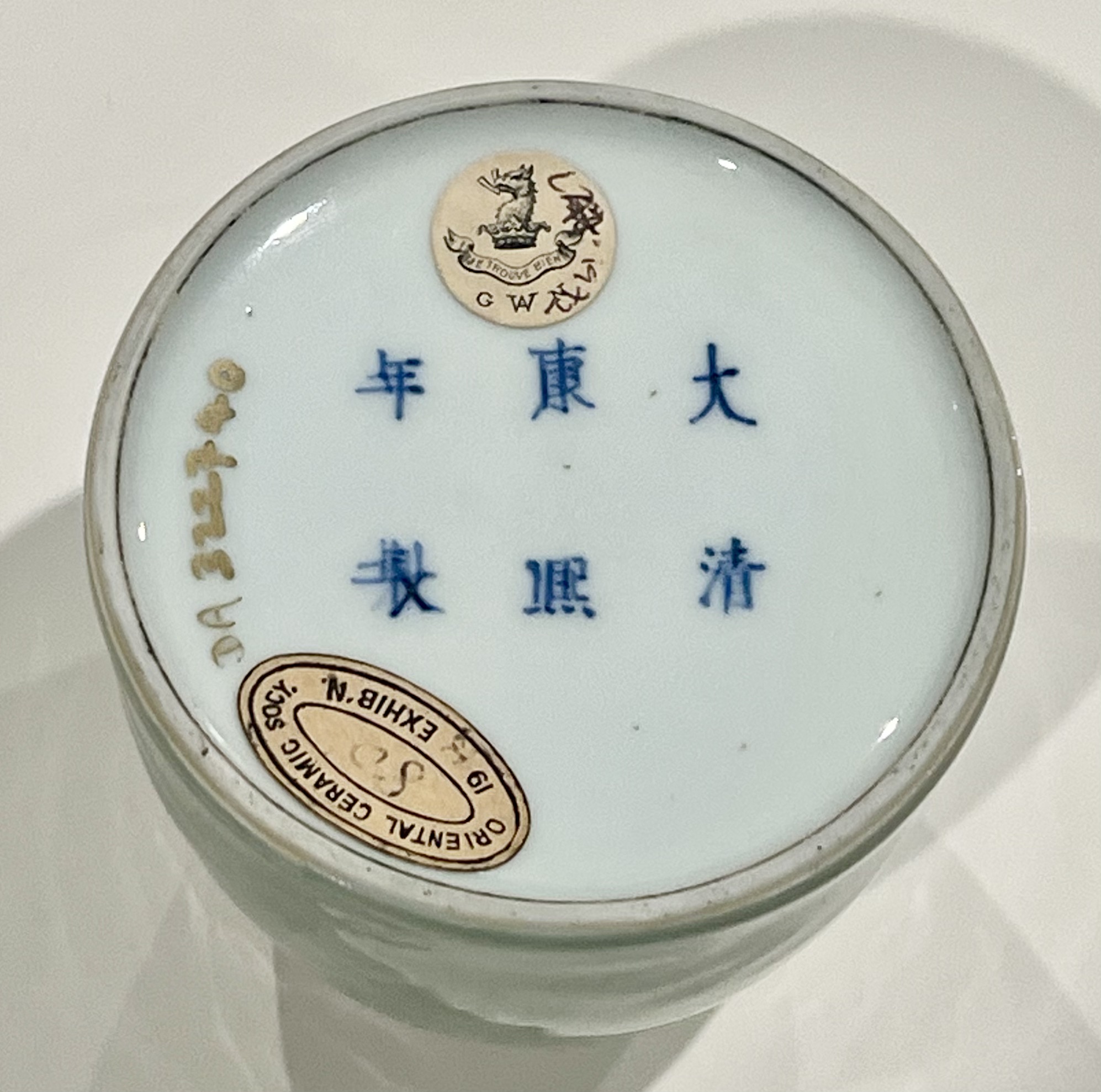
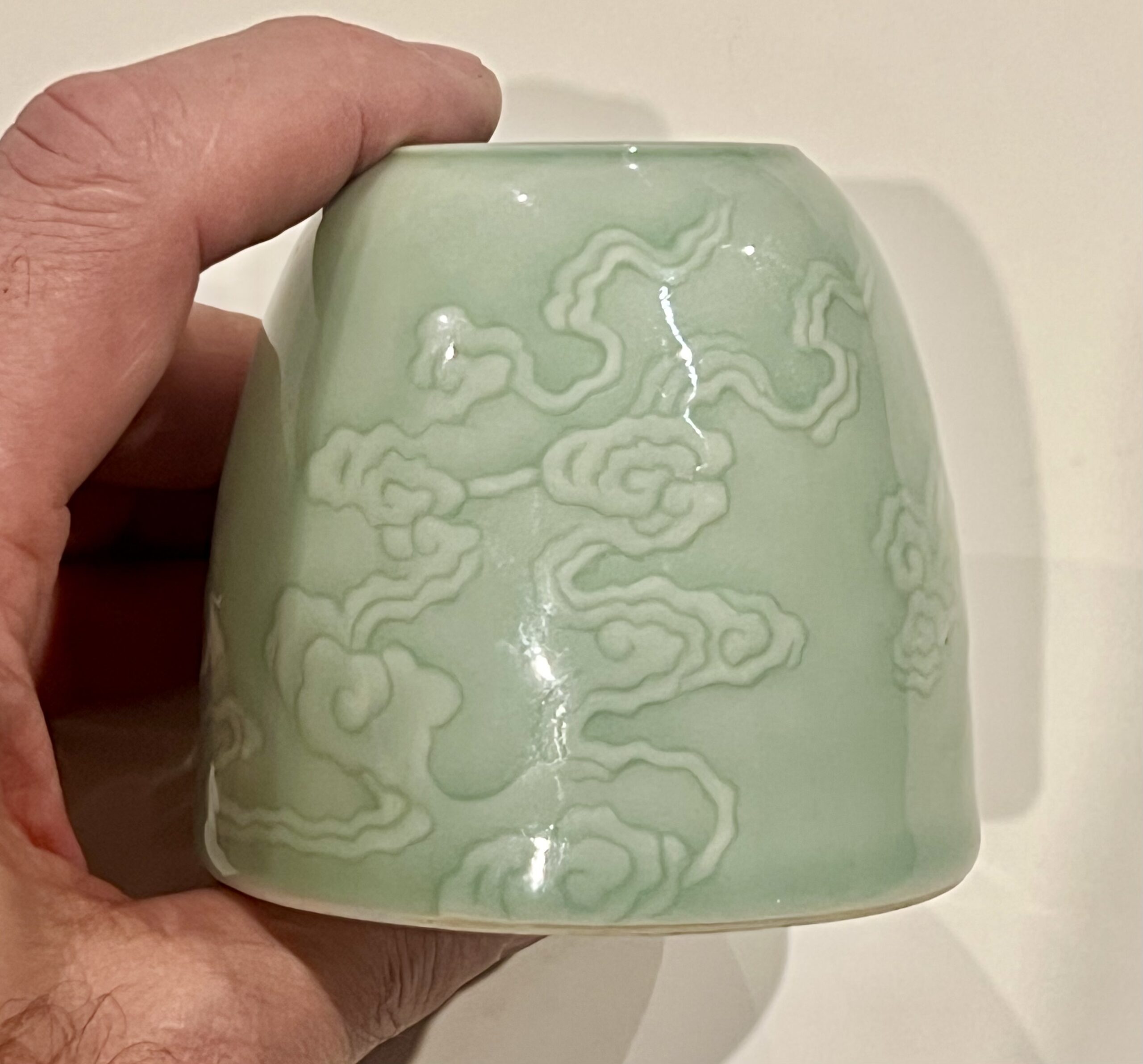
Another fine Qing monochrome we handled was the Kangxi mark and period celadon-glazed waterpot. It was finely carved with swirling clouds and covered with an even pale celadon glaze.
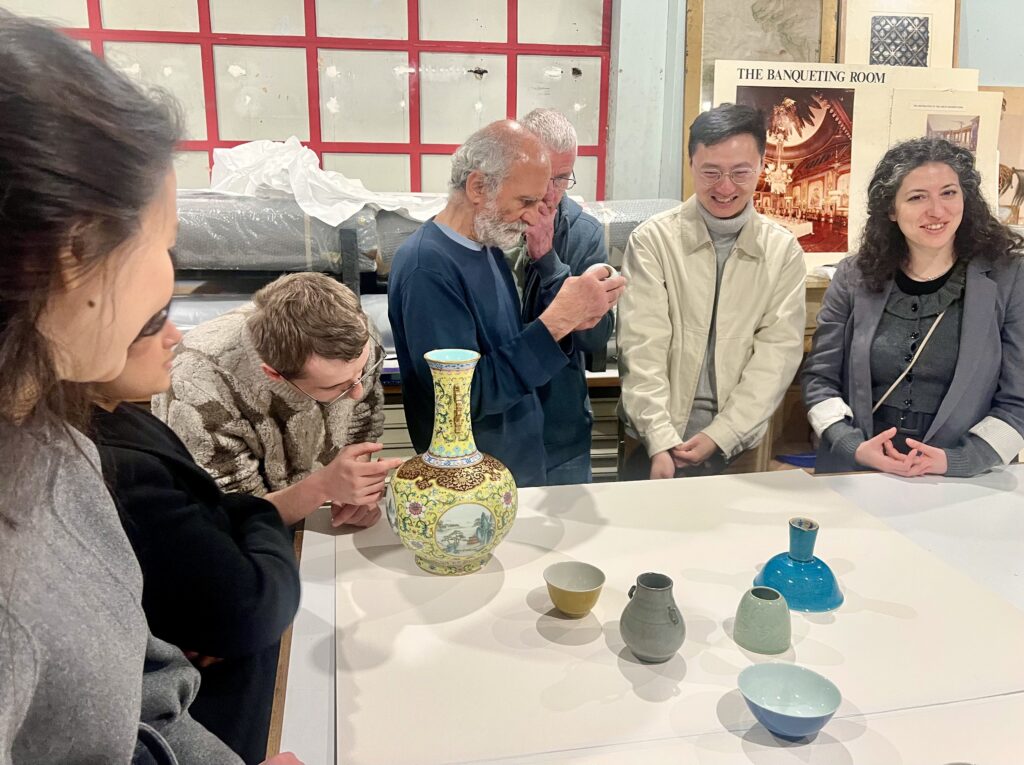
It was a really enjoyable day with some interesting discussion on many of the pieces and we are grateful to Alexandra and her team in making the pieces available for us to see.



Around the Rooms for the London Chinese Art Sales

Christie’s – The Flacks Family Collection II: Curtain Call
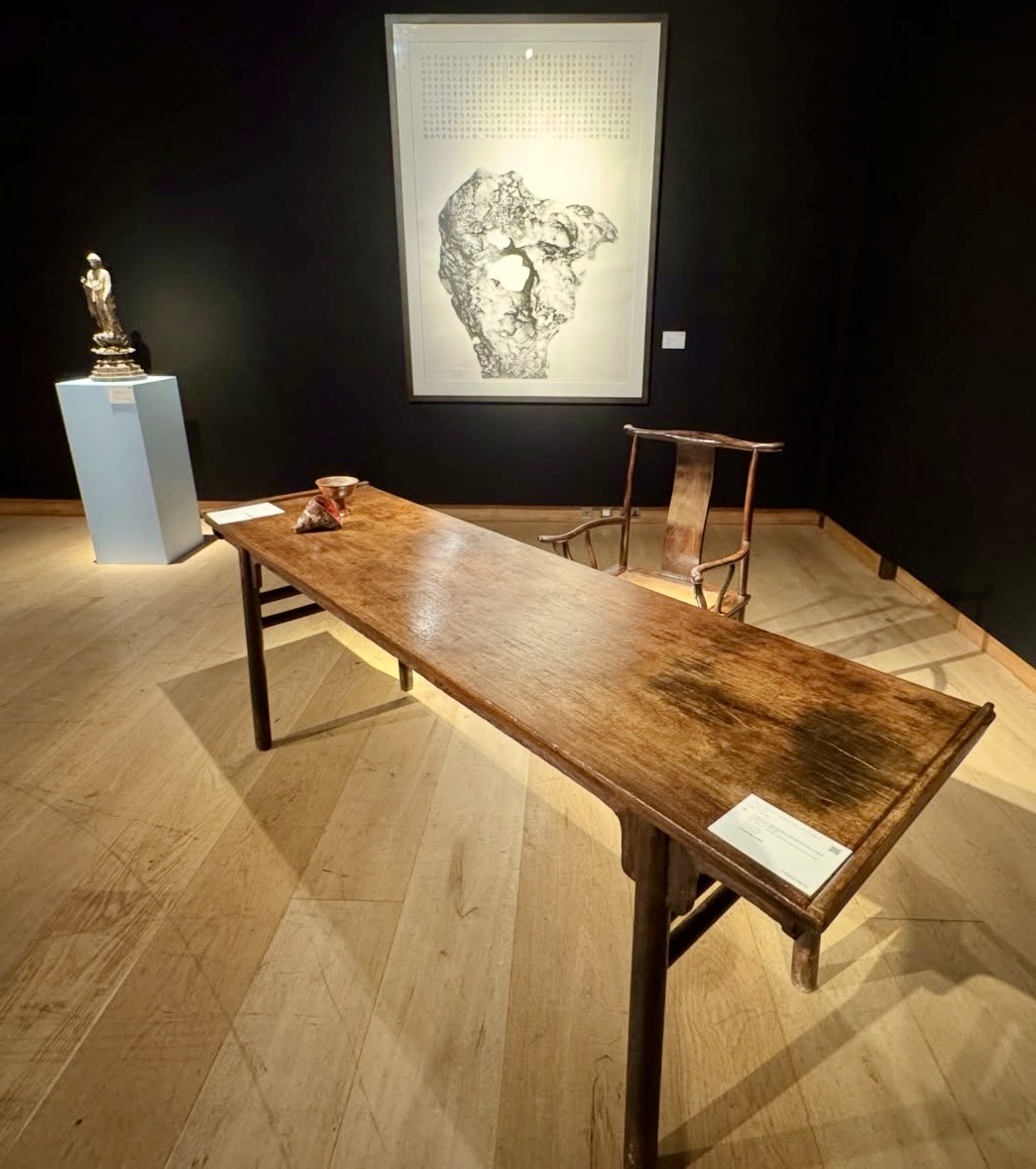
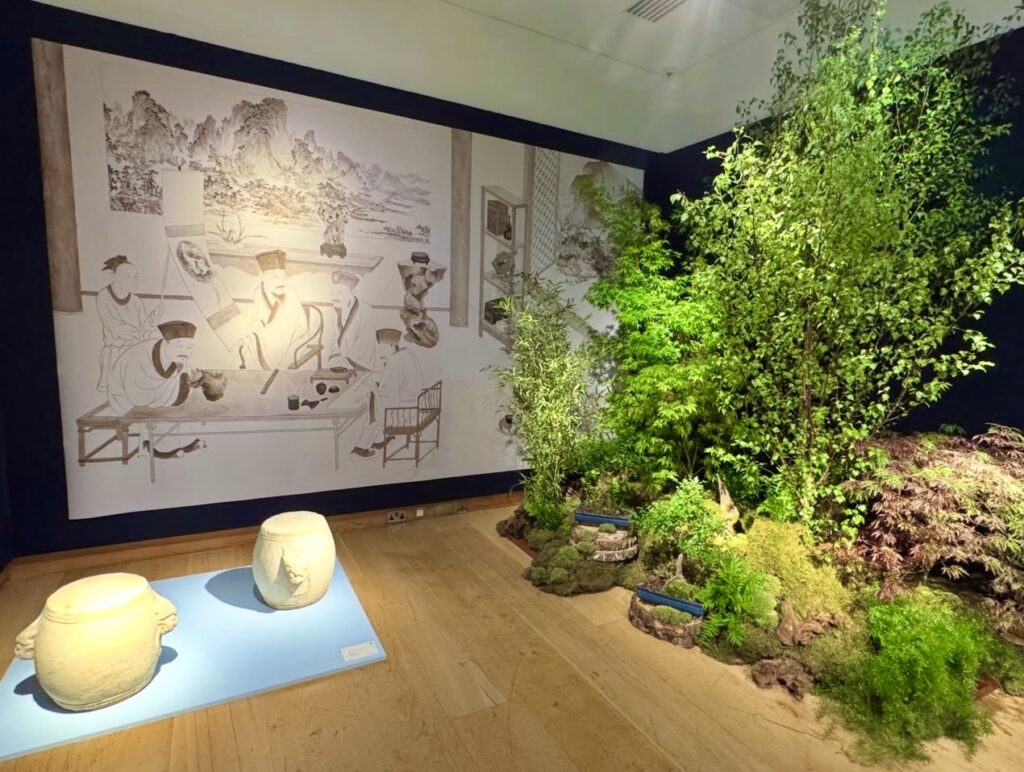
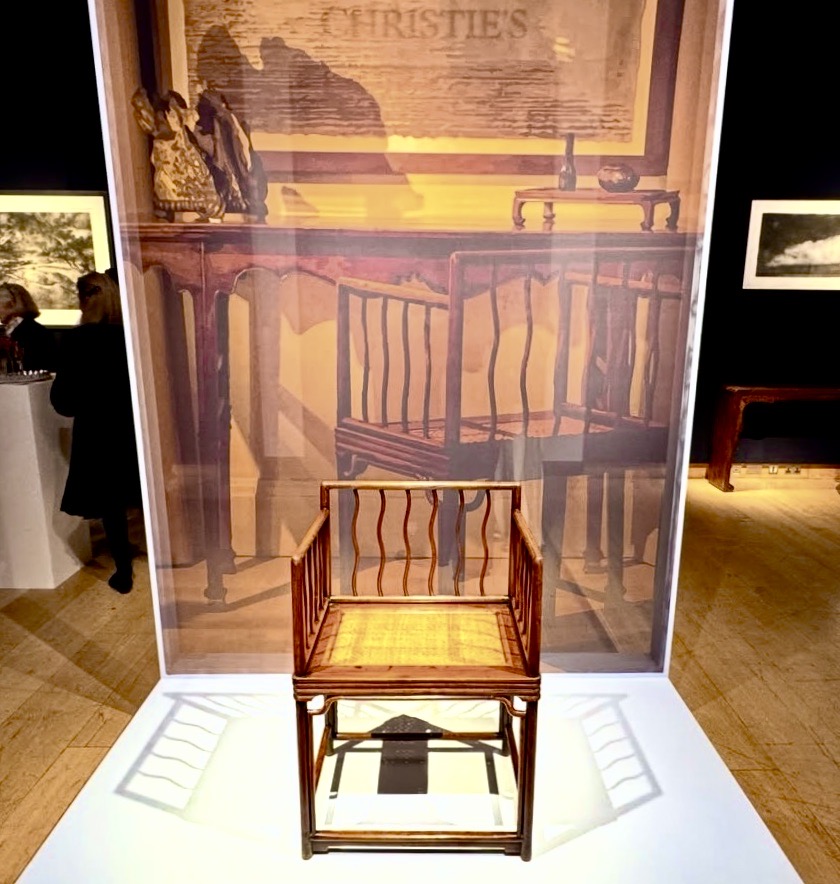
This season in London was to hold the first live Chinese sale with Christie’s since November 2020. It was the single owner sale of The Flacks Family Collection II: Curtain Call and it featured some top quality huanghuali furniture, scholars rocks, paintings and sculpture.
On 11 May, Christie’s held a discussion panel on The Art of Design and Craftsmanship: Ming to Chippendale & British Contemporary, which featured Marcus Flacks, Thomas Williams, the head of Furniture at Christie’s and Martin Penrose, the managing director of Benchmark, who made the new auction rostrums for Christie’s.
The discussions focused on design classics and how good design is really timeless. This is quite true with Chinese furniture, which does not feel out of place in modern homes today.

The top selling piece of the sale was lot 8 the rare and important late 16th/early 17th century huanghuali flush-mitred joint recessed-leg table. This table is beautifully proportioned, with a beaded bracket-lobed apron, with elegant, slightly tapering legs. It was estimated at £700,000-900,000 and sold well over this figure at £1.51 million.
The sale was the highest in total of the week at £4.09 million against a low estimate of £1.56 million.


Bonhams – Fine Chinese Art

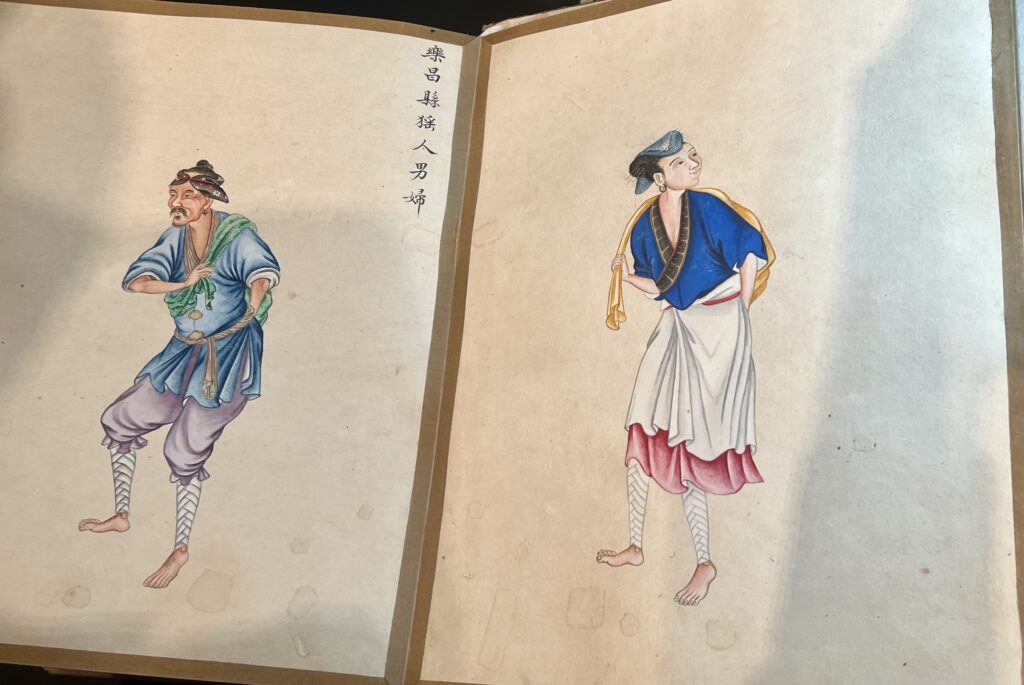
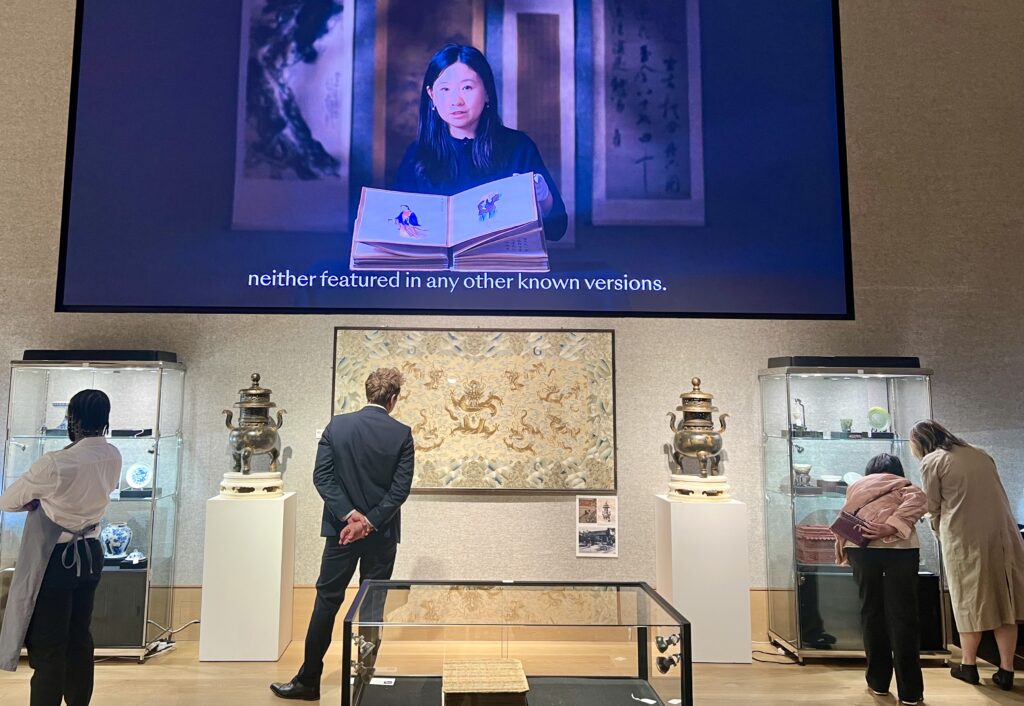
The most interesting piece in this sale (and second highest selling) was lot 19, the very rare Qianlong period album of tributary peoples, zhigong tu. Edward Luper very kindly showed us the album and translated the nationalities of the various figures depicted within.
They were individually really finely painted showing each figure in their national dress on a plain background. It had come from Martyn Gregory and sold for £95,659 (Estimate £80,000-120,000).



The highest selling piece in the sale was lot 94, the portrait by Yang Feiyun (B. 1954), dated 1987. The figure is seated with her hands crossed in her lap and looking out to the left of the viewer. It had come from a Canadian private collection and was acquired from the artist in 1990. It sold for £102,000 (£80,000-120,000).
Bonhams week of sales totalled £4.44 million.


Some Highlights from the Online and Regional Sales
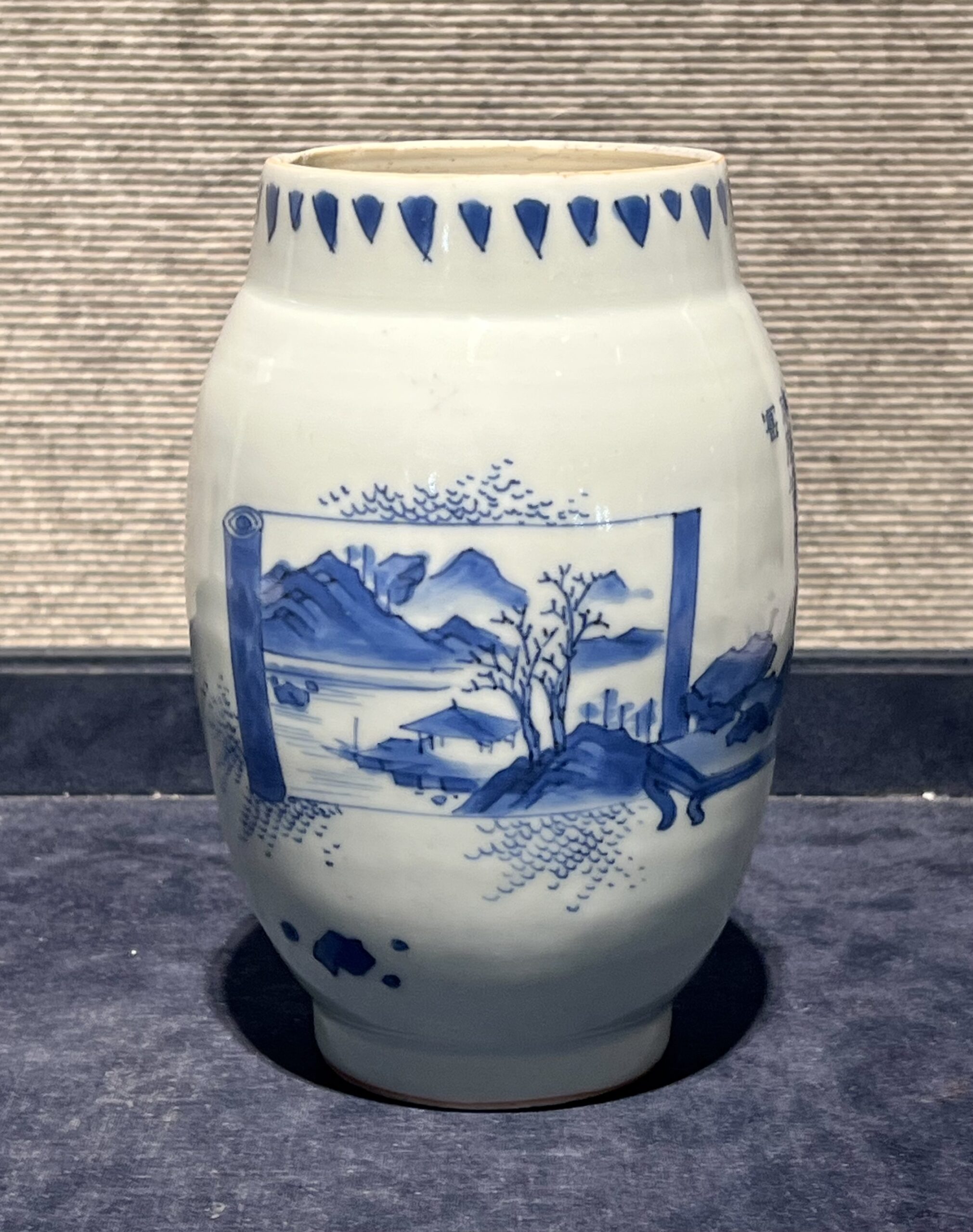
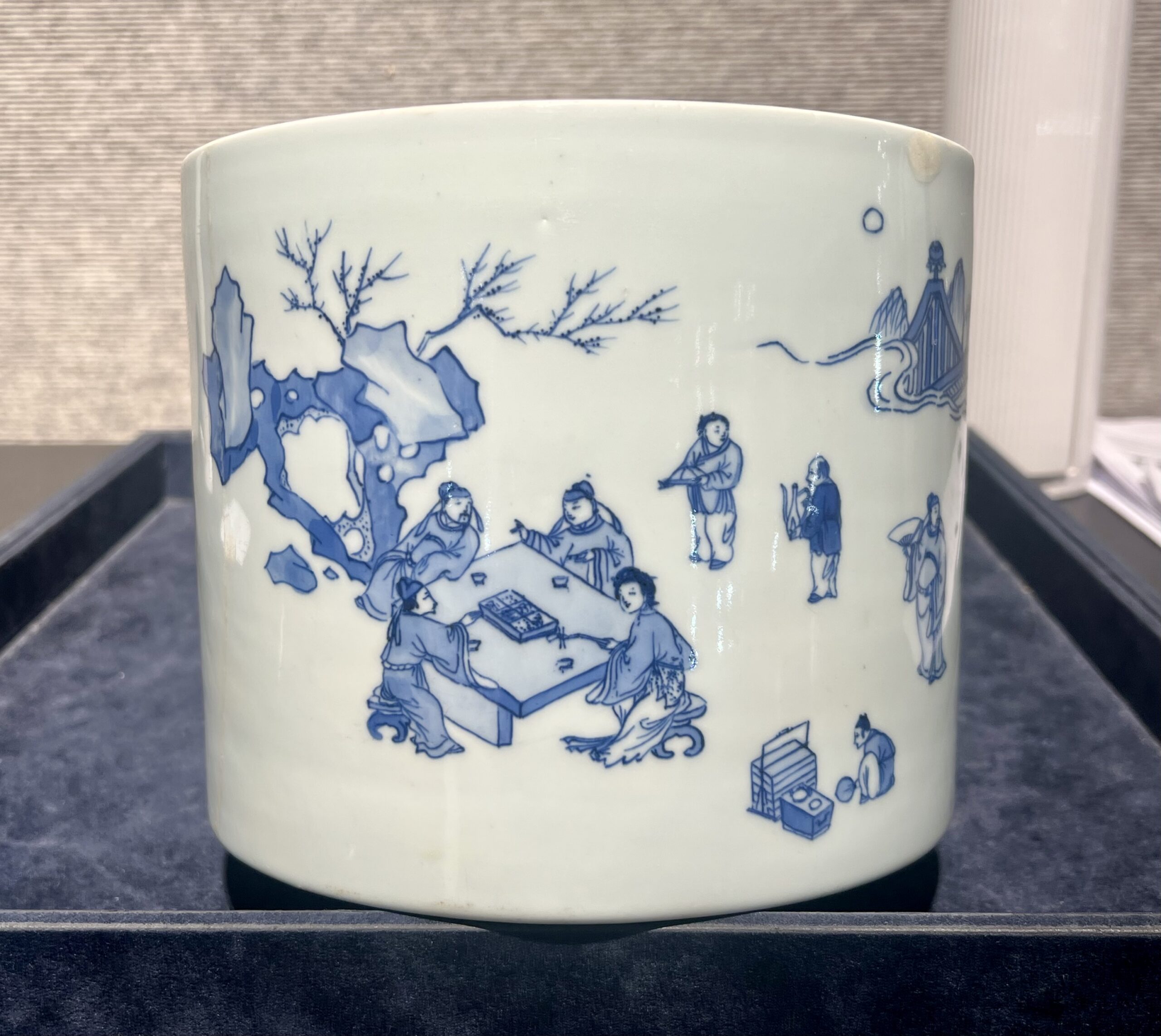
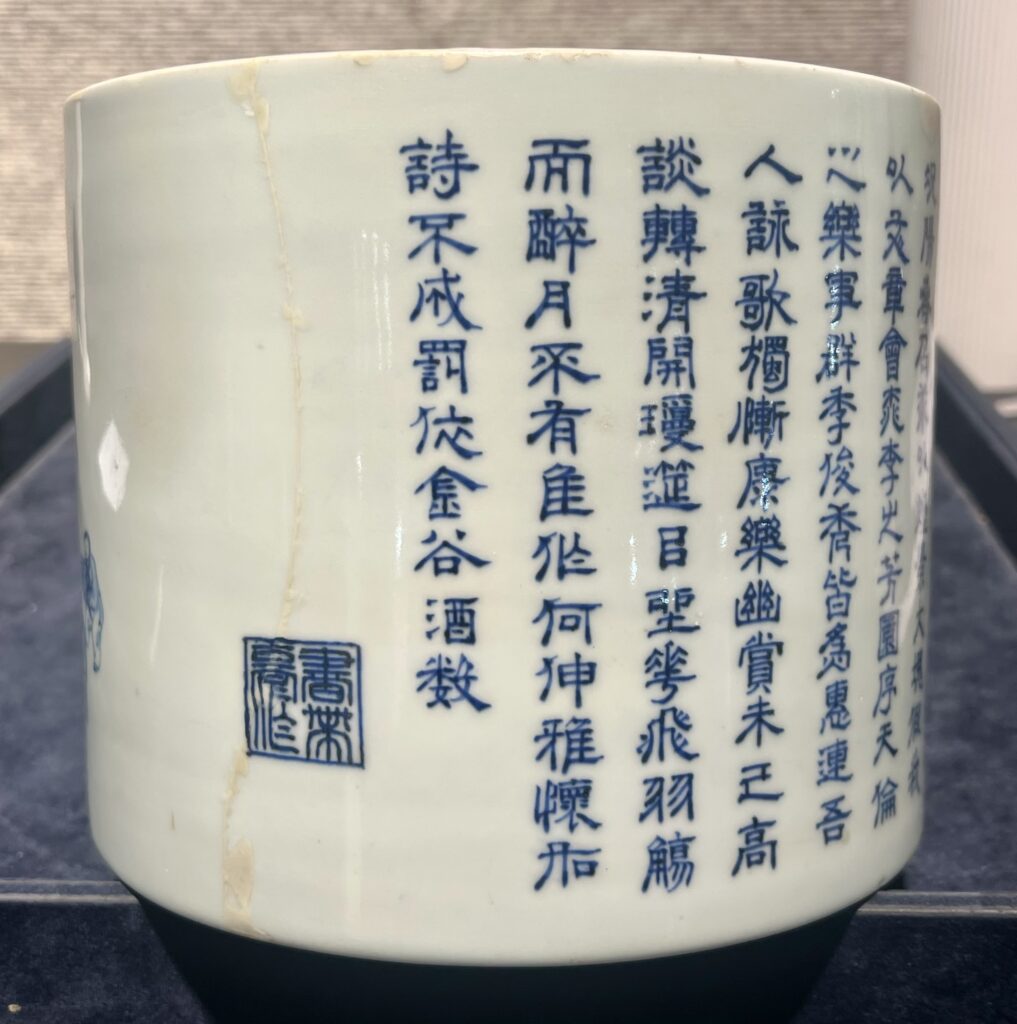
Bonhams – A Life in Ceramics: The Peter and Mary White Collection of Chinese Art, Part III

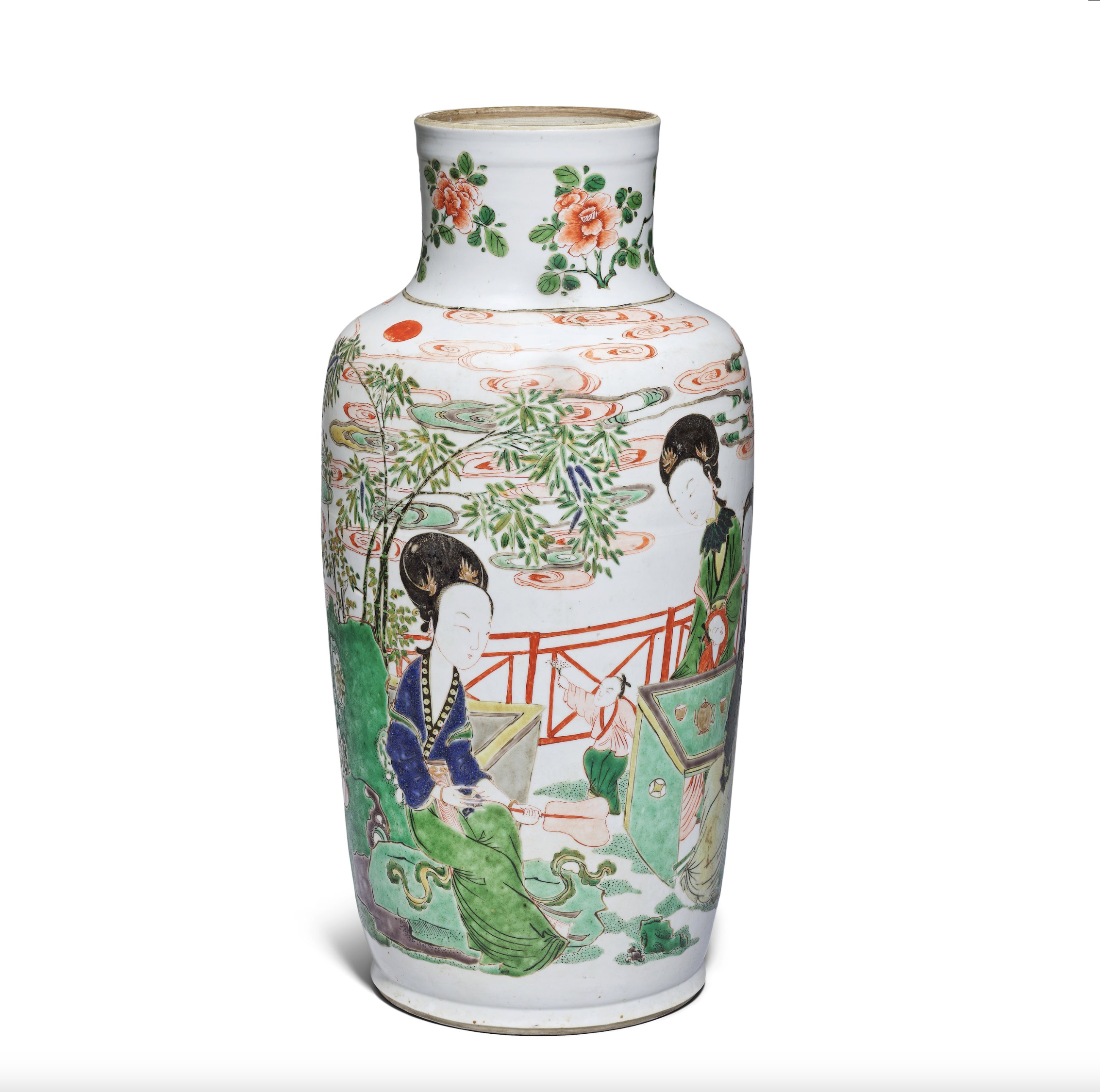
Bonhams – Chinese and Japanese Art from Richard Vandekar Ltd
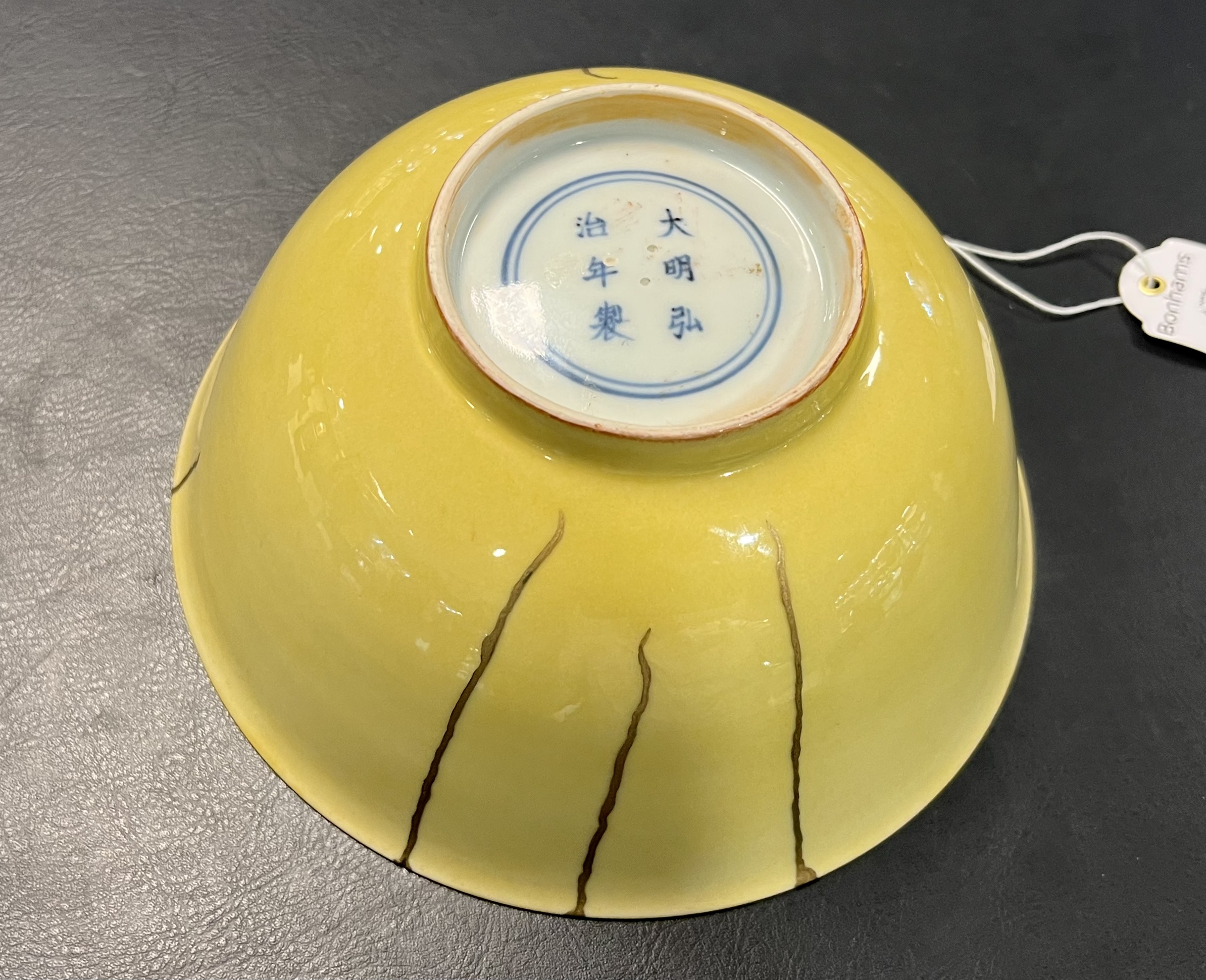
Sotheby’s – Asian Art 5000 Years
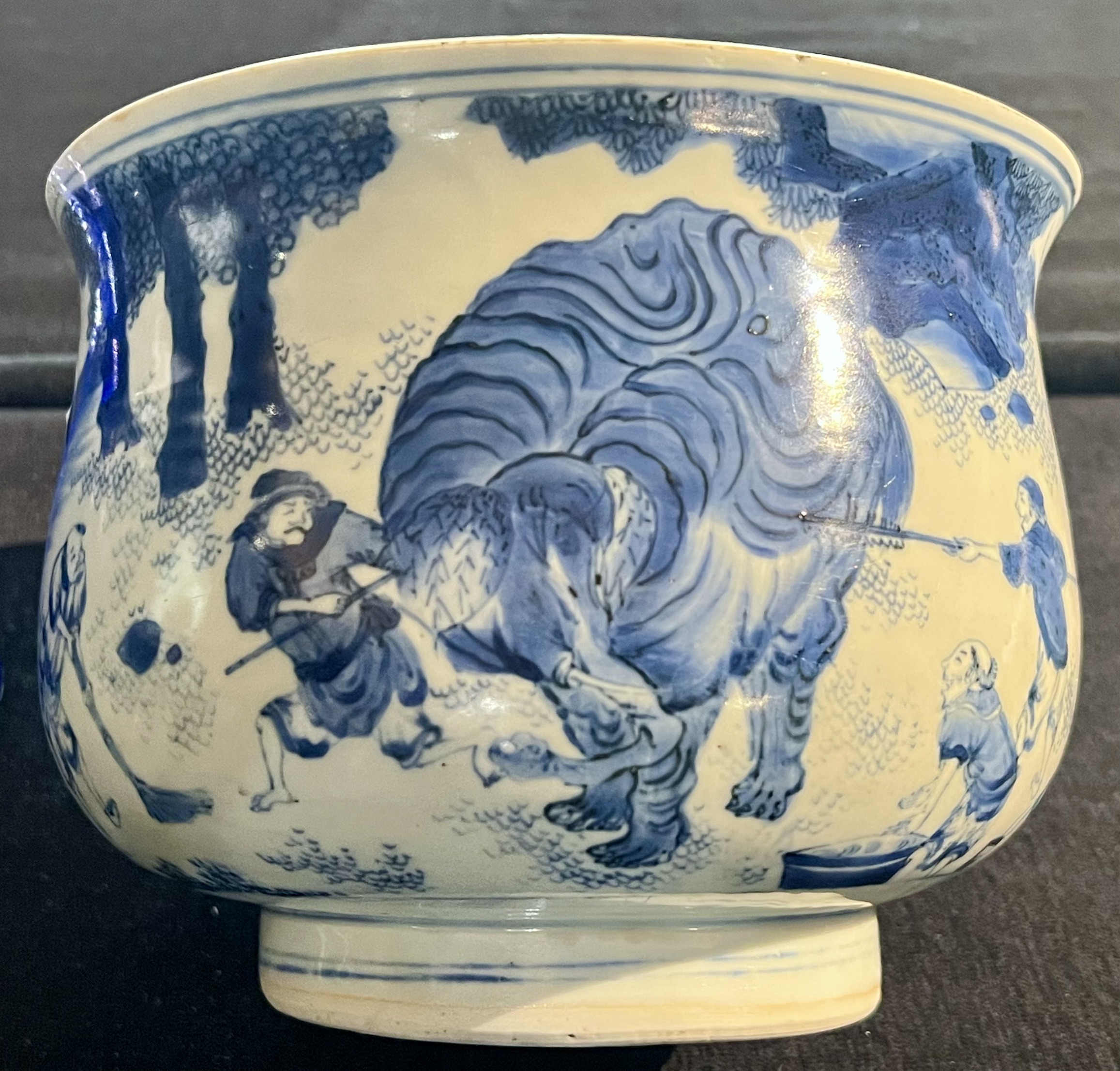
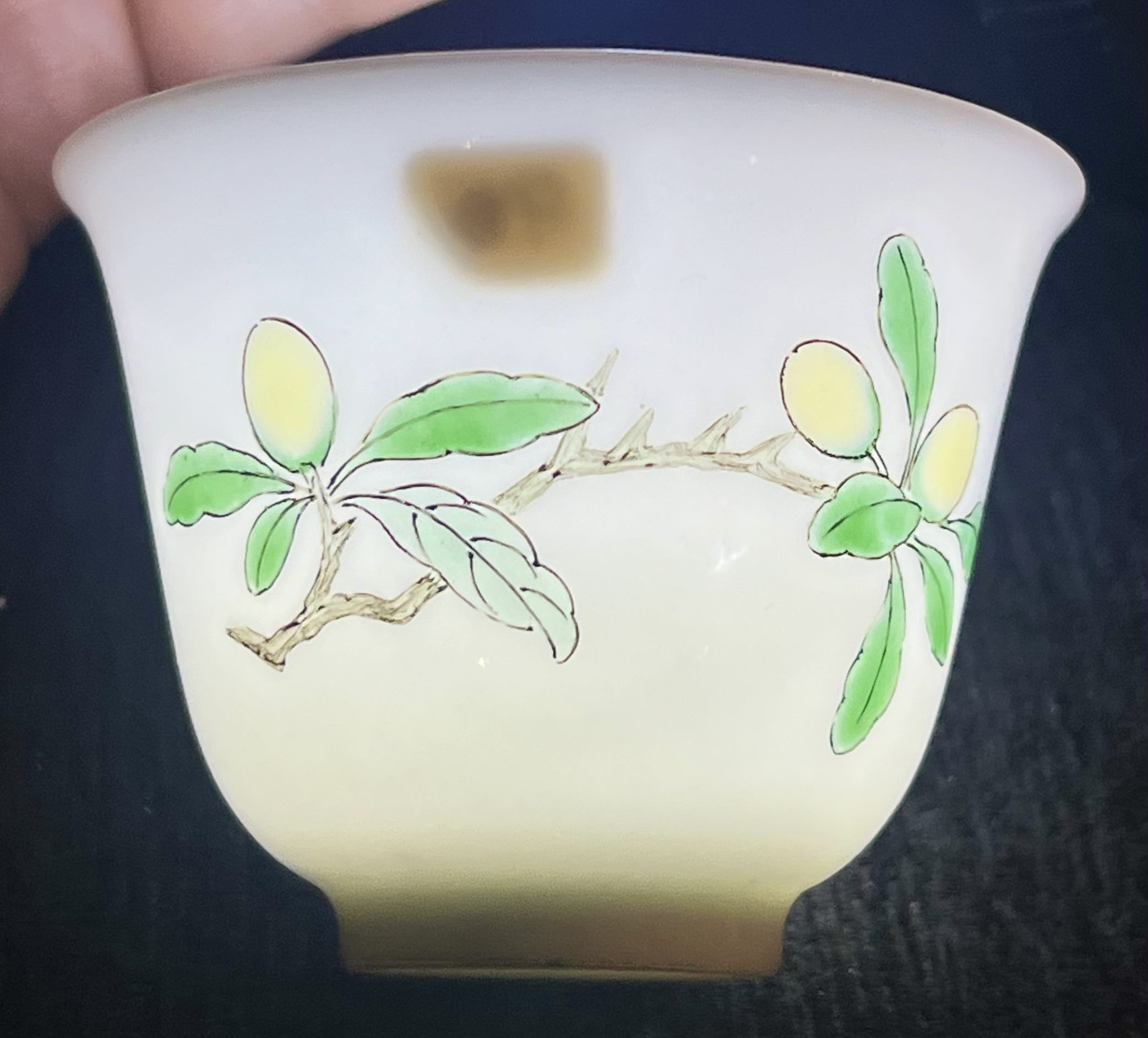
Chiswick – Chinese Art
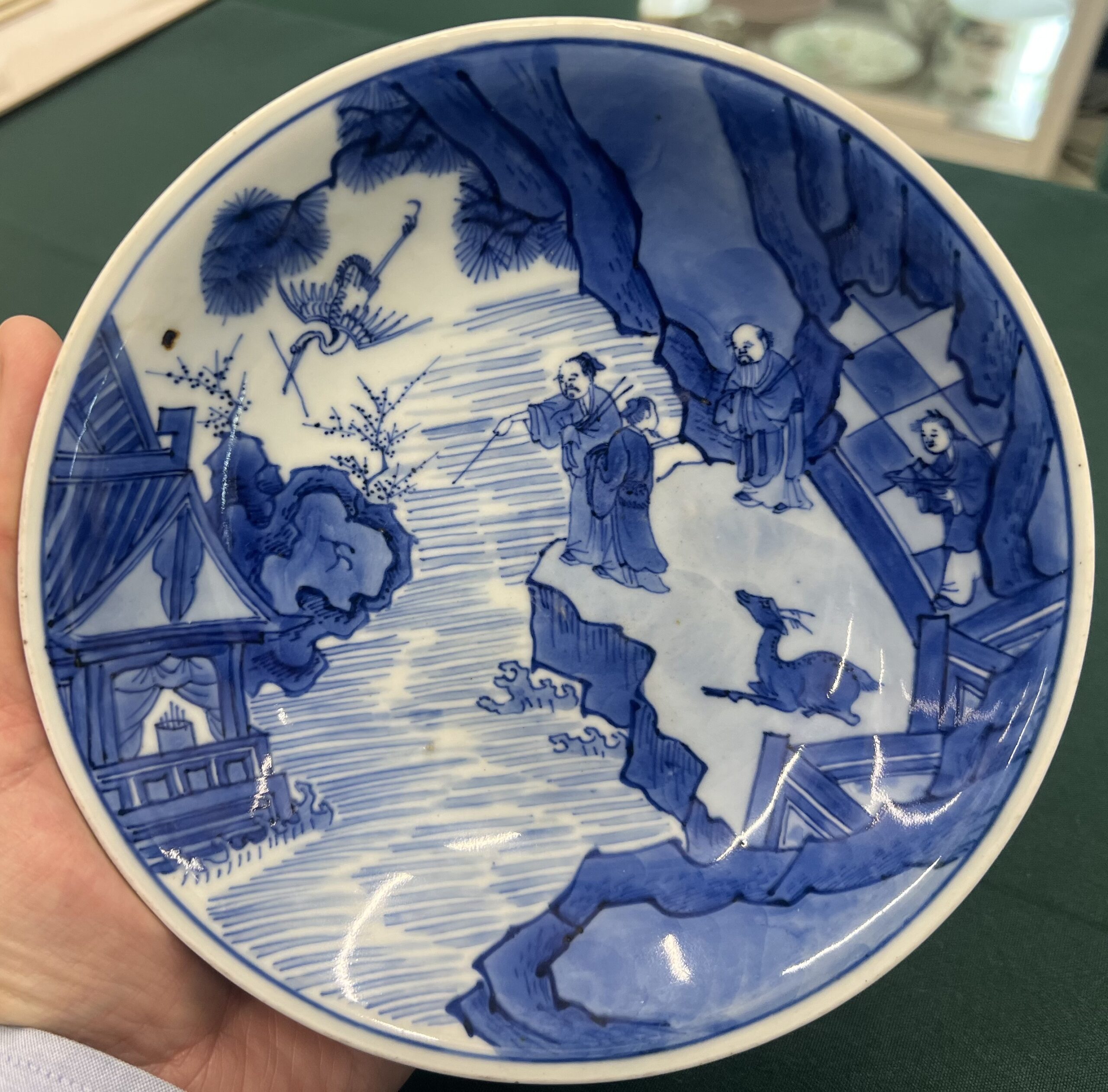

Dore & Rees – Fine Asian Art

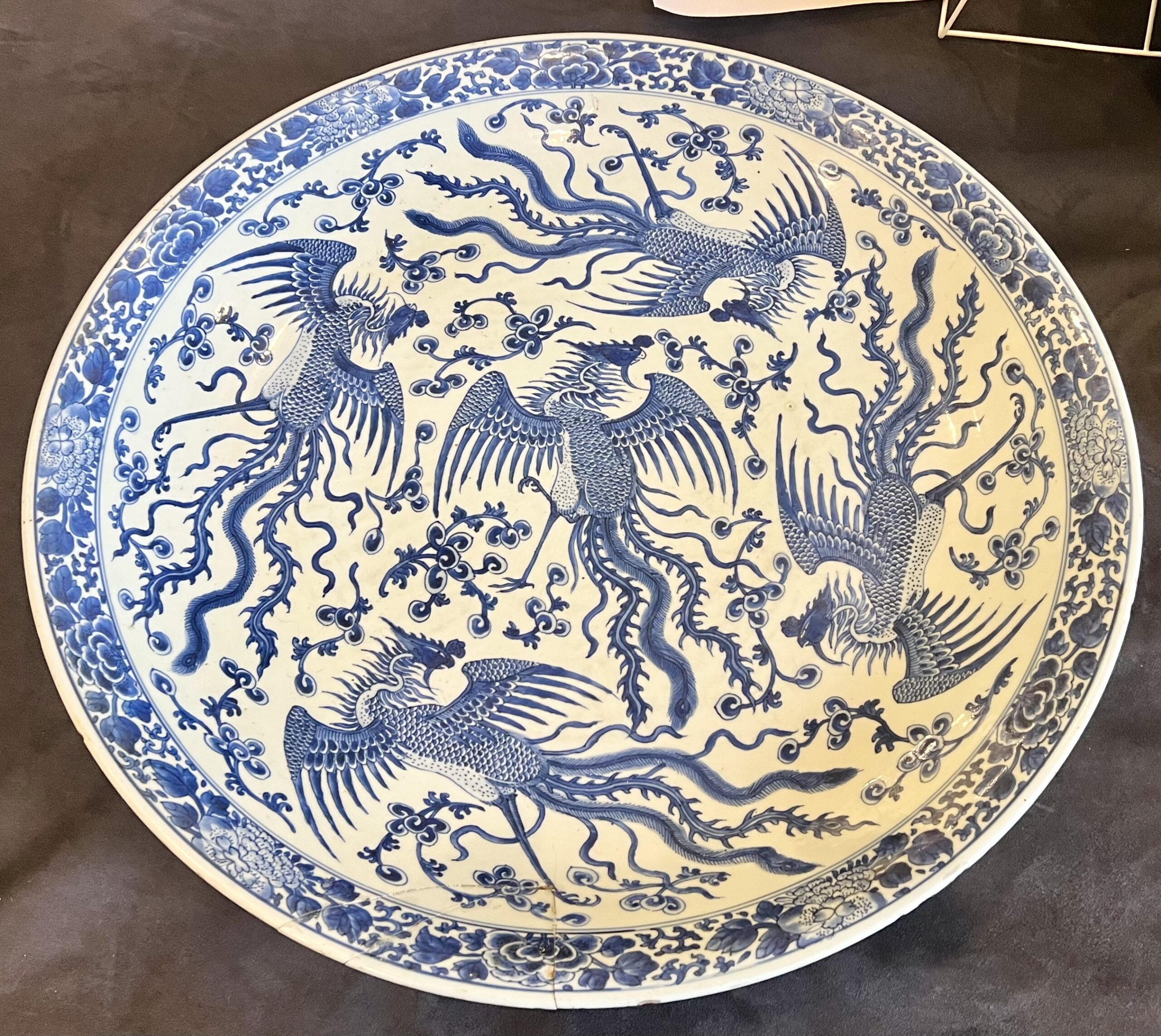
Rosebery – Chinese, Japanese and South East Asian Art


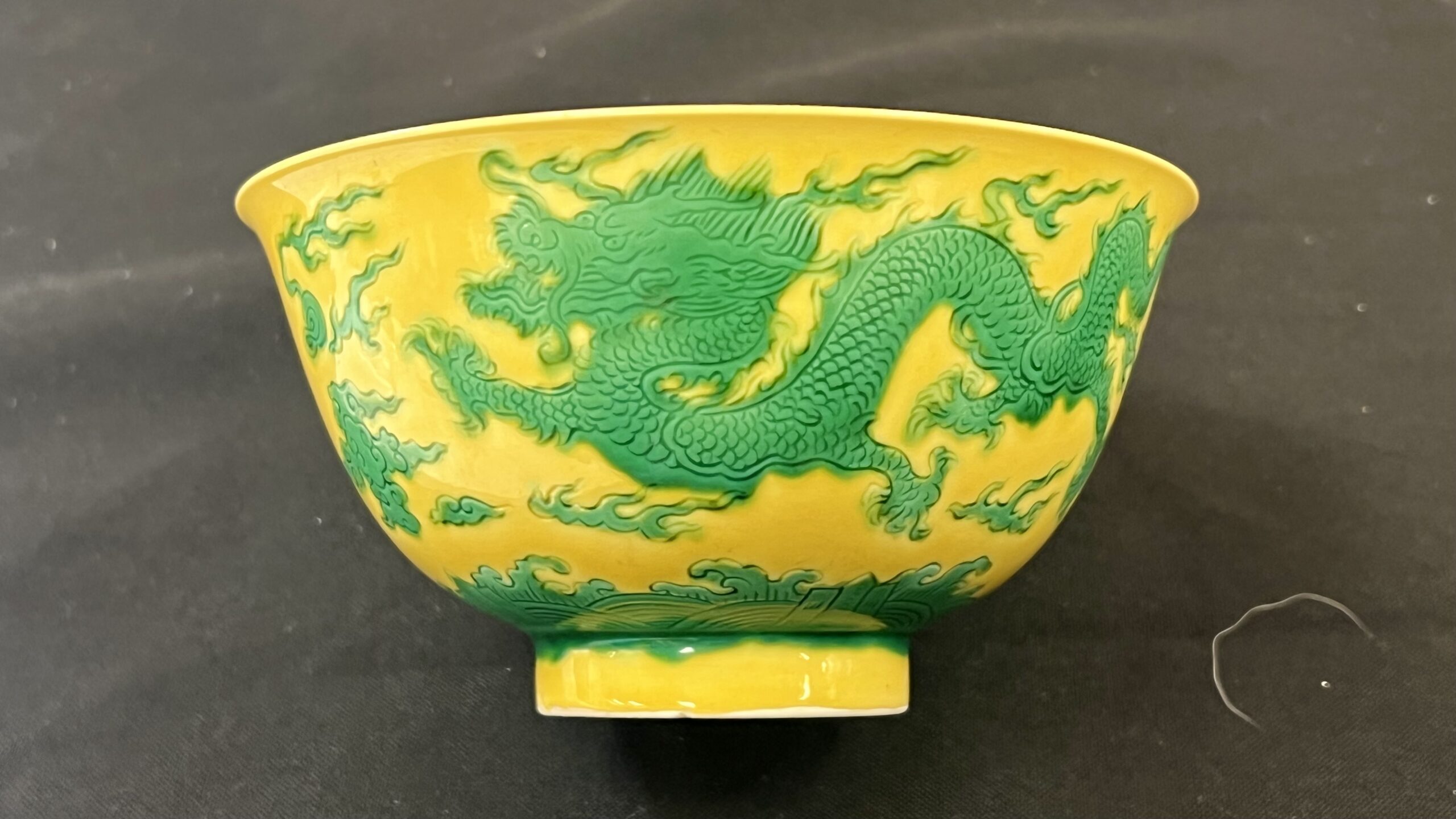
Woolley and Wallis – Fine Asian Art
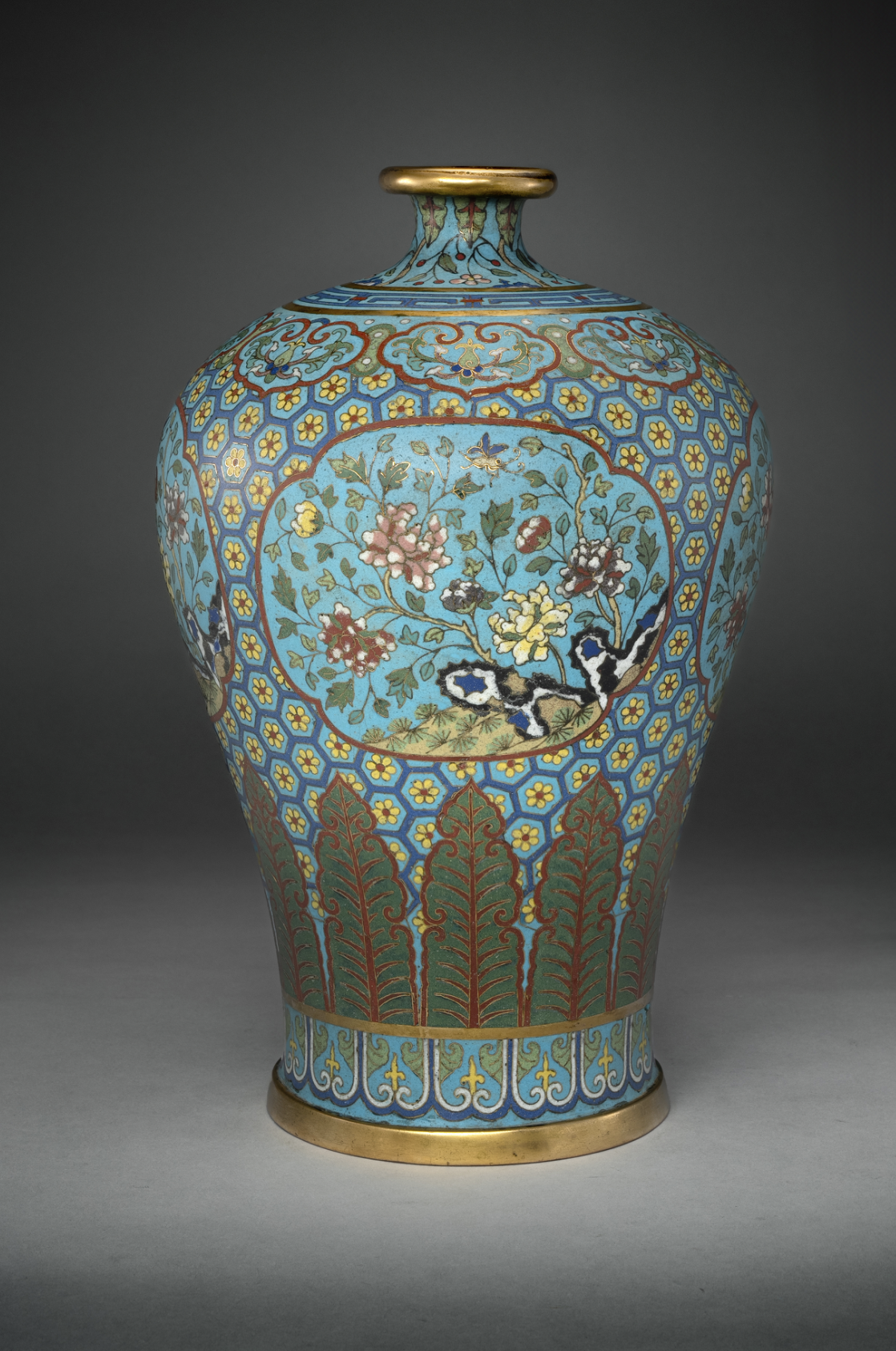
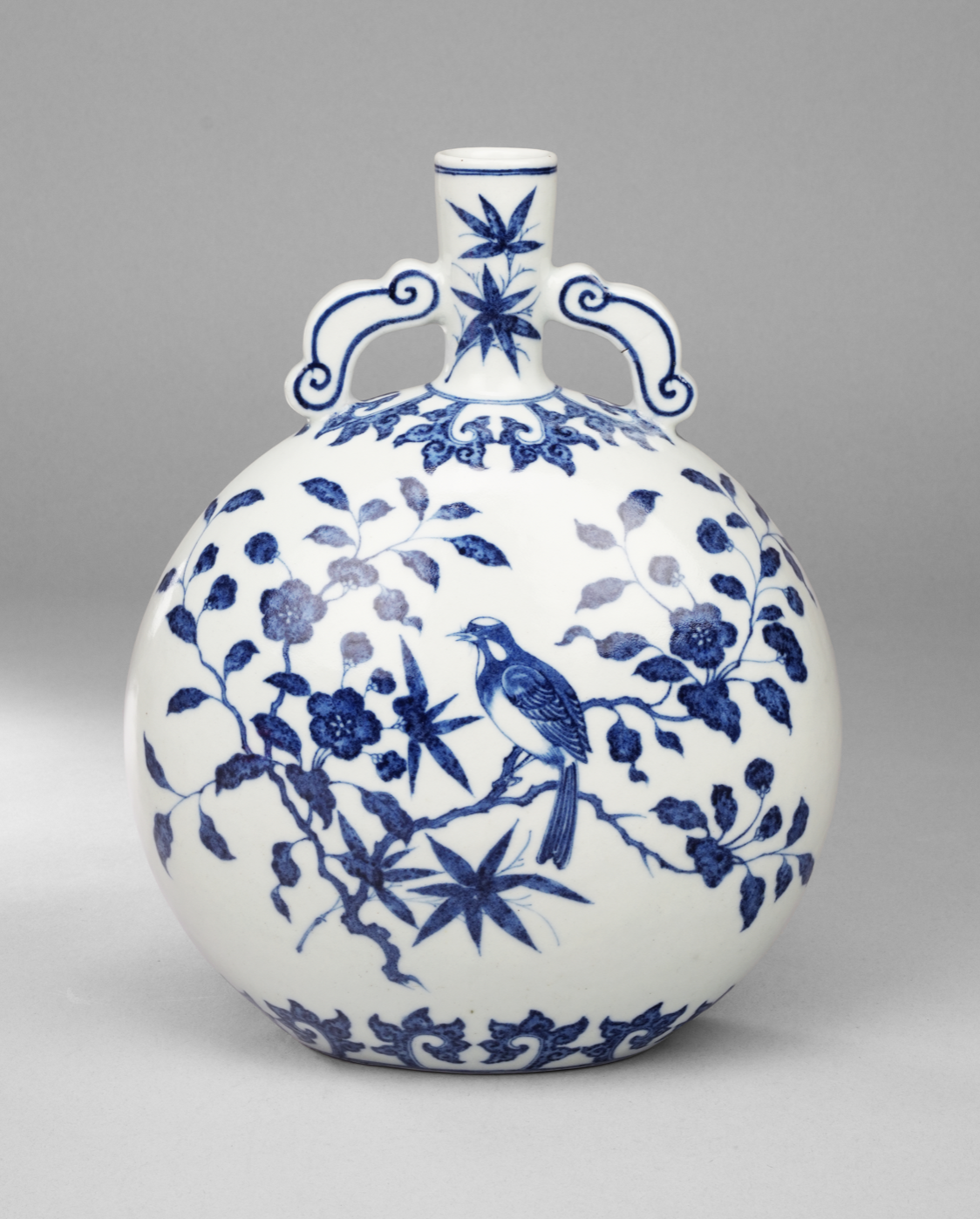
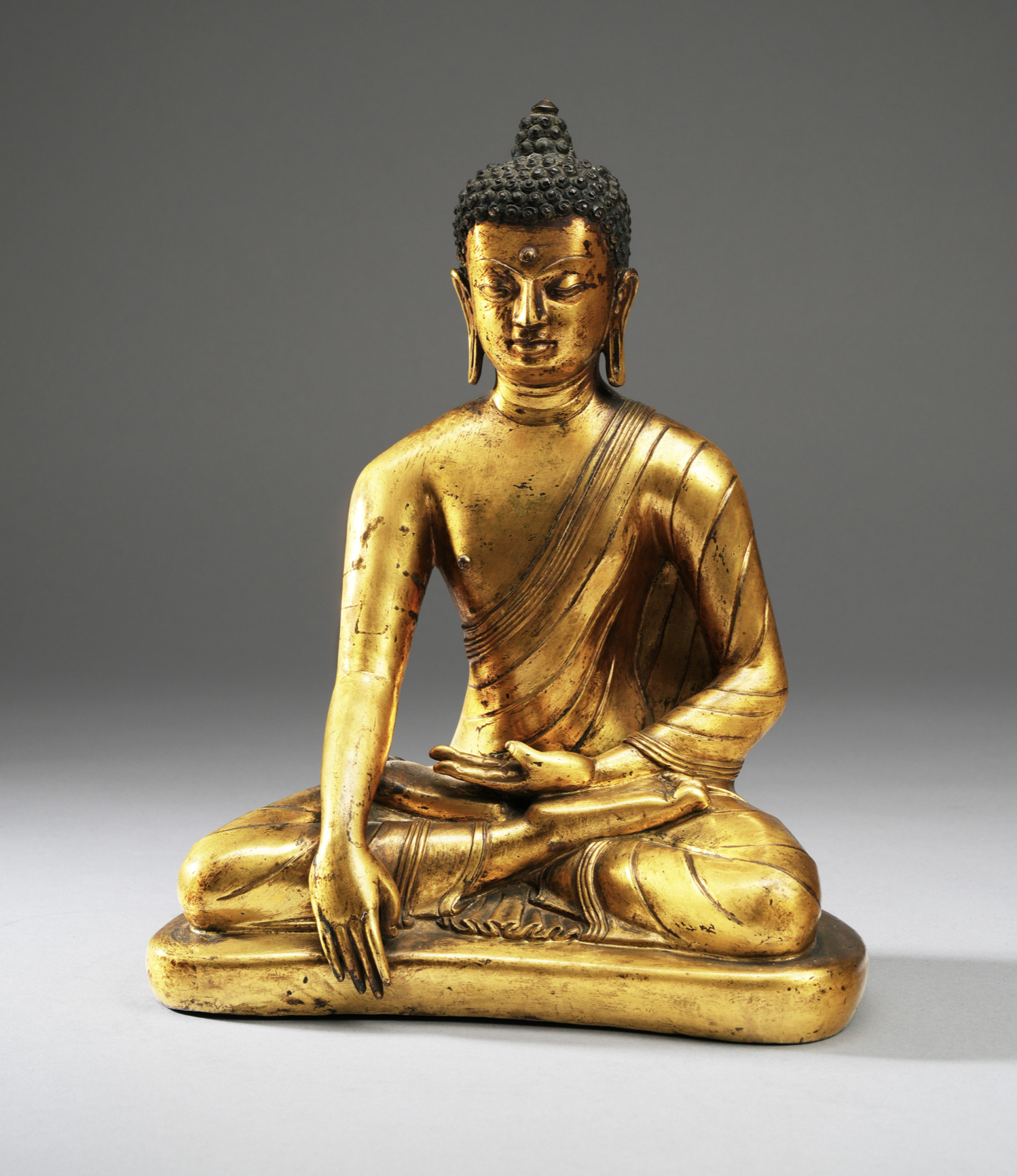
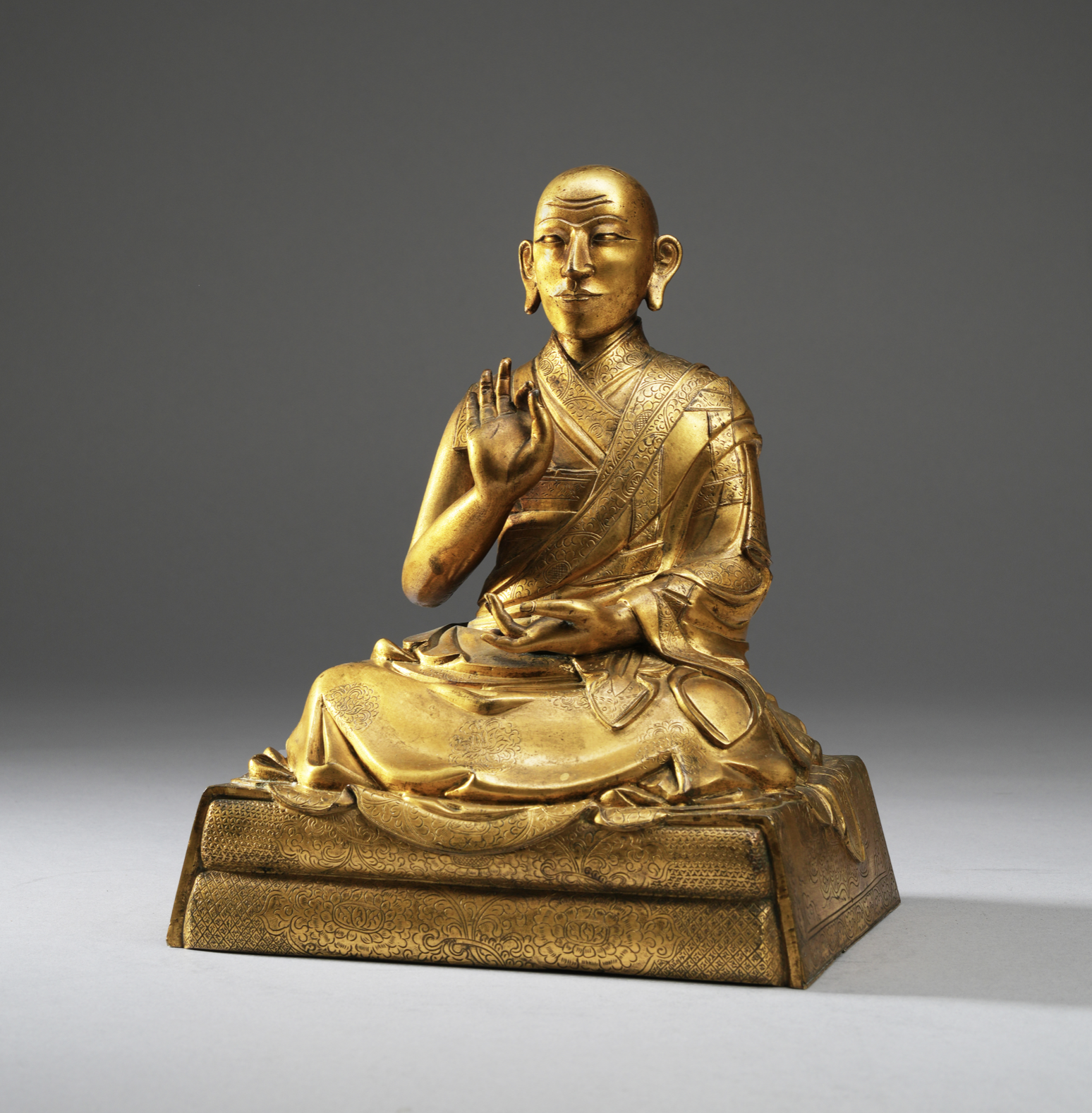
Dreweatts – Chinese Ceramics and Works of Art
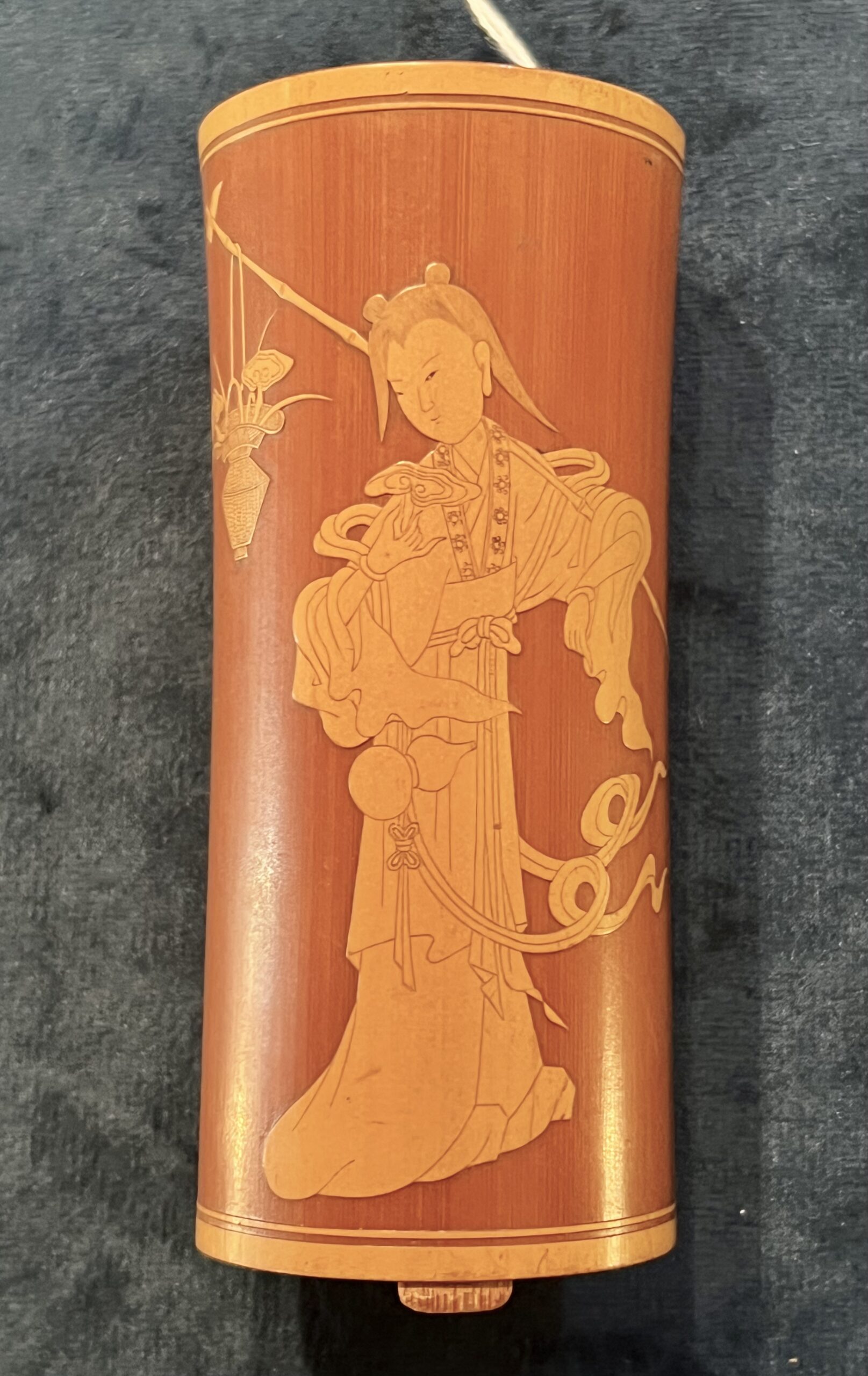
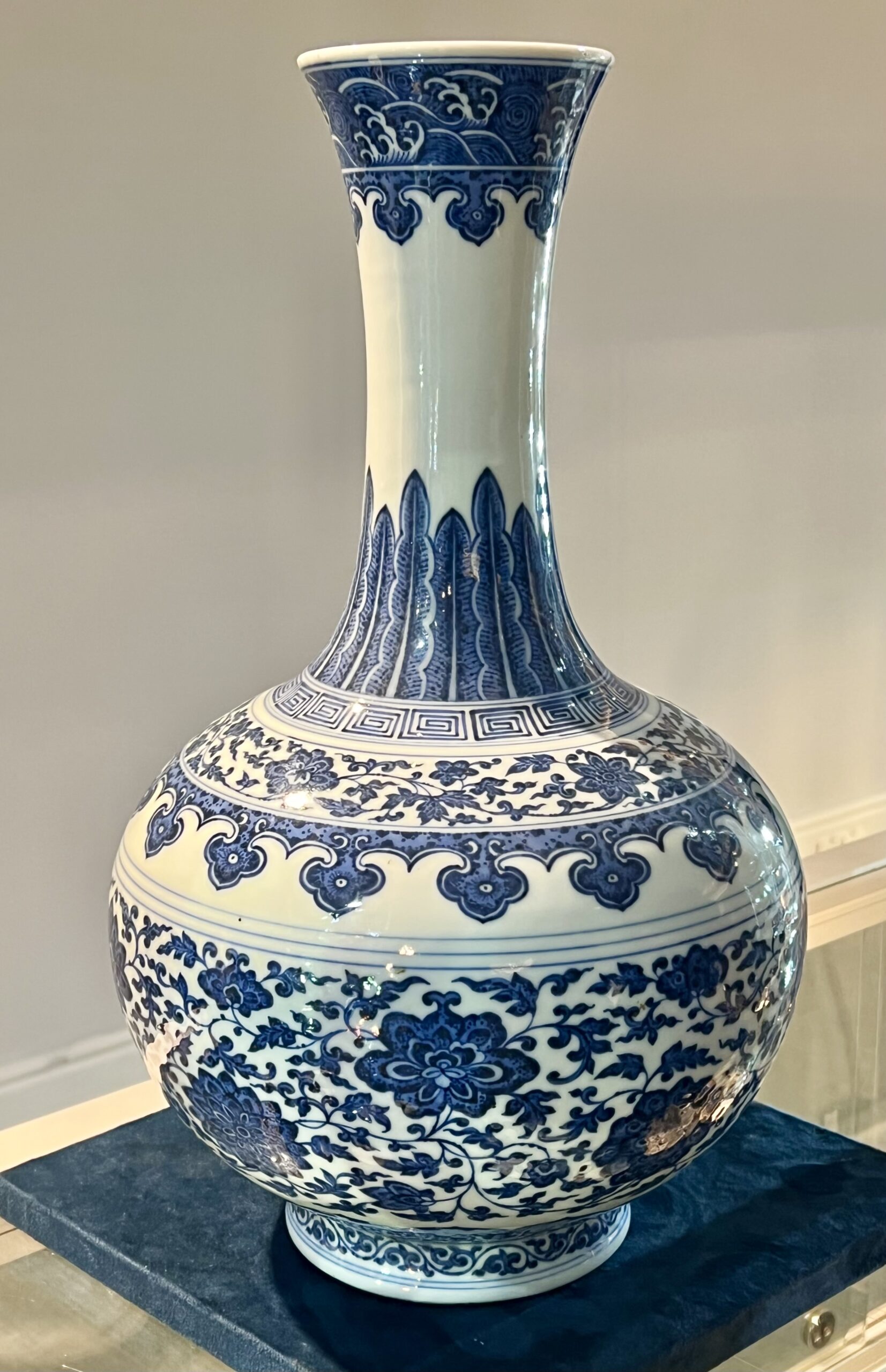
.