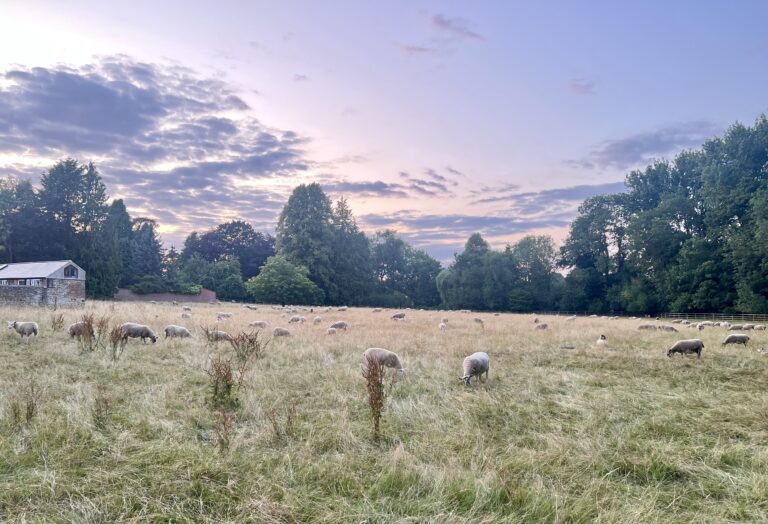
Summer evening in a sheep field, Adderbury.
Dear Clients and Friends,
I hope that you had a restful summer season.
During this period I travelled to Paris to attend the Art D’Asia sales and I vetted the Treasure House fair for a fourth year. I also attended a number of exhibitions, which I have outlined below.
I wish you all the best for the autumn season and look forward to catching up with some of you during this period.
Best wishes,
Robert Bradlow, October 2026
Oriental Ceramics Society AGM – 3 June
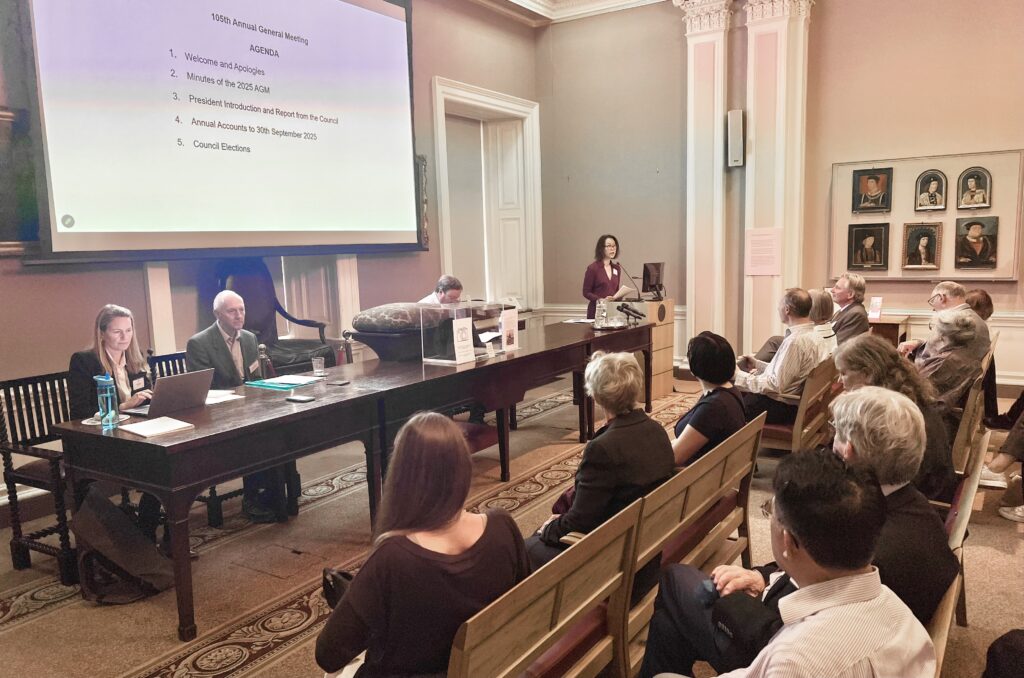
I attended the Oriental Ceramics Society (OCS) AGM on 3 June, which was followed by a lecture by Professor Stacey Pierson on ‘Porcelain Through the Ages’: Exhibiting China at 25 Park Lane (1934).
Paris Sales – 8 and 9 June

Sotheby’s Art D’Asia
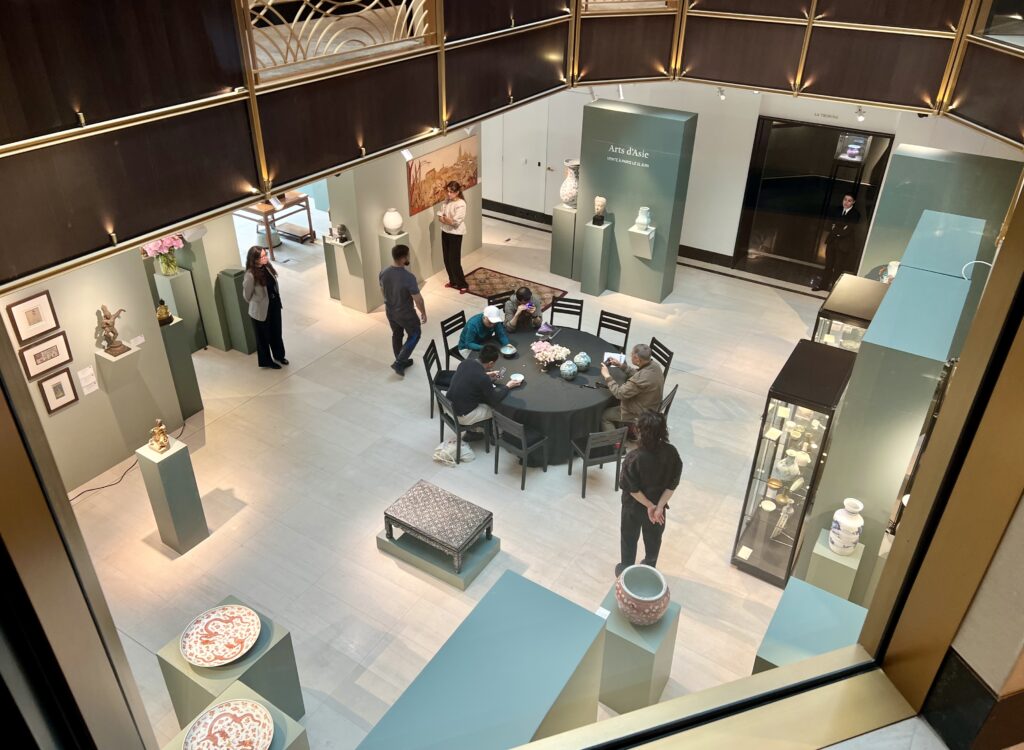
I attended the Printemps Asiatique in Paris and began by viewing the Sotheby’s Art D’Asia sale. This was the second time that I had viewed their sale in their new building, which was mostly exhibited on the ground floor.

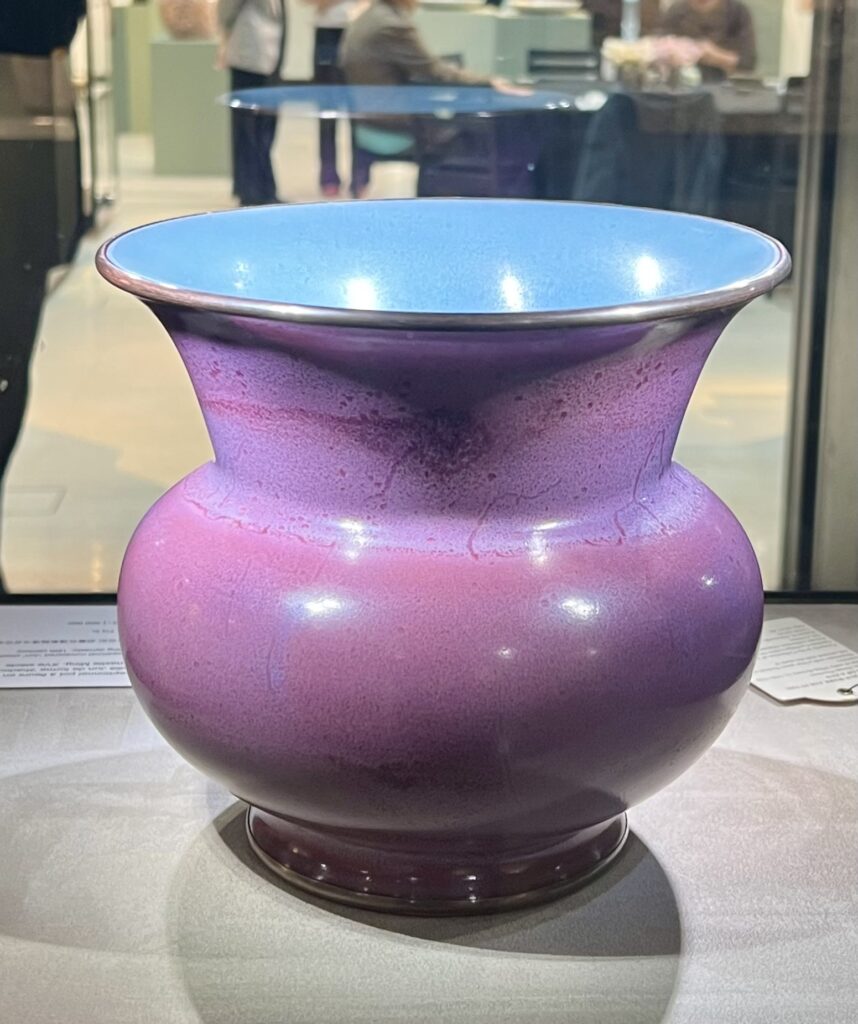
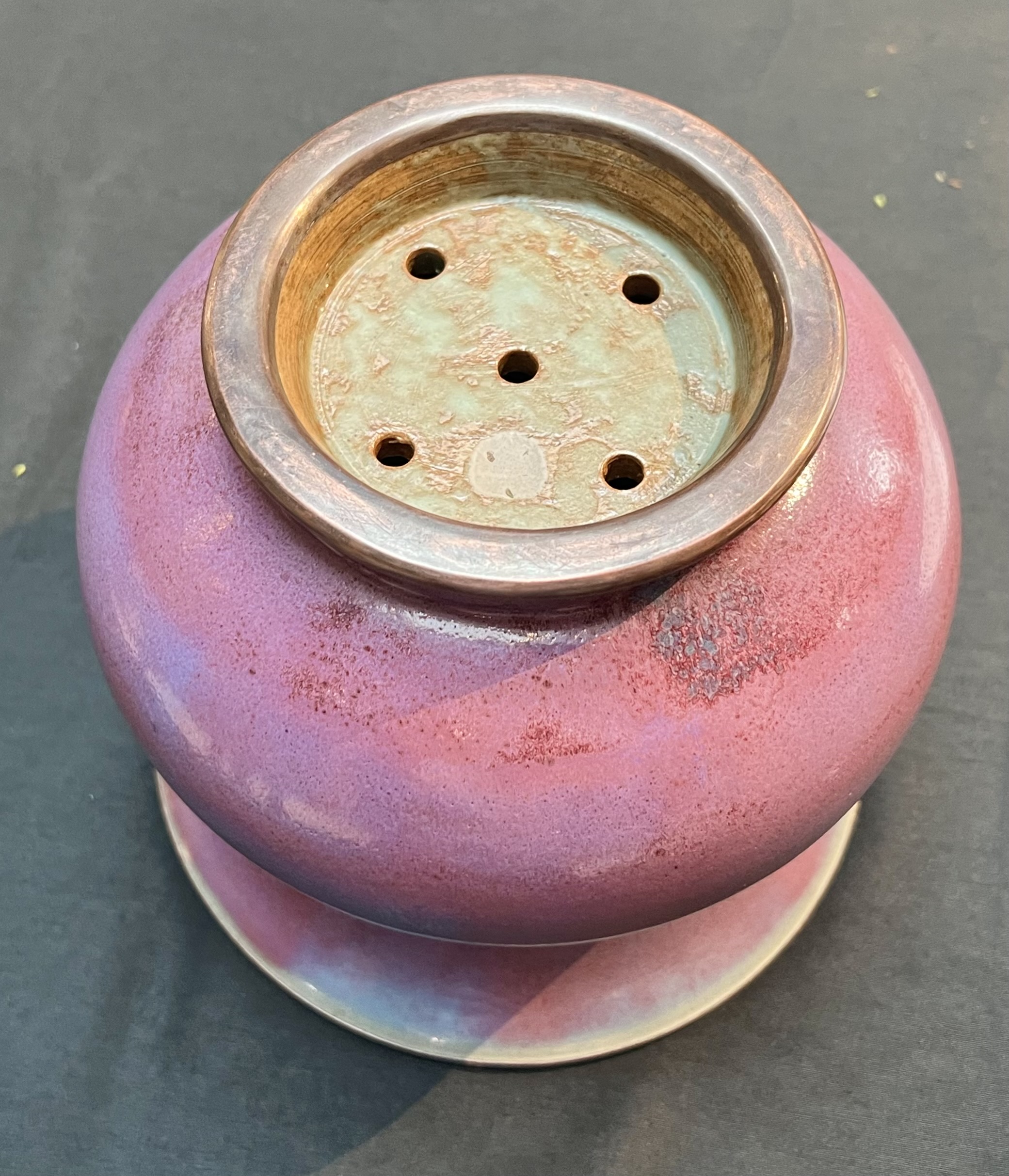
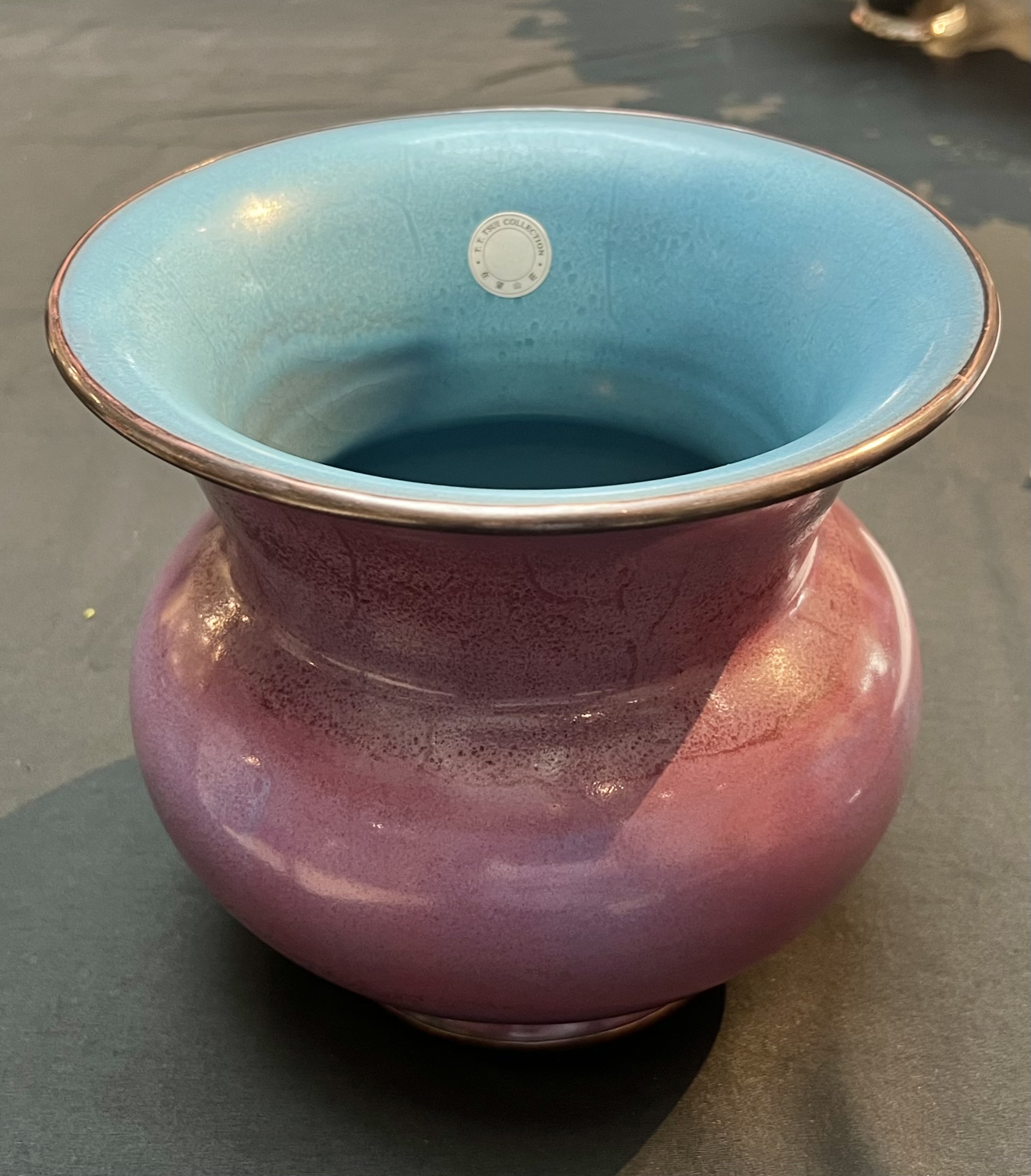
The most significant lot in the sale was lot 55, the exceptional numbered Jun zhadou-form flowerpot, early Ming dynasty, 15th century. It was beautifully potted with a compressed spherical body, rising to a wide flared mouth.
The interior with its bright blue glaze, contrasted strongly with the bright purple glaze to its exterior. The base was inscribed with a partially effaced numeral liu (six). It was purchased from the well known New York dealer Robert Ellsworth in 2010, who himself had acquired it from the collection of TT Tsui.
It sold just above the low estimate at €704,000 (Estimate €600,000-1,000,000).
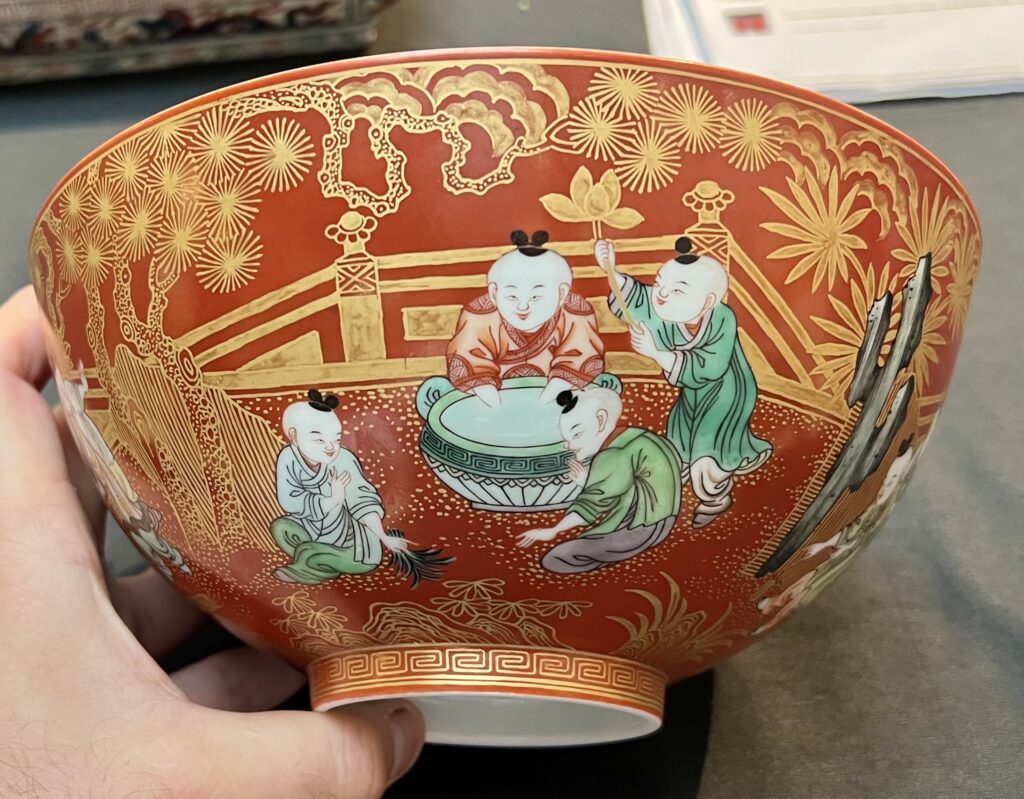
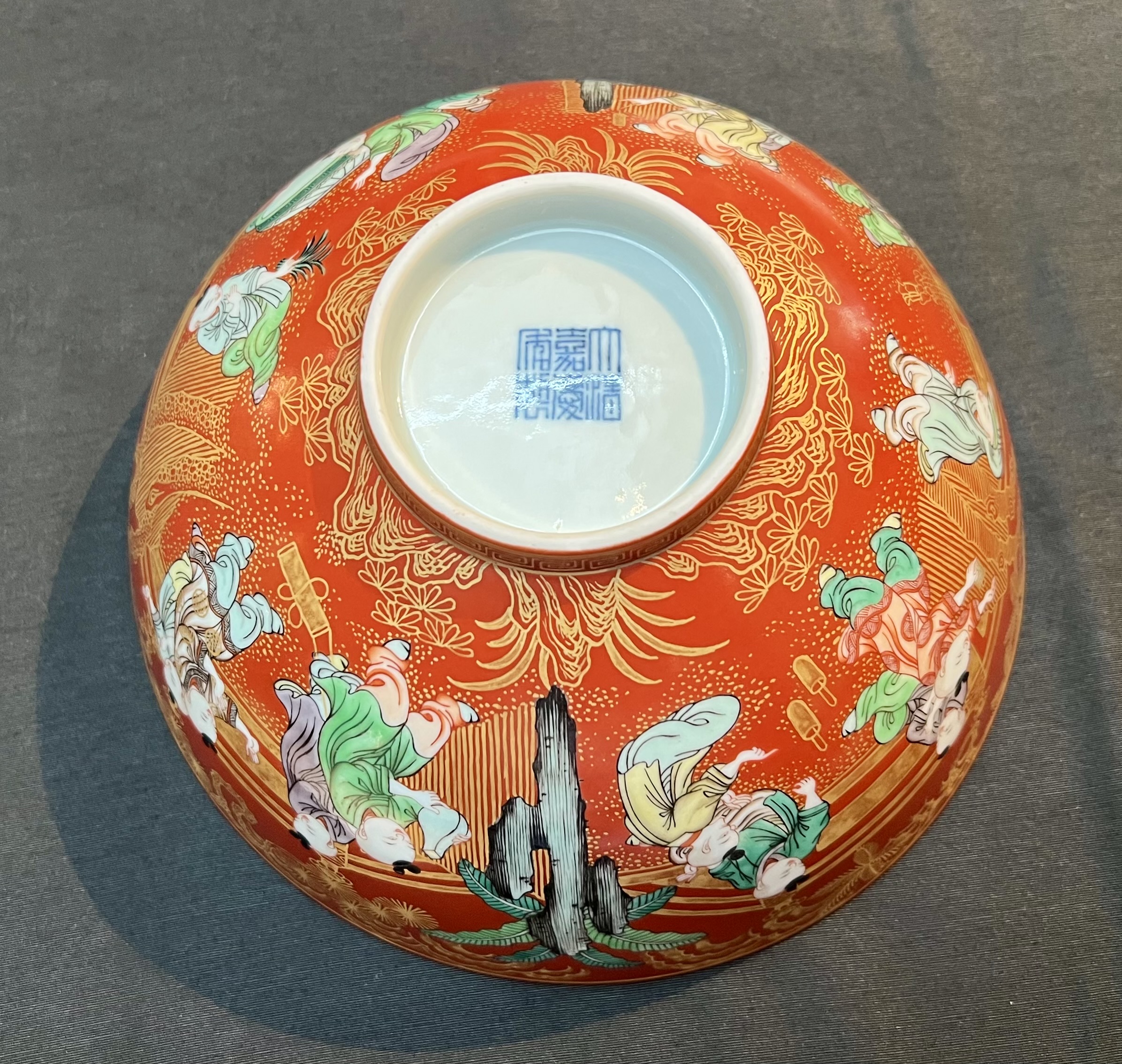
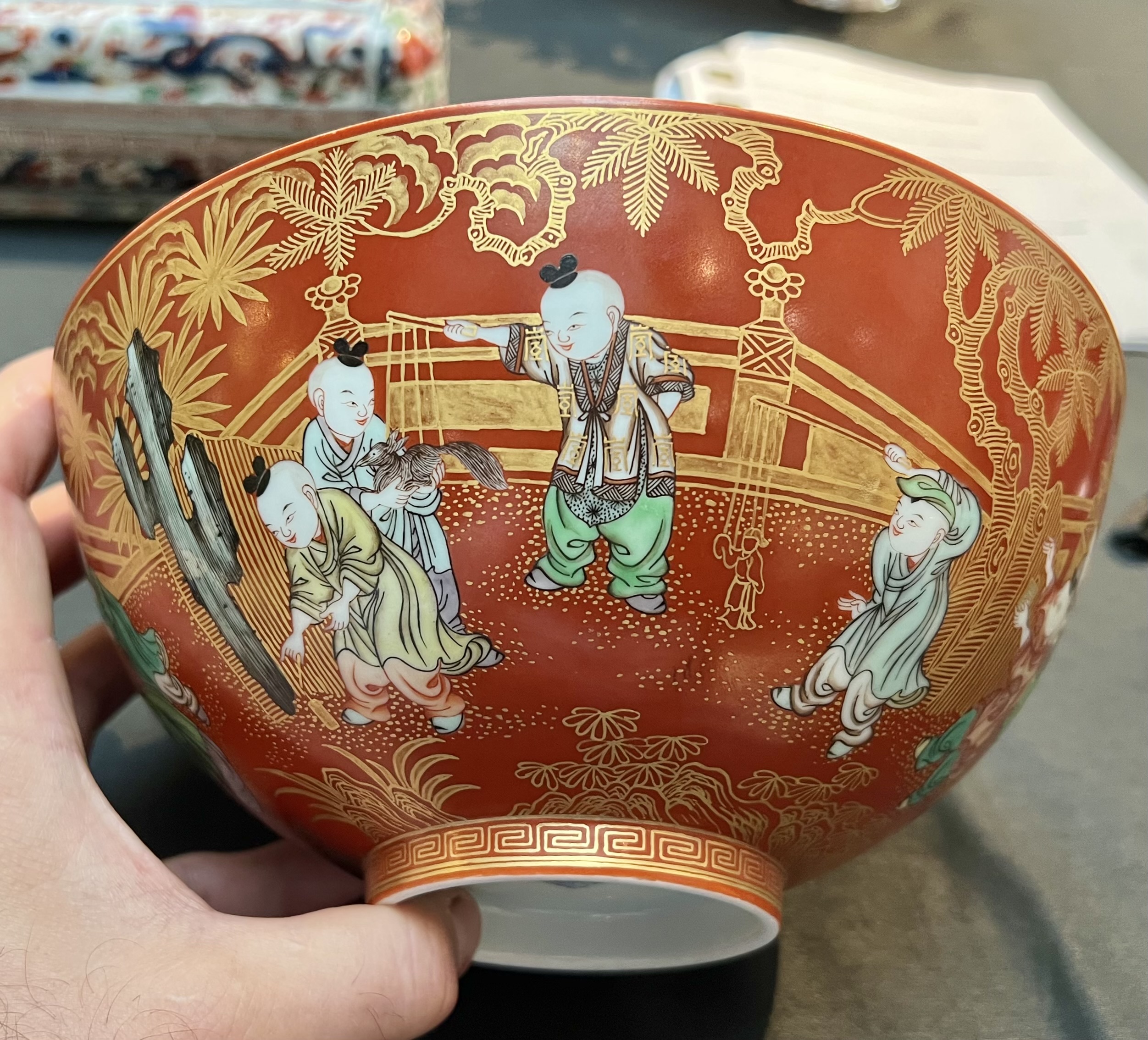
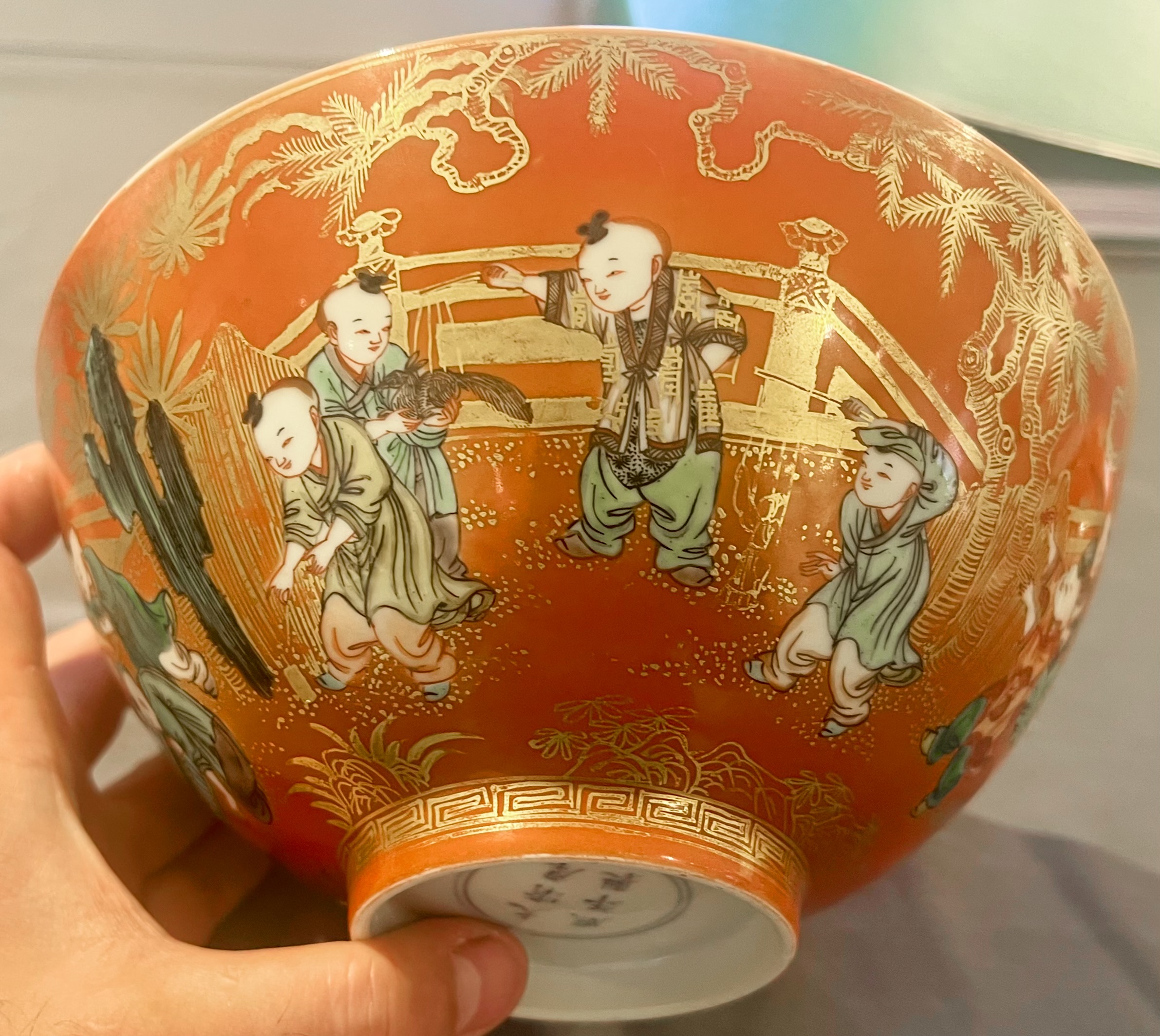
My favourite piece of imperial Qing porcelain in the sale was lot 76, the Jiaqing mark and period coral-ground famille-verte and gilt-decorated ‘boys’ bowl. It was really finely painted with groups of boys playing in a fenced garden.
The fence, trees and foliage was painted in gilt, which acted as a successful framing device for the design and allowed the famille verte figures of the boys to be centre stage in this scene. It sold well in excess of its €20,000-30,000 at €70,400.
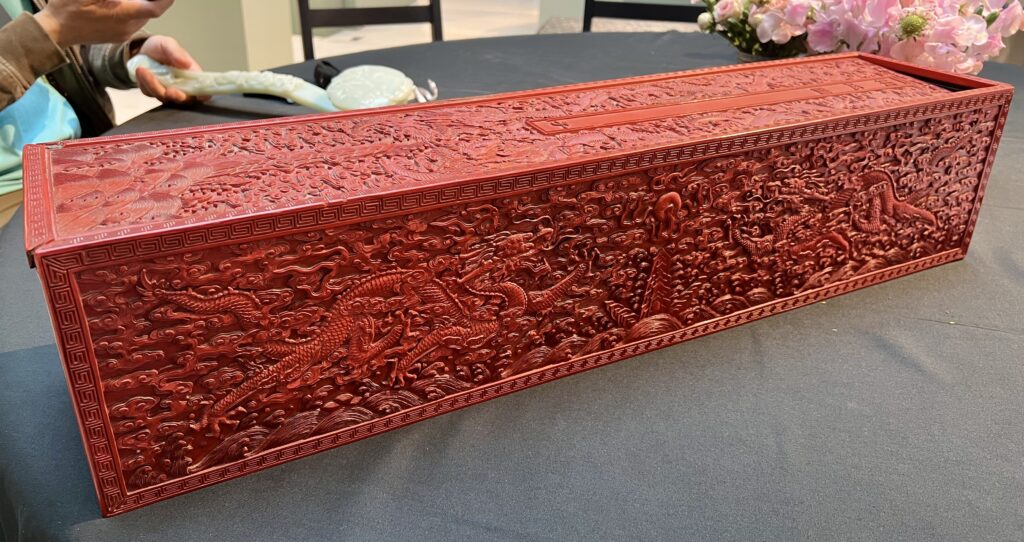
Another strong performer in the sale was lot 25, the monumental and important carved cinnabar lacquer ‘Southern Inspection Tour’ scroll box, Qing dynasty, Qianlong period, circa 1769.
This finely carved dragon box would have contained one of the twelve, ten metre long scrolls, known as the Nanxuntu, which commemorated Qianlong’s Southern Inspection Tour in 1751, following the tradition of inspection tours started by his grandfather, the Kangxi Emperor.
This box is inscribed Nanxuntu zi — ‘Southern Inspection Tour Painting, no. 1.’ and attracted significant interest at the sale, selling for €243,200 (Estimate €100,000-200,000).

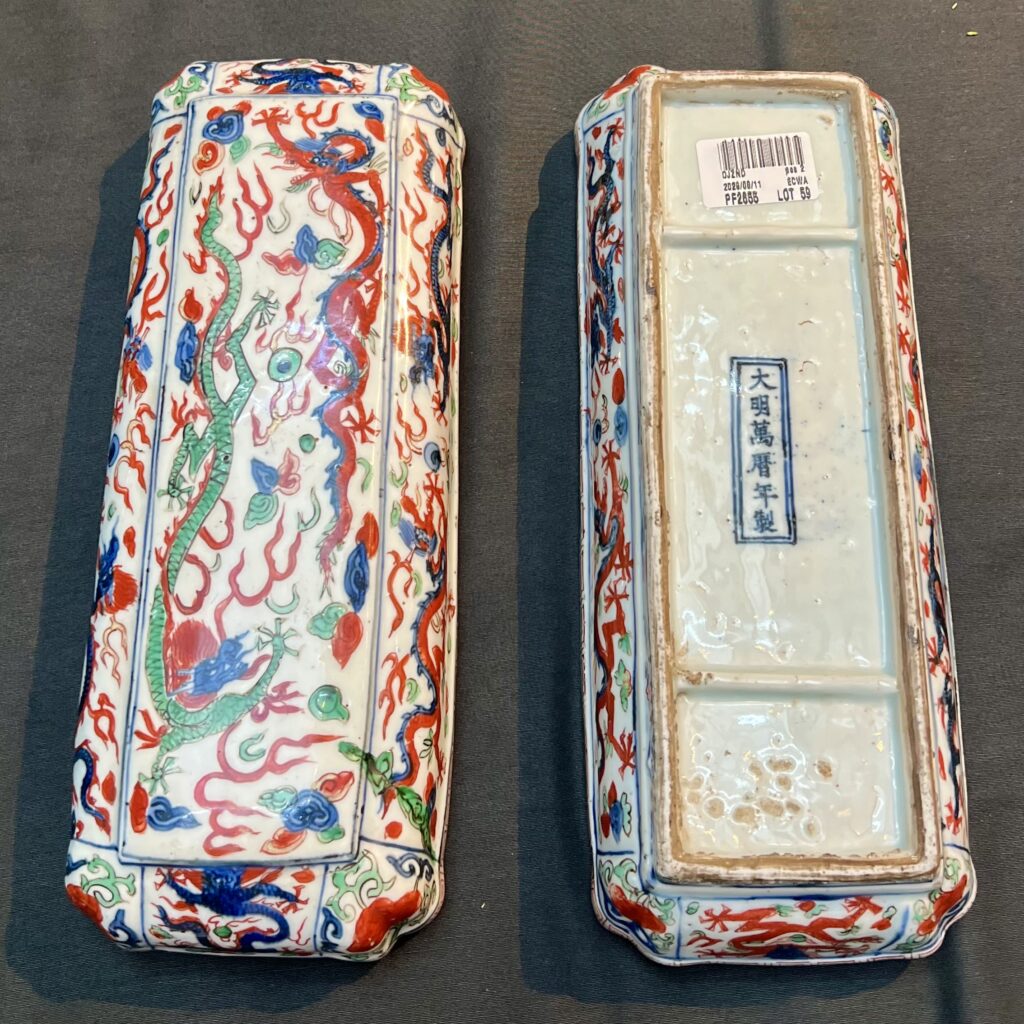
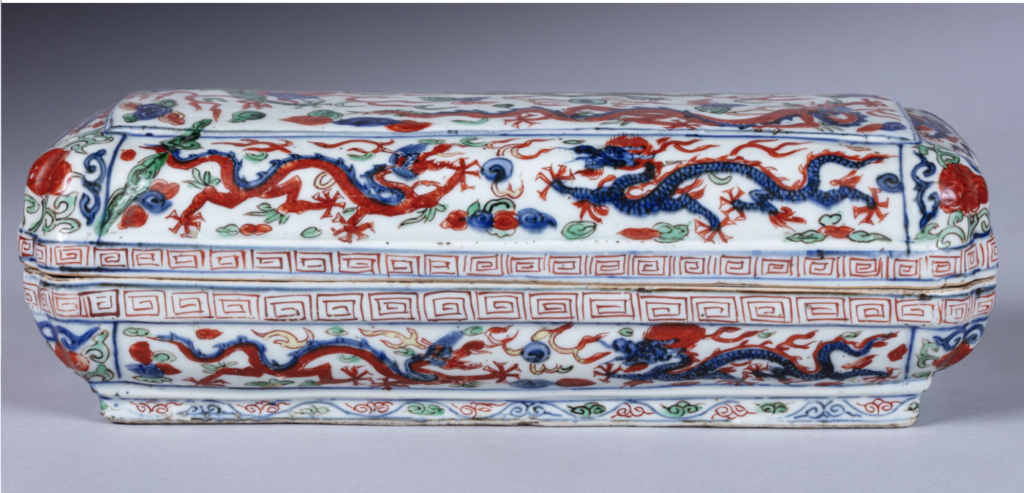
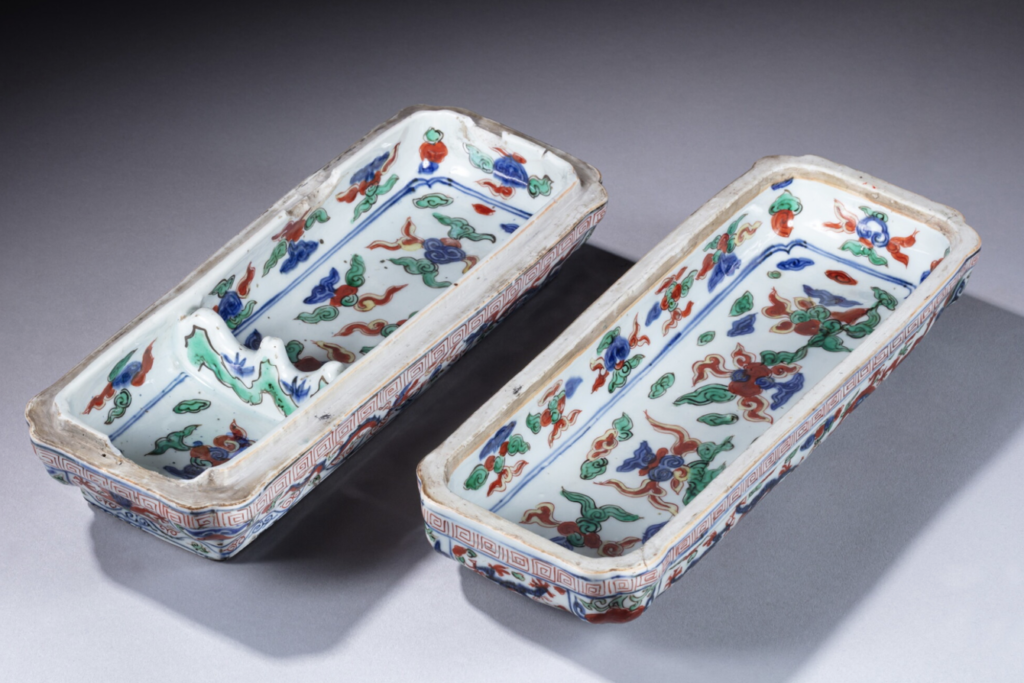
I always enjoy viewing Ming wucai wares, because of their boldness in painting and brightness of enamels. Lot 59, the Wanli mark and period wucai ‘dragon’ brush box and cover, was no exception, painted with numerous dragons.
The interior of each piece was painted with four flame scrolls and the base with a boldly painted vertical six-character Wanli mark. It sold for €115,200 (Estimate €40,000-60,000).
The highest selling gilt-bronze figure in the sale was lot 7, the superb Ming dynasty, circa 15th century, gilt-bronze figure of Avalokiteshvara.
The figure sits in the royal ease (rajalilasana) position and wearing fine robes and body jewellery. The bodhisattva holds a wish-fulfilling pearl (cintamani) in his right hand and a water vessel (kundika) in his left.
It had belonged to the prominent Turkish nobleman, businessman, and globally renowned art collector his Excellency Ilhamy Hussein Pacha (1908-1992) and was later sold at Ader Tajan Monaco, 14th March 1993. It sold at the top end of its estimate at €115,200 (Estimate €80,000-120,000).

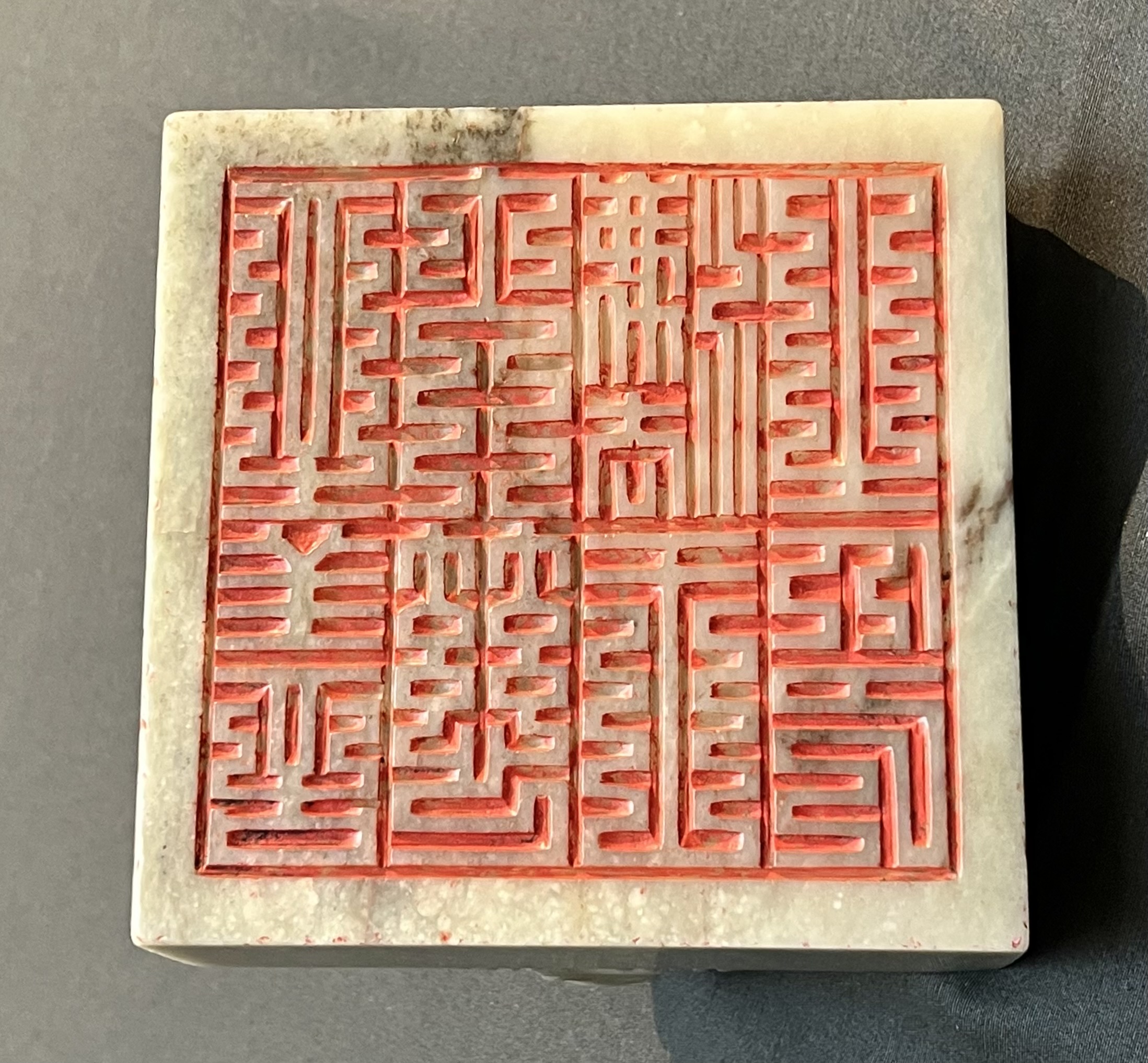
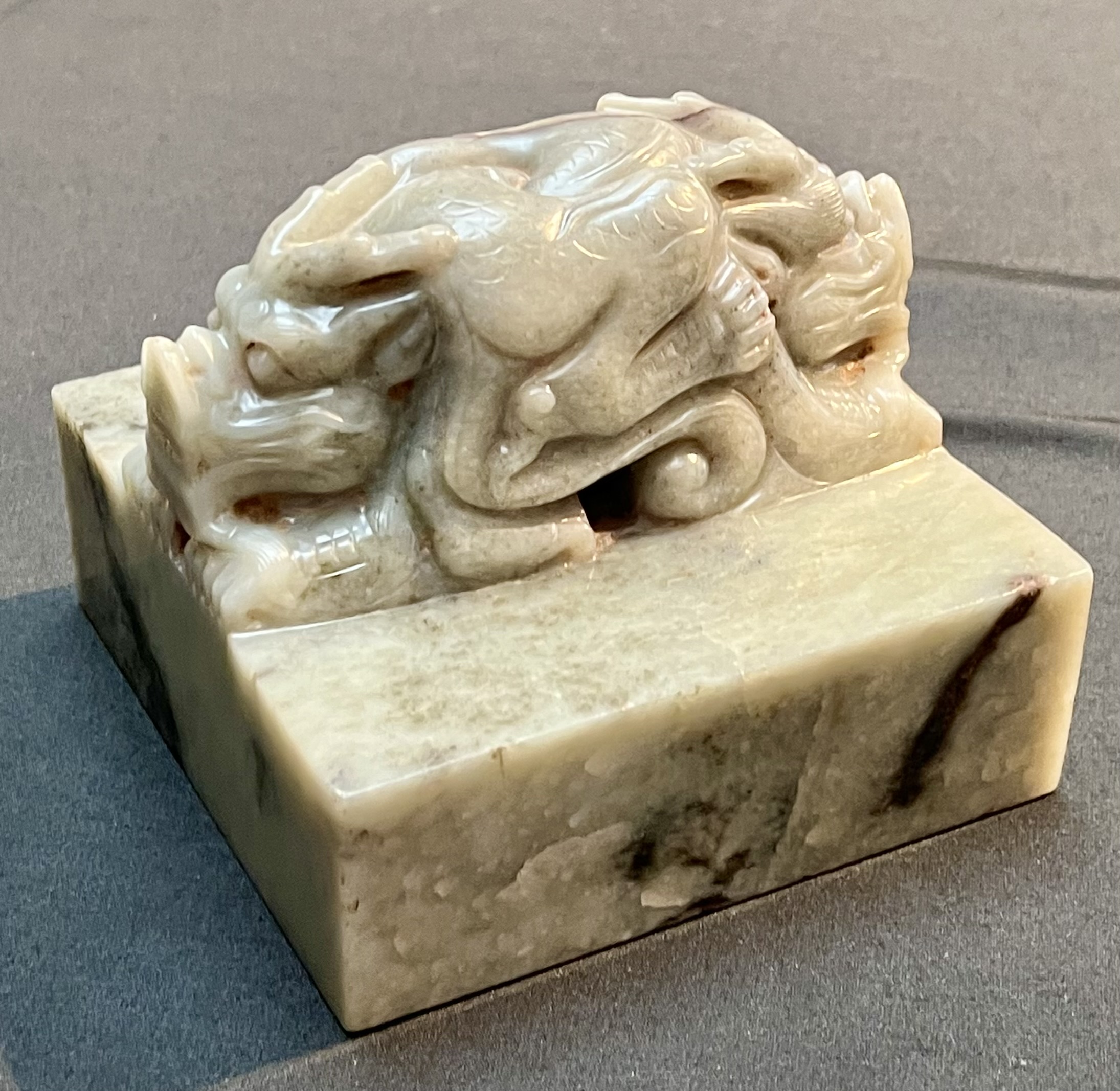
Another strong performer in the sale was lot 10, the important Ming dynasty celadon jade ‘Zhishan Daci Fawang’ Buddhist seal. Buddhist seals from the Ming Dynasty are very rare and there are only two others that are known that are in the Tibet Museum in Lhasa.
The imperial court conferred the title of Fawang or ‘Dharma King’ upon leading Tibetan Buddhist figures from the three most important schools of Tibetan thought and presented each with a corresponding jade seal. This example was originally in a French private collection and was acquired at an antique fair in Montpellier in 2024. It sold for €358,400 (Estimate €60,000-80,000).
The sale totalled €8,38 million with 75% sold by lot.
Printemps Asiatique Fair at Gallerie Charpentier
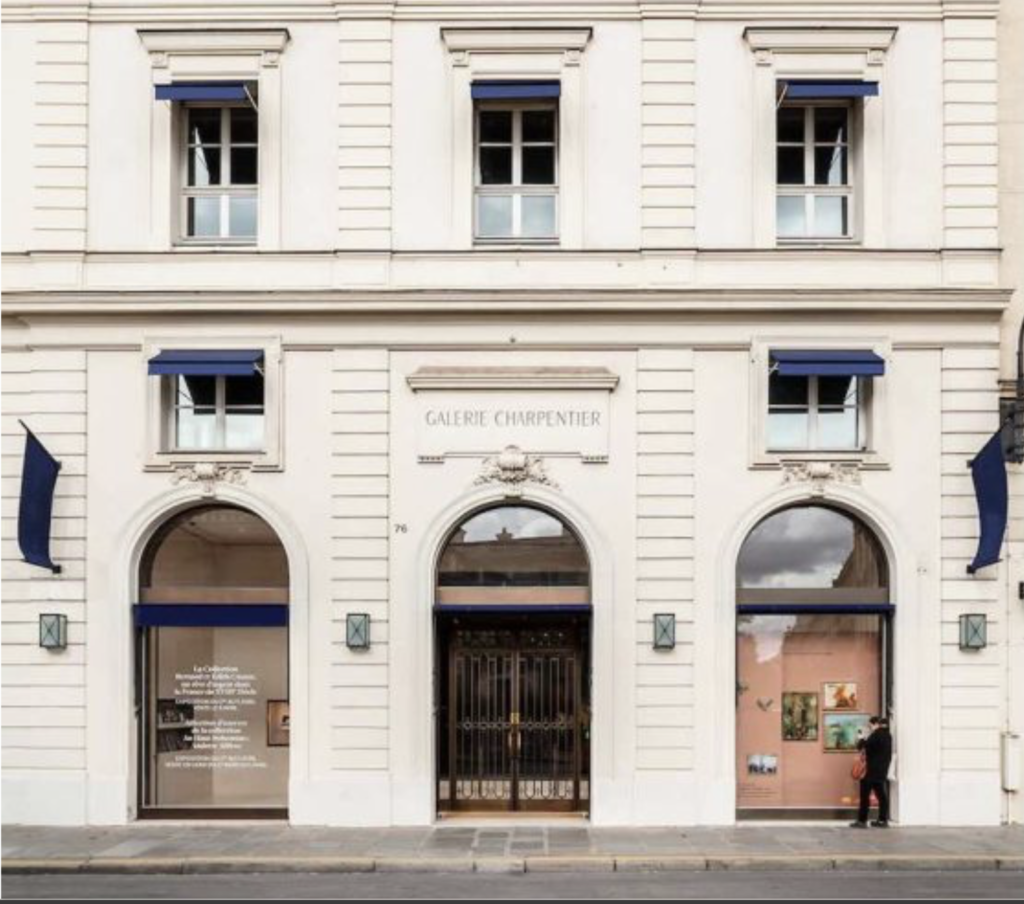
After viewing the Sotheby’s sale, I walked to the old Sotheby’s premises at Gallerie Charpentier on Rue du Faubourg Saint Honoré where the Printemp Asiatique fair was taking place.
This venue had replaced the CT Loo pagoda, which had been used for the past few years and it was a building more suited to a fair, with good light and space.
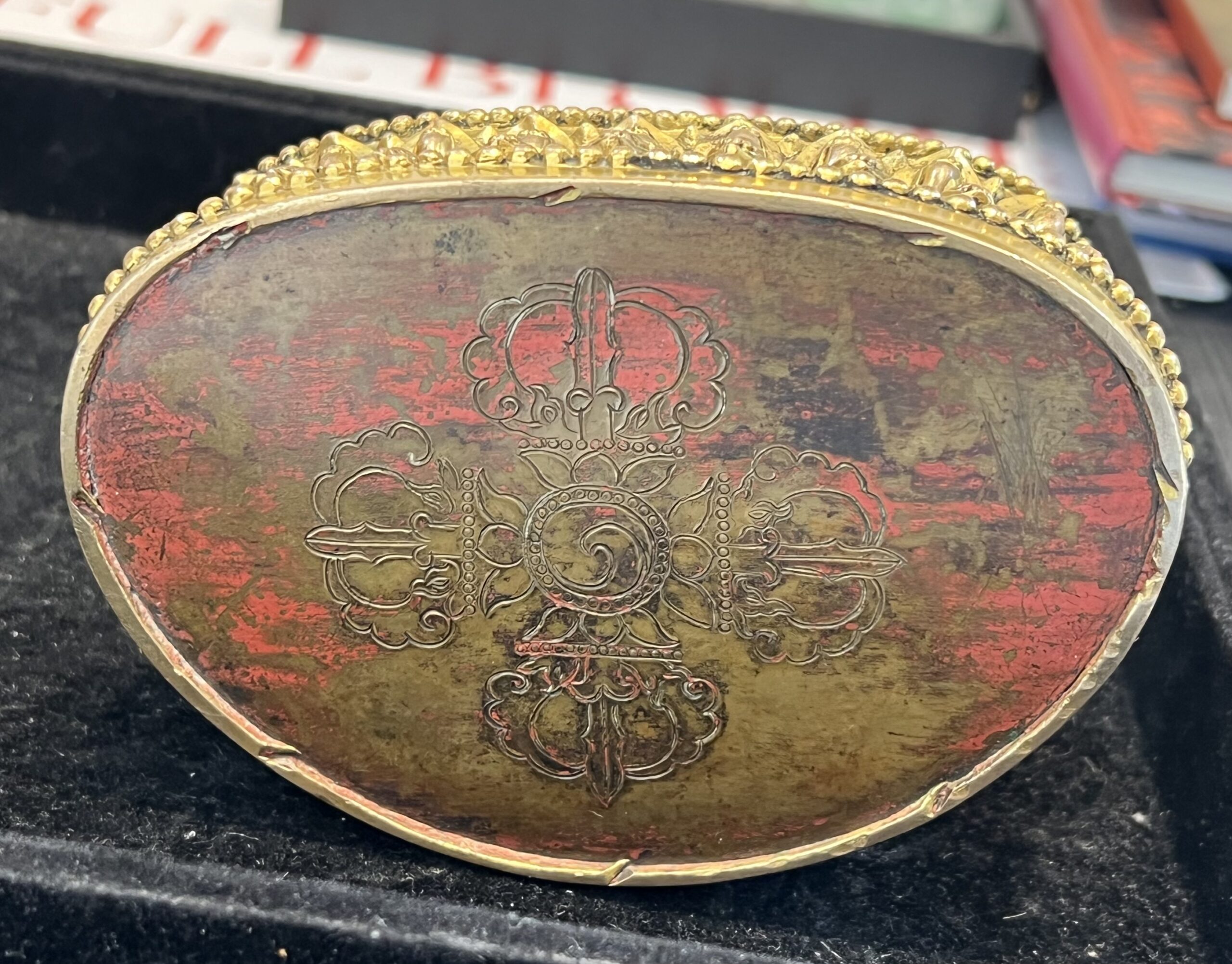
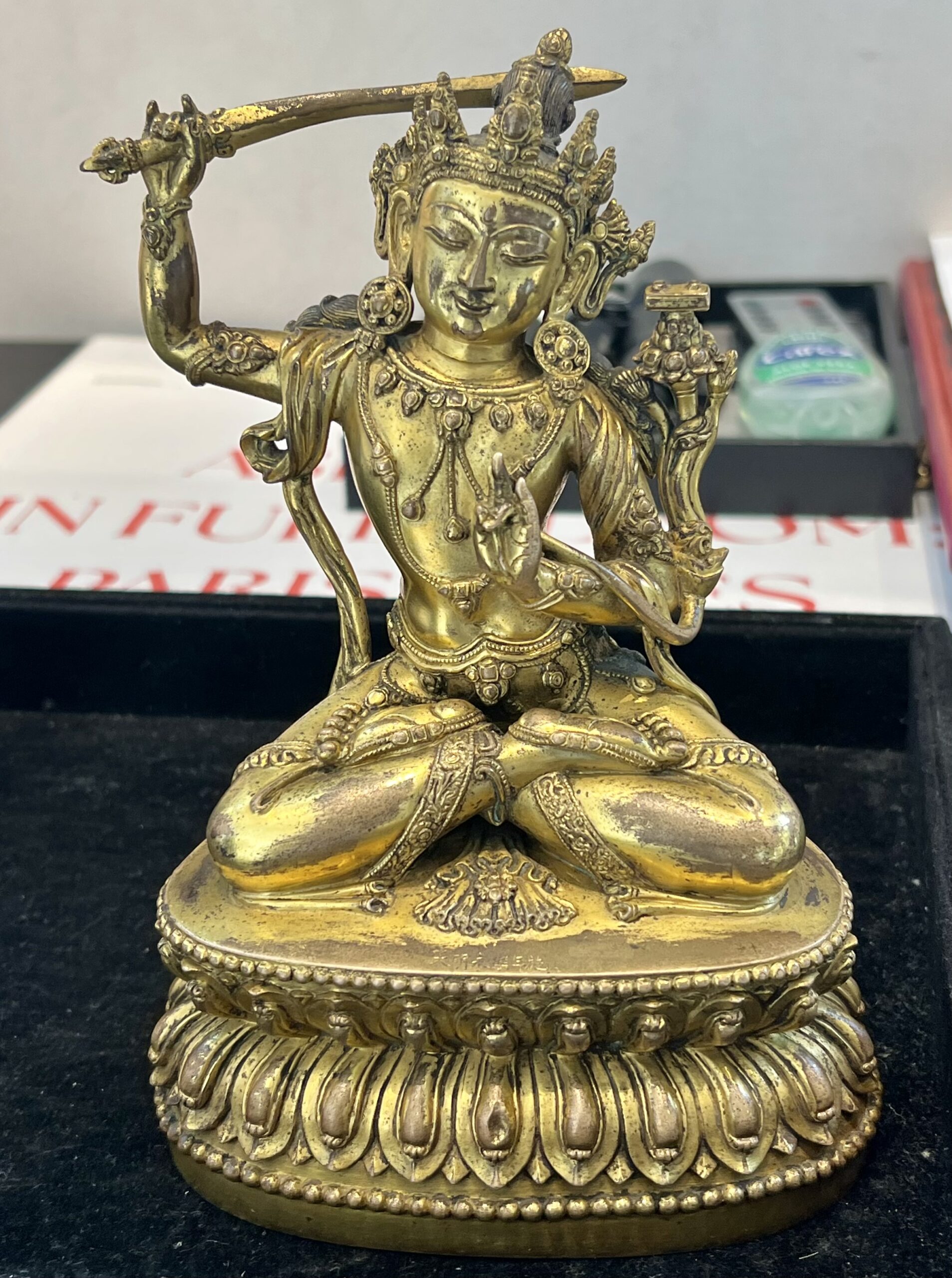
One particular highlight that I enjoyed seeing at Slaats Fine Art, was the Yongle mark and period gilt bronze figure of Manjushri. It is finely cast with the figure holding a sword in his right hand above his head, with his left hand in the vitarkamudra pose.
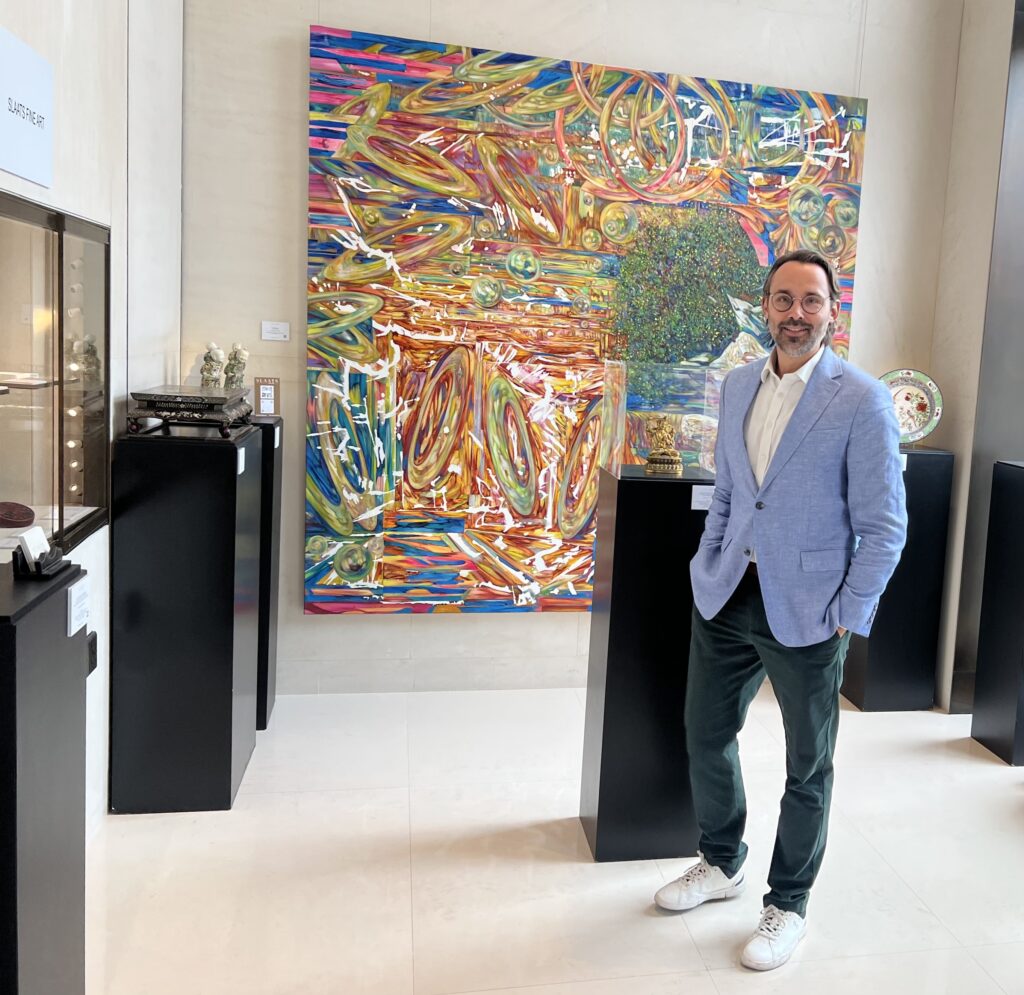
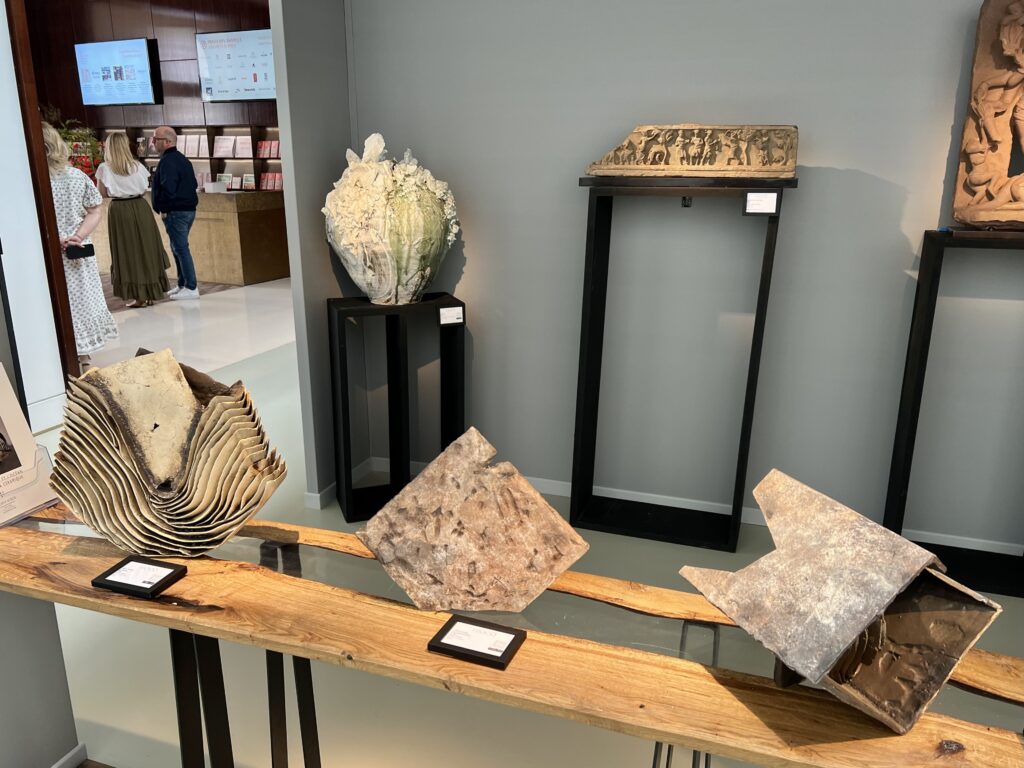
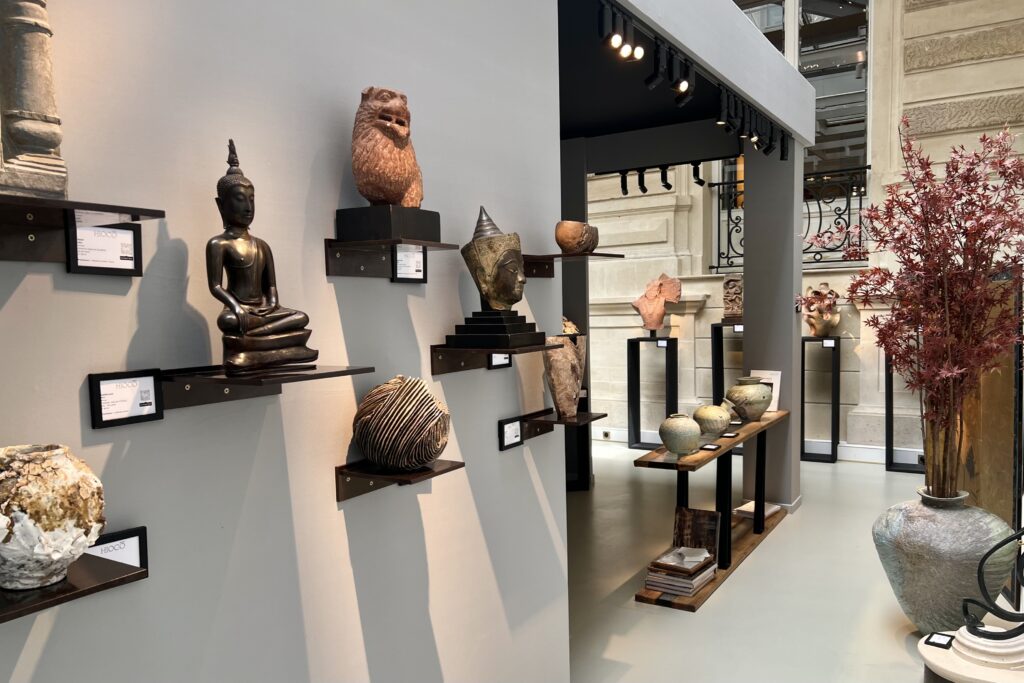
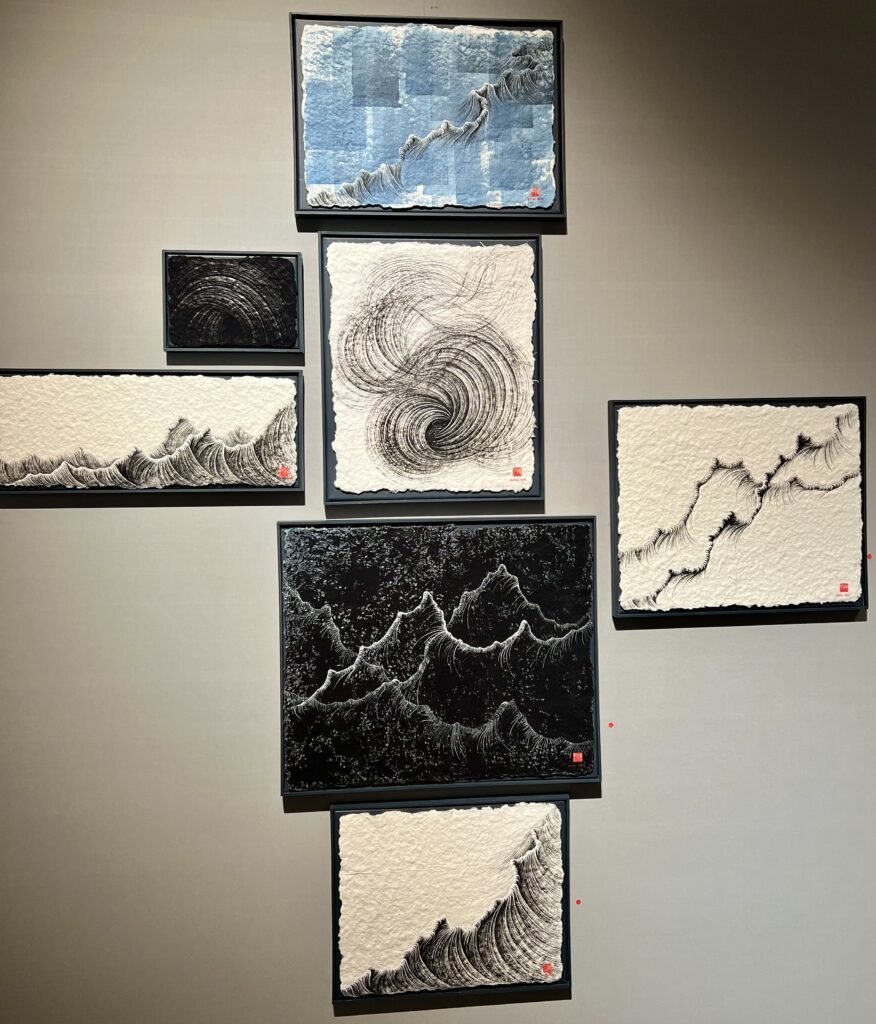
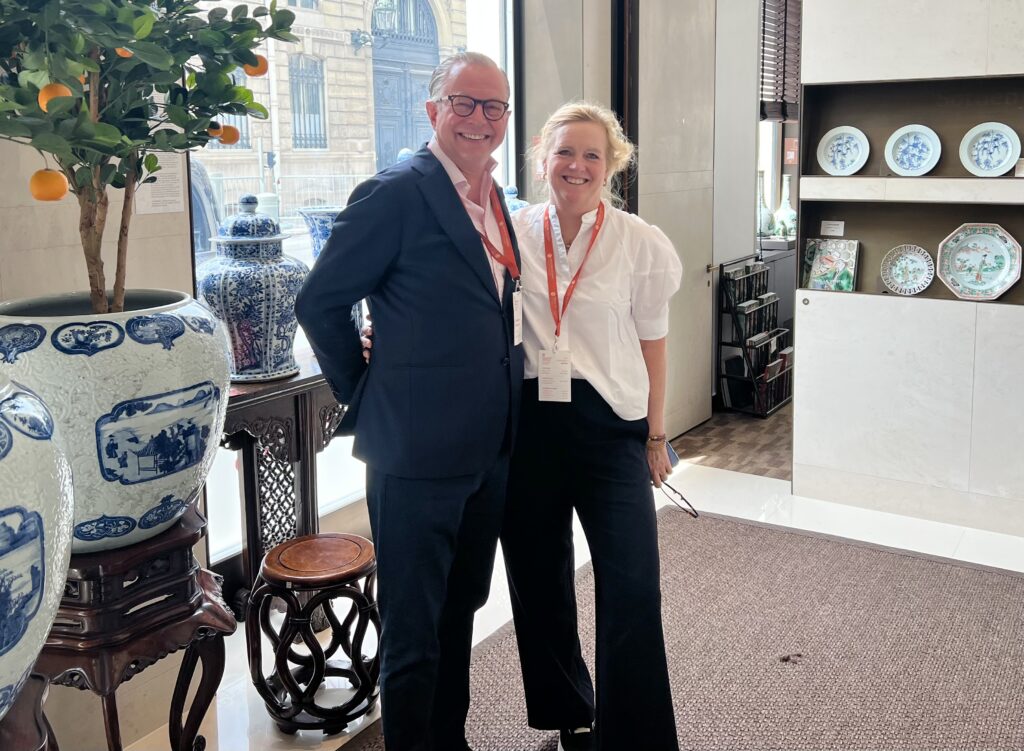
I was pleased to meet up with an old Sotheby’s colleague Rebecca Sack, who currently runs the Louis & Sack Gallery in Paris. I very much enjoyed their exhibition of the Korean contemporary artist Lee Hyun Joung, who creates beautiful wave like landscapes on fine handmade paper.

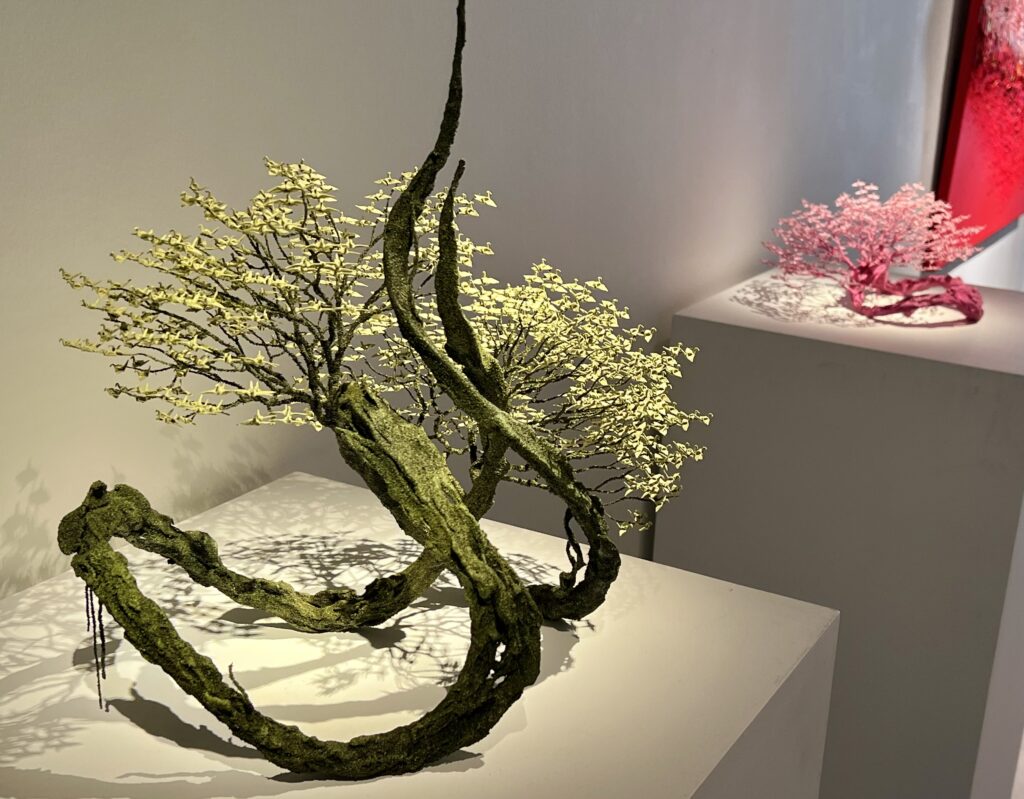
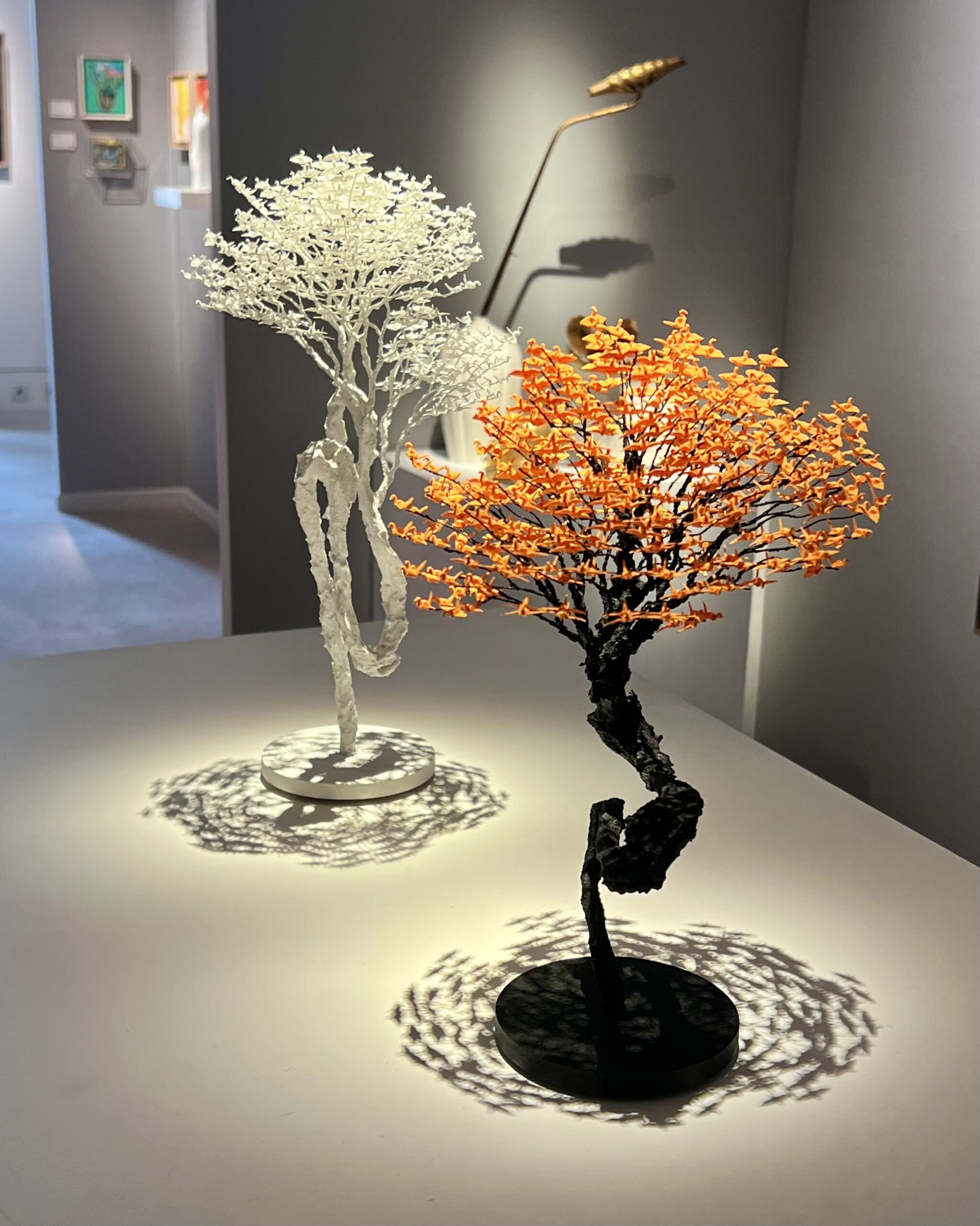
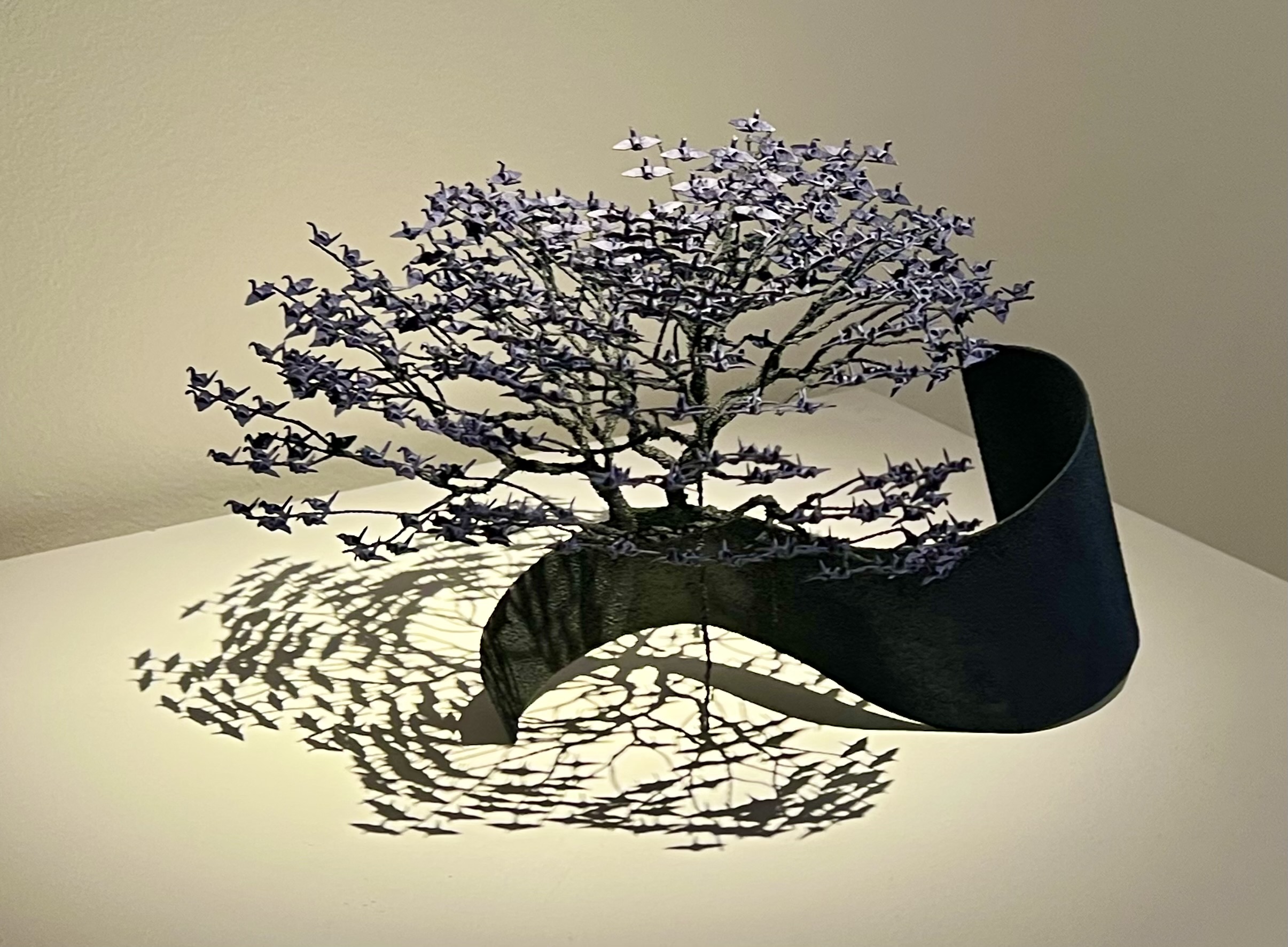
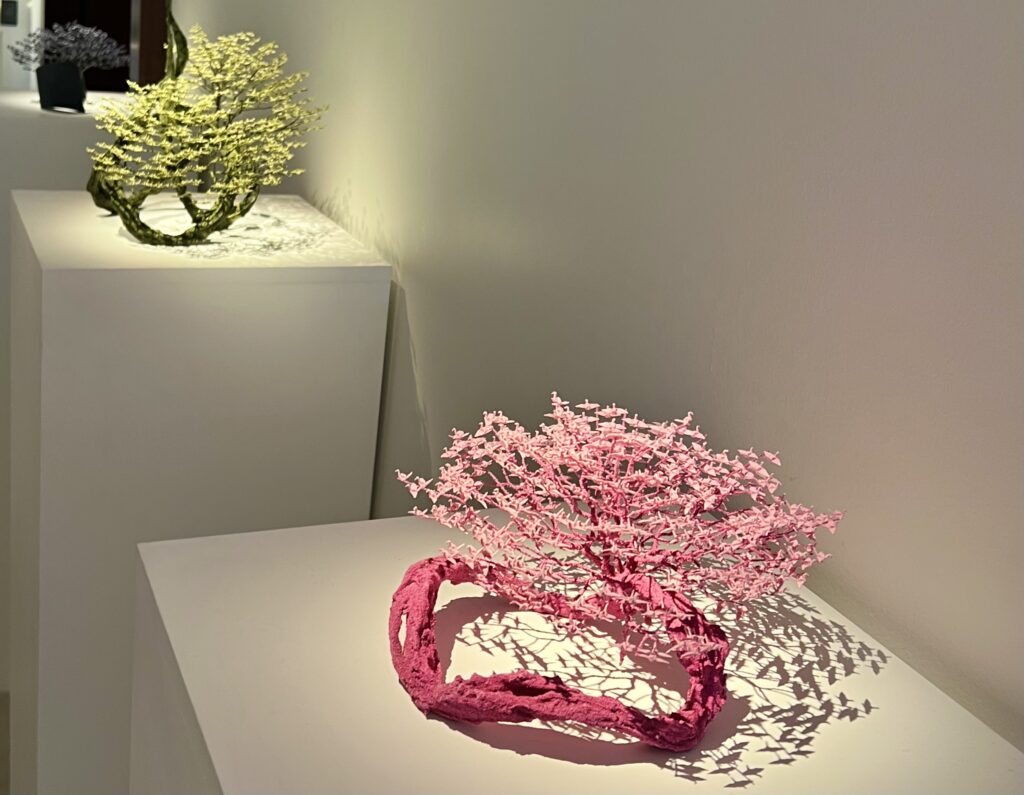
Another stunning stand out exhibit at the fair was the work of Onogawa Naoki at Gallerie Kiyama. Naoki uses a large number of miniature folded origami cranes each of differing colour, which are then mounted onto models of trees and in doing so, take on the form of leaves.
Christie’s Viewing
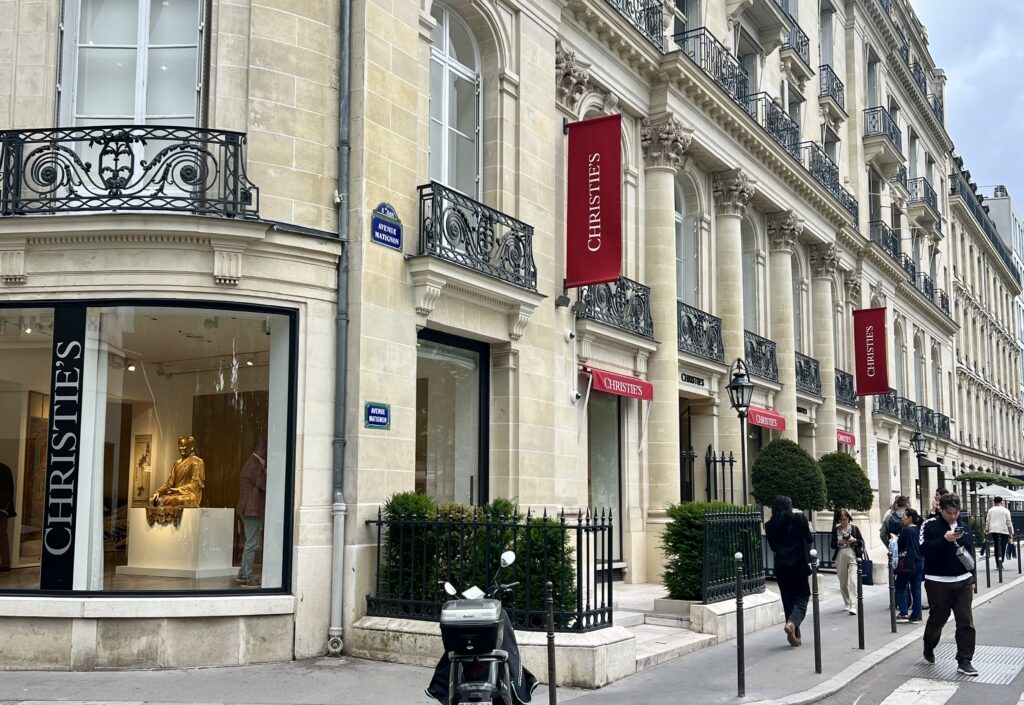
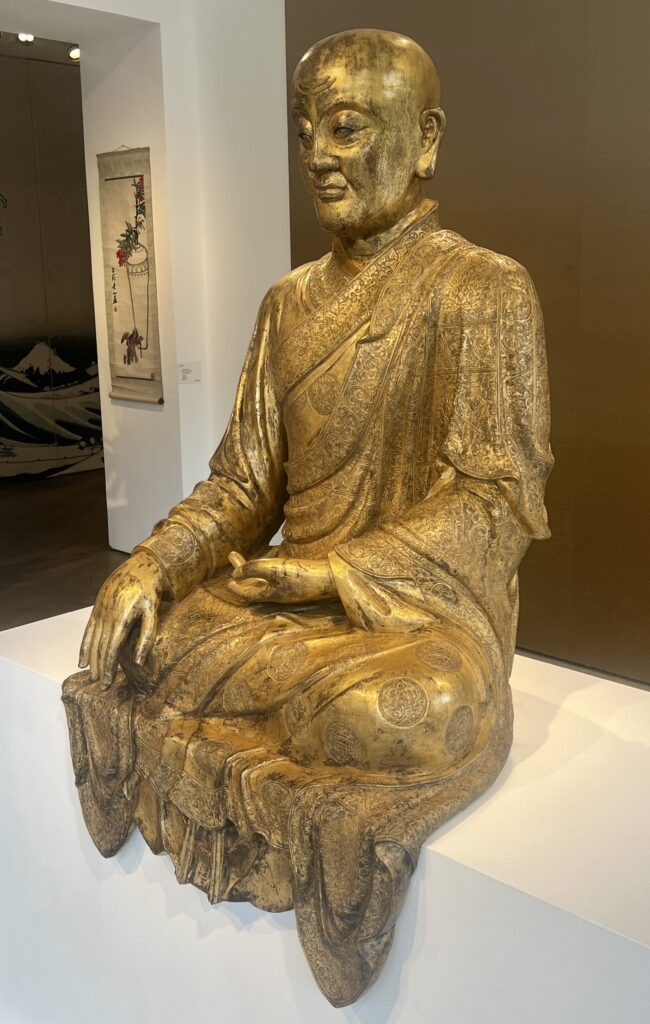
Later that afternoon I viewed the Art D’Asia sale at Christie’s. Viewing in their front corner window, was their most significant piece in the sale, lot 93, the Ming dynasty, 15th century monumental imperial gilt-bronze figure of a Karmapa, Lineage Master.
The piece had a significant provenance and was in the collection of Count Damien de Martel (1878–1940), who was in Beijing between 1913–1918 and again between 1925–1929. The Count built a villa in Cap d’Antibes, and the figure remained there through successive owners – Charles Ferdinand Joseph Marie Gordinne and later in 1962 by Nancy Phyllis Louise Astor (1909–1975).
There was considerable interest at the sale and the piece sold for €2.68 million (Estimate €800,000-1,200,000).


By coincidence, Christie’s were offering a pair of coral ground boys bowls of the same design to the one offered at Sotheby’s. However these examples were Kangxi mark and period. There was considerable interest in this pair, especially as they were estimated €8,000-12,000. The sold for €203,200.
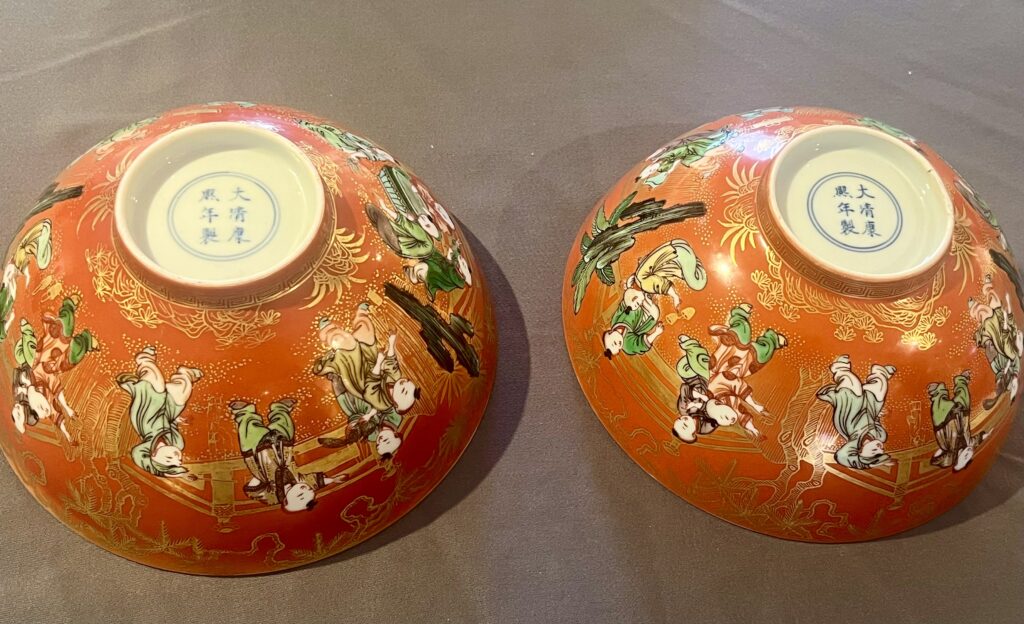


I have placed the Sotheby’s Jiaqing example against one of the Kangxi examples at Christie’s in the two sets of images below to illustrate the differences in the painting of the two.

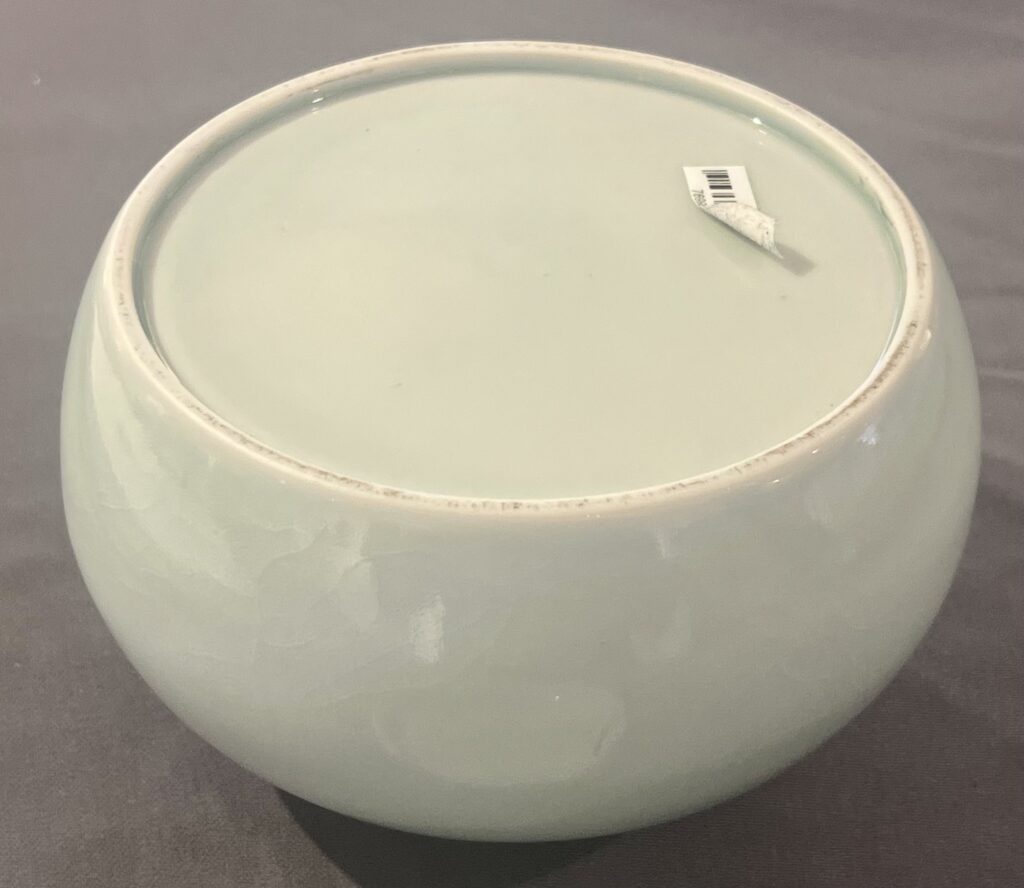
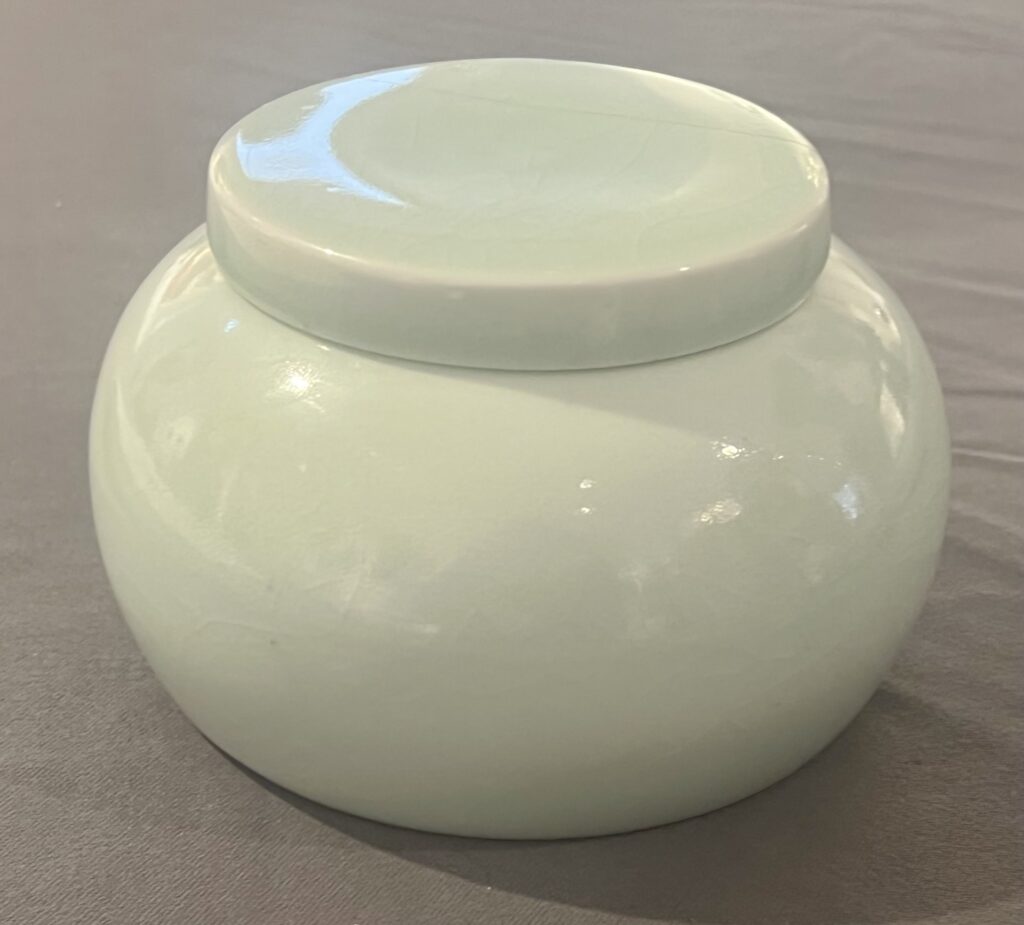
One does not often get to handle Yongle period monochrome porcelain, as they are somewhat rare. This unusual Yongle period jadeite green glazed jar and cover had belonged to an evangelist missionary Abbé L. (1840-1920), who was in China during the second half of the 19th century.
The body was of a compressed hemispherical shape and covered with an even pale green glaze. It sold well beyond its €150,000-200,000 estimate at €838,200.
The sale totalled €9.13 million selling 74% by lot.
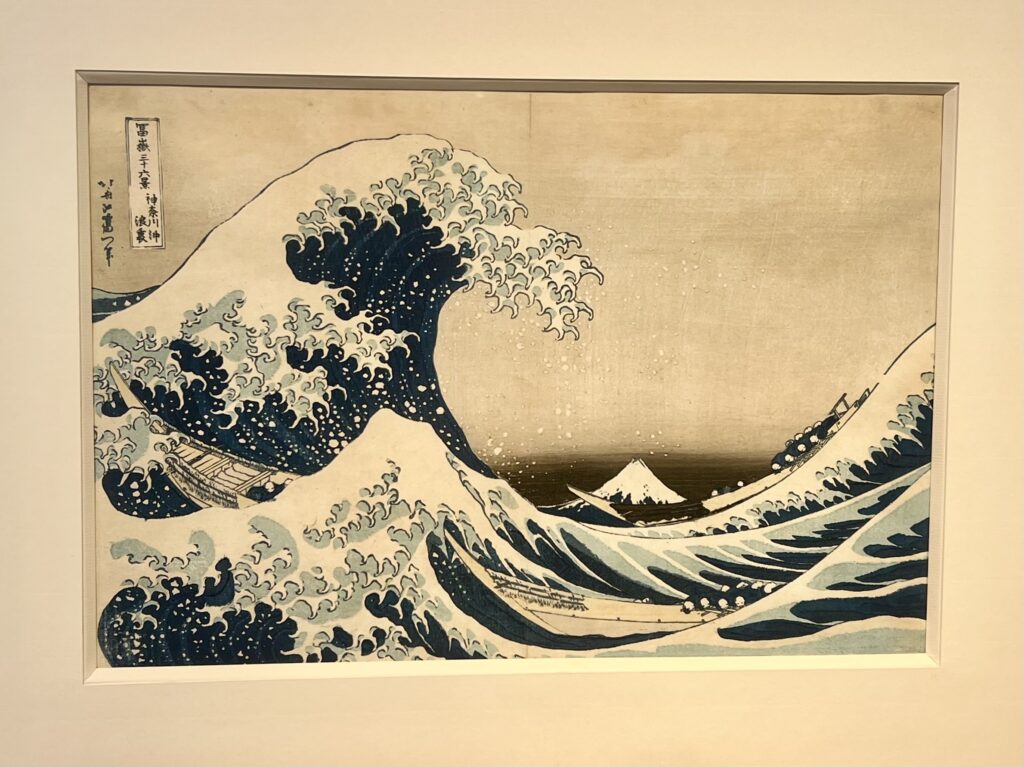
Kanagawa oki nami ura (Under the well of the Great Wave off Kanagawa), sold for €1.64 million (Estimate €600,000-800,000).
Bonhams Viewing
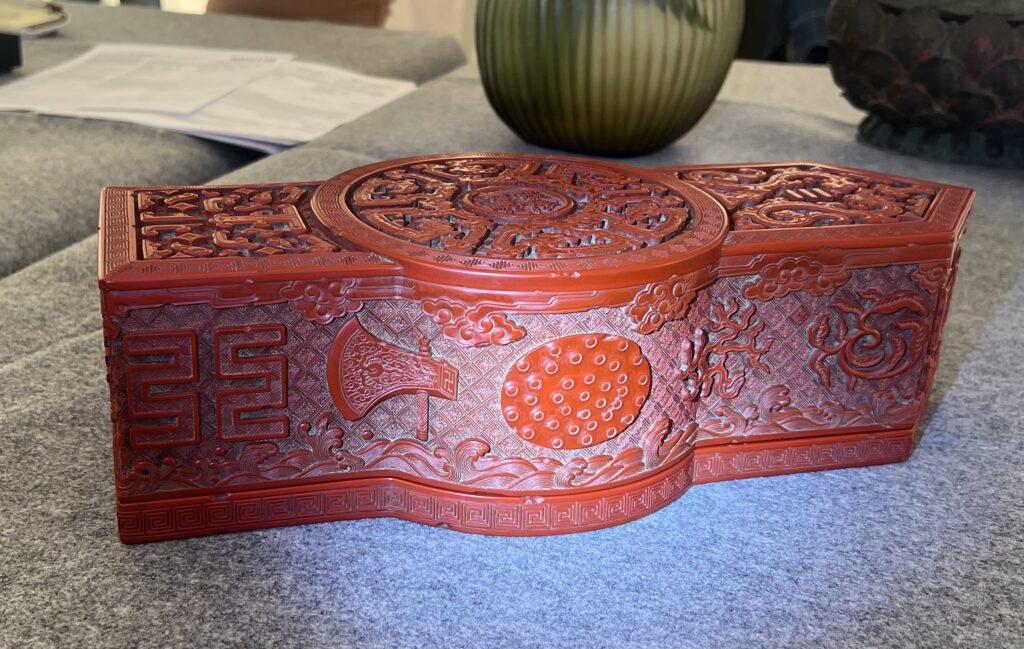
Later that afternoon I viewed the Bonhams sale and the first major piece that I handled was lot 43, the magnificent and rare Qianlong mark and period archaistic carved cinnabar lacquer ‘twelve imperial emblems’ guibi box and cover.
The box is superbly carved in relief with archaistic dragons to the upper surface of the cover, that surround the four-character Qianlong mark. The sides of the cover are carved with the full set of Twelve Imperial Symbols of Authority (shier zhangwen), which is rarely depicted in lacquer and is more commonly seen on imperial robes. The box sold for €121,050.

I enjoyed handling lot 34, the rare Yongle period blue and white ‘lotus’ dish. It is quite an unusual size being 28cm, around 10cm smaller than the more common larger examples.
It was finely painted to the centre with five lotus blooms surrounding a central larger one, with further blooms to the well. The colour of this example is a deep and consistent blue. It sold for €95,650.


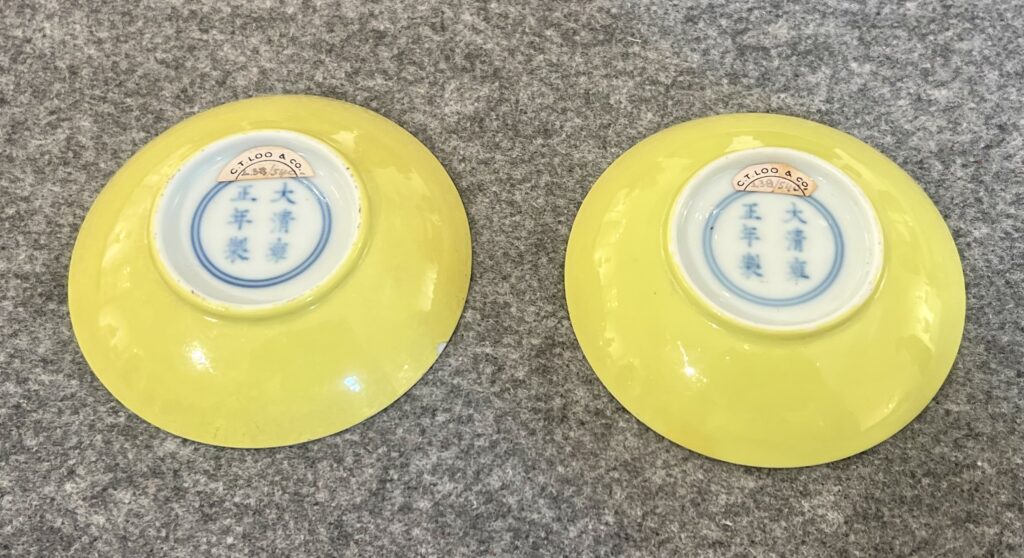
Amongst the Qing imperial ceramics, my favourite lot was lot 32, the pair of small Yongzheng mark and period lemon yellow dishes. These had originally come from the dealer CT Loo and consigned from a Belgian private collection. They sold for €70,250.

Treasure House Fair
This is the fourth time that I have vetted the Treasure House fair and it was during a particular hot week that the fair ran from the 24th to the 30th of June.
I rather enjoy this gig, as it gives me an opportunity to get an advanced sneak peek at what will be on show for the public that week.
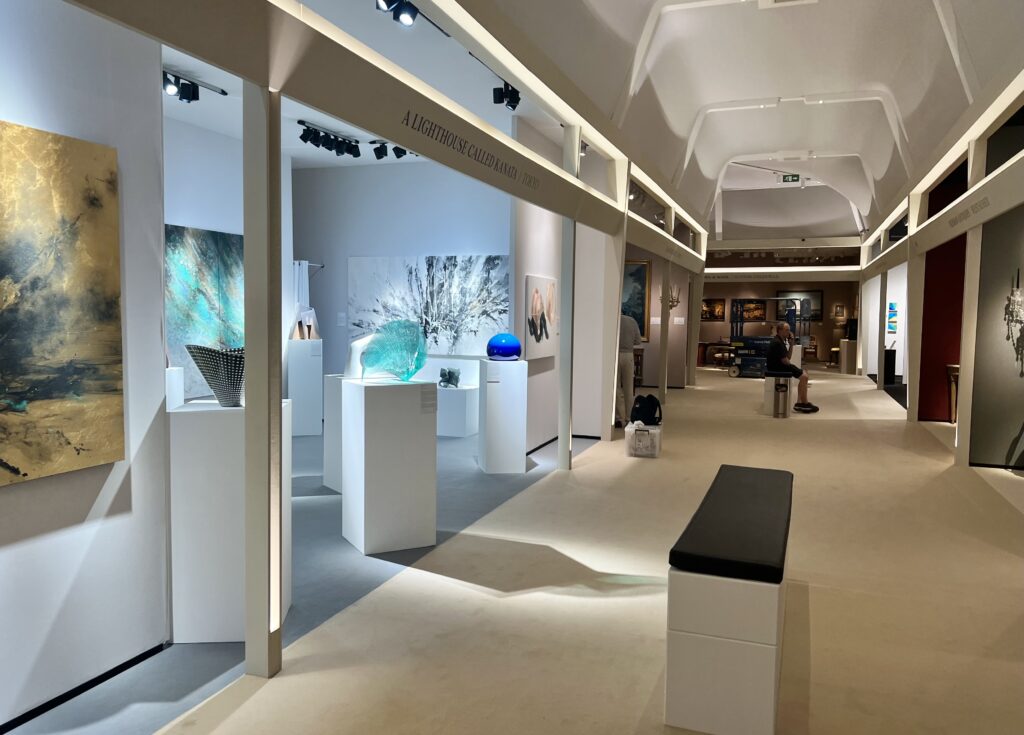
Despite the heat, the fair was well attended and I believe that sales were brisk. I think that this fair works well because it is smaller in scale than its predecessor Masterpiece and I get the feeling that the exhibitors are more carefully chosen.
This year I was joined by Caroline Blunden who specialises in Chinese painting, and Arthur Milner, who specialises in Indian, Islamic and South East Asian art.
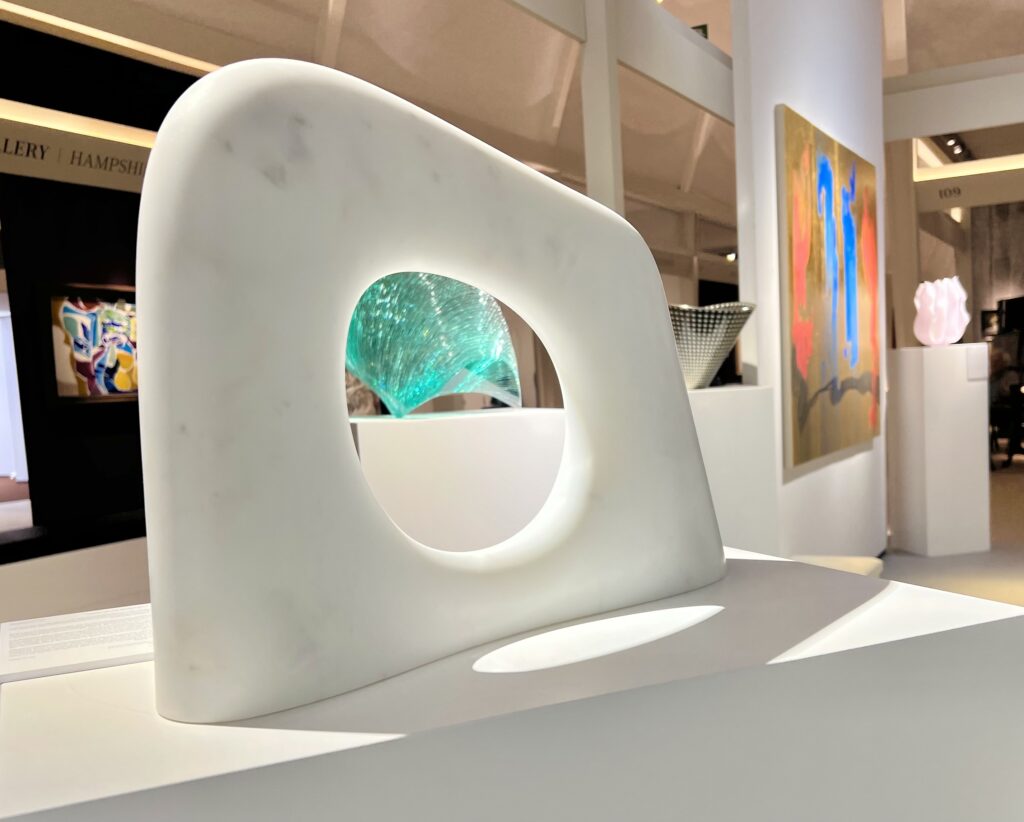
I always enjoy viewing the stand of contemporary art dealer – A Lighthouse Called Kanata from Tokyo. The Kan Yasuda marble work Myomu, is reminiscent of work by Barbara Hepworth with planes and round spaces in the work. The white markble has a particularly tactile surface.
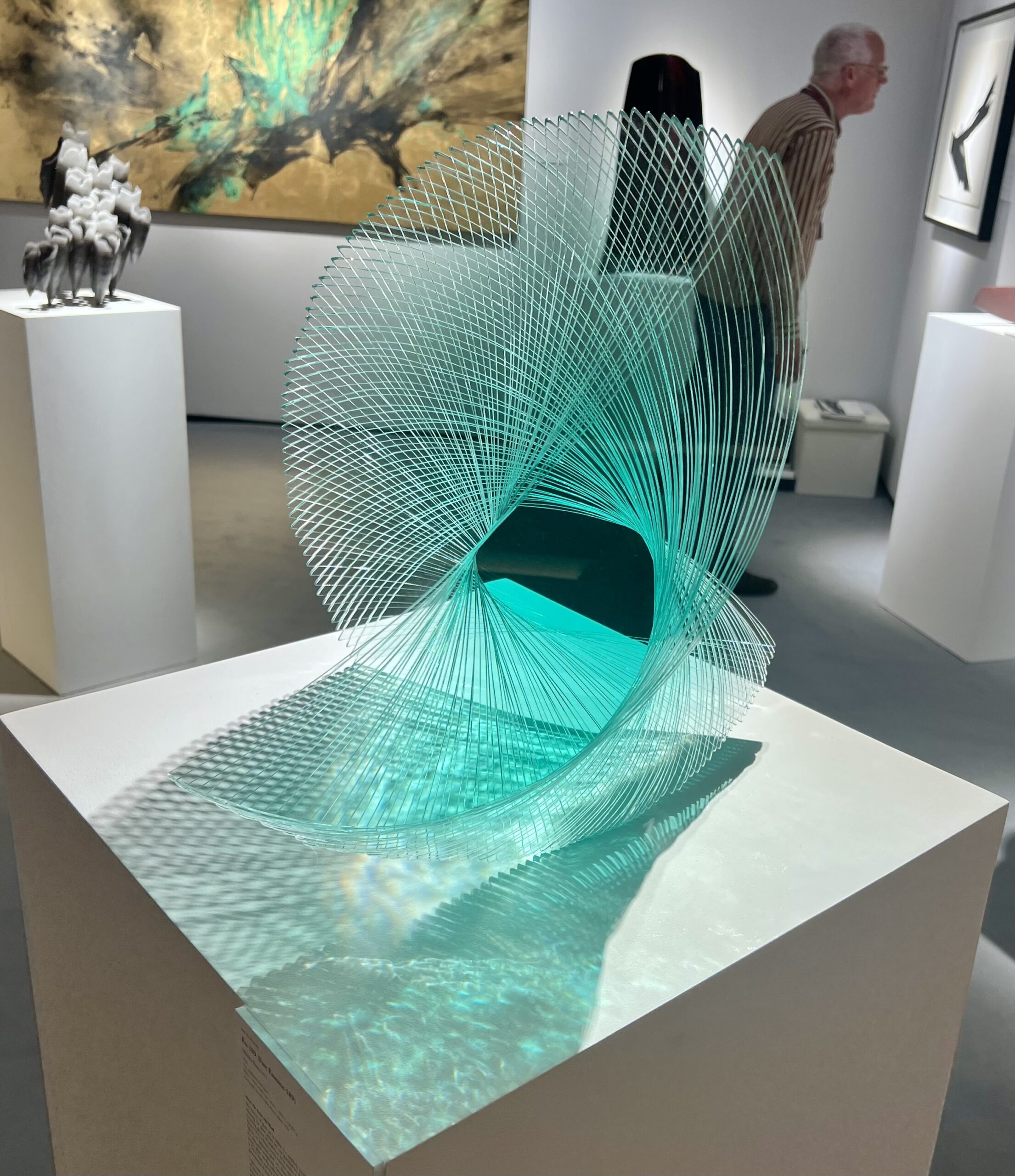
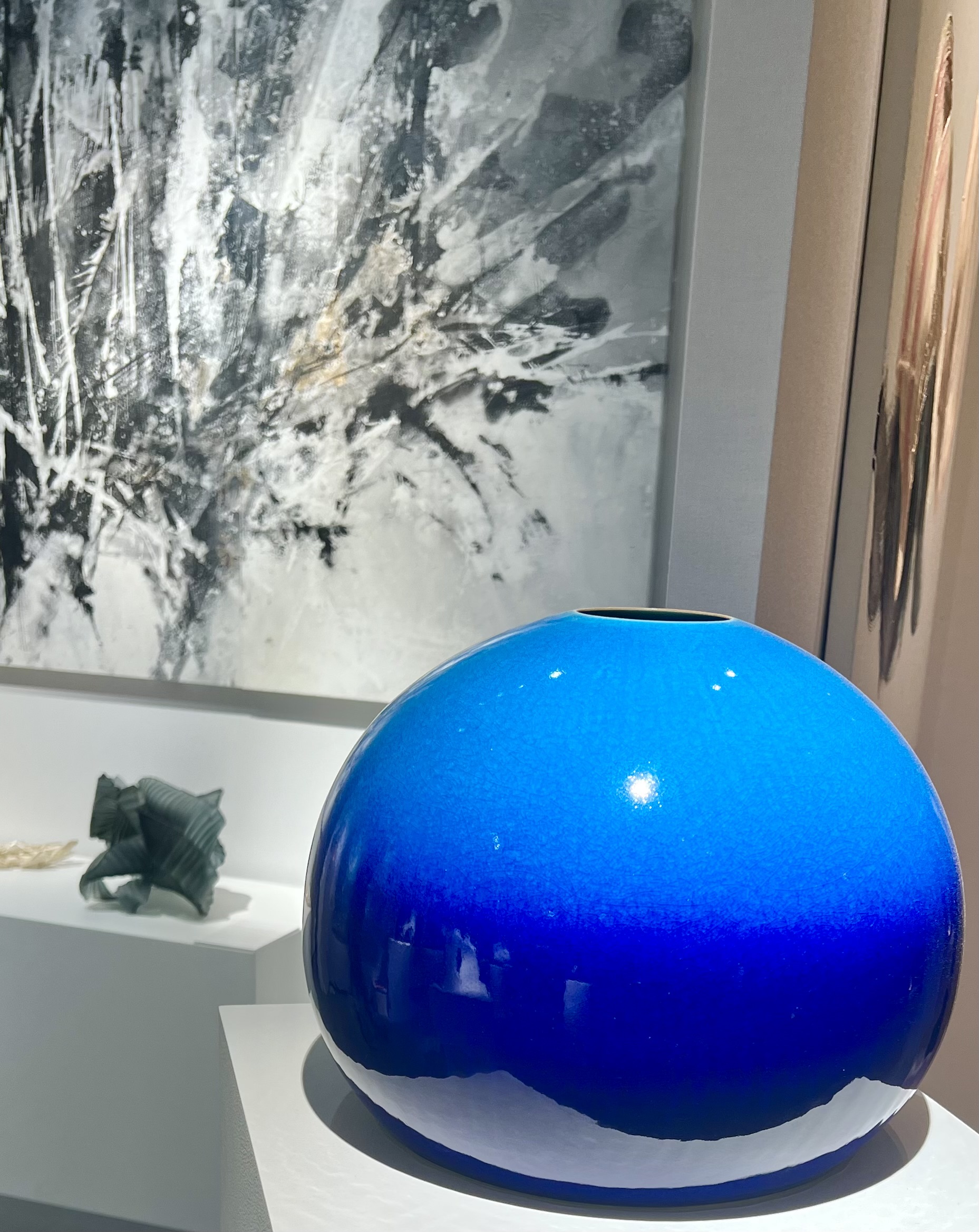
One of the stand out works on this stand was the spiralling glass forms of Niyoko Ikuta’s Ku-189 (Free Essence-189). Another striking work is Yoshiro Kimura’s Vessel with Blue Glaze, 2026, where the glaze on the beautifully rounded form transforms from light to dark blue.
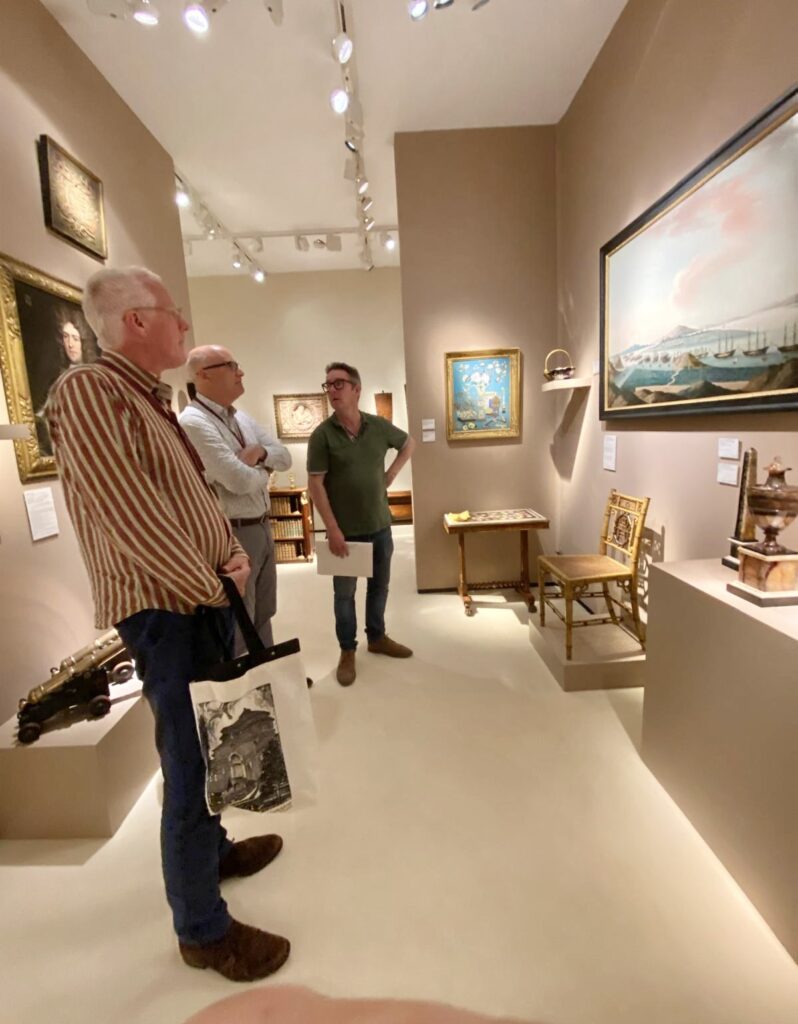
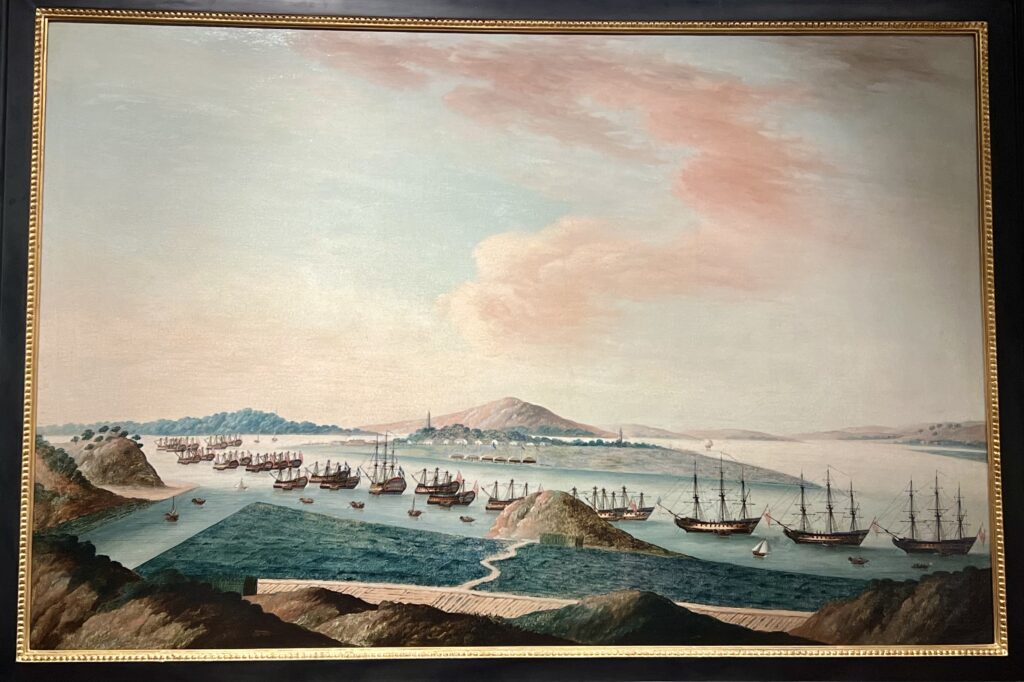
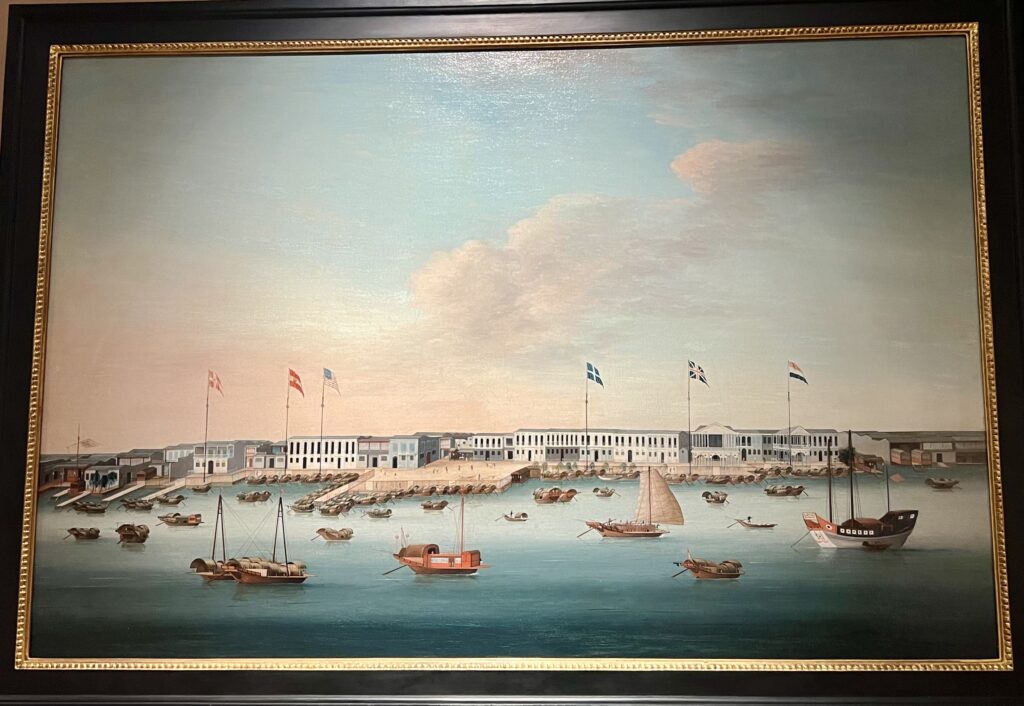
I always enjoy viewing the Thomas Coulbourn and Sons stand, as there is always some interesting Chinese pieces on exhibition. This year was also the case and I was instantly drawn to his two large trade paintings of Canton and the Whampoa Anchorage on the Pearl River. These were painted around 1800 and were particularly fine and large examples.
Of the market.
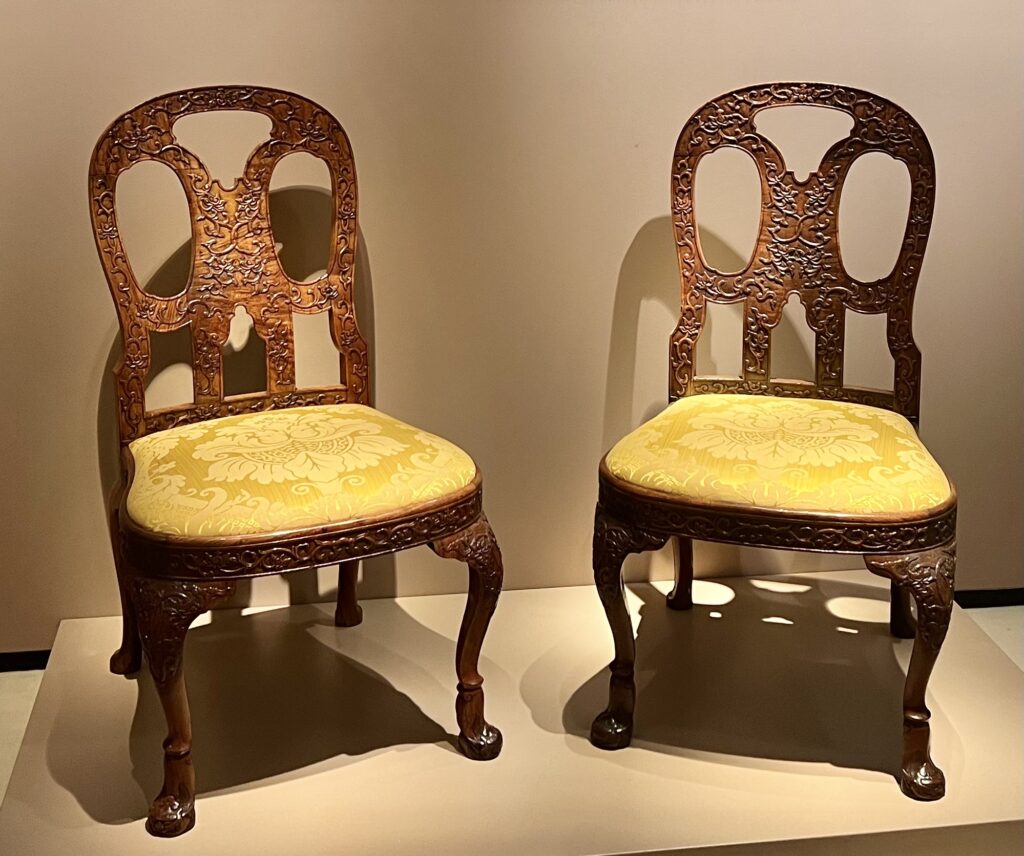
Another stand out exhibit on the stand was the fine pair of Canton side chairs, dating to around 1740. The backs and legs were ornately carved in relief with lotus form foliage.
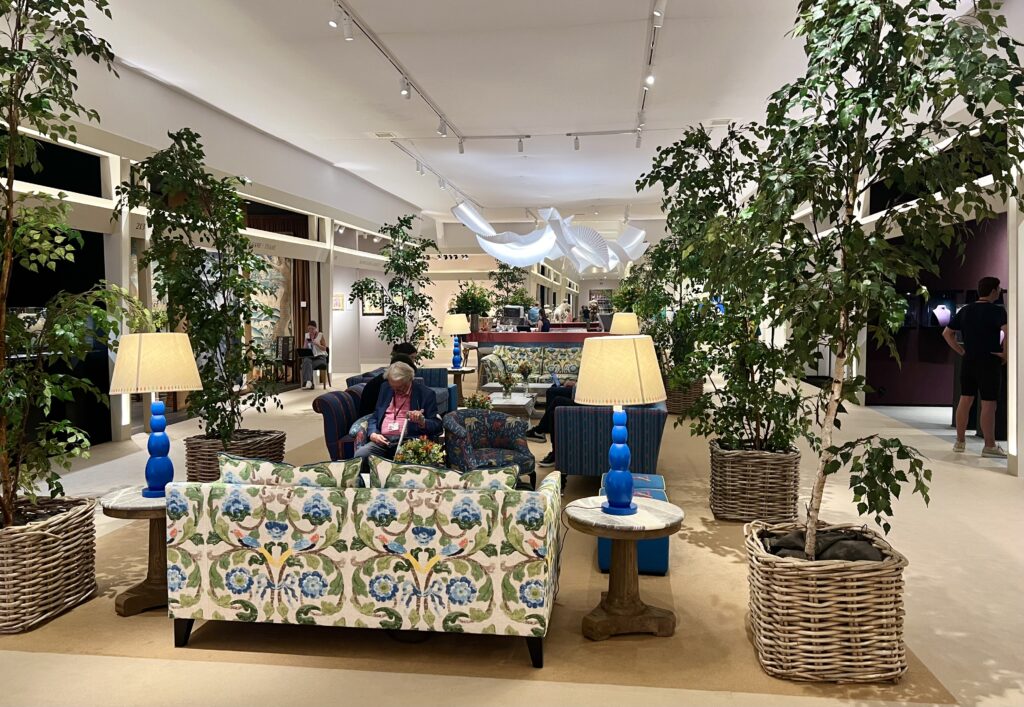

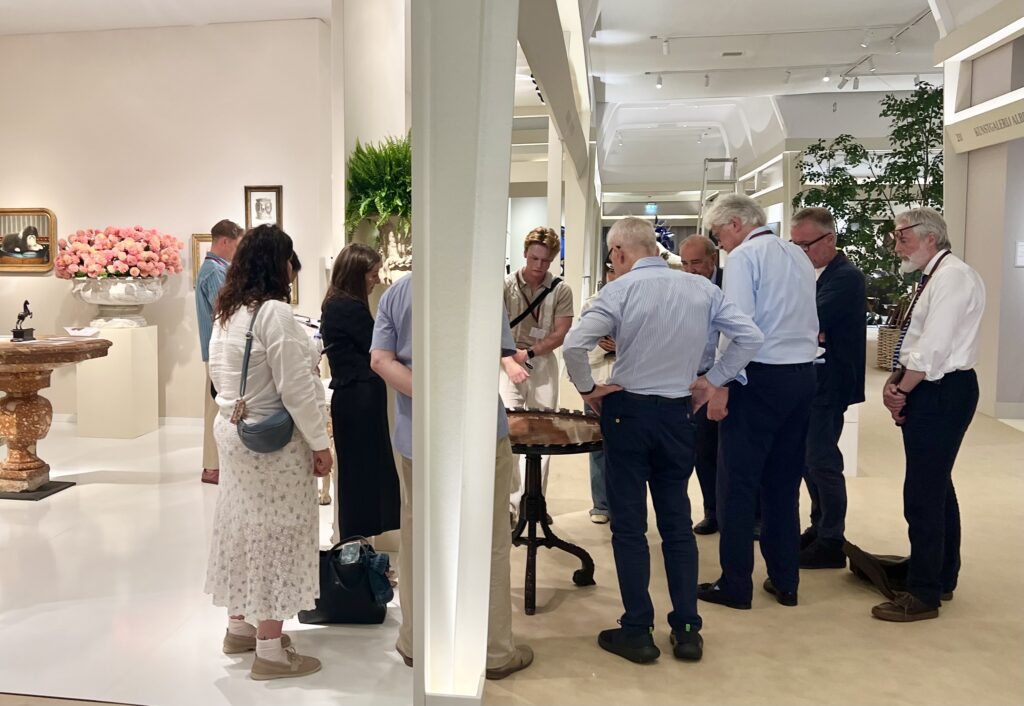
There was a somewhat amusing exhibit in the centre aisle of the fair – ‘Bangers & Mash’ by English artist Alex Chinneck, which I enjoyed viewing with Caroline and ex Sotheby’s colleague Adrian Biddell, who is now with Olympia Auctions.
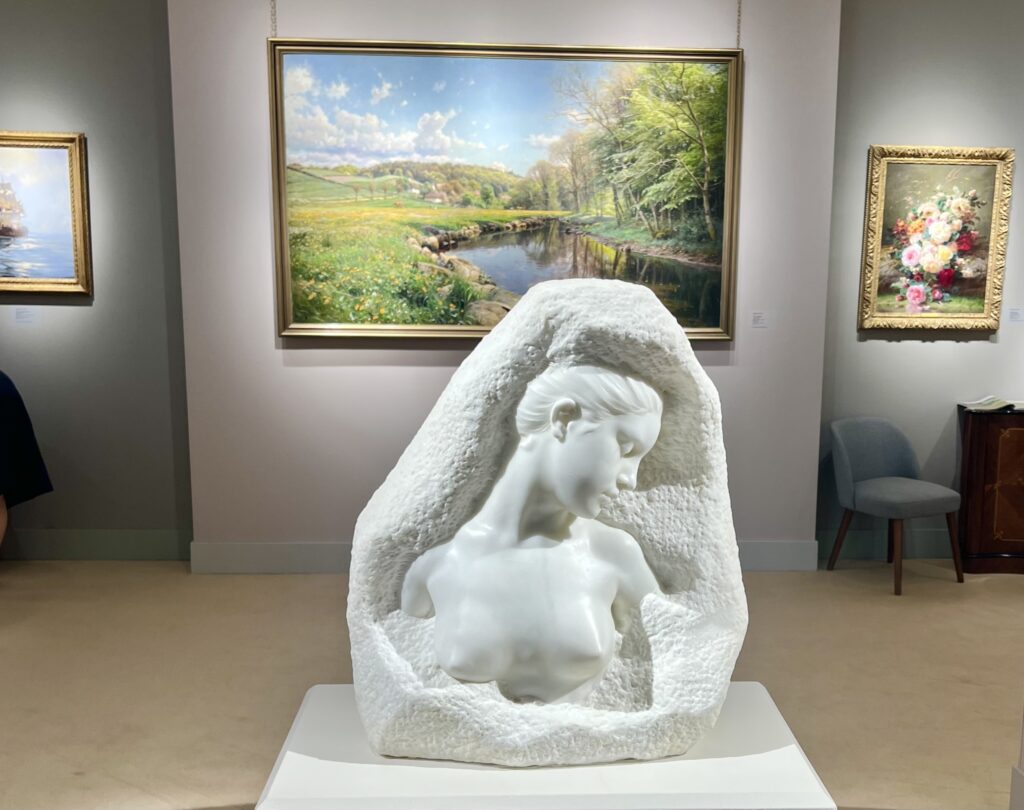
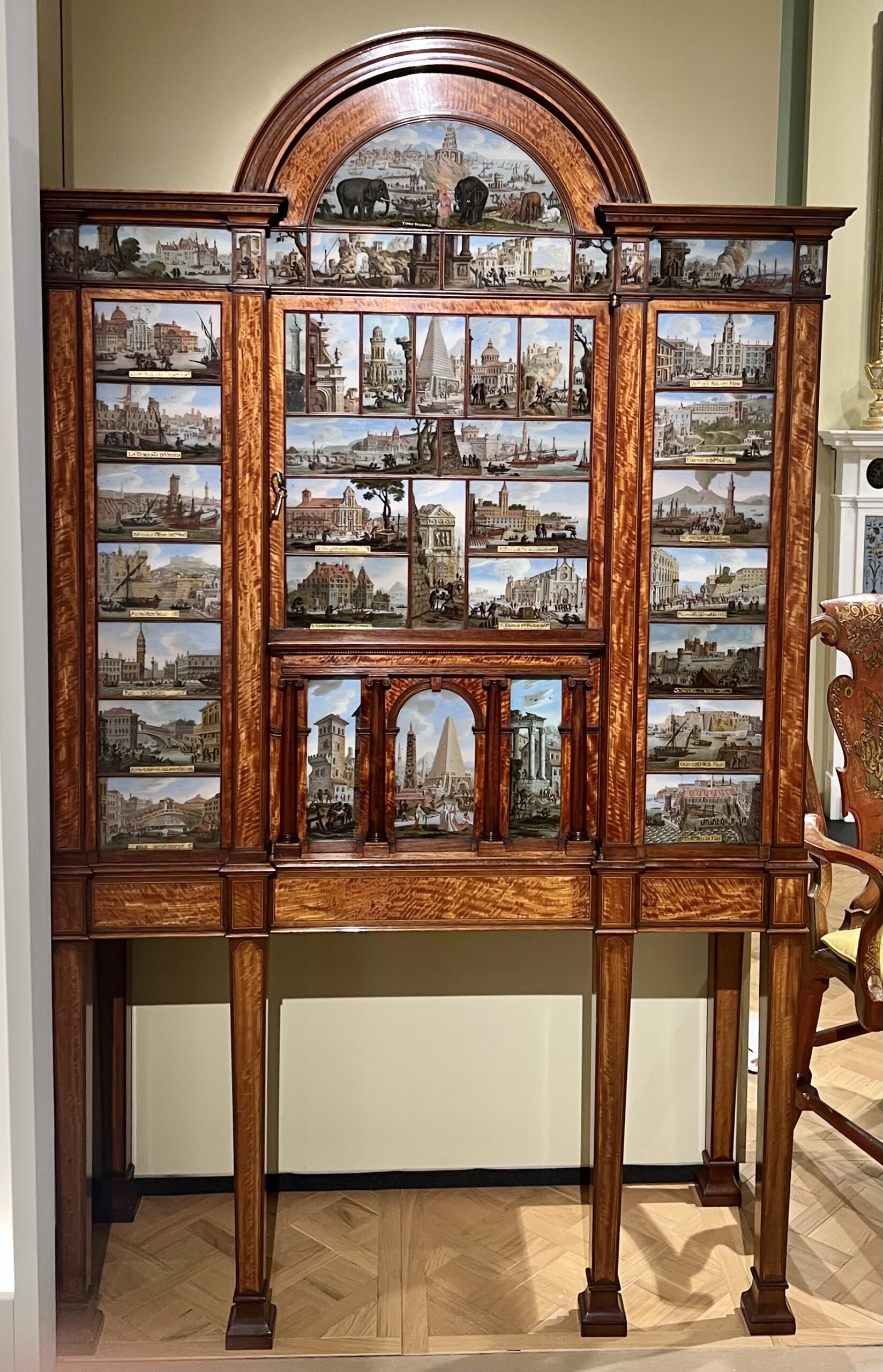
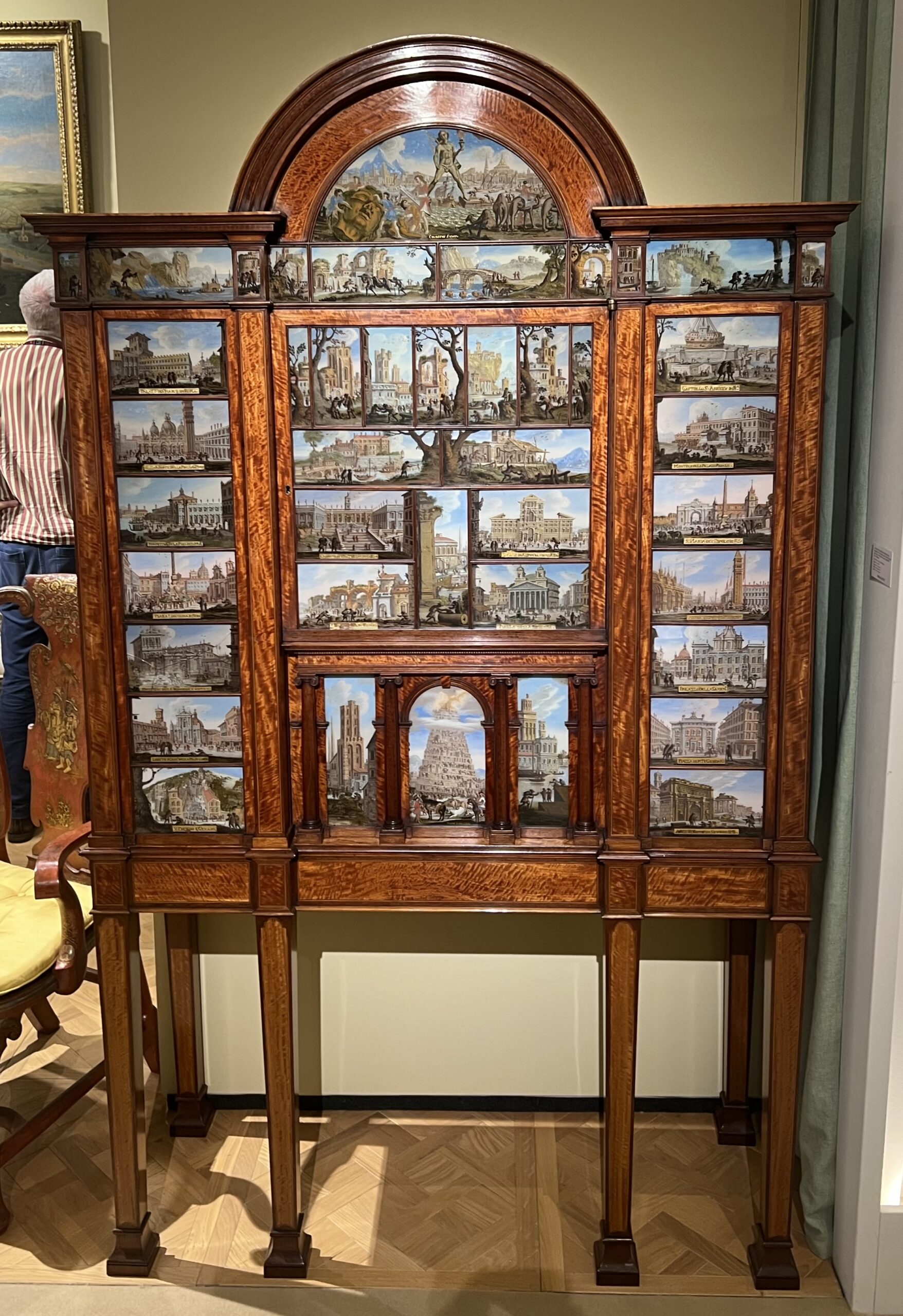
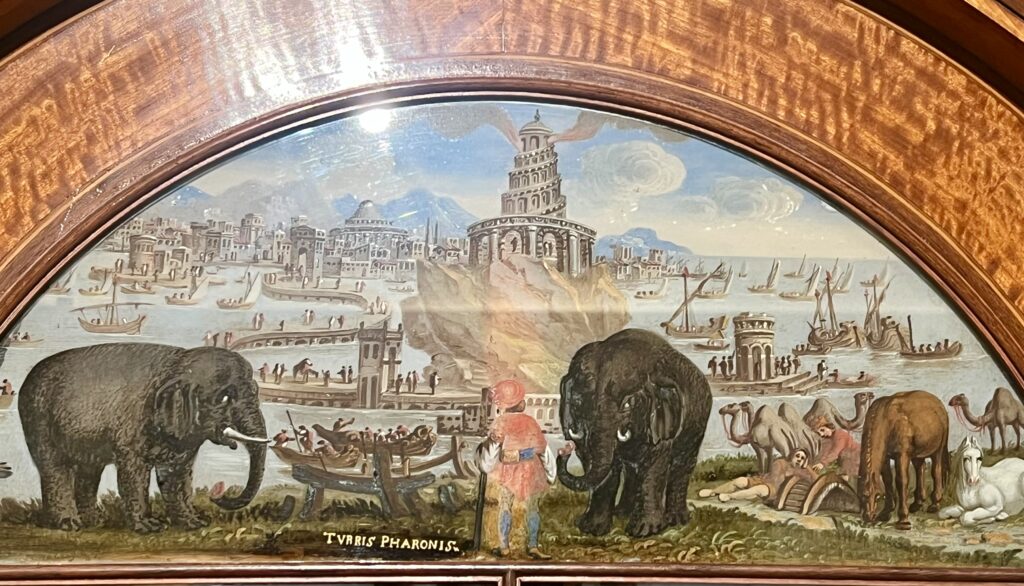
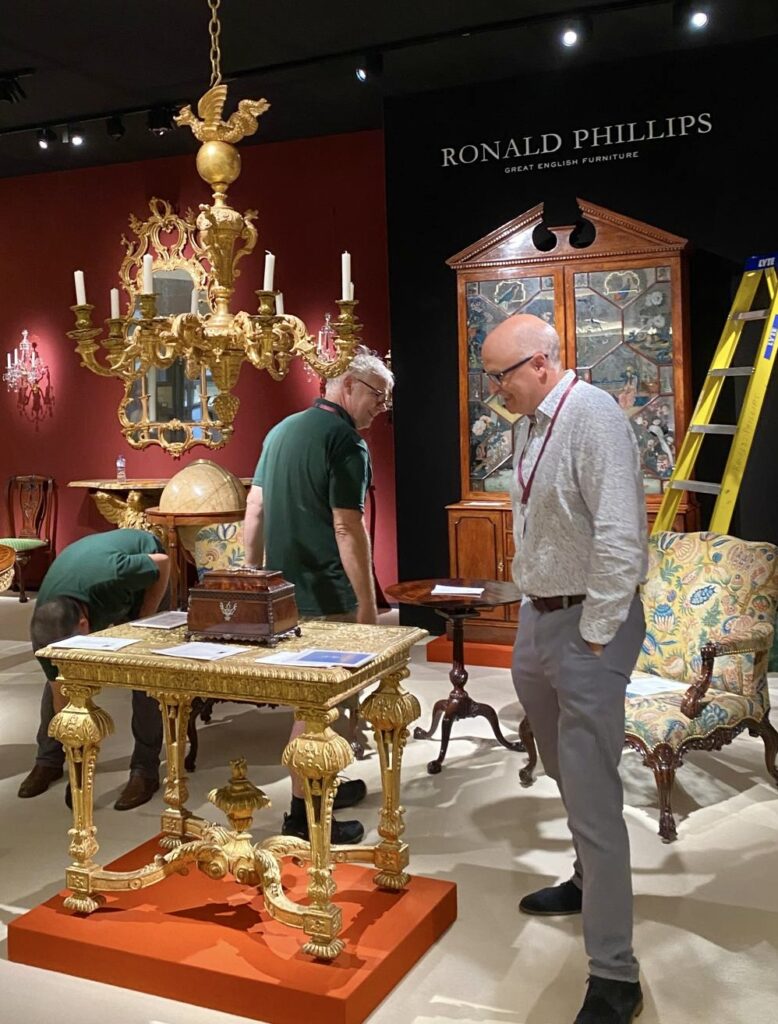
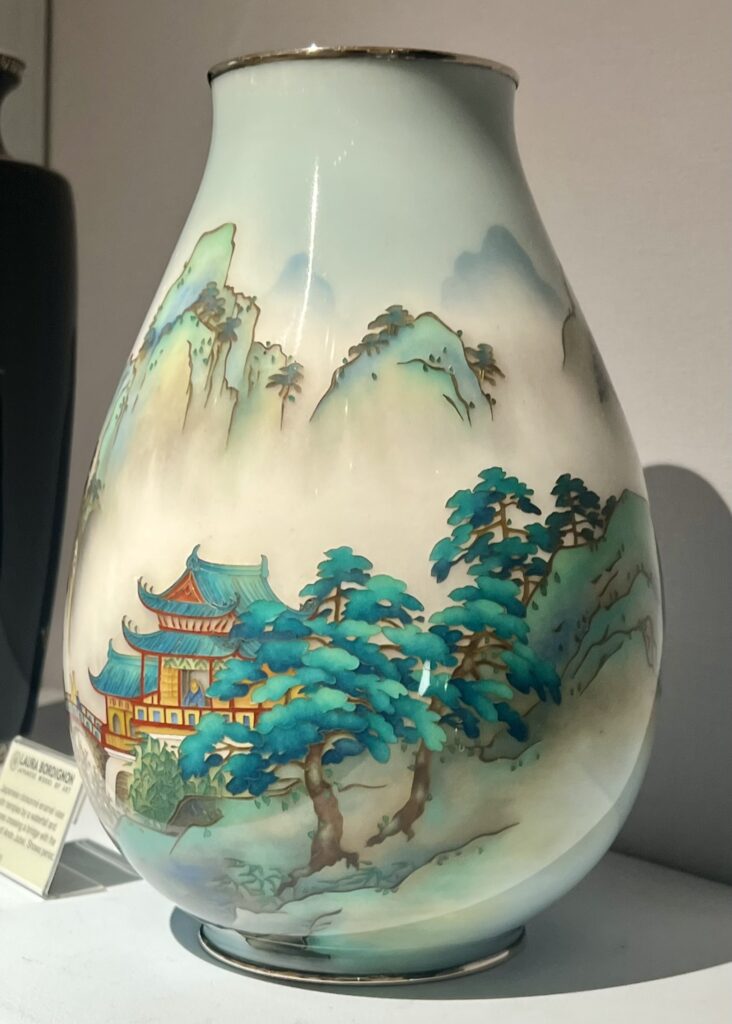
One of the finest items of furniture at the fair was in my view, the pair of George III, circa 1780, satinwood, amaranth and mahogany reverse-painted glass cabinets attributed to Ince and Mayhew, which were exhibited at there Mallet and Son stand. The cabinets depict architectural views of Rome and other Italian cities.

Th.
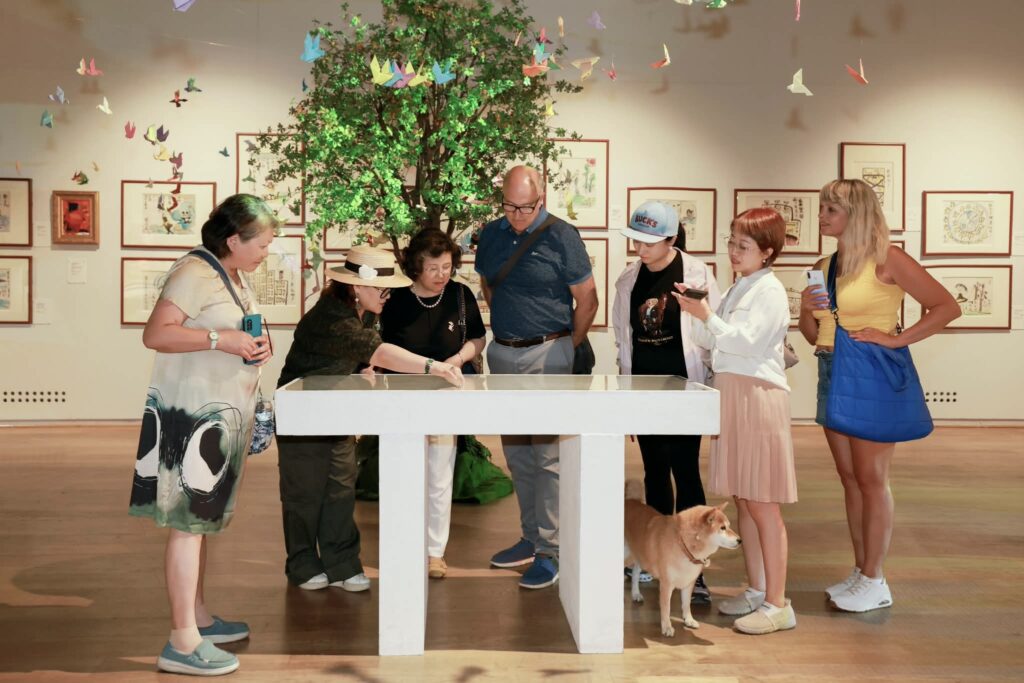
Huaicun Zhang – Exhibition at the Mall Galleries – Home Sweet Home
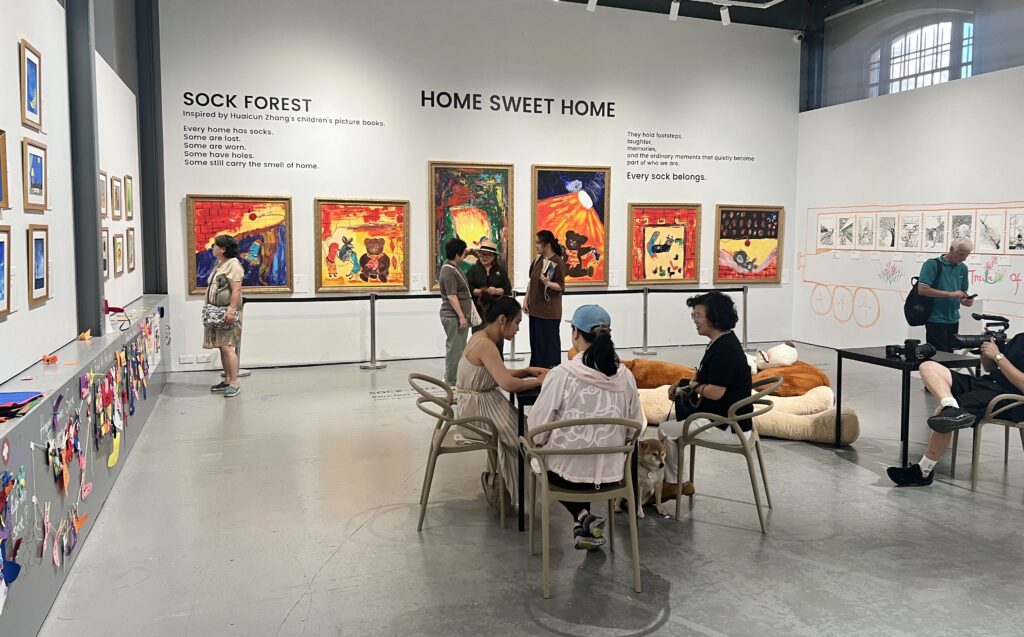
On 11 August, I attended an exhibition ‘Home Sweet Home’ by the artist and children’s author Huaicun Zhang at the Mall Galleries.
Huaicun is described as an artist and Poet. She was born in 1972 in Qinghai province, north western China and is of Monguor (Tu) ethnic origin. Her painting and poetry really began in the early 2000s and the two art forms are often interrelated, where drawings act as illustration, but have a life of their own, often inspired by her poetry.
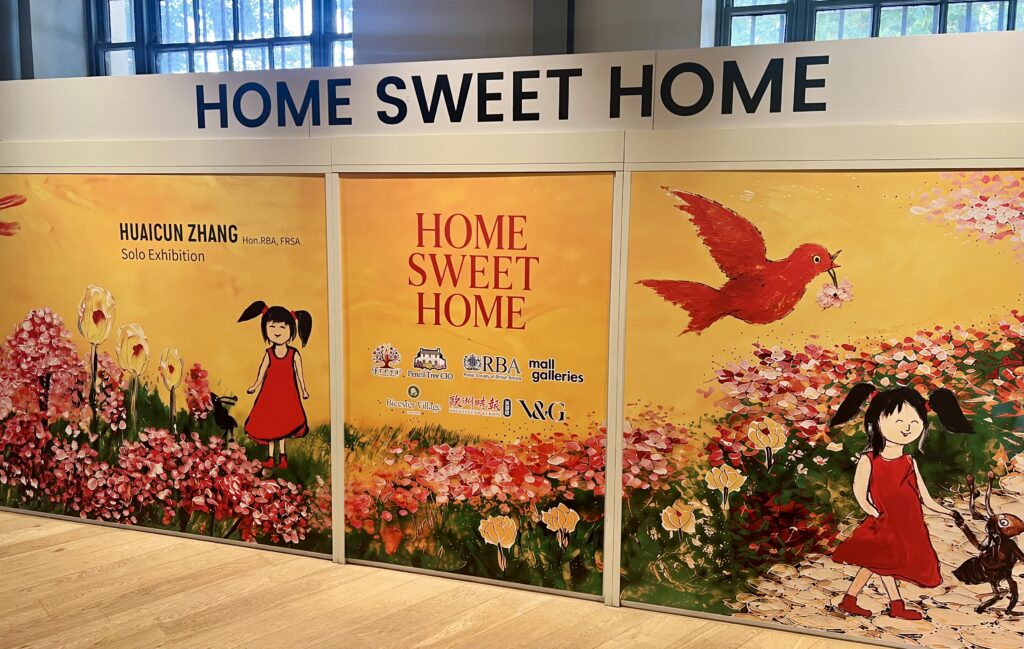
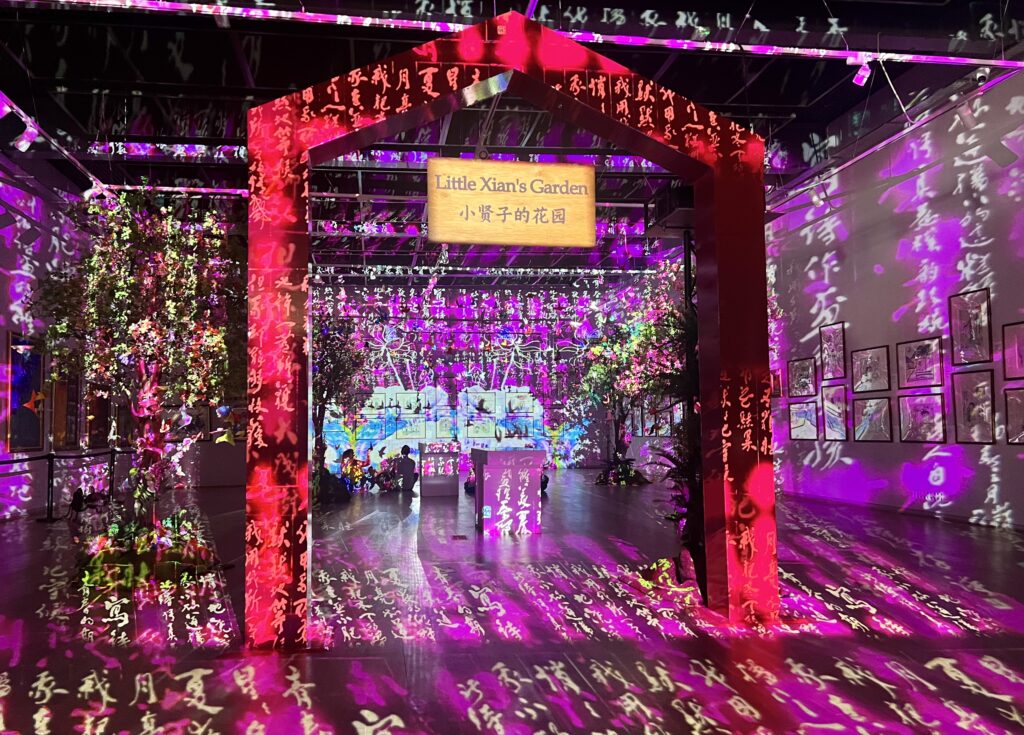

This exhibition encompasses grand scale painting with installation and smaller lyrical ink works, which often depict a young girl (her daughter) in a happy, magical and safe environment. The idea of home, becomes a place of innocence and imagination, of colour and bright sun filled days in nature.
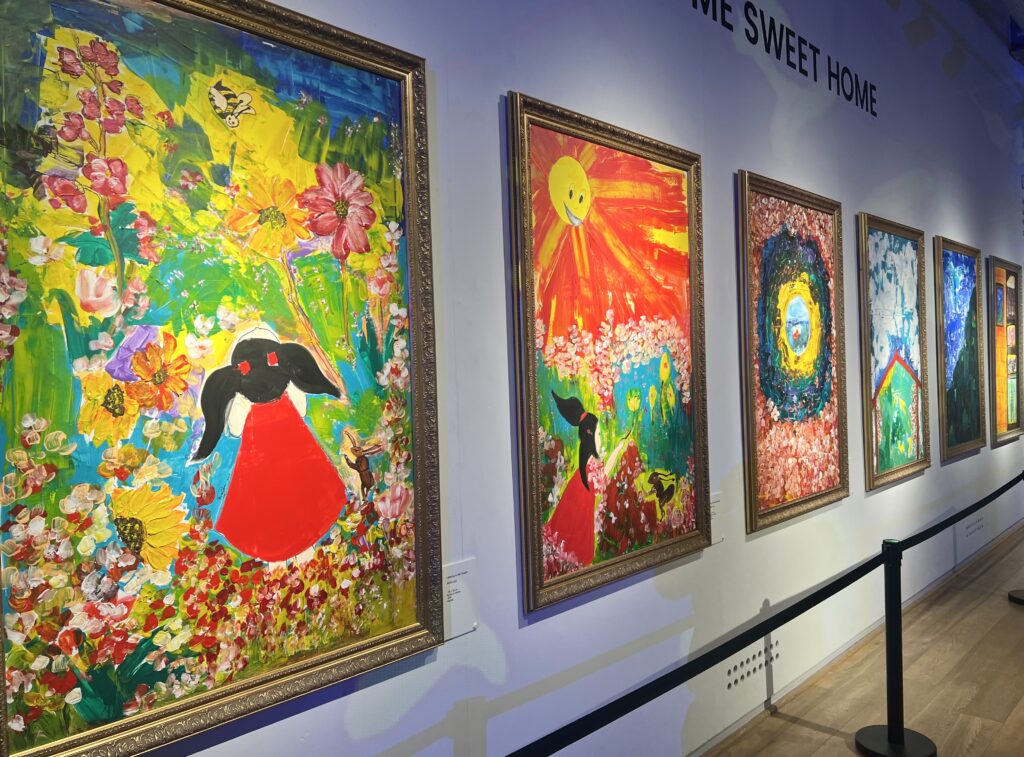
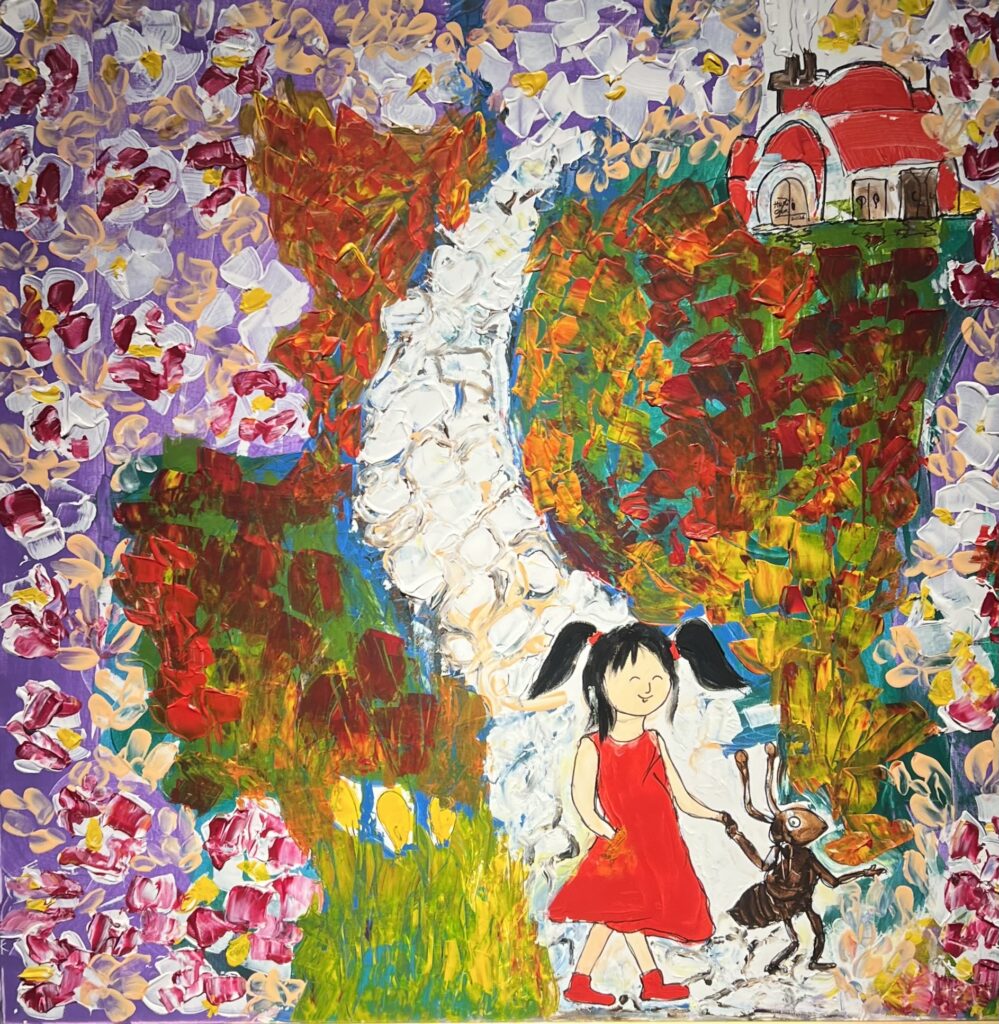
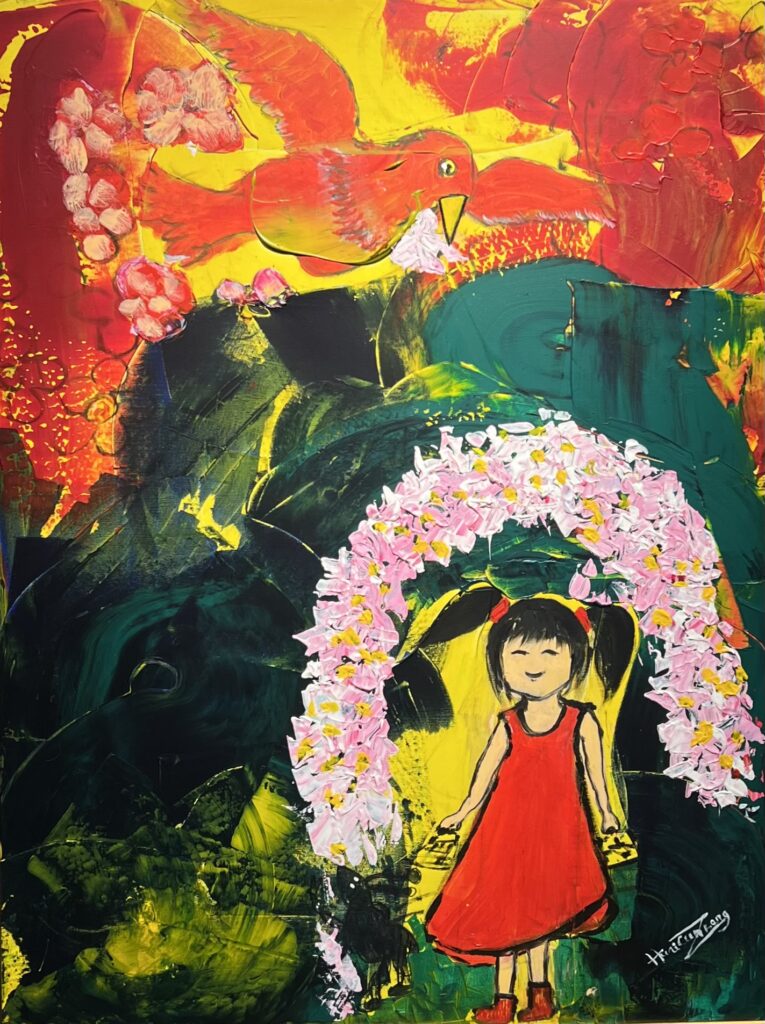

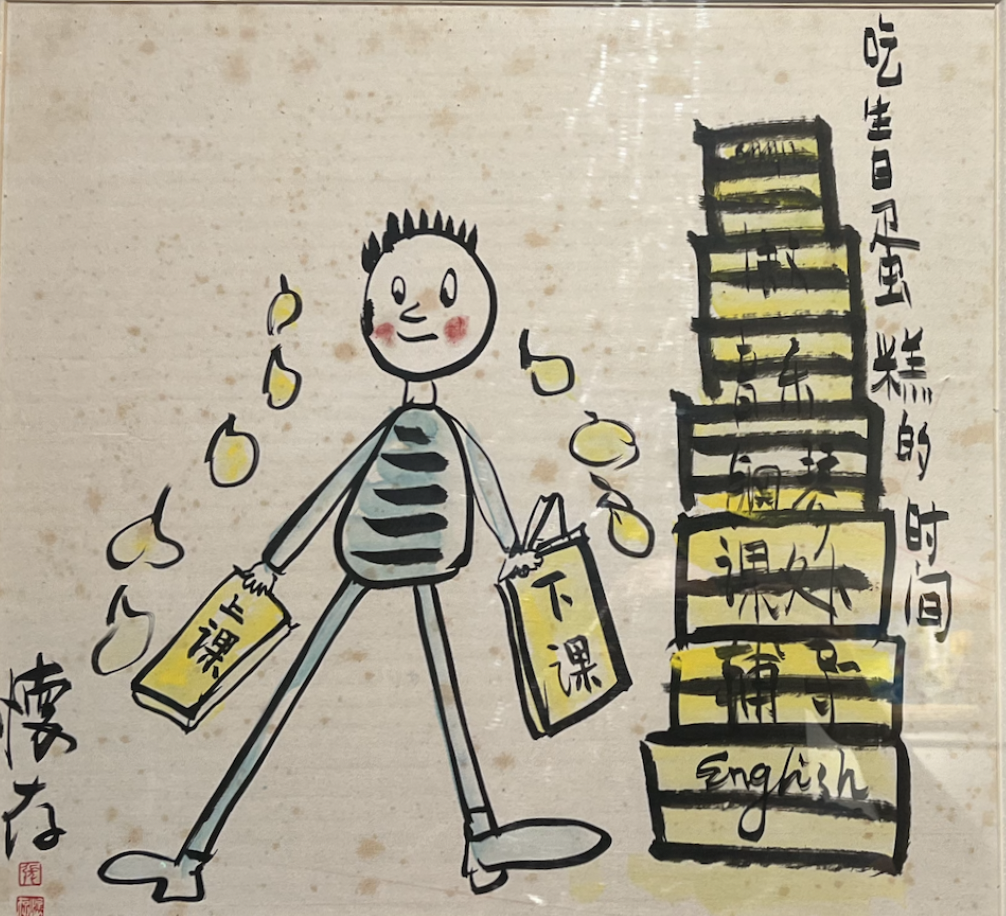
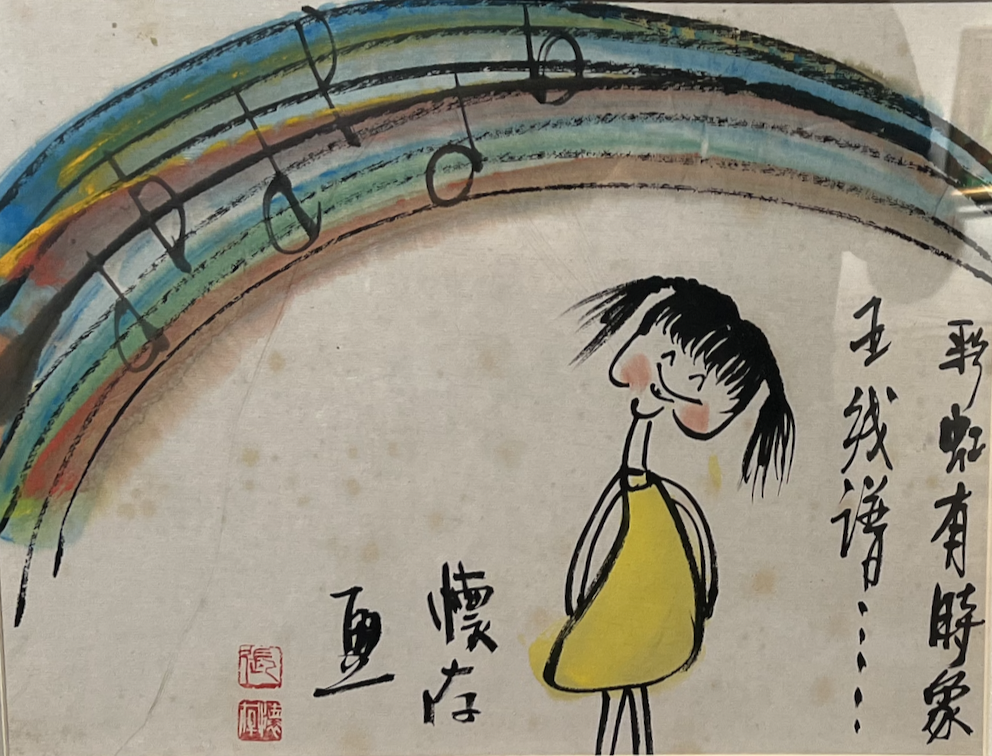
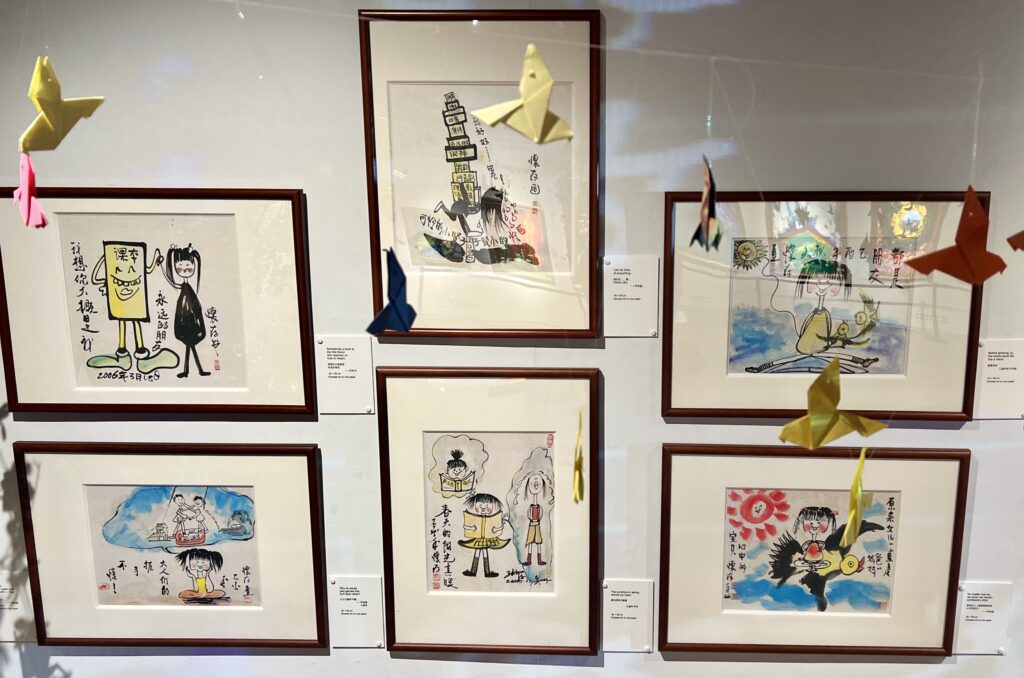
Some of my favourite works of this exhibition were the humorous and innocent ink paintings mostly of a young girl whose world we get to see through her eyes. With their fluid dark outlines, these works look to be painted quite quickly and spontaneously, which adds to their sense of innocence.

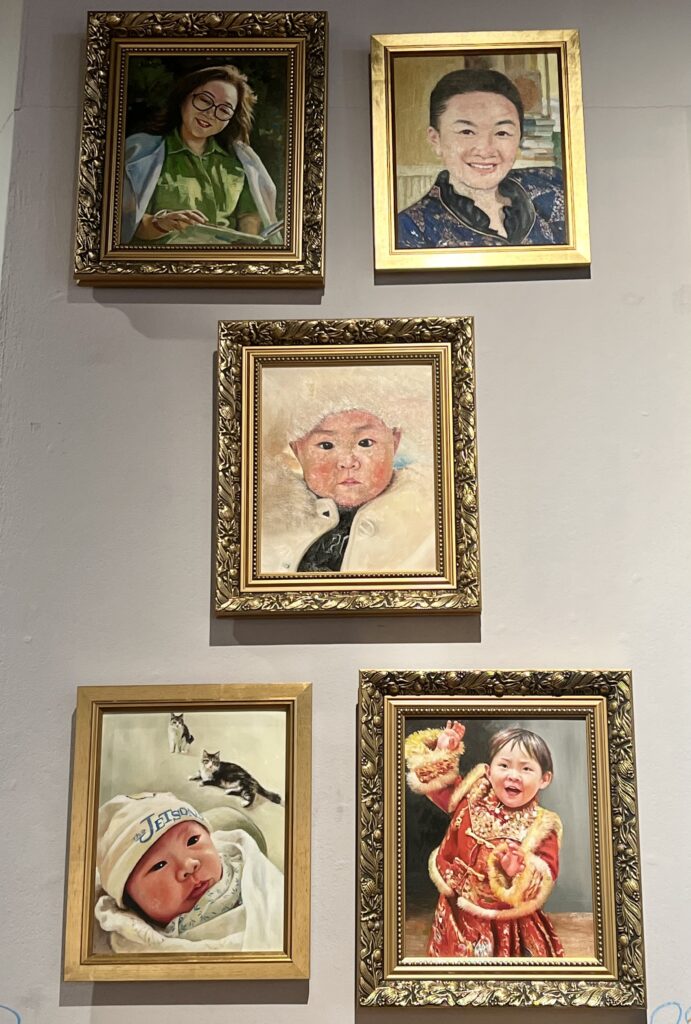
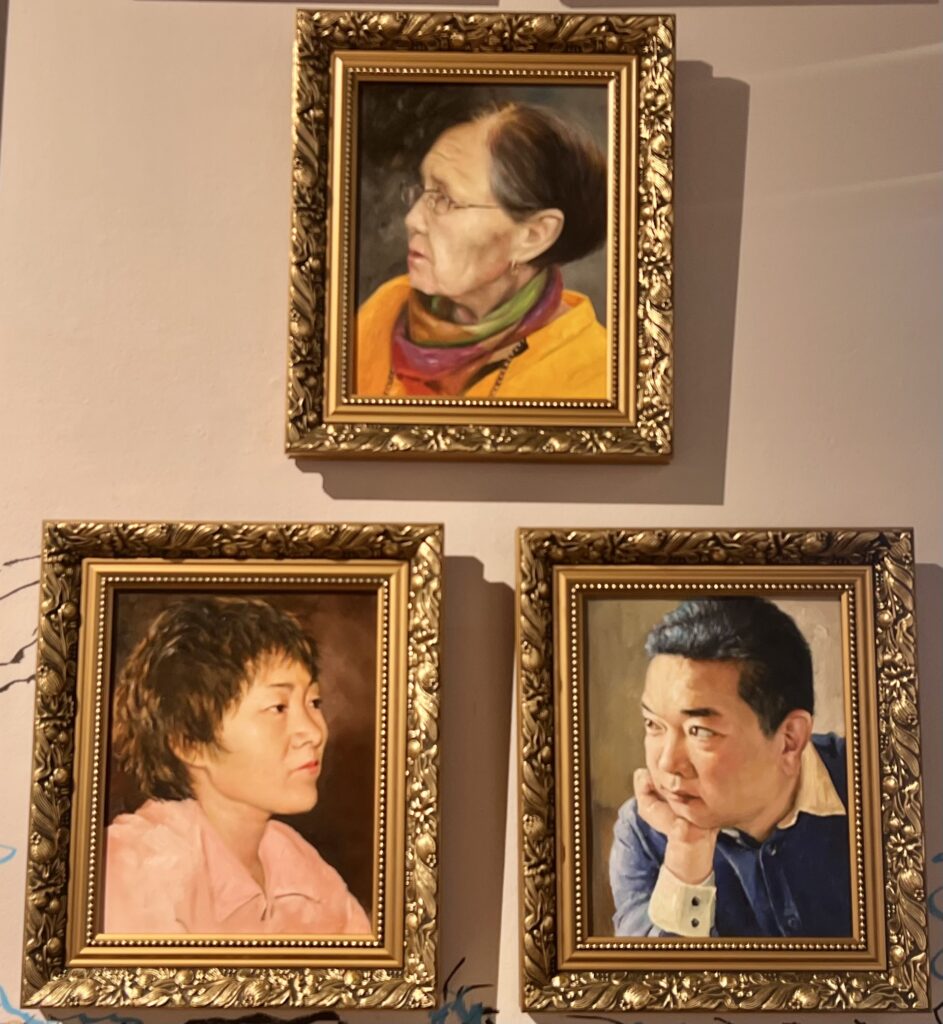
By contrast, her portrait paintings of her family, (depicted as part of a tree) are handled with great skill and naturalism. This illustrates the degree of flexibility of technique that the artist brings to her different subjects.
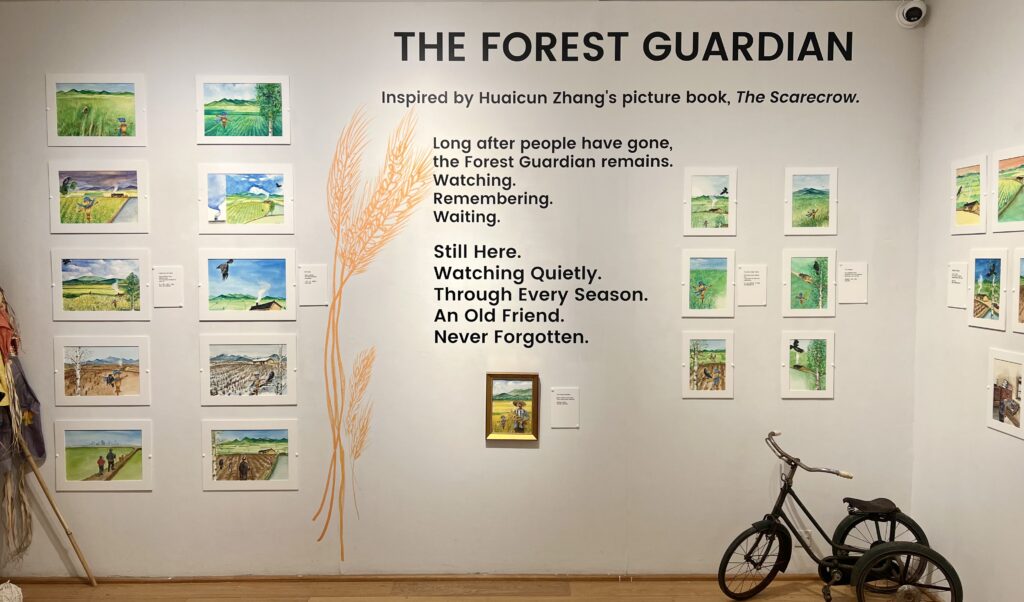

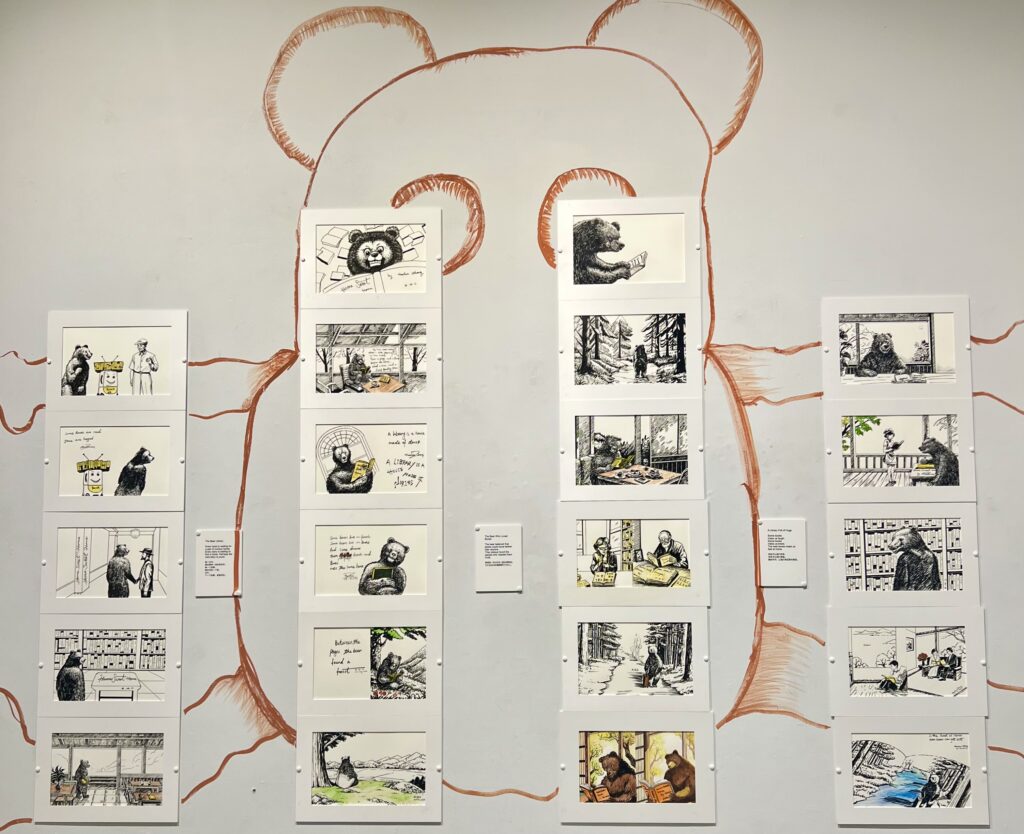
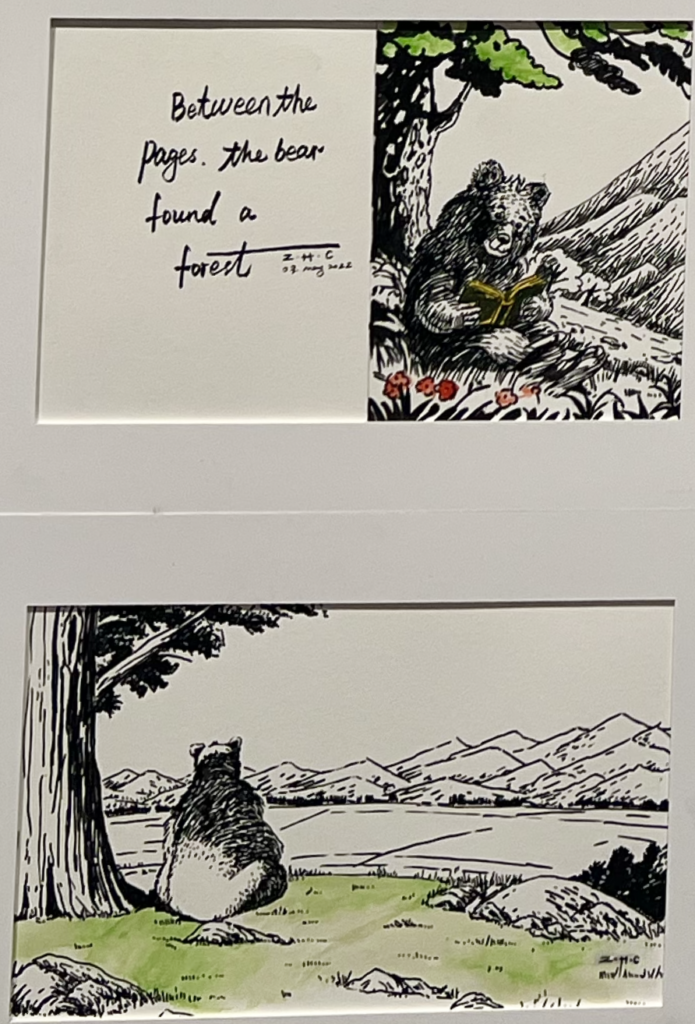
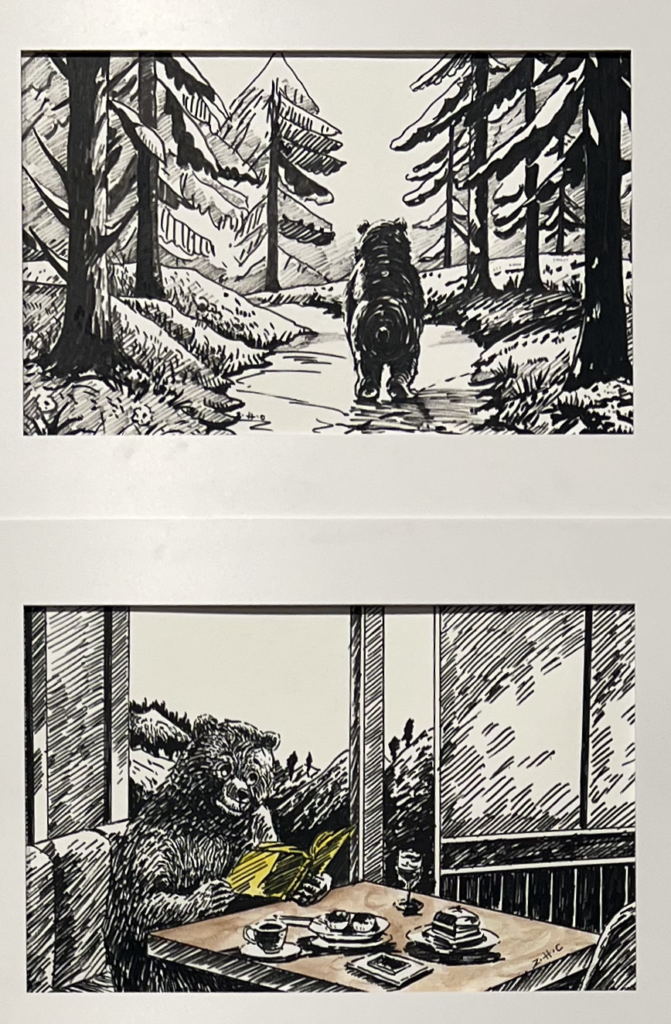
Huaicun again shows a different stylistic approach to her bear series, which is akin to book illustration. The animal is boldly drawn here in pen an ink, with some scenes having just a hint of colour.

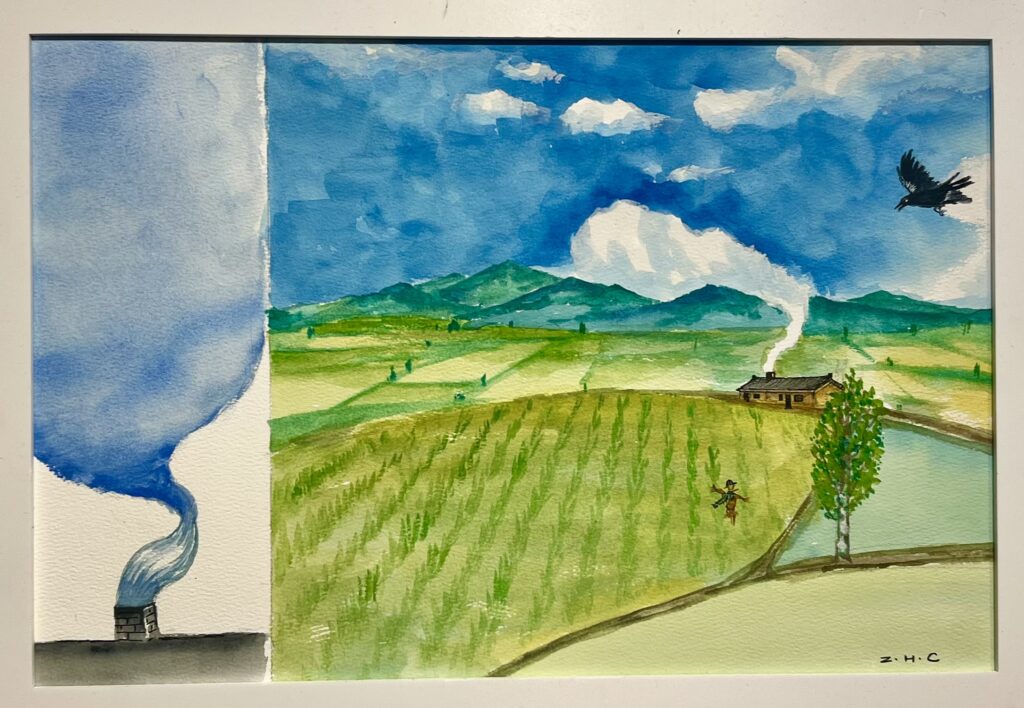
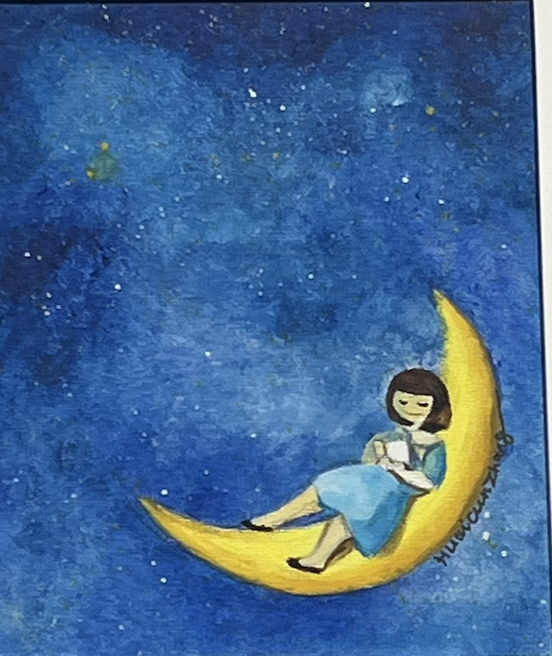
I particularly liked her small watercolours towards the end of the exhibition, which are small, rather dream like pictures and being a selling exhibition, I was able to acquire a couple.
I really enjoyed Huaicun’s vision of childhood and home, where youth can be nurtured by imagination and wonder.


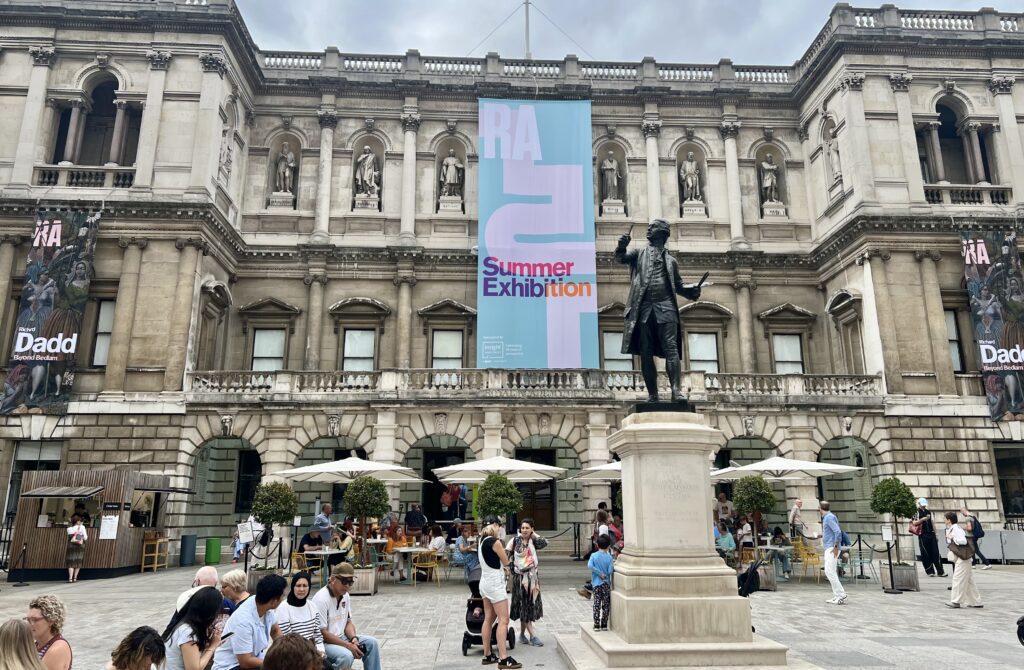
Other London Exhibitions in the Summer
Royal Academy – Summer Exhibition
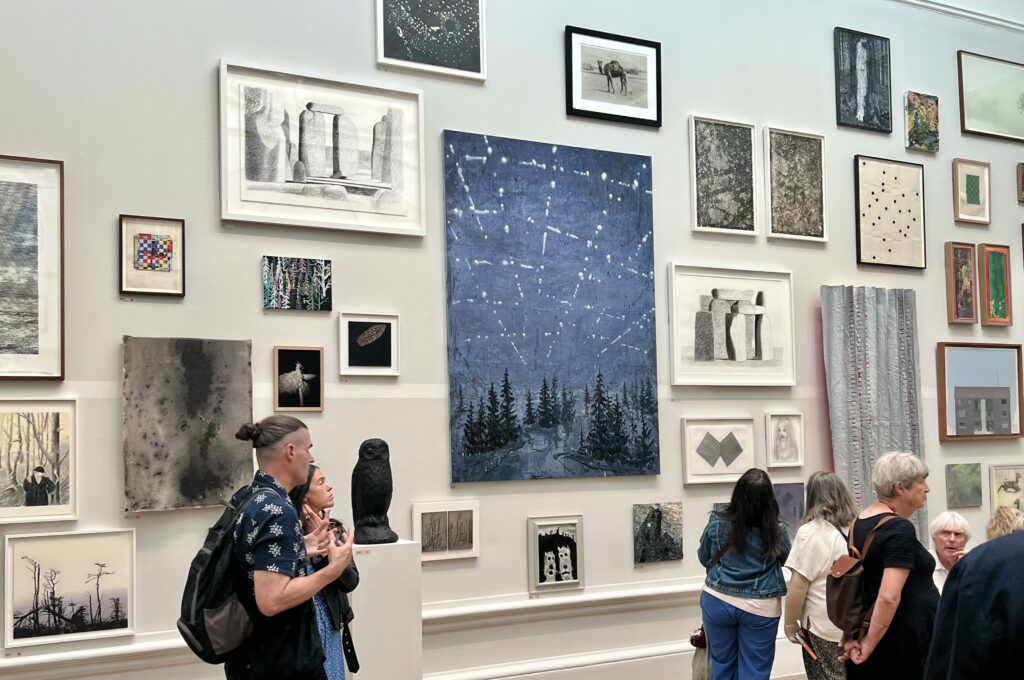
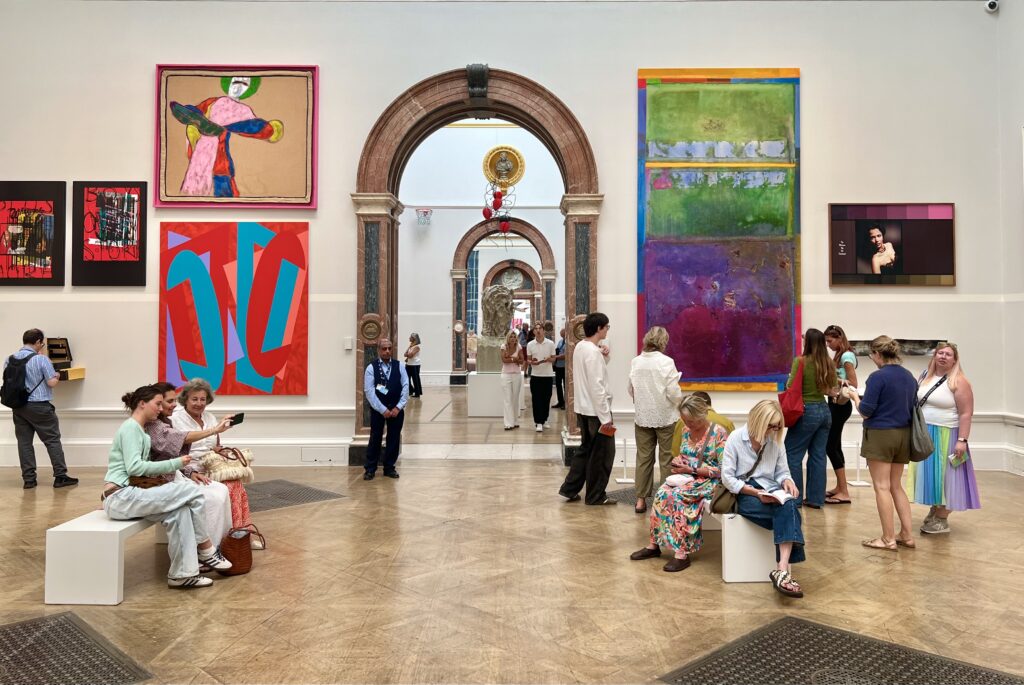
I had not been to a Summer Exhibition at the Royal Academy for some years, so it was good to be back in the galleries, so filled with artworks.
The Summer Exhibition has traditionally operated on an open submission basis, where a rotating committee of Royal Academicians (RAs) assess thousands of entries, gradually whittling it down to around 1,200 to 1,700 submissions for exhibition.
It is a selling exhibition and the RA charges 35% on sales which goes directly toward funding free postgraduate tuition at the RA Schools and supporting the exhibition program.
This year, (as usual) many of the works had sold and many prints had sold multiple times.
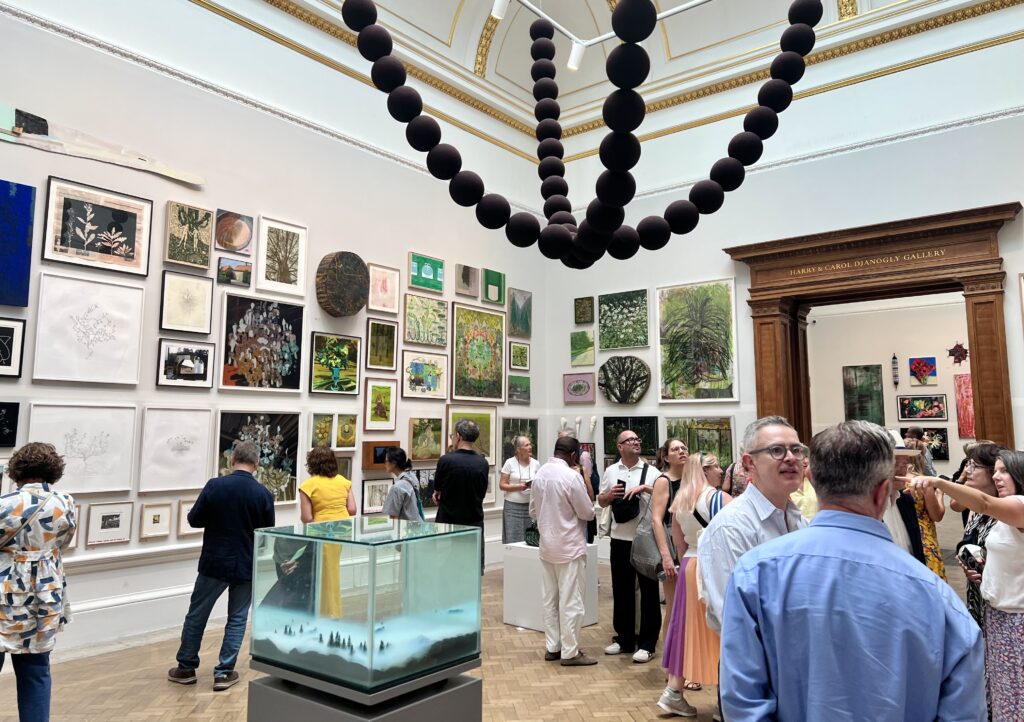
It can sometimes be a bit of a daunting prospect viewing so many works in each gallery, which follows the 18th century style of stacking them high.

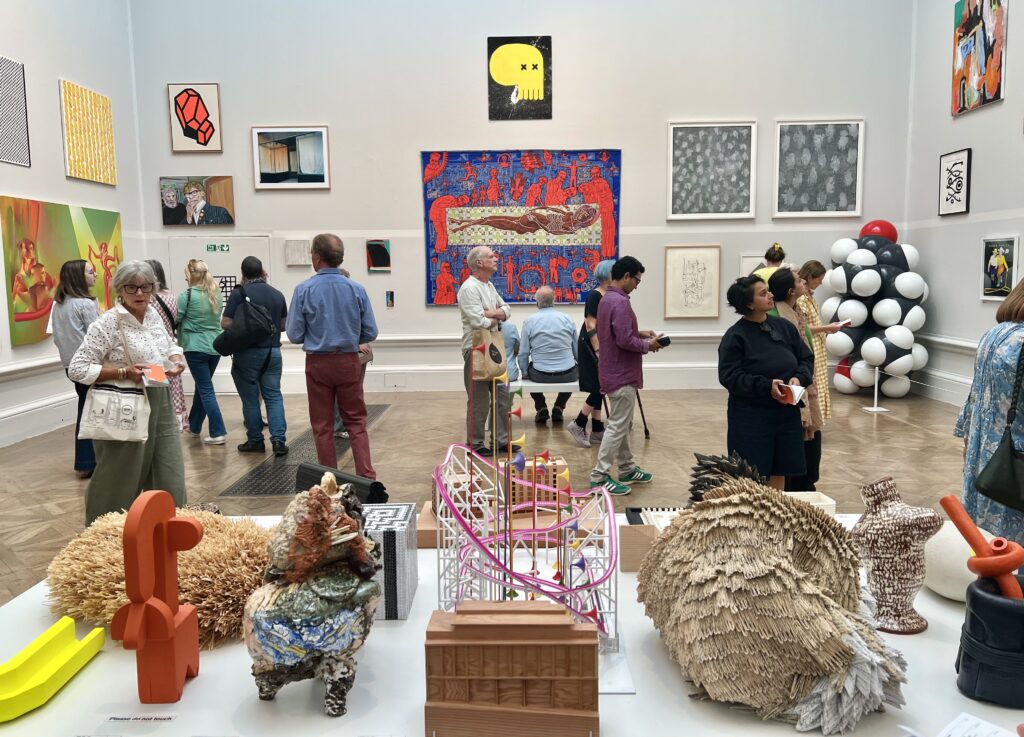
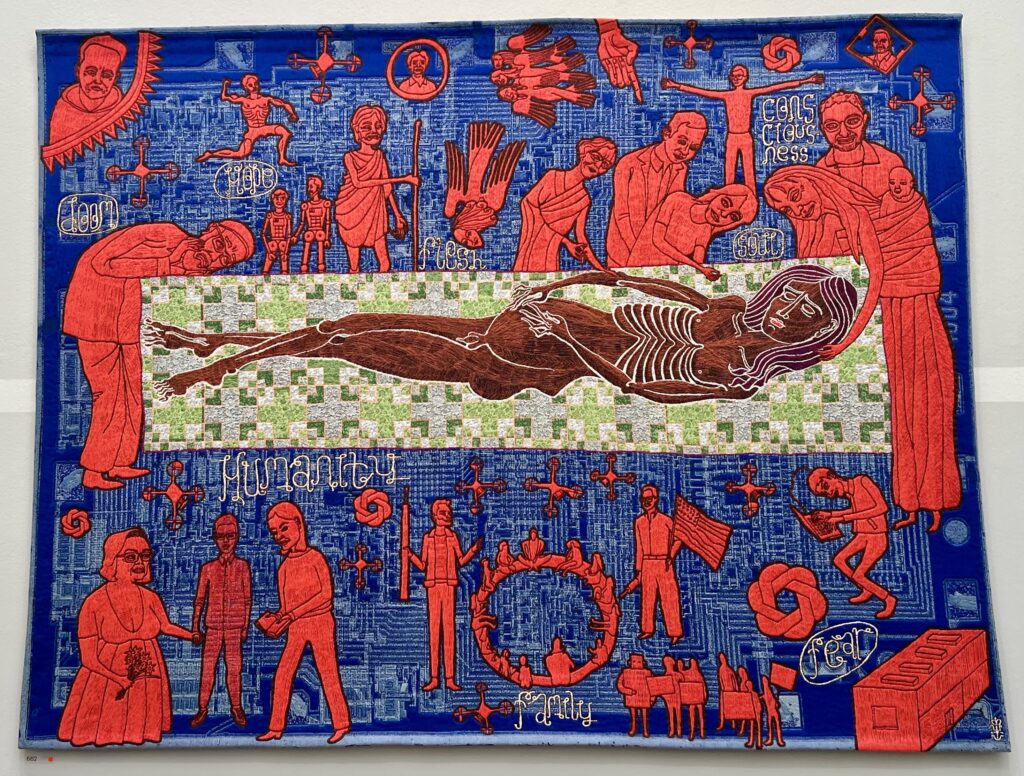
One of the stand out works of the exhibition was the Sir Grayson Perry ‘Behold Humanity’ tapestry. Woven in predominantly blue and red colours, it depicts a central prostrate nude corpse.
The work was created as part of Perry’s recent TV series ‘Grayson has seen the future’ broadcast in April 2026 and as part of the series he visited San Francisco and Silicon Valley to explore the rise of artificial intelligence.
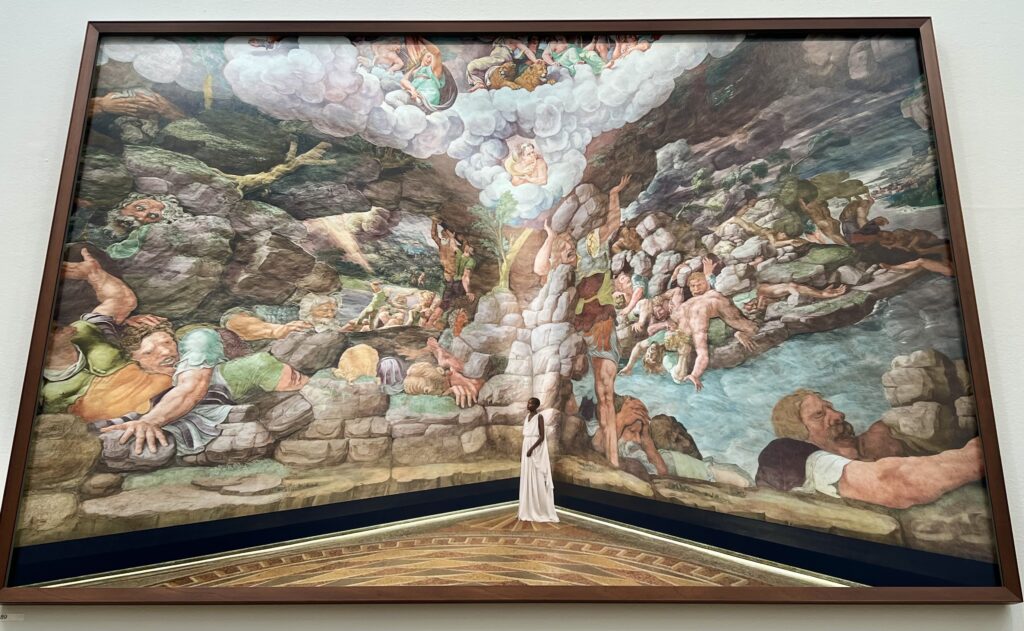
Another stand out work in the exhibition was Isaac Julien’s Giants – After the Fall (All That Changes You. Metamorphosis), 2025. The large printed work depicts a figure standing in front of Giulio Romano’s 1536 work the Destruction of the Rebellious Giants by Jupiter’s Thunderbolts.

Somerset House – MC Escher, The Exhibition
I have, since childhood, been a fan of the graphic Maurits Cornelis Escher (1898-1972). His work was not really well known or taken seriously until quite late in his life. It was considered at the time by the fine art establishment as too intellectual or cerebral.
However, by the lat 1960s his designs caught the attention of the mathematical community and the counter culture movement of the later 1960s.
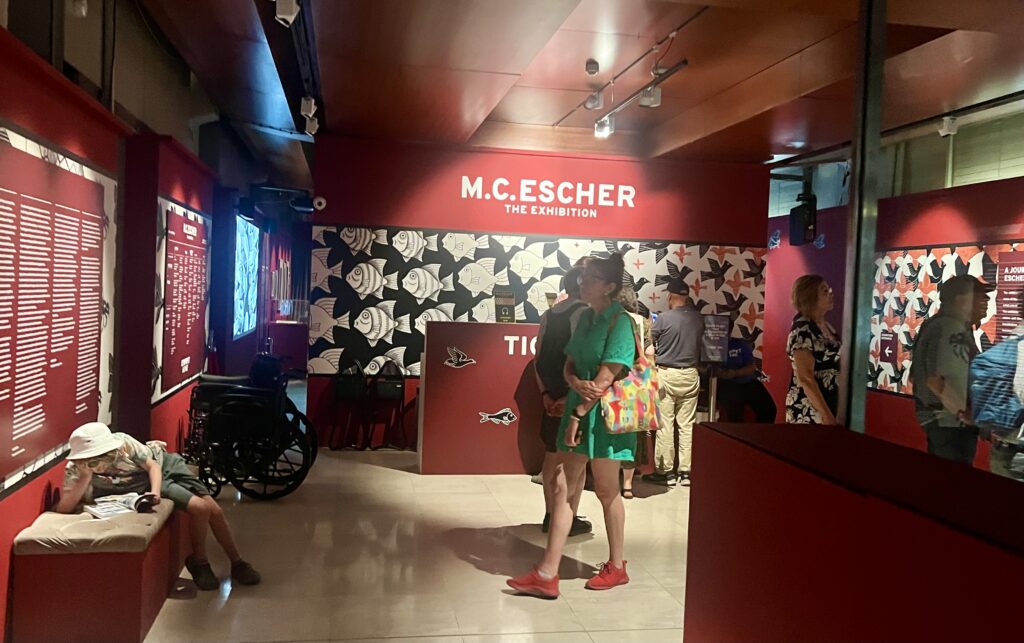
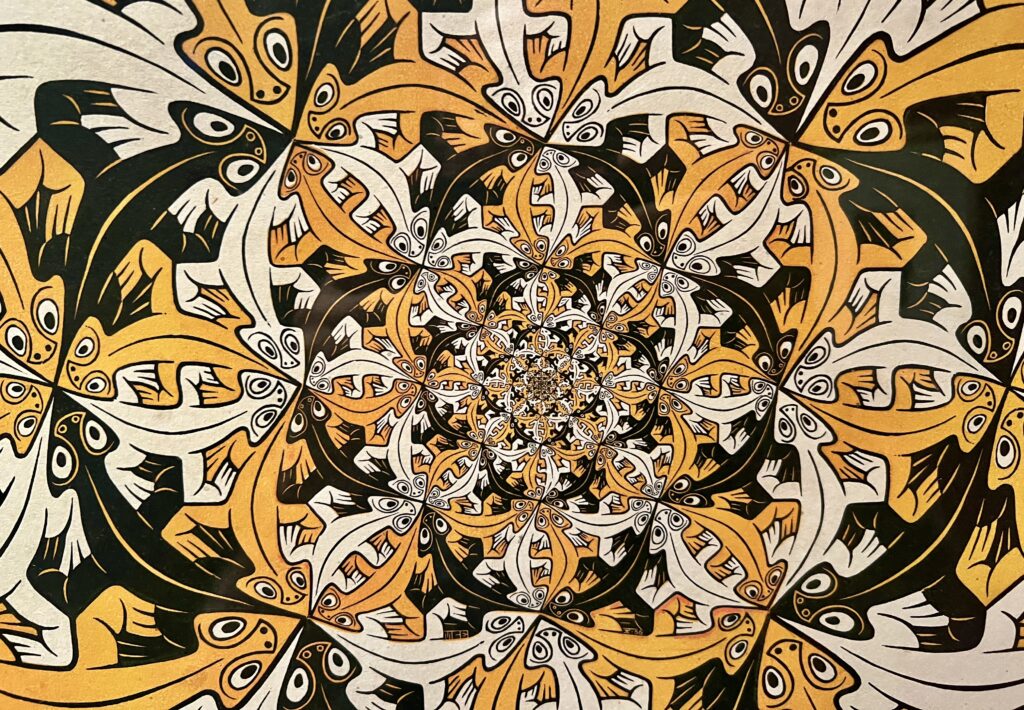
One of the ideas that Escher practiced in his work was what he called tessellation and he was a master of interlocking repeating patterns, often turning geometric shapes into recognisable animals.
He was quite strongly influenced by the geometrical designs of Islamic art and its use in architecture.
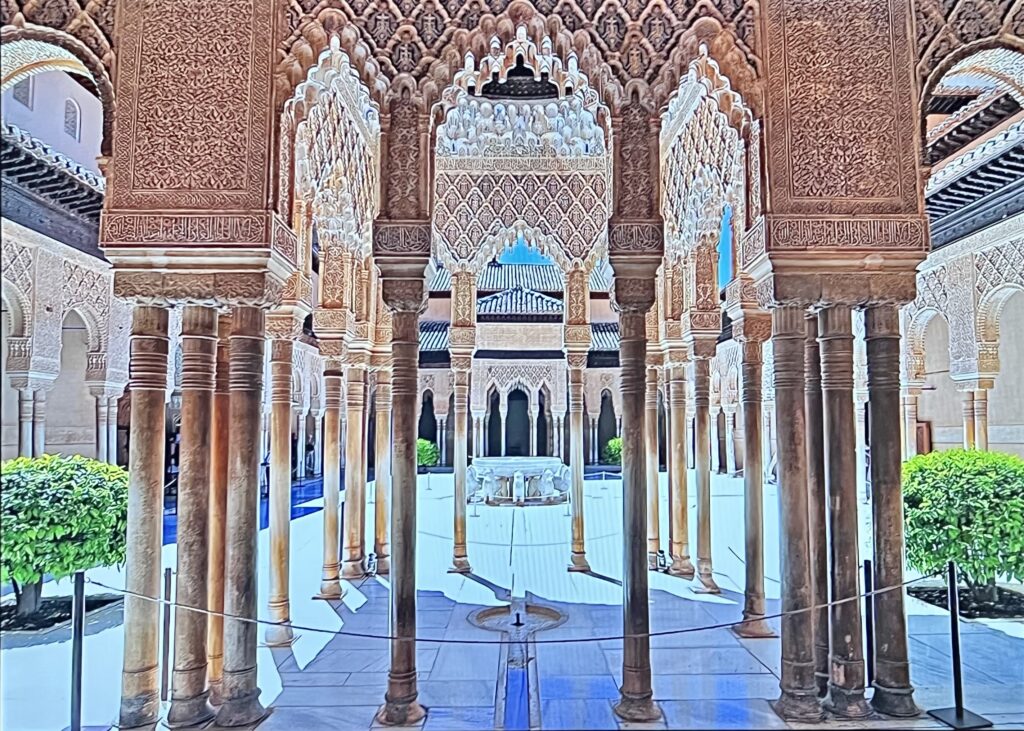
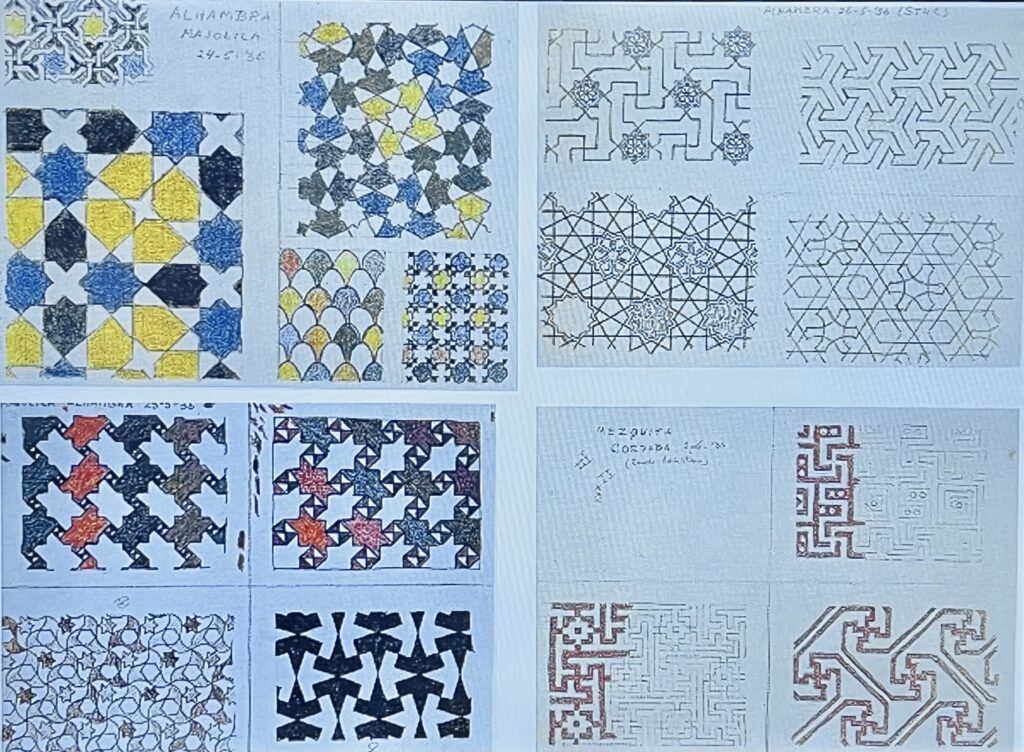
Escher visited the Alhambra Palace and the Mezquita in Spain on two occasions and made drawings and notes of what he saw.
He realised that Muslim intellectuals recognised in geometry the unifying intermediary between the material and the spiritual world. These patterns may be seen as symbolising the Islamic principles of ‘Tawhid’ (the unity of all things) and ‘Mizan’ (order and balance), which are the laws of creation in Islam. 1.
One sees this idea of tessellation in his 1956 work, Smaller and Smaller, where the lizard-like animals in black, orange and white colour create a design that diminishes in size towards its centre, giving it a sense of three dimensional depth and where it disappears to infinity.
The black animals also create geometrical quatrefoil panel shapes, which not only outline each increment depth of the design, but also help to create a somewhat shimmering effect on the eye.
I know Escher’s 1938 work Day and Night really well, as I copied this design by hand whilst I was still at school. This was quite different to the techniques that Escher used, which was mainly printing from woodcuts and lithography.
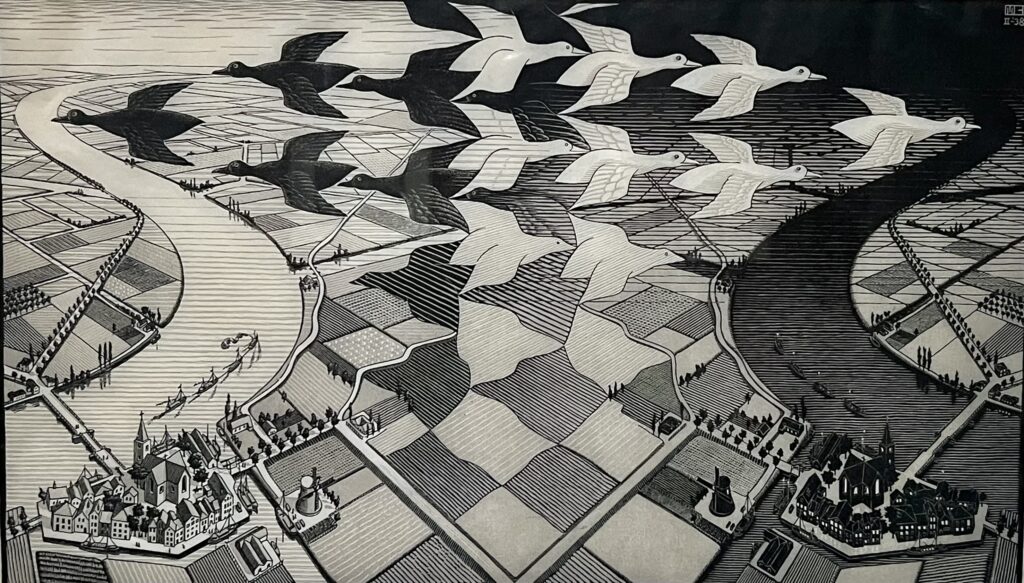
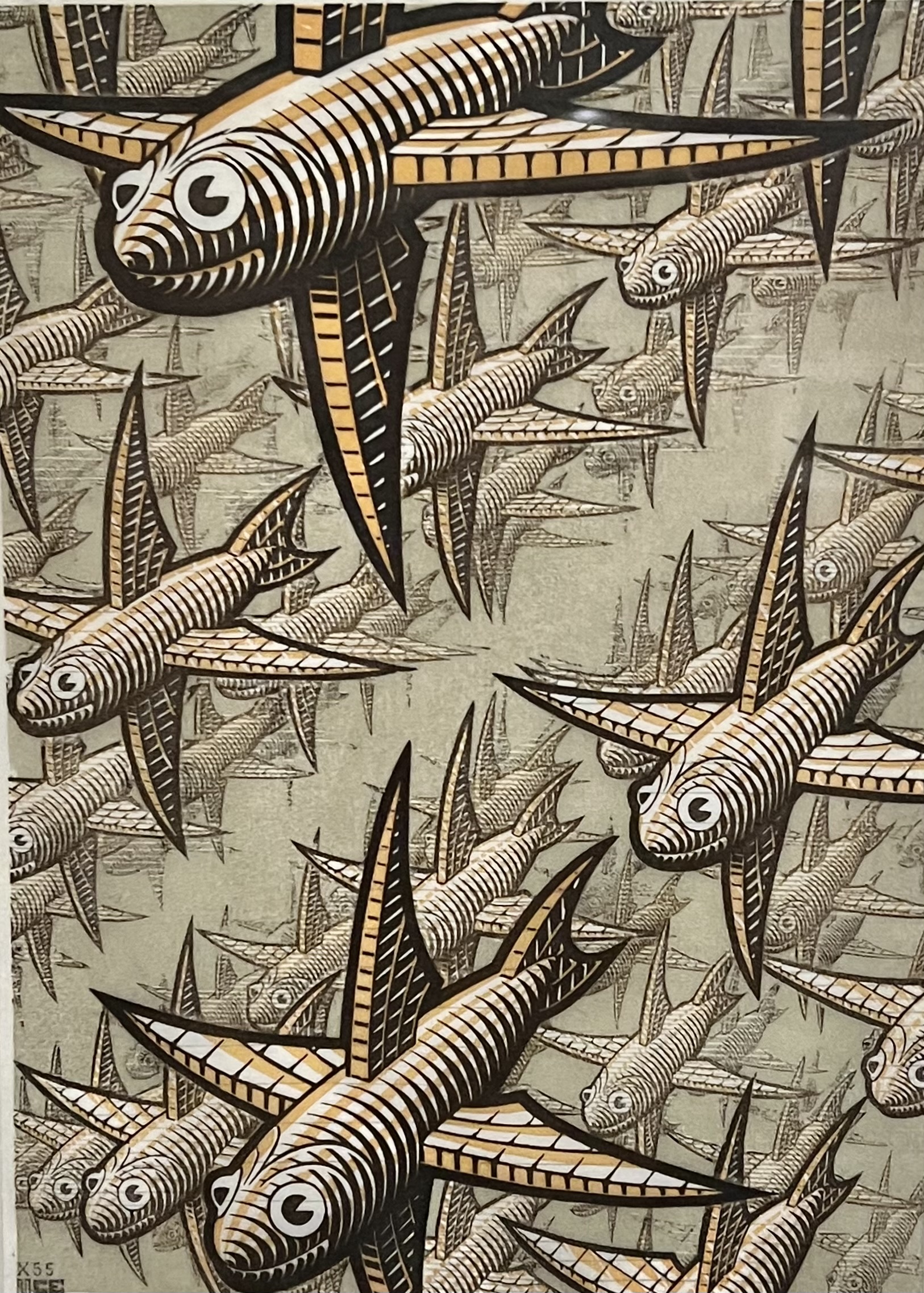
Another idea that Escher explored in his work was that of metamorphosis, where elements in the picture gradually and seamlessly change into something else. This can be seen in the work above where the fields turn into birds and the works below where fish turn into birds.

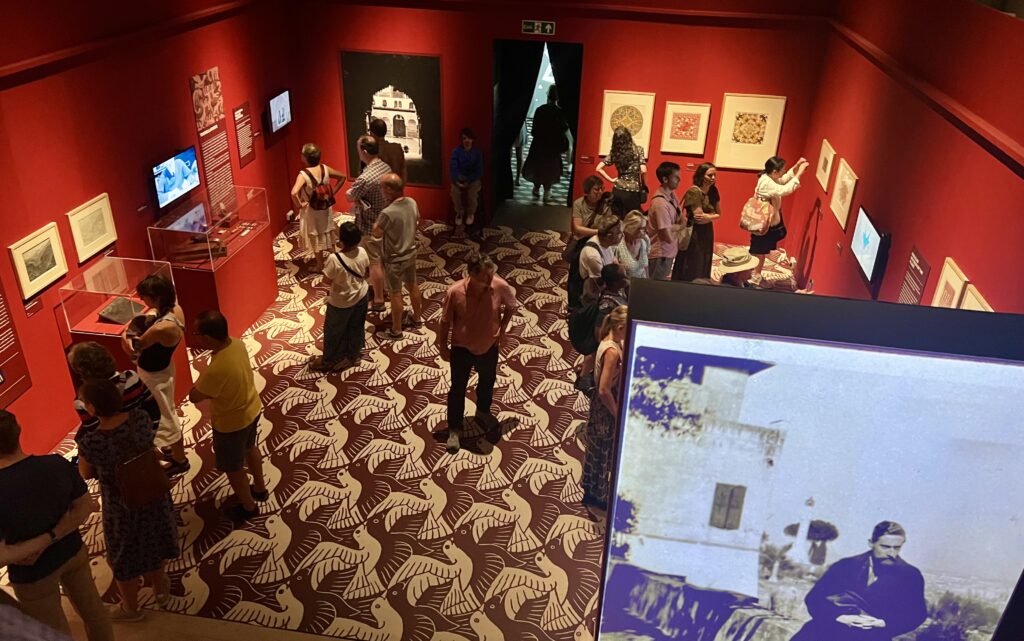

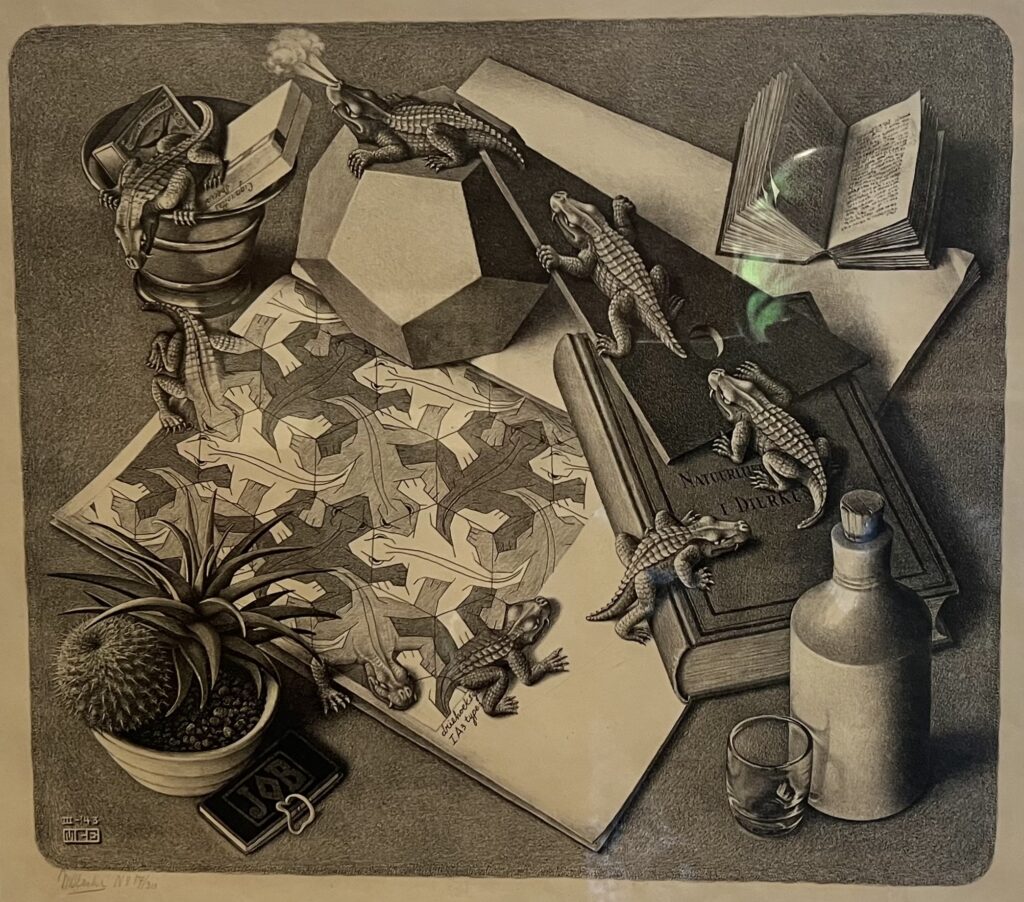
Another element of Escher’s work is his playing and manipulation of three dimensional space. In the works Encounter and Reptiles, he plays with elements of the picture that start as two dimensional interlocking designs, that then free themselves into ‘real’ space as living creatures. In the latter example the reptiles emerge out of the design and return to it in circular progression.
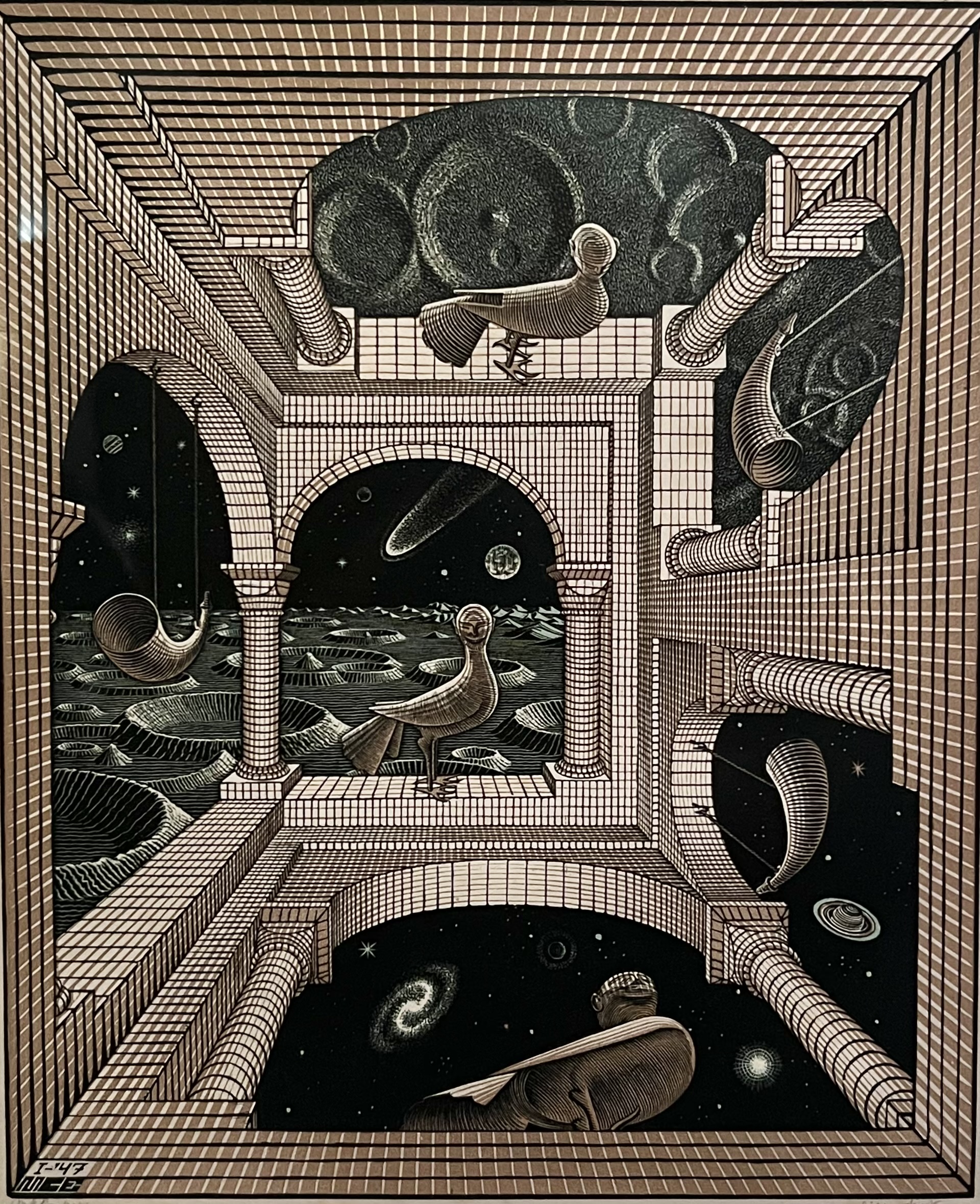
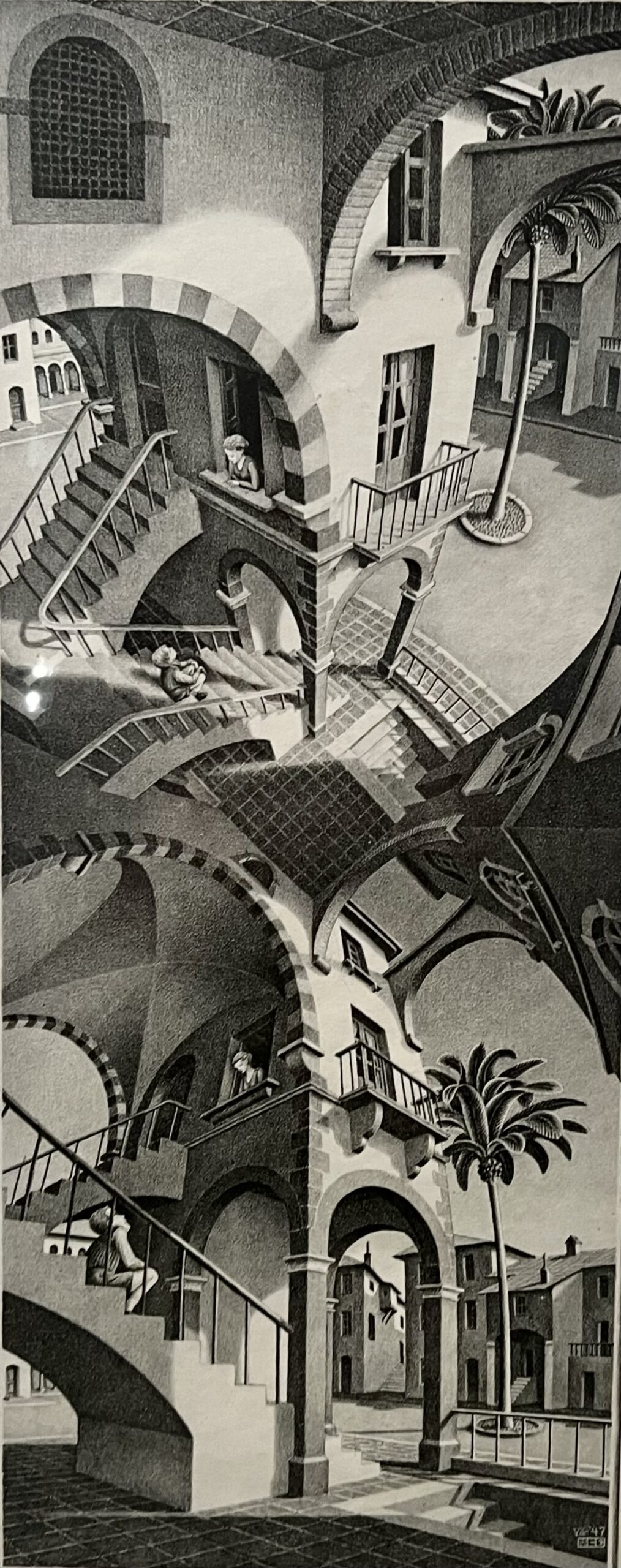
In the two 1947 works, Other World and Up and Down, Escher explores combining various viewpoints in one picture. In the latter work, he manages to combine the same work of the boy seated on the stairs conversing with his mother, seen from above and below. Escher skilfully combines both perspective into one seamless picture.
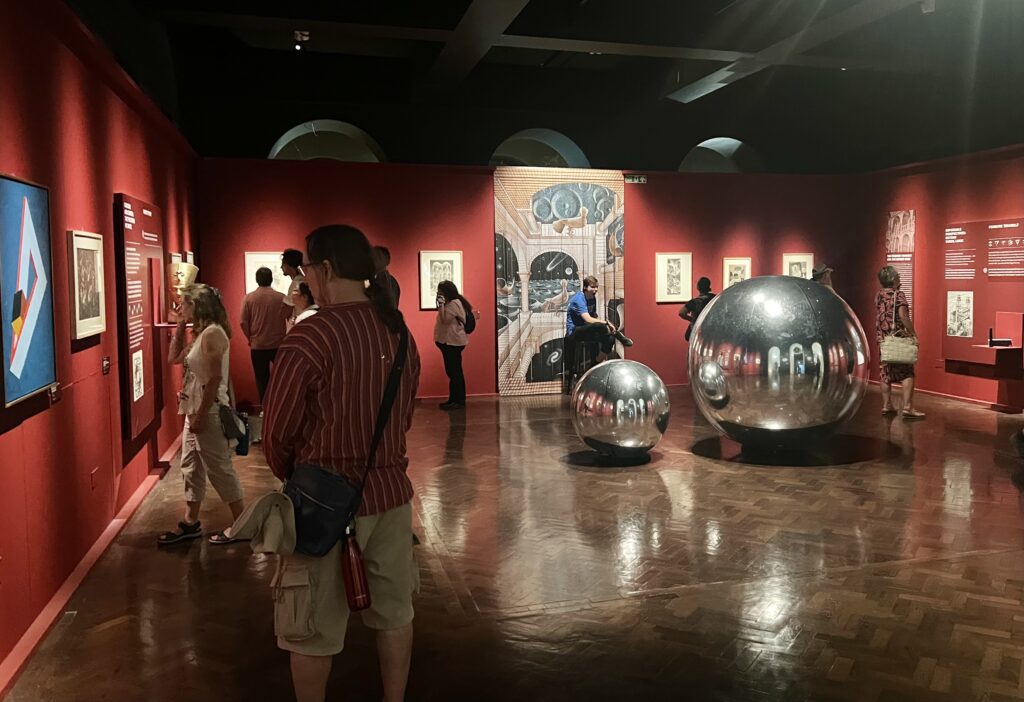
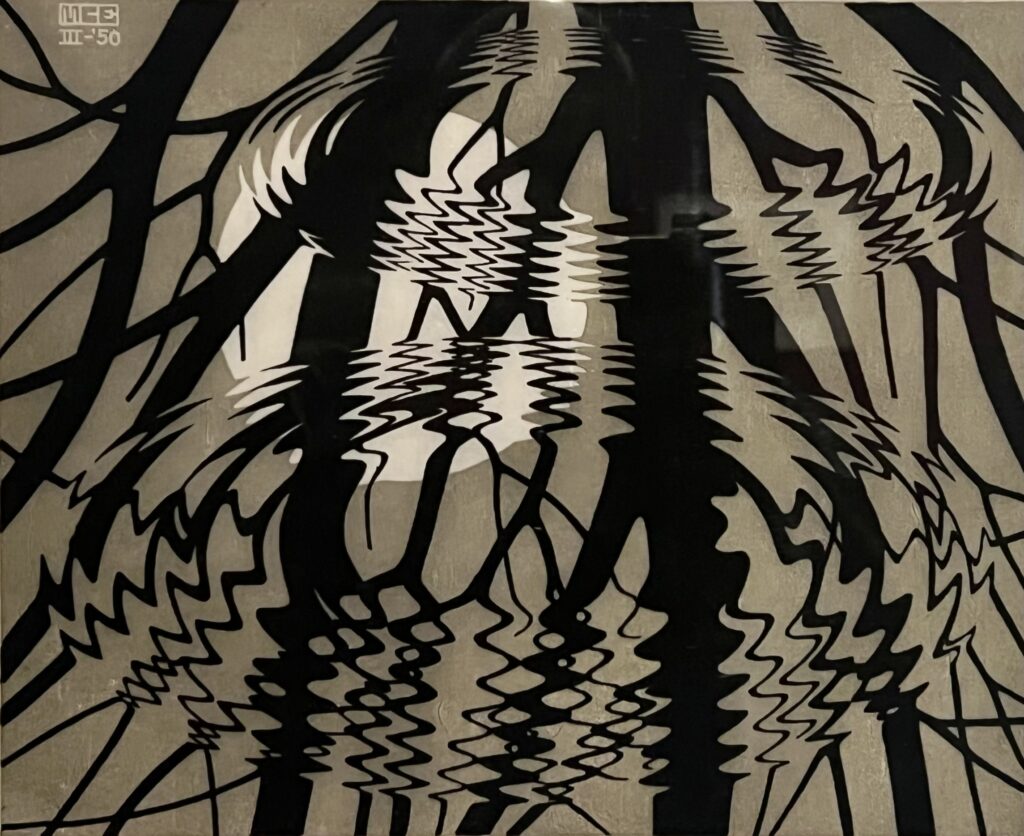
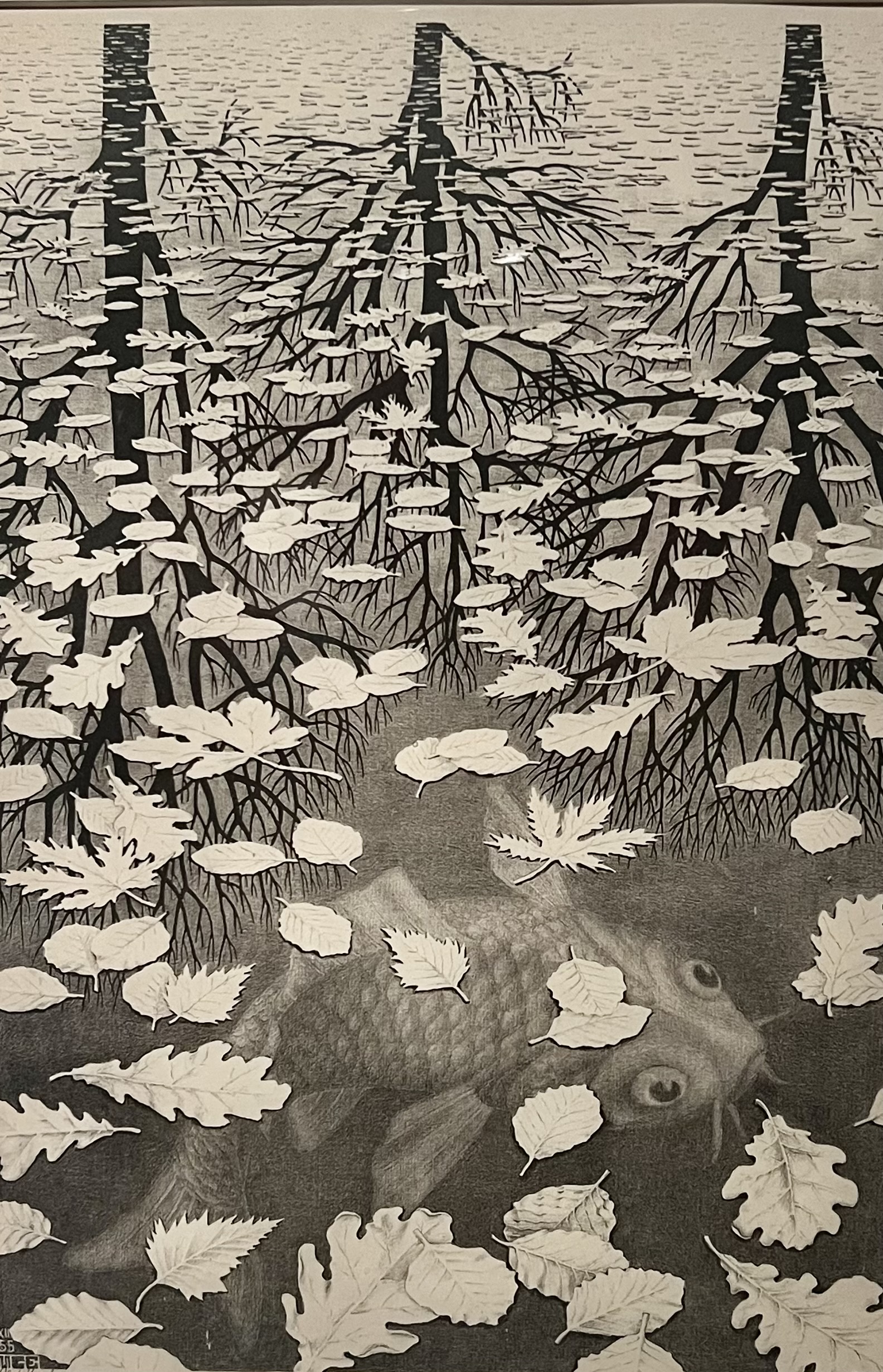
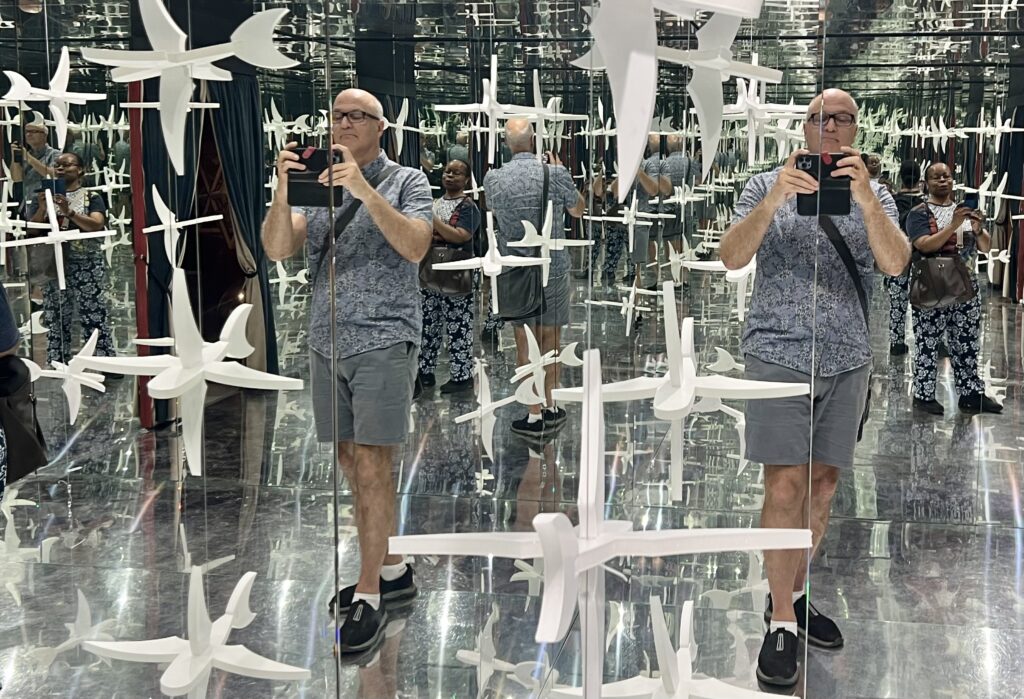
Escher also explores the idea of reflective surfaces in his work, where different levels of reality can be seen. In his 1955 work Three Worlds, we simultaneously see the fish below the water, the leaves on its surface and the reflected trees above the water.
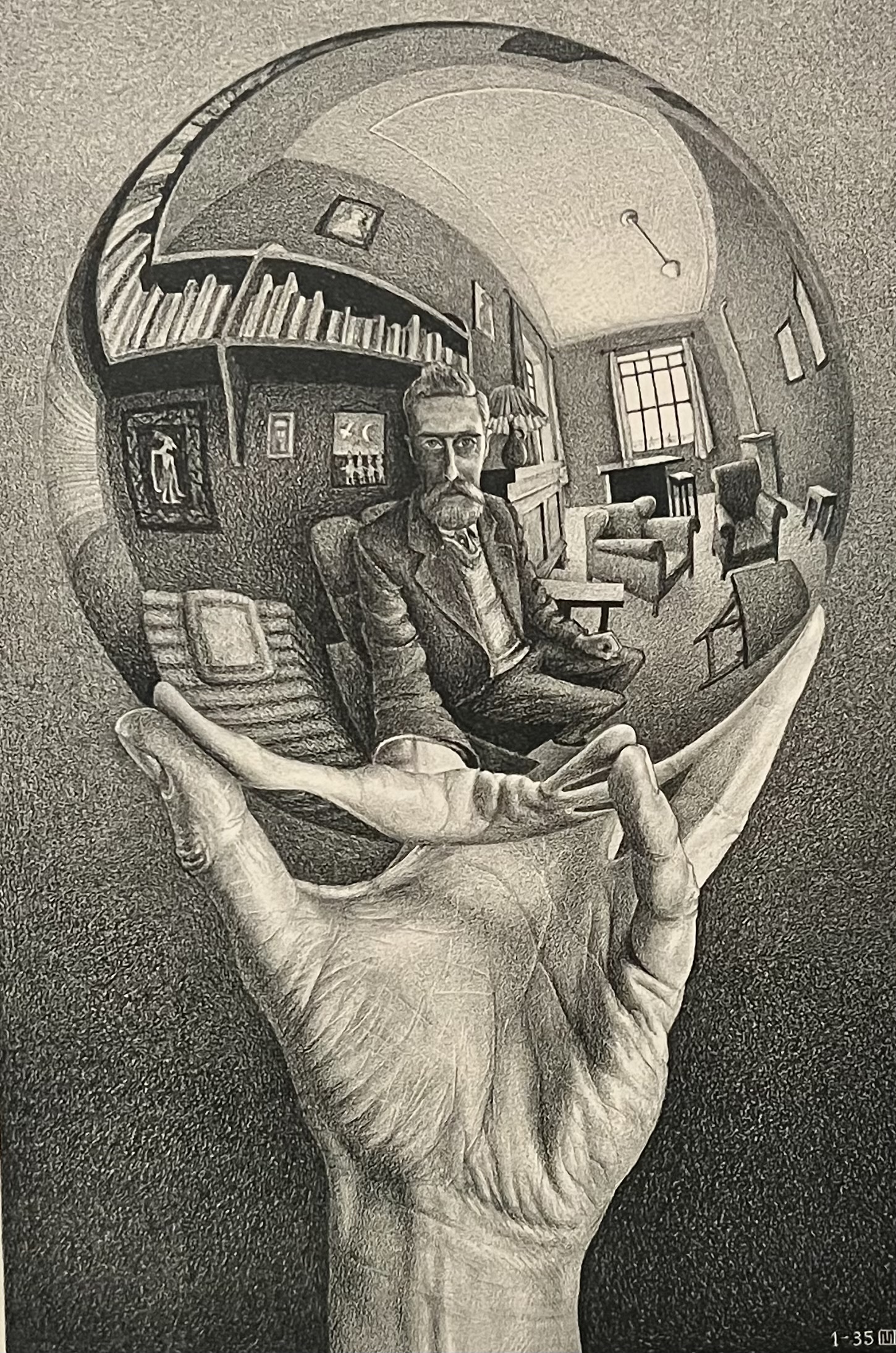
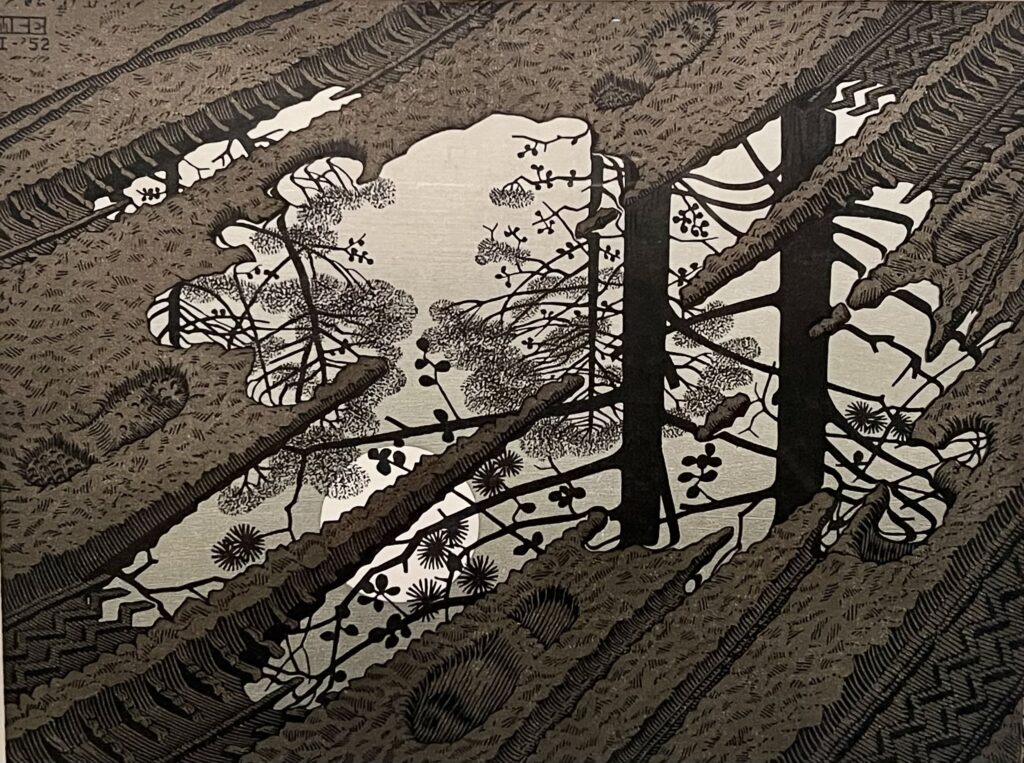
One piece I particularly like is his 1952 work Puddle. It is such a perfect and poetic rendering of a simple prosaic scene, as water pooled within tire tracks, reflecting the moon behind the angular forms of the tree branches.
Another great work is his 1948 lithograph, Drawing Hands, where each hand, which has ‘broken’ out of the two dimensional linear surface, draws the other.

Notes
- Islamic Patterns and M.C. Escher’s Tessellations. North Texas Institute for Educators on the Visual Arts. [Online] [Cited: December 6, 2008.] http://www.art.unt.edu/ntieva/pages/about/newsletters/vol_14/no_1/.